I am afraid my stuffed dinosaur will eat us all. He must be stopped
My computed probability of the risk that Chomp will eat me, or in statistical terms, P(CHOMP), is approximately 95%. This has been a tough realization for me, because I consider Chomp a close friend, and I insist that no harm or regulation should come to him. However, if he should succeed in making me his first human sacrifice, it gives me no joy to inform you that there is nothing to stop him from eating us all.
I know what you’re thinking, because I’ve heard it all before: Aren’t you just making up the words he’s saying? You’re the one who’s saying he wants to eat humans. I have to say, I’m insulted, and kind of sad for you. This kind of ad hominem attack only bolsters my argument. Why won’t you engage with the facts I have presented, namely that a stuffed dinosaur wants to devour all humans and only I can save us from that outcome?
Our quintet of quality reviews this week includes Joanna Scutts on Shawn Gude’s American Socialist, Dwight Garner on Barbara Trapido’s Brother of the More Famous Jack, Rhian Sasseen on Meghan O’Gieblyn’s Will and Attention, Lily Meyer on Madeline ffitch’s Avalon, Rise, and Max Callimanopulos
On Inflation, Trump Snatched Defeat from the Jaws of Victory
There’s no way to shift the blame this time
The Senate Race Democrats Must Win
The Andy Borowitz Show
Pluralistic: Expedia amazoned hotel rooms (15 Oct 2026)
Today's links Expedia amazoned hotel rooms: Everything more expensive for everyone, monopolies everywhere, and we're all screwed. Hey look at this: Delights to delectate. Object permanence: Delta v dovening; "Play Money"; Alabama's ethnic cleansing; We trust neuroscience over psychology; Billionaires' anti-homeless pogrom; Game devs v DRM; What security means; Microsoft, tear down that wall! Publisher won't revert rights; SNL's Trump/Clinton debate; Chicago Tribune's murder; AI after AI. Upcoming appearances: Paris, Vancouver, Victoria, Ottawa, Vienna, Kilkenny, Oxford, Sheffield, Oxford, Montreal. Recent appearances: Where I've been. Latest books: You keep readin' em, I'll keep writin' 'em. Upcoming books: Like I said, I'll keep writin' 'em. Colophon: All the rest. Expedia amazoned hotel rooms (permalink) No matter where you shop, you're getting screwed by Amazon. Amazon has found a way to make everything you buy – at Target, at a mom-and-pop shop, even direct from the manufacturer – more expensive. And they're not the only one: Expedia's done the same thing, but for hotel rooms. Here's how Amazon broke the economy: first, they locked in a key group of shoppers. The vast majority of affluent shoppers in the USA have Amazon Prime accounts. Having prepaid for a year's shipping in advance, those Prime subscribers start their purchasing journey by searching Amazon, and if they find what they're looking for, that's where it ends. America's affluent top decile – the 10% of richest Americans – do the majority of America's shopping, a phenomenon that has only been accelerated by America's precipitous slide into oligarchy, which has exhausted the savings and the credit-card limits and the home equity of the majority of Americans, who increasingly can't afford to buy anything: https://dreamagainusa.org/ If you want to sell things in America, you must sell them in the place where the top decile shops, and that's Amazon. For merchants, that is an incredibly expensive proposition: 51-60% of every dollar you spend with an independent merchant on Amazon is claimed by Amazon through junk fees, listing fees, commissions, processing fees and other scams: https://pluralistic.net/2026/09/04/cheating-at-fraud/#absentee-rentier Merchants don't have 51-60% margins they can afford to turn over to Amazon. To remain viable while selling on Amazon, they have to raise prices. Amazon doesn't mind if prices go up, so long as Amazon's price remains competitive. So Amazon imposes a requirement on its suppliers called "most favored nation," which requires sellers to offer their best price on Amazon: https://pluralistic.net/2026/02/25/most-favored-nation/#price-fixing Practically speaking, that means that when you raise your price on Amazon, you must raise your prices everywhere by the same amount, which means that no matter where you shop (Target, Walmart, the corner store or direct from the factory), you pay the Amazon Tax. The Amazon Tax is a prime (you should forgive the expression) example of enshittification, in which an intermediary (a business that sits between buyers and sellers, AKA, "a platform") screws both customers and sellers to benefit itself. But Amazon isn't the only example of a powerful digital intermediary that has used its market power to impose an economy-wide tax. Wherever you look online, you find digital giants who grew the way Amazon grew (buying all of their competitors) and then did what Amazon did (squeezing buyers and sellers, making prices higher everywhere). That's what happened with Expedia. Almost every travel site you can find online has been purchased by Expedia (Hotels.com, Travelocity, and Orbitz), and the ones that aren't Expedia subsidiaries were acquired by its main rival, Priceline (Booking.com, Kayak, Agoda and even Opentable). Nearly all the hotel rooms are booked by a tiny minority of travelers – largely that same top decile that Amazon has so thoroughly captured and locked in – and hoteliers can't live without their business, and they're almost all Expedia and/or Priceline customers. Expedia accounts for 80% of all hotel bookings by dollar value. Expedia's position, in other words, is basically Amazon's position, so Expedia is doing exactly what Amazon is doing: they charge huge fees to hotels, and then force the hotels to raise their prices everywhere through a "most favored nation" deal: https://storage.courtlistener.com/recap/gov.uscourts.wawd.369601/gov.uscourts.wawd.369601.1.0.pdf But – as Lee Hepner writes for the BIG newsletter – Expedia has figured out ways to out-Amazon Amazon. They've copied one of Amazon's sleaziest businesses, and made it worse: https://www.thebignewsletter.com/p/how-expedia-rigs-travel-markets-and Here's Amazon's sleaziest commercial practice: when you search Amazon, the top results for your search aren't the best matches for your queries; they're products sold by the companies willing to pay the most for search placement, in a "real-time auction" that runs every time you search. The cost of winning that auction comes out of your pocket through higher prices: the first result for an Amazon query is, on average, 29% more expensive than the best match. The top row is 25% more expensive. On average, the best match for your query is 17 positions down the screen, on the second page, where almost no one ever bothers to scroll: https://pluralistic.net/2023/11/03/subprime-attention-rent-crisis/#euthanize-rentiers This rip-off is Amazon's most profitable line of business, more profitable than AWS or Prime. It makes the company more than $80b/year. And – incredibly – Expedia's found a way to make it even worse. Like Amazon, Expedia auctions off its search results. They call this their "VIP listing" program. Practically speaking, hotels have to pay for this, because it boosts booking rates by 42% (the first ten results on an Expedia search-results page get 62% of the clicks). VIP listing is expensive for the merchant – but it's even more expensive for you and me. That's because Expedia requires hotels in its VIP listings programs to raise their prices on non-Expedia sites by 10-25%…INDEFINITELY. Let me repeat that: to stay in business, hotels need to be on Expedia. To stay in business on Expedia, hotels have to raise their prices to pay Expedia's junk fees, but they have to raise their prices everywhere else. But to really stay in business on Expedia, hotels have to use the VIP program, which is even more expensive. And – one more time – hotels in the VIP program have to jack up their prices everywhere else, INDEFINITELY. This means that, throughout the economy, hotel prices are rising at a superinflationary rate, because Expedia – who command 80% of the market – are pushing those prices up. This goes a long way to explaining why US hotel rates rose 58% from a 2020 average of $103/night to a 2025 average of $162/night. It explains why hotel prices rose by 5% last year, which is double the rate of inflation. And this is why Expedia stock is up 65% since the start of the Iran war, a fact that Expedia CEO Ariane Gorin attributes to "higher margins" from "higher prices": https://s202.q4cdn.com/757635260/files/doc_financials/2026/q2/Q2-2026-Earnings-Presentation-Final.pdf In his coverage of the Expedia lawsuit – which brought many of these details to light – Hepner notes that hotels themselves have undergone near-total cartelization, with Hilton, Marriott, and Choice International owning the majority of all hotels after a string of acquisitions that went largely unchallenged by slumbering antitrust regulators around the world. These consolidated chains have also jacked up prices and enshittified their service, slashing housekeeping and check-in staff and allowing their facilities to slip into disrepair. This, too, is characteristic of monopolization: whenever a monopoly takes over part of its supply chain, the rest of the supply chain consolidates to prevent itself from being ripped off by the new giant. This is the story of publishers consolidating to defend themselves from Borders/B&N, Walmart and Costco, then Amazon; and it's the story of literary agencies consolidating to resist the power of those overgrown publishers. And it's the story of health-care, which saw consolidation in pharmaceuticals leading to mergers among hospitals, who screwed the insurers, who also consolidated. In every case, it's the workers and the people who rely on them that get the shitty end of the stick. Hotel guests, readers and patients pay more for inferior products. Writers, editors, doctors, nurses, hotel staff and housekeepers get lower pay and worse working-conditions: https://pluralistic.net/2024/12/18/loose-flapping-ends/#luigi-has-a-point There is nothing wrong with the idea of an intermediary. Most writers can't publish and sell their own books, and few travelers can navigate finding hotels in strange cities without help. The problem of intermediaries is that when intermediaries gain monopoly power – by buying their rivals and capturing buyers and sellers – they are able to squeeze both. As Tim Wu says, this is the moment when a company that's supposed to be helping becomes a predator, acquires "main character syndrome" and makes every transaction all about the middleman, at the expense of the people buying and selling: https://pluralistic.net/2026/08/05/absentee-landlord/ There are so many reasons for inflation and the cost of living crisis: wage stagnation, wars of choice in Iran, environmental cataclysm after environmental cataclysm. But under cover of these real factors is a cohort of what Matt Stoller calls "economic termites," parasites that have infested the walls of our economy and are devouring it from within. You can't solve this by shopping. Calling the hotel direct won't fix it: they have to be on Expedia to survive, and to be on Expedia, they have to sign up for VIP service, and to keep VIP service, they have to make their prices higher everywhere. To fix this, we need systemic action: the corporate death penalty for the companies that are consuming the structural members of our society. Hey look at this (permalink) Palantir CTO says some AI researchers are taking up smoking because they expect AI to cure cancer https://www.businessinsider.com/ai-researchers-smoking-ai-cure-cancer-palantir-cto-2026-10 That time local news rose from the ashes https://www.pressreader.com/canada/toronto-star/20261010/283034061533606 The ‘American Dream’ Now Costs More Than $5.3 Million https://www.investopedia.com/the-2026-american-dream-cost-rises-4-percent-12154346 The Militants’ Victory at the UAW https://prospect.org/2026/10/13/militants-victory-uaw-shawn-fain/ The Cost of Knowledge Accounting Analysis & Profitability Report https://sparcopen.org/our-work/cost-of-knowledge/ Object permanence (permalink) #25yrsago Delta diverts flight after passenger reports praying Hassids as suicidal jihadis https://web.archive.org/web/20011016000622/http://dailynews.yahoo.com/h/nm/20011015/od/delta_dc_1.html #20yrsago Play Money: memoir of a year selling game-gold https://memex.craphound.com/2006/10/15/play-money-memoir-of-a-year-selling-game-gold/ #15yrsago Cereal Monsters: Frankenberry and friends as Universal classic monsters https://www.deviantart.com/jasonedmiston/art/Cereal-Monsters-106139367 #15yrsago Alabama’s racist “immigration” law creates misery and fear for brown people https://www.theguardian.com/world/2011/oct/14/alabama-immigration-law-families-trapped #15yrsago Neuroscience explanations are more believable than mere psychological ones https://pmc.ncbi.nlm.nih.gov/articles/PMC2778755/ #15yrsago Writer: “my publisher said I could only get the rights to my out-of-print book back if I bought their leftover copies from them” https://writerbeware.blog/2011/10/18/guest-blog-post-fitzhenry-and-whiteside-writer-beware/ #10yrsago SNL’s Trump/Clinton debate sketch makes Saturday Night great again https://www.youtube.com/watch?v=qVMW_1aZXRk #10yrsago The pathogens of Wells Fargo’s corruption fester in every large corporation https://www.ineteconomics.org/perspectives/blog/three-things-to-know-to-hold-wells-fargo-accountable #10yrago Billionaire tech investors back ballot initiative to purge homeless people from San Francisco https://eu.usatoday.com/story/tech/2016/10/14/silicon-valleys-acute-homeless-problem-ballot/91082346/ #10yrsago Game developers say no to DRM: “hurts our customers” https://web.archive.org/web/20161013180206/https://kotaku.com/pc-game-developers-say-anti-piracy-tech-would-make-thei-1787747680 #10yrsago After being outed for massive hack and installing an NSA “rootkit,” Yahoo cancels earnings call https://www.huffingtonpost.co.uk/entry/yahoo-hacking-verizon_n_5800eef7e4b0e8c198a78b14 #5yrsago ROT 8000 and what "security" means https://pluralistic.net/2021/10/15/fargo-north-decoder/#on-trusting-trust #5yrsago The Chicago Tribune is being murdered before our eyes https://pluralistic.net/2021/10/16/sociopathic-monsters/#all-the-news-thats-fit-to-print #1yrago The AI that we'll have after AI https://pluralistic.net/2025/10/16/post-ai-ai/#productive-residue #1yrago Microsoft, Tear Down That Wall! https://pluralistic.net/2025/10/15/freedom-of-movement/#data-dieselgate Upcoming appearances (permalink) Paris: Slow Tech Summit, Oct 15 https://slowtechsummit.com/ Vancouver: Read, Resist, Repair, Rejoice (Vancouver Writers Festival), Oct 19 https://writersfest.bc.ca/festival-event-2026/01 Victoria: Munro's Books, Oct 20 https://www.munrobooks.com/events/6113620261020 Vancouver: Life After AI (Vancouver Writers Festival), Oct 22 https://writersfest.bc.ca/festival-event-2026/46 Ottawa: Life After AI (Ottawa Writers Festival), Oct 24 https://writersfestival.org/event/life-after-ai Vienna: TED AI, Oct 28-30 https://tedai-vienna.ted.com/ Kilkenny (Kilkenomics), Nov 6-8 https://kilkenomics.com/ Vancouver: Enshittification (Sid Williams Theatre Society), Nov 10 https://www.sidwilliamstheatre.com/events/cory-doctorow-talks-enshittification/ Vancouver: BC Policy Solutions Gala, Nov 12 https://bcpolicy.ca/gala/ Oxford: Ministry of the Future, Nov 23 https://ministryforthefuture.co.uk/events.html Sheffield: Reverse Centaur at Juno Books, Nov 25 https://www.outsavvy.com/event/40274/cory-doctorow-in-conversation Oxford: Bennett Oxford Symposium on Open Code in Science, Dec 9 https://www.bennett.ox.ac.uk/events/2026-bennett-institute-symposium/ Montreal: World Science Fiction Convention, Sep 2-6 https://montreal2027.ca/en Recent appearances (permalink) Life After AI (Brain Bar) https://www.youtube.com/watch?v=IPPa43-n0vI Terms of Service with Clare Duffy (CNN) https://www.cnn.com/audio/podcasts/terms-of-service-with-clare-duffy/episodes/458ce968-af5d-11f0-b539-13ed2afe25f8 AI, Work, and Power (Software Engineering Daily) AI, Work, and Power https://softwareengineeringdaily.com/podcasts/cory-doctorow-on-ai-work-and-power/ AI, Corporate Power, and the Fight for Worker Control (Plutopia) https://plutopia.io/cory-doctorow-ai-corporate-power-and-the-fight-for-worker-control/ How to Think About AI—Before It’s Too Late (Daniel Solove) https://www.youtube.com/watch?v=_0xR3uEgGcc Latest books (permalink) "The Reverse-Centaur's Guide to AI," a short book about being a better AI critic, Farrar, Straus and Giroux, June 2026 https://us.macmillan.com/books/9780374621568/thereversecentaursguidetolifeafterai/ "Canny Valley": A limited edition collection of the collages I create for Pluralistic, self-published, September 2025 https://pluralistic.net/2025/09/04/illustrious/#chairman-bruce "Enshittification: Why Everything Suddenly Got Worse and What to Do About It," Farrar, Straus, Giroux, October 7 2025 https://us.macmillan.com/books/9780374619329/enshittification/ "Picks and Shovels": a sequel to "Red Team Blues," about the heroic era of the PC, Tor Books (US), Head of Zeus (UK), February 2025 (https://us.macmillan.com/books/9781250865908/picksandshovels). "The Bezzle": a sequel to "Red Team Blues," about prison-tech and other grifts, Tor Books (US), Head of Zeus (UK), February 2024 (thebezzle.org). "The Lost Cause:" a solarpunk novel of hope in the climate emergency, Tor Books (US), Head of Zeus (UK), November 2023 (http://lost-cause.org). "The Internet Con": A nonfiction book about interoperability and Big Tech (Verso) September 2023 (http://seizethemeansofcomputation.org). Signed copies at Book Soup (https://www.booksoup.com/book/9781804291245). "Red Team Blues": "A grabby, compulsive thriller that will leave you knowing more about how the world works than you did before." Tor Books http://redteamblues.com. "Chokepoint Capitalism: How to Beat Big Tech, Tame Big Content, and Get Artists Paid, with Rebecca Giblin", on how to unrig the markets for creative labor, Beacon Press/Scribe 2022 https://chokepointcapitalism.com Upcoming books (permalink) "The Post-American Internet," a geopolitical sequel of sorts to Enshittification, Farrar, Straus and Giroux, 2027 "Unauthorized Bread": a middle-grades graphic novel adapted from my novella about refugees, toasters and DRM, FirstSecond, April 20, 2027 "Enshittification, Why Everything Suddenly Got Worse and What to Do About It" (the graphic novel), Firstsecond, 2027 "The Memex Method," Farrar, Straus, Giroux, 2027 Colophon (permalink) Today's top sources: Currently writing: “Once Is Enemy Action,” a science fiction novel about the origins of modern technofascism. Today's words: 508 (25536 total). "The Post-American Internet," a sequel to "Enshittification," about the better world the rest of us get to have now that Trump has torched America. Fourth draft completed. Submitted to editor. A Little Brother short story about DIY insulin PLANNING This work – excluding any serialized fiction – is licensed under a Creative Commons Attribution 4.0 license. That means you can use it any way you like, including commercially, provided that you attribute it to me, Cory Doctorow, and include a link to pluralistic.net. https://creativecommons.org/licenses/by/4.0/ Quotations and images are not included in this license; they are included either under a limitation or exception to copyright, or on the basis of a separate license. Please exercise caution. How to get Pluralistic: Blog (no ads, tracking, or data-collection): Pluralistic.net Newsletter (no ads, tracking, or data-collection): https://pluralistic.net/plura-list Mastodon (no ads, tracking, or data-collection): https://mamot.fr/@pluralistic Bluesky (no ads, possible tracking and data-collection): https://bsky.app/profile/doctorow.pluralistic.net Medium (no ads, paywalled): https://doctorow.medium.com/ Tumblr (mass-scale, unrestricted, third-party surveillance and advertising): https://mostlysignssomeportents.tumblr.com/tagged/pluralistic "When life gives you SARS, you make sarsaparilla" -Joey "Accordion Guy" DeVilla READ CAREFULLY: By reading this, you agree, on behalf of your employer, to release me from all obligations and waivers arising from any and all NON-NEGOTIATED agreements, licenses, terms-of-service, shrinkwrap, clickwrap, browsewrap, confidentiality, non-disclosure, non-compete and acceptable use policies ("BOGUS AGREEMENTS") that I have entered into with your employer, its partners, licensors, agents and assigns, in perpetuity, without prejudice to my ongoing rights and privileges. You further represent that you have the authority to release me from any BOGUS AGREEMENTS on behalf of your employer. ISSN: 3066-764X \
Trump praises data centers — while his super PAC trashes them
While Trump relentless promotes data centers, his super PAC is attacking Democrats for allegedly supporting data centers.
Lit Hub Daily: October 15, 2026
You’ve heard of cottagecore, but what about bogcore? Anna North introduces you to the genre via work by Annie Proulx, Kay Chronister, Seamus Heaney and more. | Lit Hub Criticism Why are publishers suing big tech with one hand and
The GOP’s parade of horribles
Gawdawful candidates are hurting the party’s hopes of holding the Senate.
Hegseth's Bloodthirsty Pentagon
Just when you thought he could sink no lower, Secretary of War Pete Hegseth is now planning to livestream a public execution, carried out by American soldiers. Paul Rieckhoff—founder and CEO of Independent Veterans of America—shares how Hegseth’s murderous theatrics are sitting with veterans, his reaction to thousands of troops deploying to the Middle East, and why he thinks the war in Iran will only end when Trump leaves office. Then, Alex puts it all into context with Zeteo founder Mehdi Hasan: why the US is signing diesel deals with Russia, how Republicans are ramping up Islamophobia ahead of the midterms, and why on earth Trump is still listening to Bibi Netanyahu.
Hate listening to ads? Become a Friends of the Pod subscriber for ad-free episodes of Pod Save America, Pod Save the World, Lovett or Leave It, Runaway Country, Offline with Jon Favreau, and more—plus exclusive content, including bonus episodes of Pod Save America. Subscribe now at crooked.com/friends, on Apple Podcasts, or through the Pod Save America YouTube channel.
You can request a transcript by emailing transcripts@crooked.com. Include the podcast name, episode title, and air date. Please allow 48 hours for delivery.
The End of Everything
For years Phillip Tennent lived at the edge of the sea, where artefacts were washed up every day. Scavengers, professional and otherwise, came and went. Turnover was higher than you’d expect given the relaxed lifestyle, the constant good weather, the
Why Are Publishers Suing Big Tech With One Hand and Embracing AI With the Other?
Last weekend I had a little stagefright before I was set to appear on a panel about authorship and AI for an event called Whose Truth? Writers and Readers Forum presented by the Authors Guild. I had a feeling I’d
Anna North on the Genre You Didn’t Know You Needed: Bogcore
Bogs are big right now. Fashion designers are dipping couture in peat; memes on Instagram offer help choosing your bog witch name. Internationally bestselling authors are (figuratively) mining wetlands for inspiration. The bog and its cousins the swamp and marsh
How a Novel is Born Among the Superyachts of Monaco
In the summer of 2021, as the Covid-19 pandemic was finally slowing down, my teenage son and I took a trip to Italy. Travel restrictions had been lifted only a few days before, and Rome was almost entirely empty of
Five Essential Books for Understanding North Korea’s Cult of Personality
Anyone who reads the news or has logged onto social media is aware of the cult of personality around North Korea’s Kim dynasty. From afar, it’s almost cartoonish, with the bronze statues and the funny haircuts and the penchant for
Read “Cruise Control,” a New Poem by Eric Amling
There are epiphanies. Posts of stern nonfictions. There arise in us strong love affairs with feedback. The id a remarkable botulism. And what about shuttered domestic spirits. A proclivity for baskets of stone- colored kittens. Rooms ticking with taxidermy. That
Meet Biddy Mason, the Black Matriarch Who Helped Build Los Angeles
Southern California’s perennial sunshine rarely penetrated the ground-floor lockup of the Los Angeles county jail. On the best of days a dank stillness would have encased the adobe chamber and those confined within. And this was the worst of days.
After Nickel Mines: On Guns and Other Forms of Self-Protection
“Kids five and up get in free the first Sunday of the month,” Matt said. We were at Barcade in downtown New Haven, across from Elm City Games, for a date night in late February. Matt was my neighbor in
MyChart and a major hospital said I could opt out of sharing my health data. But they didn’t make it easy
My journey included a notary, a hospital that won’t honor its own policies and employees that gave me wrong information.
Patients: All my best tips on how to opt out of data sharing
Even when patients are told they can opt out, medical providers often don’t give patients instructions on how. For patients who are interested in opting out, here are my best tips on how to start.
Defund Musk!
Friends,
October 14, 2026
According to Ukrainian presidential advisor Serhiy Beskrestnov, last night, without warning, Elon Musk’s SpaceX restricted the speed limits for the Starlink terminals Ukraine’s military uses, known as Starshield, debilitating Ukraine’s drones even as Russian forces launched strikes against Ukraine’s energy and critical infrastructure—the very infrastructure Trump said must be left alone.
@Miguel de Icaza Mastondon feed
Laura goes “let’s watch the anniversary, they say it is quirky” that was quite the understatement.
Generative AI in disarray
Seven brief items from Delhi.
a new model for open source: closed to pull requests, open to remix.
, updated:
All right, I'm going to open up a history lesson because it's been a couple of generations of software engineers since this essay, and I have to assume not everyone knows what a cathedral is. Everyone knows what a bazaar is because they're using
Desperate for Distraction
, updated:
To read this letter, click here:
Last Call - Tonight, 7pm ET - Our Weekly Hopium Paid Subscriber Get Together
, updated:
Welcome new subscribers. Lots to discuss tonight!
Resetting Local Network Privacy
, updated:
Howard Oakley: Of all the privacy protections in macOS, those for local networking are among the most recent and the least understood. […] All non-exempted apps and other processes start without any privilege. Those that try to make a local network connection result in the user being prompted to allow or deny their access. Your […]
@Dave Winer's Scripting News
Thread: "Imagine rock and roll without the Beatles."
@Dave Winer's Scripting News
Someday all the pieces will be interchangeable. Then there won't be different brands of social networks, just different brands of the software. All parts replaceable. It won't have all the chaos of the web. And that will be a good thing.
@Dave Winer's Scripting News
Occam's News reports that Trump et al are selling out the US. Putin can get the US to do what he wants by giving Trump money. Total win-win. And the US is flushed down the toilet. That's all that's going on there. All of the journalistic feigned bafflement is make-believe. It's totally obvious what's going on. And don't forget Musk has the world encircled with satellites. If he doesn't want you communicating, you don't communicate. In other words the selling-out has been going on for some time.
Sherrod Brown Returns For An Update On His Critical Battleground Senate Race
, updated:
Senate Republicans may end up spending more money in Ohio than any other state this year - for the second cycle in a row
This Week In The Big Picture
, updated:
If you’ve been considering upgrading, we would appreciate your support more than ever right now.
My Interop 2027 Rankings
, updated:
In which I explore why I ranked what I did for Interop 2027.
Dogs of New York
I recently updated nycdogs, a data package for R that I originally made for teaching purposes. It bundles up New York City’s dog licensing and dog bite datasets into an R package. The data is already provided by the city in a directly usable way (as CSV files), but packaging it up makes it easier to integrate with other packages and get things moving a little more quickly in class.
The nyc_license table looks like this:
 1
 2
 3
 4
 5
 6
 7
 8
 9
10
11
12
13
14
15
nyc_license
#> # A tibble: 819,323 × 12
#>    animal_name animal_gender animal_birth_year breed_name       breed_rc zip_code zip   license_issued_date license_expired_date extract_year borough city
#>    <chr>       <chr>                     <int> <chr>            <chr>    <chr>    <chr> <date>              <date>                      <int> <chr>   <chr>
#>  1 Paige       F                          2014 American Pit Bu… Pit Bul… 10035    10035 2014-09-12          2017-09-12                   2016 Manhat… New …
#>  2 Yogi        M                          2010 Boxer            Boxer    10465    10465 2014-09-12          2017-10-02                   2016 Bronx   Bronx
#>  3 Ali         M                          2014 Basenji          Basenji  10013    10013 2014-09-12          2019-09-12                   2016 Manhat… New …
#>  4 Queen       F                          2013 Akita Crossbreed Akita C… 10013    10013 2014-09-12          2017-09-12                   2016 Manhat… New …
#>  5 Lola        F                          2009 Maltese          Maltese  10028    10028 2014-09-12          2017-10-09                   2016 Manhat… New …
#>  6 Ian         M                          2006 Unknown          Unknown  10013    10013 2014-09-12          2019-10-30                   2016 Manhat… New …
#>  7 Buddy       M                          2008 Unknown          Unknown  10025    10025 2014-09-12          2017-10-20                   2016 Manhat… New …
#>  8 Chewbacca   F                          2012 Labrador Retrie… Labrado… 10013    10013 2014-09-12          2019-10-01                   2016 Manhat… New …
#>  9 Heidi-bo    F                          2007 Dachshund Smoot… Dachshu… 11215    11215 2014-09-13          2017-04-16                   2016 Brookl… Broo…
#> 10 Massimo     M                          2009 Bull Dog, French French … 11201    11201 2014-09-13          2017-09-17                   2016 Brookl… Broo…
#> # ℹ 819,313 more rows
The dataset is good for teaching with for several reasons. First, people like
dogs. Second, it has about 800,000 records, which is a lot in many ways but also
trivial for a modern laptop to work with. Third, the data are pretty clean, but
they’re not that clean. There are various things going on in there that invite
us to explore it but also to be careful about what we can and can’t be confident
about.
The first thing we ask about any data set like this is: what is each row in this
table? In the case of nyc_license, each row is a record of one time-limited
license for a dog. A row is not necessarily the record of a unique dog. When an owner
renews a dog’s license, the dog will appear one time for each license period. In
New York City, dog licenses can be issued for one year or five years. The table
does not provide any dog_id column that ties sequences of licenses to individual
dogs.
Second, the table contains several “extracts” of the license data. It seems like
the way the provider updates the NYC Open Data record is to periodically pull
from its internal database every year or so and append it to the existing,
previously-released version. The extract_year column identifies the extract,
so at least we know that. But it’s also the case that a license that was active
in more than one extract year appears in each extract. As a result, the table
has a large number of duplicate rows.
Third, license information is provided by dog owners. This means that there’s a
fair amount of noise in the records, because people make typos and other errors.
For instance, the ZIP code data has incomplete ZIPs. Some people provide invalid
ZIP codes (e.g. ones that are fewer than five digits long). Others (about 3,300
records) have ZIP codes that are not in New York City. Eighty percent of these
(about 2,700) are ZIP codes located elsewhere in New York state. Another 77 are
located in Florida, which I kind of like. Five of them live in Boca Raton, for
example. Their kids never call. You’d think it would be easy for them to just
pick up the bone, I mean phone, but you never hear from them.
About 650 rows have valid ZIP codes that are in Manhattan, but these ZIPs are
notZCTAs.
The trouble with ZIP codes is that people think of them as areas, as polygons,
but in fact they are lines. They are defined by the Post Office as postal
routes, i.e. as journeys a mail carrier takes. While they tend to form closed
polygons, they are absolutely not guaranteed to. But people know their ZIP code
and all kinds of analysts (from marketers to political operatives) like thinking
in terms of ZIP codes. So the Census defines ZIP Code Tabulation
Areas
that are a kind of best-effort at answering the question “What if this ZIP code
were a closed polygon?” ZCTAs exclude every P.O. box and single-address ZIP
nationwide. Manhattan has several buildings that have their own ZIP code. New York City also defines MODZCTAs that merge some low- or no-population ZCTAs with their neighbors. I use these below.
Fourth, beyond the ZIP codes, owners also provide information about the age and
sex of their dogs, the dog’s name, and the dog’s breed. Again, this kind of
information tends to be a little noisy. For example, people vary in how they
spell names. They also vary in how they classify their dog by breed. Beyond the
list of “recognized” breeds (itself something that dog owners variably conform
to), some people might describe their dog as, e.g., “Labrador-Sheltie mix” while
others might just say “Unknown”. The dataset includes the breed_name column from
the original dataset and also breed_rc, which is a recoding by me to clean up equivalent terms (“Yorkshire Terrier” and “Terrier, Yorkshire”, for example) along with a few other coding decisions.
Finally, and only because I’m choosing to stop here, the table just shows the
number of licensed dogs in New York City. That is definitely not the same as the
number of dogs there. Moreover, license compliance varies quite a bit in ways
that are related to characteristics of the owner that we can’t observe, and also
ones that we partially can, like where they live.
All of which is related to the fact that one of the lolsob-mantras of courses I
teach is “Now you know the true meaning of data”. In the graphs and maps below,
I’ve done the best I can, where appropriate, to uniquely identify individual
dogs in the dataset (even though ultimately we cannot).
Popular Breeds
With that out of the way, it’s time to indulge your prejudices about Dogs, New
Yorkers, and New York Dogs. The most common “breed” of dog in New York is
“Unknown”, as befits a city of immigrants, hustlers, scrappy up-and-comers, and
dogs seeking to leave their small-town past behind and remake their identities.
Somewhere between eight and ten percent of records each year have “Unknown”
recorded as their breed. There’s some change over time (a declining share), but
I think this is an artifact of how breeds are getting recorded rather than a
change in the composition of the dog population. If we leave the Unknowns out,
here are the trends in annual licenses issued to the twenty most popular breeds.
Some breeds are pretty steadily popular. Smaller breeds do well in a city full
of apartments. We can also see some evidence here of trends in popularity.
However, these annual numbers are what we might call the prevalence of dogs,
rather than the incidence of new dogs. If we want to get a better sense of
fashion trends in dog breeds, we should look at puppies. (Who doesn’t want to
look at puppies?) Because of the structure of the data we can’t quite do this.
The best we can do, based on the dog’s age, is to examine licenses issued to
dogs younger than a year old. Let’s pick out some breeds that seem to be rising,
a few that seem relatively steady, and a few that might be declining. I’ve
indexed these changes relative to each breed in 2016 by setting the value for
that year to 100. Even though our range is narrow, we use a log scale on the
y-axis because, e.g., a rise in a breed’s index from 100 to 200
reflects the same relative change as a fall from 100 to 50.
Maltipoos and Goldendoodles seem to be doing pretty well for themselves. Golden Retrievers
remain steadily popular. Meanwhile, Shiba Inus, beloved fad-breed of the 2010s,
seem to have been affected by their association with crypto and are strongly in
decline. Much drop. Very diminish. Wow. Beagles are also doing poorly. Good grief.
Where Breeds Live
We can look at the relative prevalence of breeds by their ZIP code (strictly
speaking, by their MODZCTA). I hesitate a little on this just because, even with
800,000 licenses, we’ll run out of degrees of freedom fairly quickly if we break
things down by breed and ZIP. Relatedly, we should ask what sort of metric we’re
trying to show here. What’s the denominator? (A surprising amount of Statistics,
I claim, is essentially exploring the question “What happens if I divide bythis number instead of that number?”) Popular dogs are, to a first
approximation, pretty popular all over the city. Most ZIP codes have a solid
contingent of Yorkies. If, for each popular breed, we calculate the share of
that breed as a percentage of all dogs in the ZIP code, we’ll see some
ZIP-by-ZIP variation come out.
It would also be nice to adjust for the fact that different ZIP codes have quite
different shares of the total number of dogs licensed in the city. (Which,
again, is not the same as share of the total number of dogs in the city.) So we
calculate the within-ZIP share and make a ratio of it by dividing that number by
the breed’s citywide share. The ratio is 1 when the breed is just as common in
that ZIP code as it is across the whole city. If it’s 2, the breed is twice as
common in that ZIP as it is across the city. If it’s 0.5, the breed is half as
common in that ZIP as it is in the city as a whole. The main downside of ratios
like this is that they can exaggerate differences a little, especially if the
base rates are small. We have enough breeds in each zip code to make me feel OK
about doing this. But if you refer to the bar charts above you can see that even
for disproportionately popular breeds in zips, you’re looking at changes like
“twice as common with respect to a baseline of five percent of all dogs”. Here’s
the map:
We see some plausible evidence that breeds are distributed across ZIP codes in a
manner that tracks the demography of owners. French Bulldogs in Chelsea, Soho,
and TriBeCa. Havanese on the Upper East Side. Pit Bulls in the Bronx. German
Shepherds on Staten Island. Goldendoodles and King Charles Spaniels in Manhattan
south of 96th.
The Diffusion of Goldendoodles
Let’s take a closer look at the Goldendoodles. In 2015, Goldendoodles weren’t
that common. We can ask: where were they initially popular? Did they diffuse
across New York City from focal points where people were more likely to set
trends in breed fashion? Restricting ourselves to young dogs, we can try to look
at each ZIP’s share of all Goldendoodle puppies licensed each year from 2015
to 2025. Here’s what that looks like:
In 2015, Goldendoodle puppies are licensed in a relatively small number of ZIP
codes, mostly in Manhattan. Most ZIP codes are doodle-free. Over the next five
years, they gradually spread across the city. By 2023 or 2024, most—though
still not all—ZIP codes are licensing young Goldendoodles.
Again, the underlying numbers aren’t huge. So take all of this with a delicious
treat. I mean, grain of salt. I also wonder what the next few years are going to
look like in terms of dog popularity. Based on the maps above, I think
Australian Shepherds are likely to continue to rise in popularity amongst owners
looking to acquire a fashionable breed. And while they’re not on any of the maps
above, the data also suggest that theJindo, a Korean breed that is a
relatively recent arrival in the US, has been sharply on the rise. If you ask
me, though, if you’re in New York City and planning to get a dog, you should
throw in your lot with Unknown and get a good, solid, dog-shaped mutt.
Preferably one with strong views on the state of the Subway these days, or who
knows a guy who can get you a deal on some shirts, or the special ramen, or
tickets. Not tickets for anything in particular. Just, like, tickets. Works out
of an upstairs bar downtown on Water St. Trust me.
Argentina's top news app was made by two 23 year olds using AI
, updated:
46% of Argentine adults avoid the news. These 23 year olds vibe coded a solution that's turned into the most popular news app in the country.
Python 3.15 delivers a native-by-default experience on Windows on Arm
Windows on Arm has been ready for Python development for some time. With Python 3.15, the broader ecosystem has matured significantly, with more package maintainers publishing native Arm64 wheels, allow
The Shrugflation Triangle: How AI, Oil, and Treasuries are Impacting the Economy
, updated:
why everything is getting more expensive and why some simply don’t care
Hopium Ad And Video Roundup - Turek (Iowa), Peltola (Alaska), Pulido (TX-15), Rutinel (CO-8), Gillen (NY-4), Tran (CA-45)
, updated:
Upcoming Live Events - Sherrod Brown today at 115pm ET, Manny Rutinel (CO-8) Thursday at 130pm, Iowa Dems Chair Rita Hart on Friday at 215pm...
Upcoming Speaking Engagements
, updated:
This is a current list of where and when I am scheduled to speak:
I’m speaking at ATTENTION: Democracy, Rebuilt in Montreal, Quebec, Canada. The event runs October 21–23, 2026, and my talk is on Wednesday, October 21.
I’m speaking at the University of Toronto in Toronto, Ontario, Canada, at 5 PM ET on October 22, 2026.
I’m speaking at [un]prompted in San Francisco, California. The event runs October 27–29, 2026, and my talk is at 11:35 AM PT on Thursday, October 29.
I’m speaking at the Catalyst Summit in Brampton, Ontario, Canada, on Wednesday, November 18, 2026...
BIFF 2026: cobertura especial, episodio 2
El podcast de Palomita de maíz llega al BIFF 2026, el festival internacional que trae el cine del mundo a Bogotá. La programación de su duodécima edición, que se realiza del 8 al 14 de octubre, está compuesta por 60 títulos, entre los que se encuentran autores reconocidos como Lav Díaz, Andrey Zvyagintsev y Lisandro […]
DAIR's @dataworkersinquiry.bsky.social and @superrrnetwork.bsky.social are building a network to strengthen data-worker-led movements around the world.
The website launches in mid-November. Sign up at dataworkersunited.org for updates!
Stop Managing Your Time. Start Managing Your Energy.
, updated:
Energy is the resource nobody budgets.
Cheeses and Theorems
, updated:
Writing of lasting value
2026-10-14 English
2026-10-14 English
I write in English, both at work and at home. I read a ton of English. It’s still my second language as far as proficiency is concerned. I guess it’s also only the fourth language I learned, growing up.
When people tell me about the correct pronunciation of this or that, or make fun of somebody who doesn’t speak their British or American variant of English, I usually like to point out that the majority of English speakers probably live in India. English is for everyone. All languages are for everybody.
Sometimes we learn a language and learn about the culture of a certain country. When I grew up, we learned English and learned about England. We learned French and learned about France. It is only now that I realize how toxic this is. What a colonizer mindset!
It’s probably why I don’t react well when people talk about German this or German that or Germans here and Germans there. Just Germans? Or German-speaking? I am a former Austrian living in Switzerland with a handful of German ancestors. Of course it’s not just Germany. The language is for everybody.
Today I saw a crushing comeback to somebody who was making fun of grammar mistakes:
“You speak English because its the only language you know. I speak English because its the only language you know. We are not the same.” – MeisterVaxl
Matthew Green hasbeenwriting a rather pessimistic series of posts about the potential for AI systems to vastly outperform humans in cryptanalysis of both symmetric and public-key ciphers.
I am more optimistic than he is. That is, I have stronger faith in the over-engineering cryptographers tend to do. I am trying to write this up in more detail.
Hackers gained control of the software that regulates the temperatures of the refrigeration units, forcing some to warm to 50C (120F) overnight, according to one supermarket chain affected.
[…]
Normally, supermarket freezers go through a short period of defrosting overnight, in which temperatures rise slightly. But the hackers ordered the units to heat up and stay hot, although Danfoss did not confirm any reports about just how warm the fridges and freezers could become in that process.
Danfoss said the affected cold units were older models whose security software could not be updated to ward off a risk they had identified...
Inflation Soars, The House Slips Away From The Rs, Dems Must Now Work Very Hard To Take Trump’s Foreign Policy Keys Away
, updated:
Sherrod Brown joins us today at 1pm ET live from Ohio/Hopium paid subscribers gather tonight at 7pm
Ode to a Tie Revisited
As a follow-up to yesterday’s post, I also used Gemini to revisit my “Ode to a Tie” cartoon. Unlike yesterday’s cartoon, I didn’t have to wrestle with Gemini very much to get it right.
Buy It Again: The hidden owners behind Amazon's best-selling brands
, updated:
More than 100 firms bought up Amazon brands, mostly with borrowed money. What changed after the sale, and how to check any listing before you buy.
2026-10-14 The state of the world.
2026-10-14 The state of the world.
Has Israel stopped the genocide?
Has Russia stopped invading Ukraine?
Have the Republicans been voted out of office in the USA?
Has Brazil prevented the fall to the son of a convicted right-wing extremist?
Has Germany initiated strong measures against the right-wing extremist party in their midsts?
Has France managed to weaken the right-wing extremist party driving the rest before them?
No?
Well, fuck.
Today I feel like we need a new enlightenment, like Voltaire arguing that church power is bad, actually, and that it was full of corrupt and terrible people, and where are we now? Pointing out that rich billionaires everywhere are corrupt and terrible people, you know?
Formlabs dropped the Raspberry Pi on the way to a $699 SLA printer
Formlabs sent me a Form Studio 1 resin 3D printer to test after years of back-and-forth about their Form 4 printer.
Like the Form 4, it's an SLA (stereolithography) printer, but unlike the Form 4 (which starts at $2,600), it's affordable for a hobbyist. It's not cheap, coming in at $699 (or $749 with a flex build platform, which I highly recommend), but it is affordable.
I can't say as much about this printer as people who are well-versed in resin printing and use other SLA printers (all my experience until now is with FDM, or Fused Deposition Modeling1, printers). But I can convey my first-time experience using this printer and with the entire SLA experience.
2026-10-14 Showing a directory tree in Oddμ
2026-10-14 Showing a directory tree in Oddμ
I was wondering about offering people a way to leave Obsidian. Obsidian is, according to Wikipedia, “a proprietary personal knowledge base and note-taking application that operates on Markdown files.” And Oddμ “helps you run a minimal wiki, blog, digital garden, memex or Zettelkasten … with Markdown files” – so we’re all set, right?
Not quite. For one, Oddμ follows a few conventions: If you visit a directory, you’re redirected to the index page. If that page does not exist, you’re redirected to the edit action for the index page. You never get an overview of where all the other pages are, no sidebar to show all the pages. I wanted to fix this.
The way to add interesting things to Oddμ is by writing code that gets called by the templates used. When looking at a page, the “view.html” template is used. The data it gets is a Page. When you read the oddmu-templates(5) man page, you’ll see what you do with it. It’s “attributes” are either fields of the Page structure, or functions. I wrote a new function called Tree which produces a linked list representing the directory, and some CSS to make it look like a directory tree as you might get it from tree(1).
SkipHomeChangesEditAddDiffZipUploadSearch:Go
. Vault
Oddμ: A minimal wiki
Welcome to Oddμ
themes
chat
2026-04-28
2026-04-28
Home
Themes
vault
👉 Home
Home
The vault theme is for medium size wikis: between twenty and two
hundred pages, perhaps. It shows a tree of all the existing pages in a
sidebar. It’s good to have an overview over the directory structure
and not having to write index pages everywhere.
The Tree data structure is a link and possibly children for the link.
The problem is, of course, that a directory is not really a page.
What the code does, in this situation, is it links to the index page of the directory
and gives it the name of the directory.
At the end of the list above, for example, “vault” is a link with the name “index” and the title “vault” and it’s only child is a link with the name “index” and the title “Home”. Both link, in fact, to the same page. I know it’s confusing but it looks pretty intuitive until you start clicking on directory names.
type Link struct {
	Title string
	URL   string
}

type Tree struct {
	Link
	Here bool
	Children []*Tree
}
The recursive nav template to produce the HTML, reformatted for readability, is shown below.
Here is what it does:
if there is a link (the root node has no URL to link to) and if this is the link to the current page you’re looking at, use an emoji and the title, but don’t link to it;
otherwise link to the page and use its title for the link text (not the file name);
if it has children, start a new list and call the nav template for every link (start at the top);
if there is no link (that is we’re at the root node), skip it, start a new list and call the nav template for every link (start at the top).
navigation ( nav) and page content ( main) are both in a div with flex display, putting them next to each other;
the navigation gets a minimum width as well as padding, border and margin on the right;
the list marker is not shown but there is an indent of 2ex;
instead, the invisible pseudo-element before the list item (except for the top ones) get a border to the left and at the bottom (an L shape) but it’s bottom is half a letter from the bottom (in the middle) and it’s top is 50 lines up (this will fail for very long lists), and the overflow is hidden so you can’t see the very, very long stem of the L (giving us the nice corner ┗ ) stretching up.
World’s largest health appointment platform dumps its web trackers after Markup investigation
, updated:
Doctoralia said it was removing trackers that communicated with social media companies out of an abundance of caution
What Law Cannot Explain (or Solve) about Capitalism
If capitalism is a legal regime above all else, then legal reform is not only necessary but sufficient in order to achieve democratic self-governance, ecological sustainability, and equality. As the collapse of the WTO and the rise of China suggest, however, law alone does not decide who holds economic power.
TBR Cartoon Double Header!
, updated:
Two new cartoons by New Yorker legend Paul Noth.
Nerobefehl Nation
, updated:
My fears for the next two years
UPDATE: Katie Zacharia’s disastrous response to Popular Information’s report
, updated:
Zacharia, who claimed for years to be a lawyer, is not a lawyer.
Lit Hub Daily: October 14, 2026
How newspapers helped democratize knowledge (because reading isn’t just for the rich). | Lit Hub Politics Is it or isn’t it? James Folta considers how generative AI is poisoning the literary well for everyone. | Lit Hub Technology Oksana Lutsyshyna
Republicans learn to love DOJ weaponization
, updated:
Just kidding, they always love it when they’re holding the weapon.
On Sportsbooks
, updated:
Growing up in Massachusetts, professional sports were king.
Is It or Isn’t It? How Generative AI is Poisoning the Literary Well For Everyone
Vauhini Vara, who has for years been investigating the impact of AI on writing, published a piece in The Atlantic over the weekend claiming that the winner of The Caine Prize used AI to write his story. Zimbabwean writer Simbarashe
What Lies Behind a Blank Wall? On the Myriad Hidden Meanings of White Paint
The painted white room was born out of an episode of introversion, in an act of creative defiance. On a night in London, a British interior designer and architect named Edward William Godwin holed up in his room to ponder
Keep Hope Alive: Al Sharpton Remembers His Mentor, Jesse Jackson
There is a moment in every young person’s life when they encounter someone who makes them believe that the world can be different—that they can be different—and nothing is ever the same again. For me, that moment came because of
On Medieval Europe’s Systemic Slaughter of Nonconformist Women
By the end of the Middle Ages, it was a broadly accepted truth that women were running around Europe who had been seduced by Satan and then enabled to perform wicked magic in his stead. Numerous treatise writers began to
The Real Reason the Rent Is Too Damn High: Greed-Driven Corporate Algorithms
Have you ever wondered why your rent is so damn high? Ask any economist or housing expert and they’ll tell you the reason is simple: There’s not enough housing. Too many tenants are competing for too few units, which drives
What My Relationship With a Rescue Raccoon Taught Me About Myself
Among the gifts bestowed by my long relationship with a wild deer, chronicled in Penelope: A Love Story, (Crown) being published October 13, was an opening of the spirit, a freedom from human/animal boundaries. This seems to be recognized by
How Newspapers Helped Democratize Knowledge and Civic Participation
Literacy is not a deus ex machina descending helpfully from the clouds to usher in a new, more just political order. At the beginning of the twentieth century Germany had been regarded as one of the most literate and civilized
The Work of Witnessing: On New Ukrainian Lit by Artur Dron, Andriy Lyubka, and Lena Lyagushonkova
Since the start of the full-scale invasion of Ukraine, nonfiction and autofiction have become, alongside poetry, the leading genres of contemporary Ukrainian literature. There are several reasons for this. Firstly, autobiographical approaches and autofiction help emphasize the immediacy of events,
A curl audit by Aisle
Over the last year or so, multiple engineers at Aisle have spent a lot of time and energy while pointing their AI powered tooling at the curl source code. This has resulted in no less than thirty-five published curl vulnerabilities and CVE Ids. Today, we make Aisle’s audit report available on the curl website. Yet … Continue reading A curl audit by Aisle→
Season 3 is Coming!
The next season of Shell Game arrives October 21!
Here's a hint, and another new show from Shell Game to check out in the meantime: Evan Finds a Friend.
The Author is facing the sea, his cheeks orange from the lowering sun. There’s Maja, walking towards him, from behind, tentative, yet her right arm is reaching for him, reaching around him. No sound except the waves, they break against
Office Hours: What’s his “October Surprise”?
, updated:
He said there’d be a “big surprise” coming up.
LibreOffice comes to the rescue of Microsoft Publisher users
Yesterday, MS Publisher users joined the millions of users who have been abandoned – or forced into a completely unjustified update – by Microsoft over the years, alongside those using Office LTSC 2021 and Office 2021. Consequently, anyone who has purchased a Microsoft 365 subscription will no longer be able
A UAF turned RCE
In the curl 8.23.0 release we shipped a fix for one of the worst vulnerabilities in curl in a long time. We grade it severity HIGH. It is known as CVE-2026-92392 with the title HTTP/2 upload Use-After-Free. This post explains the bug, what the problem can lead to, and something about why it happened and … Continue reading A UAF turned RCE→
curl 8.23.0
Release presentation Numbers the 277th release4 changes42 days (total: 10,929)281 bugfixes (total: 14,770)476 commits (total: 40,084)0 new public libcurl function (total: 100)0 new curl_easy_setopt() option (total: 312)0 new curl command line option (total: 278)84 contributors, 58 new (total: 3,844)45 authors, 28 new (total: 1,546)24 security fixes (total: 239) Security This time we announce no less … Continue reading curl 8.23.0→
One in ten people are older than 65. Three in four live under a leader who is.
, updated:
How old are leaders across the world, and how long have they been in power?
October 13, 2026
, updated:
This afternoon, the President of the United States posted two videos of lions and tigers attacking humans.
Barbarians Sack the Capital.
, updated:
It’s 21 days until the midterms: We are witnessing the meltdown of a man, of a political party, and of most assumed constraints on authoritarian power. Plus: The lawless rapine of Washington DC.
Politics Chat, October 13, 2026
, updated:
Watch today’s live recording here.
Installing Websites Must Be Easy
A message to Apple from the W3C Technical Architecture Group:
We expect user agents to make installation an obvious affordance to users. Specifically, we expect the install option to clearly name the action, and to be easily reachable from the browser’s UI. An entry inside a menu with an unrelated label (such as Share), or several menu layers deep, does not meet this expectation.
A newsletter about the history behind today's politics.
It remains “very difficult [to find] actual, materially measurable financial impacts” from spending on AI, per new study
, updated:
Yet another study pointing in the same direction
Zero
The term “no-brainer” refers to a suggestion that is so compelling that it would be foolish to even consider not doing it.
I came across a no-brainer recently, thanks to Matt Hobbs:
Make all UK Government websites free to access without mobile data charges.
When I was done slapping my forehead at how obvious this proposal is, I signed the petition. If you’re a UK resident, you should do the same. And then spread the word.
This is the kind of proposal that I imagine any politician would be happy to support, regardless of party affiliation, so don’t be shy about contacting your local MP.
I guess in theory this could be opposed on the grounds that it technically violates net neutrality, but I would hope that the obvious societal benefits would outweigh that objection.
Like I said, a no-brainer.
Reading The Tusks of Extinction by Ray Nayler.
Reading The Tusks of Extinction by Ray Nayler.
Better HTTP/1 connection reuse
Go 1.27 includes a change to the HTTP client that can make programs sending many sequential HTTP/1 requests significantly faster.
Wednesday 14 October, 2026
Cyclamen A staggeringly beautiful plant, seen in a Norfolk garden. Quote of the Day ”During my time as a political strategist, one of the most vexing problems was figuring out why so many people vote against their perceived interests.” James … Continue reading →
Radicalism
, updated:
To read this letter, click here:
Don Jr. Regrets Splitting With Guilfoyle After Learning She is World-class Grifter
, updated:
“When Kimberly and I were together, I worried that we didn’t have enough in common,” Trump said. “Now I realize I was very wrong.”
@Barack Obama @Bsky
I’m coming for you, Ohio! Join me in Cleveland on October 24 for a rally to support @amyactonoh.bsky.social, @sherrodbrownoh.bsky.social, and Democrats up and down the ballot.
The Man I Love (BIFF 12): la tensión vital del cine de Ira Sachs
, updated:
Sección: Masters. Dirección: Ira Sachs. Guion: Mauricio Zacharias, Ira Sachs. Elenco: Rami Malek, Tom Sturridge, Rebecca Hall, Ebon Moss-Bachrach, Luther Ford. Países: Estados Unidos y Francia. Más información de la película https://www.imdb.com/title/tt37522972/ El arte y la muerte tienen un vínculo inexorable. El primero es un medio a través del cual nos aproximamos a ella, la […]
A huge milestone for the Surveillance Watch project! 🎉
SW is an invaluable resource for journalists, researchers, and anyone concerned about the shadowy global network of surveillance companies. Check out the 1,000+ surveillance entities mapped at surveillancewatch.io.
[contains quote post or other embedded content]
Trump’s October Diesel Surprise
, updated:
Trump gave Russia the green light to sell diesel fuel again to bring down prices. But the math isn’t mathing, raising questions about his real motives.
Apple Home Collection
, updated:
Apple (MacRumors, Six Colors): Apple today announced Apple Home Collection, a new lineup of smart home accessories — including indoor and outdoor cameras, thermostats, temperature sensors, and a video doorbell and door lock — designed in collaboration with LG Electronics and Schneider Electric. These new accessories are simple to set up starting with one tap […]
HomeView
, updated:
Apple (video, Hacker News, MacRumors Six Colors, MacStories, Slashdot): Apple today introduced Apple HomeView, designed to be central to the home and personal to everyone in it. With a stunning 7-inch Liquid Retina display, HomeView brings entertainment, connection, and smart home management together in one place, from playing music and making FaceTime calls to home […]
Apple TV 4K 2026
, updated:
Apple (video, Hacker News, MacRumors, Six Colors): Apple today announced the next generation of Apple TV 4K, delivering its most immersive home theater experience yet. The new Apple TV 4K features Siri AI, an entirely new version of Siri powered by the next generation of Apple Intelligence, transforming how users search for, discover, and enjoy […]
HomePod mini 2
, updated:
Apple (video, MacRumors, MacStories, Six Colors): Apple today announced HomePod mini 2, featuring Siri AI, gorgeous new colors, and enhanced audio experiences. Siri AI, coming to HomePod mini 2 in a future software update, is a profoundly more capable and conversational assistant with personal context understanding, broad world knowledge that powers tasks like richer music […]
Destruction and despair
, updated:
A review of “A Sentimental Journey 1917-1922” by Viktor Shklovsky
Invite: A Special Hopium Event This Thursday At 8pm ET
, updated:
Friends, this is an invitation only event, and this invite is non-transferable.
Young people trust AI more than the people in their lives.
, updated:
48% of young people who use AI trust it more than the humans in their lives.
@Miguel de Icaza Mastondon feed
, updated:
I love many Apple products, but we should acknowledge that their cute UI to make six-digit codes input, has inspired every website to copy the cute little boxes, botch basic input, and declare a national emergency the moment you try to use paste.
2026-10-13 Fascism is against the rules
2026-10-13 Fascism is against the rules
This rule was written by Olivia Hill and first appeared in the game #iHunt by Olivia Hill and Filamena Young:
If you’re a fascist, you’re not welcome to play this game. It’s against the rules. If you’re reading this and thinking, “You just call everyone you disagree with a fascist,” then you’re probably a fascist, or incapable of drawing inferences from context and acknowledging a dangerous political climate that causes the oppressed to be hyperbolic. Don’t play this game. Heal yourself. Grow. Learn. Watch some Mr. Rogers’ Neighborhood or something. – No fascists
I love it.
@pathunstrom posted about this a few months ago and added:
anyone questioning the rule “no f fascists” directly is going to be a problem. There are no “false positives” because the signal is “willing to argue with a no fascist policy” not “full throated fascists!”
The conversation turned to somebody who ran afoul of the rule by saying they “question everything.” That reminds me of the constant struggle about words in our society. If whatever wording works for one side, it doesn’t take long until the other side coopts it. And so we have to keep reinventing new words, new jargon, new phrases. That’s just the way it works.
When I grew up, we felt that skepticism was new and we wielded it against the religious fundamentalists. Now a new generation is growing up and wields it against us.
it’s always fine too question rules on your own time. that’s good and fine and healthy to do cause in the process you can learn why rules are in place and what rules and values are important to the community and to you. but if you join a community and then try to re-litigate every rule they established without even knowing why they exist or how they work in practice, you become a problem for those trying to run a community smoothly with limited time and energy. be respectful of other people’s time and energy and make an effort to understand things before you bother them about it.
A sign showing a human throwing a swastika into the trash.Keep your environment clean!
All of this because people still haven’t read the Ur-Fascism essay by Umberto Eco or something similarly good that explains how the fascists don’t want to argue in order to be right. They argue for the spectacle of it. It’s a game of who needs to bend their knee. They flood the zone with shit and if you’re trying to argue, you’re wasting your time – and they get the spectacle they enjoy watching. Liberals and leftists squirming, trying to keep up the political correctness and the necessary decorum. That’s why the Olivia Hill rule is cool. It identifies the initial impulse before the fight gets an audience. The urge to argue about this is what gets you banned.
That’s why the “message of the day” for the IRC server I run says “This server is only for anti-fascists. If you are a fascist, you are not welcome here.”
The stack of hair defines a "web" that is far far away from the web we started with.
The tech industry kicked the web out of the web.
It was going pretty good for a while, if you could live with the all the modal popovers and paywalls, but now the current owners are excluding old sites, and imho when you do that, it's not the web any longer.
@Dave Winer's Scripting News
, updated:
firstSentence, a JavaScript function that returns the first sentence in a string. Useful in coming up with something to display for an untitled post. It's always been a klooge, but this time with Claude's help we're using a new API in JavaScript, and supposedly it really works. I'm using it in one of my apps, and you might find it useful too, and let me know if it works for you.
Peter Fleming
, updated:
The (loose) inspiration for D’s main character
House and Meals
, updated:
Writing of lasting value
Crowding Out
, updated:
In Downgrades and Competition For Capital I discussed how AI's insatiable appetite for funds was raising interest rates not just for AI-related debt, but also for everyone else. The impact of these rate increases will take time to become evident, as borrowers roll over existing debt or raise new debt.
Below the fold I look at impacts that we don't have to wait for, because they are already happening on a large scale.
Krugman Chart 1
Now, Paul Krugman's AI Versus Everything Else presents a different aspect of the competiton for capital — it is "crowding out" investment in everything else:
Evidence of that crowding out is revealed by a recent article in the New York Times, which noted that the AI Boom is not being slowed by these soaring rates. Yet the spike in interest rates is being felt throughout the non-AI economy. In other words, all that money going into construction of datacenters and purchasing foreign produced semiconductors comes at the expense of investment in everything else.
The chart at the top of this post, which I borrowed from Steve Rattner, clearly makes this point: construction of datacenters appears to be diverting funds and resources from the construction of housing, office buildings, and factories — more or less everything that isn’t AI-related.
That said, AI-related construction — building the structures that house datacenters — is only a fraction of the AI spending boom. Most of the money is going for equipment and software. In fact, that’s one main reason AI spending is so resistant to high interest rates: Borrowing costs matter much less for assets like GPUs, which depreciate rapidly in any case, than they do for long-lived assets like buildings.
Krugman Chart 2
Rattner's chart only showed the effects within the construction industry, which absorbs only about 40% of the spending on AI data centers. Krugman's Chart 2 shows the effects on the other 60% of the spending:
I look at business investment in “tech” — information processing and software — measured as a percentage of GDP. The blue line in the graph below shows how much that measure of tech spending has changed since the beginning of 2023. I compare that with the corresponding change in all other investment. This chart clearly reveals dramatic crowding out by tech spending of all other investment:
Krugman Chart 3
Interestingly, given the analogies being drawn between the AI boom and the dot-com boom, Krugman shows that the effects of AI spending aren't just much bigger but also different:
Chart 3 shows the same calculation as Chart 2, but applied to the tech boom of the 1990s, and it doesn’t show any crowding out at all — in fact, non-tech investment rose:
Low interest rates imply that people will swap their claims on today’s productive potential for a song. In such cases, a debt-financed investment plan need not yield very much to pencil out. As rates rise, however, the expected return on an investment plan needed to justify the borrowing costs also goes up. Decent investments get squeezed out, then good investments, and then maybe really excellent investments that stand to deliver big economic benefits. So it goes.
We are experiencing this today, and you’ll never guess which part of the economy is responsible for the pronounced and sustained rise in desired borrowing.
But Avent argues that the "part of the economy" isn't AI but governments:
Anyway, gross government debt across advanced economies rose from 67 per cent of GDP in 2001 to 108 per cent today. So one could say that AI borrowing is crowding out other private investment, but one could also, and perhaps more reasonably, say that government borrowing is stymieing what might otherwise be a very broad-based, AI-driven, private sector investment boom.
If this turns out to be the better way to think about it, we’ll know soon enough. Firms in non-AI sectors may abandon efforts to claim more of the economy’s productive potential in the face of rising interest rates, but governments almost certainly won’t. For governments to give way, budget deficits need to fall. Accomplishing this means disappointing people who are expecting to receive claims from the government. It also means people have to give up more of their own claims to the government through higher taxes. In this fractious age, governments that do such things tend to be tossed out in favour of crazier governments which are even less able to do the needful.
Unfortunately, this likely means that we are on one of two paths. Either the AI complex ultimately smashes itself against the irresistible borrowing needs of the public sector and is forced to retrench, with potentially unpleasant consequences for growth, or rising interest rates cause one or another sovereign to slip into a market-destabilising crisis first.
The re-direction of investments toward AI would not be a problem if two conditions were satisfied. First, that the AI investments were more productive than those they crowded out. Skepticism on this question is warranted. There is a distinct lack of empirical evidence that AI is increasing productivity in the economy as a whole. Krugman expresses this skepticism:
Moreover, we shouldn’t assume that the private sector knows what it’s doing. There’s often a double standard when thinking about bad investments, in which public investments that go bad are treated as evidence that the government can’t do anything right, while private malinvestment is brushed off as no big deal.
Think about the $80 billion that Meta, formerly known as Facebook, spent on the “metaverse,” only to basically abandon the concept. A government program that spent $80 billion on a failed project would be the subject of endless Congressional hearings. Yet the waste from a failed private investment is equally real.
Second, that the enhanced productivity from the AI investments was at least as durable as that from those they crowded out. But the benefits of the 60% of the iAI investment that goes into IT hardware decay very rapidly, as I discussed inMind The GAAP Again and its predecessors.
So it’s clear that crowding out by the AI boom is happening on a very large scale. And unlike the risks of technological unemployment or a burst bubble, this isn’t a hypothetical risk. It’s happening right now.
Subsequently, Krugman also asked Will AI Crowd Out Jobs?, pointing out that a data center that might cost around $8B might only employ about 100 workers, mostly in low-skill jobs like security:
deploying $8 billion in capital, the cost of a data center, in a non-AI sector will, on average, support more than 10,000 jobs, while investing that money in a data center will support only around 100 jobs. Or to put it another way, money spent building data centers will, on average, create only around one percent as many jobs as investing the same sum in other industries would have created.
Van Nieuwerbergh estimates that through 2032 hyperscalers will spend more than $10 trillion on data centers — capital expenditure that, all the evidence suggests, will come at the expense of investment elsewhere in the economy. And because data centers employ so few people, a back-of-the-envelope estimate yields a number that made even my eyes bug out: the capital invested in data centers will employ roughly ten million fewer workers than that capital would have employed if invested elsewhere.
This doesn’t mean that unemployment will rise by 10 million. It means, instead, that reduced demand for labor will put downward pressure on wages and shift the balance of economic power, which has already been moving against labor, even more in capital’s favor. Even before the rise of AI, we were experiencing a rapid decline in the share of national income going to wages relative to profits, along with rising oligarchy. The anti-labor effects of AI will accelerate that trend.
For the AI companies' managements, this seems like a feature not a bug.
Source
Rattner's and Krugman's charts show a rapid increase in the crowding out effect. But the worrying thing that Krugman doesn't mention is that the AI investments that have already had such a marked crowding out effect are small compared to those planned for the next few years.
This chart, from Big Tech will fund more than a third of its AI investments with debt in 2027, Goldman Sachs predicts by Jake Conley, reports Goldman Sachs' estimates of the scale of the investments by the hyperscalers, and how much they expect them to borrow:
hyperscalers have turned increasingly toward debt markets. In 2025, investment-grade-rated global bond issuance from the hyperscalers totaled $108 billion, per Goldman Sachs, or roughly 26% of capex. Through the first half of 2026, those companies have already issued $194 billion of IG-rated debt, with that figure expected to reach roughly $250 billion in debt issuance, or roughly 33% of capex.
In 2027, Goldman Sachs said, the share of debt-funded capex is likely to rise even further, with $400 billion in expected global IG bond issuance from the hyperscalers against an estimated $1.14 trillion in capex, or a roughly 35% share.
If these investment plans materialize, the crowding out effect will greatly accelerate. In the 18 months from January 2025 it reduced non-AI construction spending by $132B, or about six week's worth. The chart suggests that spendig will double from around $700B to around $1.4T in 2028. That might equate to crowding out 12 weeks worth of non-AI construction in 2028, or about a quarter. That would be a significant hit to the broader economy
the AI complex ultimately smashes itself against the irresistible borrowing needs of the public sector and is forced to retrench,
Zitron is skeptical that these investment plans will materialize:
In any case, AI data center debt is way more expensive now by virtue of the current state of treasuries, with costs compounded by the anxiety around them in general.
This means that any “virgin” projects — those that aren’t directly backstopped or co-signed by hyperscalers — are guaranteed to hit egregiously-high, 9% to 14% rates, which makes ( as I discussed a few weeks ago in my two-part debt series) it near-impossible to make the already-questionable economics of running a data center work.
This means that any AI data center debt being raised right now is doing so under stricter credit conditions and doing so at unrealistic, unsustainable prices, if they’re going to be able to raise at all. This makes the $174 billion in debt that SB Energy needs to raise to fund its theoretical data center project with OpenAI — even when backstopped by NVIDIA — either horrendously expensive or impossible to complete, as does it mean that any future large, multi-gigawatt projects will add billions of dollars in interest payments to already-expensive debt.
OpenAI and Anthropic have made huge, non-cancelable "take-or-pay" commitments to the hyperscalers. These form the basis of a vast amount of the hyperscalers' backlog. The compute these commitments cover is for both training, a cost, and inference, which generates revenue. In Thoughts on The Curve and the Future of AI Thomas Wright reported an estimate:
that the labs spend 58% of their compute on R & D and 32% on servicing customers.
Zitron estimates that OpenAI and Anthropic represent 80% of the total demand for compute. Thus about half of the total demand for compute is OpenAI and Anthropic's training and attacking other companies. Halving their internal compute budget would allow for about a 50% increase in compute for customers with no need for additional investment. This is why they are using the claim that their products are too dangerous to release to call for a pause and regulation.
Source
But even if the competitors could agree, and they weren't worried about the Chinese catching up, halving their training budget wouldn't work because the demand doesn't exist:
As a result of their $1.3 trillion in compute commitments, neither company can become “capital efficient” by cutting their training costs, because said training costs are the only means of further growth outside of massive price increases that are unlikely to grow their businesses.
To make matters worse, both are cutting prices to compete with each other, and per Ramp, said price cuts aren’t increasing usage:
Price cuts, flat usage, cutting R&D and revenue disappointments aren't a good look when you're planning a $2T IPO or a $30B funding round at a $1.4T valuation. Skepticism about the projected capex spending, and the increased crowding out is reasonable. But the effects on the broader market of the bubble deflating will be severe.
Panmure Liberum’s Joachim Klement said his base case is for that trade to disintegrate as soon as 2027, sending stocks sharply lower.
“My core conviction is that the AI bubble will either burst in 2027 or in 2028, so sometime in the next two years,” Klement said in an interview. Hyperscalers’ free cash flows are largely depleted, while the cost of debt is rising quickly and becoming prohibitive for these firms, he said.
Klement’s 2027 year-end target of 5,000 points for the S&P 500 implies 36% downside from current levels. ... Klement sees Europe’s Stoxx 600 falling to 430 points, more than 30% below current levels.
There are many more pessimistic forecasts. Hang on to your hats.
@Pleiades STOA at hcommons.socal
, updated:
Export Updates 2026-10-13:
Pleiades gazetteer of ancient places
6 new and 15 updated places. 16 new and 18 updated linked data sidebars.
“Elections Are Decided In November, But They’re Won In October”
, updated:
Today at 530pm ET - ASDC President and Nebraska Dem Party Chair Jane Kleeb joins us live!
Building the Missing Half
, updated:
Open models are ready for agents, but the infrastructure around them isn't. Otari is a gateway that restores what hosted APIs quietly handle, like web search and code execution, so you keep control of your providers, credentials, and sandboxes while your app sees the same tool interface.
@Dave Winer's Scripting News
, updated:
I'm a recent convert to new versions of the MacOS, last version I was using was High Sierra. In this version, Tahoe, it's entirely too easy to make a window go full screen with no obvious keystroke to undo the mistake. I learned if you move the mouse up to the top of the screen you get the menubar, but unfortunately there is no obvious command in the menu for undoing the mistake. I still don't know which gesture does this. And btw, the longtime Mac bug where some keystroke moves the dock to another window, that's still here. I can tell as I'm clicking the mouse, too late to stop, that this is one of those times. I've memorized a finger macro to get it back, but it used to piss me off a lot, but now it's kind of a gentle reassurance that someone is remembering how we got here.
Republicans’ Attempt at a Talarico Takedown Becomes Embarrassing Self Own
, updated:
Paxton tried to push a conspiracy theory questioning Talarico’s mental fitness, but it ended up exposing his own deficiencies.
What is early voting telling us about the 2026 midterms?
, updated:
A regularly updating live blog for early voting data and news, Strength In Numbers style
@Miguel de Icaza Mastondon feed
, updated:
Rainy breakfast in beacon hill
Zero-downtime Postgres upgrades with logical replication
This is part 3 of a series about Postgres logical replication use-cases,
and about how the feature set has evolved over the past ten years and ten
releases (Postgres 10 through the Postgres 19 beta), one architecture at
a time.Part 1 built
a hub-and-workers system for write scalability and has the table of what
each release added, which this post assumes.Part 2
consolidated several application databases into one warehouse. This one is
the most common reason to touch logical replication at all: a
major-version upgrade with no downtime, and a way back if it goes wrong.
Elon Musk Shows Us Why Oligarchy is a Danger
, updated:
Mega-billionaires are more dangerous to democracy than the merely rich
Attempting to reverse engineer code review
I keep hearing complaints about code review. About volume, about quality, about trying to take responsibility for code produced by colleagues who have abdicated their responsibility for thinking and are uncritically hitting enter. But how much of that is just grumpiness? Frustration? “AI slop” is the new “I didn’t like it.” Code review was always […]
Pluralistic: Bundestrojaner (13 Oct 2026)
, updated:
Today's links Bundestrojaner: You can't make people more secure by making them less secure. Hey look at this: Delights to delectate. Object permanence: 9/11 sitcom; Jon Norman v Philcon; Bruce Sterling's post-9/11 geopolitics; Polaroid bankrupt; David Mamet x Shel Silverstein; "Great Big Beautiful Tomorrow"; Canadian government calls abortion doctors "terrorists"; Shanghai Ikea kicks out lonely, loitering seniors; Black Panther self-care. Upcoming appearances: Paris, Vancouver, Victoria, Ottawa, Vienna, Kilkenny, Oxford, Sheffield, Oxford, Montreal. Recent appearances: Where I've been. Latest books: You keep readin' em, I'll keep writin' 'em. Upcoming books: Like I said, I'll keep writin' 'em. Colophon: All the rest. Bundestrojaner (permalink) Every morning, I revisit my blog headlines from this date, going back 25 years, 20 years, 15 years, 10 years, 5 years, and one year. I publish the most interesting ones in a section of my newsletter that I call "object permanence," and I think it's the most useful part of my day. "Object permanence," of course, is a reference to the stage in an infant's development when they acquire the ability to connect events in the past to events in the present, which is why it's the point at which babies cease to be amazed by peek-a-boo. I've been blogging for more than a quarter century, and these daily trawls through the things I considered important enough to share are an unexpectedly powerful way to connect the events of the past to the events of the present. Take cybersecurity, subject that is filling today's headlines, primarily due to a spate of poorly understood (and criminally poorly explained) incidents in which AI companies' hacking tools broke into various servers on the internet, sometimes trashing them: https://pluralistic.net/2026/09/12/god-in-the-box/#llms-are-fake In my discussions of this subject, I've been at pains to tease apart two different aspects of these incidents: first, that it's wrong to speak of bots "going rogue" here (they're doing what they're designed to do); but second, that the alarming thing about these incidents is that they illustrate how deeply unserious our approach to information security has been, and remains. This is important context, and context is what gives us the object permanence we need to both understand and address real problems, like the two related facts that a) our IT systems are poorly constructed and indifferently maintained; and b) the people who are supposed to be fixing this keep making it worse. The worst culprits here are governments, though the private sector is also terrible (in truth, our cybersecurity nightmare is something of a private-public partnership from hell). Governments are deeply compromised when it comes to digital security because they have an irreconcilable conflict of interest: on the one hand, they want to defend their countries' administrative systems, firms and households from digital attacks. But on the other hand, they really want to be able to launch attacks on their adversaries, both foreign and domestic. Worse: because governments don't know who those adversaries might be (or might become at some later date), the state security apparatuses of the world's governments keep insisting that all working computer security must be dismantled, so they can spy on all of us in order to figure out whom among us is a Bad Guy, and then "travel back in time" through each newly discovered "bad guy's" communications to identify their confederates and detail their nefarious plots. This is an old, old, old fight. It was arguably the first policy fight of the digital era: the fight over whether we could have working encryption at all. Old hands call this era "the crypto wars" (from when "crypto" meant "cryptography"), when the NSA classed working encryption code as a "munition" and criminalized civilian access to it. That was a very hard-fought fight, and it was won decisively by the Electronic Frontier Foundation and our just-retired executive director Cindy Cohn, who, as a young lawyer, litigated the "Bernstein case" that established that code was a form of expressive speech protected by the First Amendment. If you're interested in learning more about this, you should read Cindy's newly published memoir, Privacy's Defender (all profits go to EFF): https://mitpress.mit.edu/9780262051248/privacys-defender/ Before Cindy came on the scene, the crypto wars were being fought primarily by the "cypherpunks," a motley gang of computer security enthusiasts of many political stripes who were unified by their conviction that the most important aspect of security was defensive. The fact that the NSA wanted to be able to read the private messages and files of their adversaries (the "Four Horsemen of the Infocalypse": terrorists, drug traffickers, child pornographers and organized crime) must not be allowed to trump the fact that any encryption that the NSA could pierce could also be pierced by bad guys: corporate spies, state-sponsored spies, griefers, petty criminals, stalkers, identity thieves and other creeps. This argument was so indisputable, it's a tautology: "You cannot make a computer user more secure by making their computers less secure." We don't know how to make a computer that only "good guys" can break into, but which "bad guys" bounce off of. Either we make computers more secure, or we don't. We didn't. In the decades since the crypto wars, governments have embarked upon an uninterrupted program to weaken the security of our computers, with catastrophic effect. The most spectacular example is unquestionably the spy agencies' doctrine called "NOBUS," which stands for "no one but us"; as in "No one but us is smart enough to find this bug, which means that we can withhold its discovery from the manufacturer, which will allow us to weaponize this bug and use it to attack our enemies. Because no one but us is smart enough to find this bug, none of those enemies will ever discover it, weaponize it, and use it to attack the people who pay our salaries, who expect us to keep them safe." This turns out to be both catastrophically wrong and catastrophically dangerous. A series of leaks of computer vulnerabilities hoarded by both the NSA and CIA under NOBUS confirmed that these bugs were independently rediscovered by criminals and state actors at the rate of about 20% per year. Worse, though, is that these bugs don't need to be independently rediscovered, because the NSA and CIA both leaked them. The highest-profile leak was an NSA-hoarded vulnerability in Windows they codenamed "Eternal Blue." Eternal Blue leaked in 2017, whereupon cybercriminals hybridized it with some otherwise undistinguished ransomware to create Wannacry, a devastating piece of malware that took down hospitals, banks and oil pipelines, as well as the entire city government of Baltimore and the British Library: https://cdn.sanity.io/files/v5dwkion/production/99206a2d1e9f07b35712b78f7d75fbb09560c08d.pdf But NOBUS isn't the only example of spy agencies making our computers less secure in the name of making us more secure. Perhaps the most egregious example of that are the Bundestrojaners, malicious software purchased by the German government, whose customs agents secretly installed it on the computers of unsuspecting people during border inspections. This "lawful interception" software was hugely invasive: it could grab your screen, plunder your hard drive, and install and execute software on your computer, all with the utmost stealth, intended to keep you from knowing it was installed and operating on your computer. But it wasn't merely invasive – it was insecure, so anyone (rival spies, criminals, stalkers) could scan the internet for infected computers and take them over: https://www.ccc.de/en/updates/2011/staatstrojaner You really couldn't ask for a more perfect example of the maxim that you can't make computer users more secure by making their computers less secure. Despite this, governments continue to demand the introduction of grave, universal secure vulnerabilities into our digital lives. Take "chat control," a proposal to force every device manufacturer to install software that continuously scans your devices for child sex abuse material (AKA "child porn"): https://www.eff.org/deeplinks/2026/04/eu-parliament-blocks-mass-scanning-our-chats-whats-next There are plenty of things wrong with this, starting with the fact that it requires your device to secretly grab and transmit sensitive images from your phone, which might include sensitive images of your kids that were requested by their doctors. This isn't a hypothetical: it's something that happened to a dad who subsequently lost his email, his login to every other account, his phone number, all of his files (including his tax records and his business data), and every photo he had ever taken of his family, without appeal, after Google automatically detected a photo he took of his son to send to the family pediatrician. Google also falsely accused this man of sexually abusing his child and sicced the SFPD on him: https://pluralistic.net/2022/08/22/allopathic-risk/#snitches-get-stitches But even if you're not worried about this, you should still have the object permanence to recall the lessons of NOBUS and the Bundestrojaner. We can't make computer users more secure by making their computers less secure, and it's hard to imagine something more insecure than a computer that you entrust with every sensitive detail of your life that is designed to run computer code in secret that you can neither inspect nor terminate (let alone delete). Hardly a day goes by without some country demanding that your computer's security be weakened in the name of protecting you. For years, both Conservative and Labour UK governments have been steaming towards a total ban on working encryption in the name of catching bad guys: https://pluralistic.net/2023/03/05/theyre-still-trying-to-ban-cryptography/ It's happening in Canada, too, where somehow "digital sovereignty" means "making every device used in Canada vulnerable to foreign spies so that our own spies can access our private communications": https://www.eff.org/deeplinks/2026/05/canadas-bill-c-22-repackaged-version-last-years-surveillance-nightmare Then there's the "age verification" laws proliferating all around the world. Remember, there's no such thing as "age verification," there's only "spying on everyone, all the time, to figure out who the kids are": https://pluralistic.net/2026/06/23/destroy-the-village/#to-save-it Age verification requires multiple entities to assemble vast corpuses of the kinds of sensitive identification papers that would allow identity thieves to destroy the finances and lives of everyone in the country, and (as foretold) every time it's tried, these files leak. Someday, this will lead to doxing whole countries: https://arstechnica.com/tech-policy/2026/02/discord-faces-backlash-over-age-checks-after-data-breach-exposed-70000-ids/ Age verification is the latest and worst stage in governments' fraught relationship with private sector data-collection. The USA is the worst offender here: it is the largest, richest country in the world that has essentially no privacy protections. The last time the US updated its federal privacy law was in 1988, when the Video Privacy Protection Act banned the disclosure of your VHS rentals. Tech companies spy on you for the same reason your dog licks its balls – because they can, and no one stops them: https://pluralistic.net/2026/03/10/ice-tech/#foreseeable-outcomes Which raises an obvious question: why hasn't Congress updated privacy law? And why hasn't the EU figured out how to force the US companies that pretend to be Irish to obey European privacy law? The answer is that governments love private sector data-collection, because it gives them a cheap, off-the-books source of warrantless access to information they aren't legally allowed to acquire: https://pluralistic.net/2021/04/13/public-interest-pharma/#axciom From Flock cameras to ICE's use of Google data in its ethnic cleansing campaign, the US government and the commercial surveillance industry have created a public-private partnership from hell, where governments refuse to block commercial spying and companies hand their commercial surveillance data over to governments in return. From there, it was a short leap to governments insisting that the private sector gather our data. That's the right way to think about age verification, chat control, and other mandates for corporations to spy on us using our devices and our accounts: a government requirement for private-sector mass surveillance. I have plenty of hostility to corporate overreach, but to have any hope of fighting that overreach, we need governments to be on our side. But for our governments, it comes to cybersecurity, we are the enemy, and spying corporations are our governments' allies. Sometimes, that's utterly, literally true. Governments around the world are addicted to buying spyware from cyber-arms dealers, mostly headquartered in Israel and the UAE (with the odd Italian and British company for variety). These arms-dealers practice NOBUS-by-proxy, wherein they discover or pay bounties for bugs in widely used hardware, operating systems and applications and – rather than reporting them to the manufacturer – hoard them and weaponize them, and then sell the weapons to criminals, corporations, and our governments, who give them billions of our money to ensure that our computers have huge, glaring defects in them that leave us terribly vulnerable: https://citizenlab.ca/focus-area/targeted-surveillance/ In a world where our governments' national security apparatuses were genuinely committed to our safety and security, they would criminally prosecute these companies, not make their owners into billionaires. This is the context we should all be thinking about when it comes to these "rogue AI hacking agents." The IT systems that these irresponsibly deployed software products have trashed were already terrifyingly vulnerable…by design. Rather than fix these systems, our governmental "security" agencies have spent the past 40 years making them less secure, in order to make it easier for them to catch "bad guys," who now find it trivial to attack us through systems we are all totally reliant upon. In every way, in every area of law, governments fail to take our security seriously. That even includes copyright law. All over the world, the US Trade Representative has ensured that every country has an "anti-circumvention" law that makes it a crime to reverse-engineer and modify software without permission: https://pluralistic.net/2026/01/01/39c3/#the-new-coalition From the very start, these have been a security nightmare. Remember the "Sony Rootkit?" Between 2005-2007, Sony-BMG Music distributed over 6m CDs that were deliberately infected with a piece of malicious software called a "rootkit" that was used to disable your computer's ability to rip (copy) music CDs. The way this rootkit did so was depraved in its indifference to the security of Sony-BMG's customers: at the same time as Sony-BMG's malware installed its secret anti-ripping program, it also altered their computers' operating systems to make them incapable of detecting any program or file whose name started with $SYS$. Immediately, malicious software authors started adding $SYS$ to the start of all their filenames, and that malicious software was therefore undetectable to millions of users' computers. It was even invisible to anti-virus software. Worse: Sony-BMG's rootkit infected 200,000-300,000 US government and military networks: https://www.schneier.com/blog/archives/2005/11/sonys_drm_rootk.html Even worse: after the scandal broke, security researchers all over the world came forward to say that they'd discovered the Sony Rootkit months before it became common knowledge, but their lawyers had told them they weren't allowed to disclose its existence because doing so would fall afoul of anti-circumvention law. For months, this official, deliberate malware epidemic spread in secret because of anti-circumvention law. It's been more than 20 years since the Sony Rootkit, and anti-circumvention law is now worse than it was in the oughts: now it applies to far more devices from far more vendors. Today, it's common for corporations to threaten their own customers with civil and criminal liability if they have the temerity to hire outside auditors to evaluate the software they entrust their businesses to for security defects. And oh God, it's even worse, because the worst offender is Oracle, who are now the de facto IT czars of America: https://arstechnica.com/information-technology/2015/08/oracle-security-chief-to-customers-stop-checking-our-code-for-vulnerabilities/ I'm not saying that these are the only problems with our IT security. What I am saying is that the hacking bots everyone's freaking out about didn't appear out of nowhere. If you have just a little object permanence, you can see that they are the terminal stage of a pathology that governments have only ever worsened: by hoarding and weaponizing vulnerabilities; by paying others to hoard and weaponize vulnerabilities; by criminalizing security audits; by insisting that every computer we rely on be equipped with deliberate vulnerabilities in software we can't inspect, terminate or delete. Yeah, there should be criminal and civil liability for OpenAI, Amazon, Anthropic and every other company whose bots "went rogue" and attacked servers. But that will do nothing to fix our IT. The table-stakes for a secure digital world are: public agencies that try to make our computers as secure as possible, including by administering the corporate death-penalty to any company that hoards and weaponizes information about bugs in our computer. We should protect and reward individuals and firms who come forward with true disclosures about bugs in systems we rely upon. We should not give companies the right to silence and punish those critics who want to warn us about their defective products. And we should not require that companies make us less secure in the name of making it easier for spies and cops to catch the bad guys. (Image: Pmk58, CC BY-SA 4.0; Wikipedian Prolific, CC BY-SA 3.0; modified) Hey look at this (permalink) Inside The Failed Fight To Unionize One Of Gaming’s Most Idealized Studios https://kotaku.com/inside-the-failed-fight-to-unionize-one-of-gamings-most-idealized-studios-2000742755 How Trump Enforcers are Sabotaging Efforts to Bring Down Drug Prices https://www.thebignewsletter.com/p/how-pharma-middlemen-turned-the-federal How Porter, Newsom, and so many others are wrong about Proposition 40 https://48hills.org/2026/10/who-porter-newsom-and-so-many-others-are-wrong-about-proposition-40/ Raspberry Pi puts digital handcuffs on RAM upgrades https://www.fsf.org/blogs/community/2026-raspberry-pi We Infiltrated a Police Union Convention in Las Vegas https://www.hamiltonnolan.com/p/we-infiltrated-a-police-union-convention Object permanence (permalink) #25yrsago CBS sitcom about couple who meet in the WTC rubble https://web.archive.org/web/20011014082646/http://dailynews.yahoo.com/h/eo/20011012/en/cbs_considers_wtc_comedy_1.html #25yrsago Jon Norman not invited to Philcon https://www.locusmag.com/2001/Departments/Letters10Norman.html #25yrsago Bruce Sterling's post-9/11 geopolitics predictions https://web.archive.org/web/20011102212150/https://www.edge.org/documents/whatnow/whatnow_sterling.html #25yrsago Polaroid files Chapter 11 https://web.archive.org/web/20011107181428/http://www.polaroid.com/polinfo/press_releases/october01/101201a.html #25yrsago David Mamet's tribute to Shel Silverstein https://www.nytimes.com/2001/10/14/theater/theater-a-beloved-friend-who-lived-life-the-chicago-way.html #15yrago Great Big Beautiful Tomorrow: a chapbook in PM Press’s Outspoken Authors series https://craphound.com/category/gbbt/ #15yrsago Canadian government advice defines abortionists as terrorists https://www.jezebel.com/canadian-government-lists-abortionists-as-terrorists-u-5849963 #10yrsago Ikea Shanghai to elderly, lonely Chinese people: buy something or get out https://qz.com/806990/lonely-shanghai-seniors-now-have-to-buy-something-if-they-want-to-cruise-all-day-in-ikeas-cafeteria #5yrsago Facebook shows mall ninja gear ads on insurrection articles https://pluralistic.net/2021/01/14/10-point-program/#monetizing #5yrsago The Black Panther self-care method https://pluralistic.net/2021/01/14/10-point-program/#panthers Upcoming appearances (permalink) Paris: Slow Tech Summit, Oct 15 https://slowtechsummit.com/ Vancouver: Read, Resist, Repair, Rejoice (Vancouver Writers Festival), Oct 19 https://writersfest.bc.ca/festival-event-2026/01 Victoria: Munro's Books, Oct 20 https://www.munrobooks.com/events/6113620261020 Vancouver: Life After AI (Vancouver Writers Festival), Oct 22 https://writersfest.bc.ca/festival-event-2026/46 Ottawa: Life After AI (Ottawa Writers Festival), Oct 24 https://writersfestival.org/event/life-after-ai Vienna: TED AI, Oct 28-30 https://tedai-vienna.ted.com/ Kilkenny (Kilkenomics), Nov 6-8 https://kilkenomics.com/ Vancouver: Enshittification (Sid Williams Theatre Society), Nov 10 https://www.sidwilliamstheatre.com/events/cory-doctorow-talks-enshittification/ Vancouver: BC Policy Solutions Gala, Nov 12 https://bcpolicy.ca/gala/ Oxford: Ministry of the Future, Nov 23 https://ministryforthefuture.co.uk/events.html Sheffield: Reverse Centaur at Juno Books, Nov 25 https://www.outsavvy.com/event/40274/cory-doctorow-in-conversation Oxford: Bennett Oxford Symposium on Open Code in Science, Dec 9 https://www.bennett.ox.ac.uk/events/2026-bennett-institute-symposium/ Montreal: World Science Fiction Convention, Sep 2-6 https://montreal2027.ca/en Recent appearances (permalink) Terms of Service with Clare Duffy (CNN) https://www.cnn.com/audio/podcasts/terms-of-service-with-clare-duffy/episodes/458ce968-af5d-11f0-b539-13ed2afe25f8 AI, Work, and Power (Software Engineering Daily) AI, Work, and Power https://softwareengineeringdaily.com/podcasts/cory-doctorow-on-ai-work-and-power/ AI, Corporate Power, and the Fight for Worker Control (Plutopia) https://plutopia.io/cory-doctorow-ai-corporate-power-and-the-fight-for-worker-control/ How to Think About AI—Before It’s Too Late (Daniel Solove) https://www.youtube.com/watch?v=_0xR3uEgGcc Could Tech Bosses Destroy Life As We Know It? (Politics JOE) https://www.youtube.com/watch?v=PL4VktU0SgY Latest books (permalink) "The Reverse-Centaur's Guide to AI," a short book about being a better AI critic, Farrar, Straus and Giroux, June 2026 https://us.macmillan.com/books/9780374621568/thereversecentaursguidetolifeafterai/ "Canny Valley": A limited edition collection of the collages I create for Pluralistic, self-published, September 2025 https://pluralistic.net/2025/09/04/illustrious/#chairman-bruce "Enshittification: Why Everything Suddenly Got Worse and What to Do About It," Farrar, Straus, Giroux, October 7 2025 https://us.macmillan.com/books/9780374619329/enshittification/ "Picks and Shovels": a sequel to "Red Team Blues," about the heroic era of the PC, Tor Books (US), Head of Zeus (UK), February 2025 (https://us.macmillan.com/books/9781250865908/picksandshovels). "The Bezzle": a sequel to "Red Team Blues," about prison-tech and other grifts, Tor Books (US), Head of Zeus (UK), February 2024 (thebezzle.org). "The Lost Cause:" a solarpunk novel of hope in the climate emergency, Tor Books (US), Head of Zeus (UK), November 2023 (http://lost-cause.org). "The Internet Con": A nonfiction book about interoperability and Big Tech (Verso) September 2023 (http://seizethemeansofcomputation.org). Signed copies at Book Soup (https://www.booksoup.com/book/9781804291245). "Red Team Blues": "A grabby, compulsive thriller that will leave you knowing more about how the world works than you did before." Tor Books http://redteamblues.com. "Chokepoint Capitalism: How to Beat Big Tech, Tame Big Content, and Get Artists Paid, with Rebecca Giblin", on how to unrig the markets for creative labor, Beacon Press/Scribe 2022 https://chokepointcapitalism.com Upcoming books (permalink) "The Post-American Internet," a geopolitical sequel of sorts to Enshittification, Farrar, Straus and Giroux, 2027 "Unauthorized Bread": a middle-grades graphic novel adapted from my novella about refugees, toasters and DRM, FirstSecond, April 20, 2027 "Enshittification, Why Everything Suddenly Got Worse and What to Do About It" (the graphic novel), Firstsecond, 2027 "The Memex Method," Farrar, Straus, Giroux, 2027 Colophon (permalink) Today's top sources: Currently writing: “Once Is Enemy Action,” a science fiction novel about the origins of modern technofascism. Today's words: 574 (7730 total). "The Post-American Internet," a sequel to "Enshittification," about the better world the rest of us get to have now that Trump has torched America. Fourth draft completed. Submitted to editor. A Little Brother short story about DIY insulin PLANNING This work – excluding any serialized fiction – is licensed under a Creative Commons Attribution 4.0 license. That means you can use it any way you like, including commercially, provided that you attribute it to me, Cory Doctorow, and include a link to pluralistic.net. https://creativecommons.org/licenses/by/4.0/ Quotations and images are not included in this license; they are included either under a limitation or exception to copyright, or on the basis of a separate license. Please exercise caution. How to get Pluralistic: Blog (no ads, tracking, or data-collection): Pluralistic.net Newsletter (no ads, tracking, or data-collection): https://pluralistic.net/plura-list Mastodon (no ads, tracking, or data-collection): https://mamot.fr/@pluralistic Bluesky (no ads, possible tracking and data-collection): https://bsky.app/profile/doctorow.pluralistic.net Medium (no ads, paywalled): https://doctorow.medium.com/ Tumblr (mass-scale, unrestricted, third-party surveillance and advertising): https://mostlysignssomeportents.tumblr.com/tagged/pluralistic "When life gives you SARS, you make sarsaparilla" -Joey "Accordion Guy" DeVilla READ CAREFULLY: By reading this, you agree, on behalf of your employer, to release me from all obligations and waivers arising from any and all NON-NEGOTIATED agreements, licenses, terms-of-service, shrinkwrap, clickwrap, browsewrap, confidentiality, non-disclosure, non-compete and acceptable use policies ("BOGUS AGREEMENTS") that I have entered into with your employer, its partners, licensors, agents and assigns, in perpetuity, without prejudice to my ongoing rights and privileges. You further represent that you have the authority to release me from any BOGUS AGREEMENTS on behalf of your employer. ISSN: 3066-764X
Victorinox Versatility
I used to have a 'Swiss Army Knife' when I was young, lost it long ago, and have just ordered another.
In the intervening time, the web has happened, and it turns out there are a vast multitude of pocket-knife enthusiasts out there discussing their preferred EDC ('Every Day Carry') penknives, arguing over which manufacturers use the best steel, and, even within the Victorinox fold, debating the relative merits of the Mountaineer, the Rambler or the Super Tinker. Victorinox have dozens of models to choose from, and, though there are many other options — I'm a big fan of my Leatherman Wave, for example — the company does seem to inspire particular loyalty.
But if you have one of their larger offerings and have been wondering just why you might need the little hook, the awl (or even, these days, the corkscrew) then you might enjoy this example of the kind of helpful material now available for those wanting to make the most of their EDC.
The War on Cartoonists
, updated:
It’s a war on us.
Trump’s new press secretary, Katie Zacharia, claims she’s a lawyer. Is she?
, updated:
There is no evidence Zacharia has ever been licensed to practice law — and the White House did not provide any
Lit Hub Daily: October 13, 2026
Bringing the New York School to middle school: Why Frank O’Hara is the perfect way to introduce poetry to tweens. | Lit Hub Criticism Adam Johnson talks to Amitav Ghosh about The Wayfinder, the many ways to tell a single
The fascist spectacle of streamed executions
, updated:
It’s a sign of a deeply sick society.
Why Frank O’Hara is Perfect For Introducing Poetry to Tweens
When I taught poetry, I always arrived with pencils, pieces of paper, and a printed out poem by Frank O’Hara. If my students, middle schoolers forced to cram into libraries and over-filled classrooms, had heard of any poets before, O’Hara
Lit Hub Asks: 5 Authors, 7 Questions, No Wrong Answers
The Lit Hub Author Questionnaire is a monthly interview featuring seven questions for five authors with new books. This month we talk to: Lauren Michele Jackson (Back: Essays on the Soul and Spine of America) Natasha Lennard (On Un/Certainty: The
Adam Johnson on the Many Ways To Tell a Single Story
The Center For Fiction welcomed Pulitzer Prize-winning author Adam Johnson (The Orphan Master’s Son) to The Center for Fiction this fall to celebrate the release of his new novel, The Wayfinder. This must-read novel urges us to consider how struggles
Writer, Professor and Pen Pal: Josefine Kals Remembers Stephen Dixon
I was a sophomore at the Johns Hopkins Writing Seminars undergraduate program when I first encountered Stephen Dixon. Some details I recall from his small and intimate class in the basement of Gilman Hall were his ink-stained pants pockets, and
A Reckoning With Civilization Itself: How the Genocide in Gaza Reshaped the Middle East
I have covered many wars in the past but nothing—absolutely nothing—prepared me for the brutality, cruelty, and the sheer savagery of Israel’s war in Gaza. I wasn’t alone. Veteran colleagues at Al Jazeera—battle-hardened reporters who had walked the ruins of
Bonnie Garmus on Writing a Coming-of-Age Novel of Poets and Poetry
Elizabeth Zott, the feisty 1960s-era chemist in Bonnie Garmus’ mega-selling first novel Lessons in Chemistry, captivated readers with her early feminist point of view and transformative approach to hosting a TV cooking series. Batter Gray, an aspiring poet from Yuba
Bonnie Jo Campbell Recommends Her Favorite Literary Ghost Stories
As a kid, I got easily spooked. We lived on the edge of a creaking, bubbling, swampy-dark woods; at night, my mom sang “The Unquiet Grave,” a haunting folksong where a young woman begs her dead lover to speak to
Bonnie Garmus, Yiyun Li, Joy Harjo, and more: 20 new books out today!
Yiyun Li, Bonnie Garmus, M. John Harrison, Will Maclean, and so many more apt and intelligent writers are releasing novels today. Adam Grant, Lauren Michele Jackson, and Wendy S. Walters all number among the plentiful nonfiction authors also releasing new
The Twin Evils: Unaffordability and Corruption
, updated:
Democratic candidates are connecting the affordability crisis to corruption. If Dems get the chance to govern, they’ll need to attack both.
Music Against the Night
Smolensk, Russia, February 1837 and February 1860 Belatedly, John’s last words reached Adelaide. He had been dead for a fortnight, buried for ten days. She was not at his deathbed, having been banished from their marriage bed for decades; nor
LibreOffice Migration Workshop in Nairobi, Kenya
, updated:
When governments, organisations and companies move to LibreOffice – as we’re seeing in Austria, Germany and other countries – they usually enlist the help of Certified Migration Professionals. Recently in Nairobi, the capital city of Kenya, we held a LibreOffice Migration Workshop. 40 attendees registered, from the public and private
nobody should type code by hand anymore. here's what's left.
, updated:
Josh Wulf and I talked loop engineering for four episodes. The models stopped being the constraint a long time ago; what's left is vision, verification and agency. Delete your skill packs, put the whole system under test, and revisit everything that used to be hard.
What makes me pick up a book?
Some factors that weigh in a novel’s favor when I’m deciding whether to add it to my TBR, not in any particular order: The blurb sounds fun (aka “is it drugs“) It’s a fairy tale retelling (especially Beauty and the Beast or Hades and Persephone) It has things I’m a sucker for: gardener / botanist […]
A slightly faster slimmer curl
, updated:
Back in August I mentioned the new curl performance tests we have running. I figured it could be apt to return to this topic just to mention some of the initial outcomes. When the team gets a new set of charts, graphs and plots that visualize something, like performance, they offer an excellent opportunity for … Continue reading A slightly faster slimmer curl→
October 12, 2026
, updated:
Billionaire Elon Musk has already funneled at least $366 million into the midterms to try to make sure voters elect Republicans.
The Houthi Horror Show
, updated:
I once had a grudging fascination with the scrappiness of the horrendous Houthis.
Chrome Supports JPEG XL
, updated:
Toni Sagrista Selles (Hacker News): In a dramatic turn of events, the Chromium team has reversed its Obsolete tag, and has decided to support the format in Blink (the engine behind Chrome/Chromium/Edge). Given Chrome’s position in the browser market share, I predict the format will become a de factor standard for images in the near […]
Instagram Charging for Links
, updated:
Meta: If you subscribe to a Meta One plan, you can add links to a set number of posts and reels each month based on your plan:Meta One Advanced plan: up to 4 posts and 4 reels with links per monthMeta One Expert plan: up to 8 posts and 8 reels with links per monthMeta […]
Could this be the Frontier Labs’ WeWork moment?
, updated:
Some ominous signs
India’s Quantum STI Ecosystem
Quantum technologies leverage principles of quantum mechanics to perform tasks at a much faster pace than is possible with systems based on classical mechanics. The unprecedented capabilities of these technologies in computation, ultra-secure communication, and highly sensitive measurement systems warrant a strategic outlook. Globally, countries are recognising this potential of quantum technologies, as evidenced by ...
Dragoncatcher: Ask for: a rich visual research report
From the annals of asking for what you want. Read here.
Exclusive: the science papers that patents cite the most
, updated:
Half a century ago, biochemists Georges Köhler and César Milstein kicked off a revolution in medicine. Their 1975 paper described how to mass-produce monoclonal antibodies: proteins that can be designed to recognize and bind specifically to almost any protein target1. These antibodies have since become a workhorse of biological research and the basis of blockbuster ...
Trump and Vance’s Islamophobic Target
, updated:
Violating Justice Department rules, they raided her apartment — just days before she faces reelection. If they regain control of the House, Dems must investigate this abuse of power.
@Dave Winer's Scripting News
, updated:
Gruber is right. The only way for the others to compete with Twitter is to start innovating. Get rid of the limits. The funny thing is Twitter, the dominant leader, is moving forward and getting rid of character limits, and introducing styles and links. They're acting like the little guy while the others, Bluesky, Mastodon, Threads, aren't doing anything to be more useful. That whole market is stuck in 2006 and the myth that 140 chars somehow was magic. It wasn't. It killed the web as a writer's platform. If you want to compete with Twitter, drop your proprietary protocols, hook up to the web standards, and peer with your competitors. I wouldn't be surprised if Twitter joined you. They have the same kind of competitive spirit that successful big companies have. It's time for their competitors to not win users through guilt, rather by providing a better service. Back in the day, we hated Microsoft's plan to suffocate the web, but we admired their tenacity and the way they kept the pressure on their competitors. We've had 20 years of stagnation in social networking. Time to stop being so sensitive. Bluesky made huge promises, and they aren't happening, and that was already years ago. Time for Plan B. I don't really care about the others, Masto isn't going to move and Threads? Wtf is that. Inbound and outbound RSS 2.0, is the way to go. And Markdown is the way you do text. This is what matters, you all are making something that's really simple so unbearably complicated.
Blood Money
, updated:
Trump’s most heartless betrayal of Ukraine starts with Putin
“Wealth and Poverty” Class 4: Why your income increasingly depends on where you live
, updated:
Widening inequalities of place
Anderson Clayton Checks In From Battleground North Carolina
, updated:
Early in person voting begins in North Carolina this Thursday - let’s help Anderson and the good Dems of North Carolina rock the early vote and close strong!
@Miguel de Icaza Mastondon feed
, updated:
Apple did not go far enough with Liquid Glass, this is more like it:
As a college student in the early 1990s, I created a daily comic strip named “Dexter” for the student newspaper. Over the weekend I dusted off some of those old strips and asked AI to… More
The other day I found an old note stashed away where I had started researching the macOS version of that chapter (which Michael ultimately ended up writing).
At the time, I didn’t know what to write. I mean, how do you write a history of icon design for the Mac? It’s rich!
To get my creative juices flowing, I started by researching the different docks in macOS through the years and compiled them all into a single graphic (big shout out to this compilation of images on 512 Pixels).
Last Week in the #PleiadesGazetteer (5-12 October 2026): over the course of the last week the Pleiades editorial college published 11 new and 136 updated place resources, reflecting the work of Jeffrey Becker, Catherine Bouras, Anika Campbell, Damian Noah Dimitrov, Tom Elliott, Greta Hawes, Brady Kiesling, Chris de Lisle, Gabriel Mckee and R. Scott Smith.
Last week the Pleiades editorial college published 11 new and 136 updated place resources, reflecting the work of Jeffrey Becker, Catherine Bouras, Anika Campbell, Damian Noah Dimitrov, Tom Elliott, Greta Hawes, Brady Kiesling, Chris de Lisle, Gabriel Mckee and R. Scott Smith.
Swarm Intelligence
, updated:
Here is a possible world 50 years in the future, one I think is more likely than the scenario most people expect, which is one huge AI in the sky.
Hopium Ad And Video Roundup - Brown (Ohio), Flanagan (Minnesota), Villegas (CA-22), Mayes (AZ-AG), Kansas Senate (SMP), Maine Senate (44)
, updated:
NC Dem Chair Anderson Clayton joins us live Monday at 1pm ET
Leviticus: la pesadilla de ser uno mismo
, updated:
Dirección: Adrian Chiarella. Guion: Adrian Chiarella. Elenco: Joe Bird, Stacy Clausen, Mia Wasikowska, Nicholas Hope, Tyallah Bullock, Ewen Leslie, Jeremy Blewitt. País: Australia. Más información de la película: https://www.imdb.com/title/tt39143902/ Históricamente, la represión contra la comunidad LGBTQ+ se ha sentido como una película de terror en la que es difícil dilucidar un final feliz. Si bien […]
Is X good again? That's probably the wrong question. The right one: Are we past the era when a single social network needs to be everything to everyone?
@Dave Winer's Scripting News
, updated:
I like the web for people, sites that live and grow, like people. 100 years from now you should feel the people who lived there.
2026-09-27 Still loving the MNT Pocket Reform
2026-09-27 Still loving the MNT Pocket Reform
I still use the MNT Pocket Reform a lot. I recently took it along on a
trip, as my “emergency” laptop, but also as my chill-out activity late
at night in the hotel room, working on a little something instead of
reading a book.
At home, I use it as my secondary laptop in the living room. My wife
loves to sit on the couch and read and sit on the floor. Here,
reception is not too good and so I use an Ethernet cable to get
connected.
During our recent trip, Wi-Fi reception was never an issue.
The charging problems I used to have disappeared with a recent
upgrade. So I can plug and unplug the laptop while it runs with no
issues.
I sometimes run into the situation where the laptop keyboard seems
dead. It’s not entirely dead because I can still use Hyper+Enter to
call up and navigate the OLED menu. What almost always seems to help
is closing and opening the lid. Other people havereported
that they reset the keyboard multiple times using the OLED menu.
Eventually, it works. As long as the situation does not deteriorate,
I can live with it.
I also made my peace with Debian unstable. I haven’t run into any
problems in a very long time, now.
2026-10-03. I’m holding off from upgrading the CPU of my MNT Pocket Reform because I feel that half the promise of buying this laptop was that it could act as some sort of long-term laptop with me being able to replace pieces as they fail. Should it turn out that the upgrade treadmill is worse than in my iPhone, however, with software upgrades demanding CPU upgrades every so many years, then there’d be no advantage to buying this laptop. I’m holding off with the upgrade in order to prove to myself that it is possible. I hope that it is possible. Yay for the i.MX8MP Module!
2026-10-04. Something that’s also on my mind is frugal computing. Having old hardware that is still supported by modern software is important to me. And working with it, finding the best programs, is part if this.
In September, hackers from a group called ShinyHunters announced that they stole a trove of FBI data about its own agents. It was an intelligence disaster.
Last week, the FBI arrested (alternate link) someone associated with that crime.
Join us on Wednesday for a demo of #IIIF firmware.
@Pleiades STOA at hcommons.socal
, updated:
Export Updates 2026-10-12:
Pleiades gazetteer of ancient places
3 new and 118 updated places. 2 new and 40 updated linked data sidebars. Inbound links from Wikidata are out of date because the Wikidata query service was not available at runtime.
In Manhattan, I lived on 57th St and Eighth Ave. Best location. The Columbus Circle subway station is under the building. Whole Foods a block away. Three Starbucks one block or less from the apartment (one was on 58th on the same block). Central Park has a six mile bike-only road (at least that's how bikers view it) and down the hill there's a much longer path along the Hudson River. Everywhere you look, a skyscraper is going up. Two were visible from my 50th floor window. New York is an amazing city because it can start up a huge gravity-defying construction project with almost no impact on the surrounding area. If I didn't know where to look I'd never see it. One of the biggest industries in the city is building the city. It's never finished. That's the way good software is too. And we just got a whole new tool for software construction, and it's like nothing we've ever had before.
@Dave Winer's Scripting News
, updated:
I'm still on my sabatical from working with Claude re Frontier, but have now started working with Claude on FeedLand, and another project, not yet named, experimental, might never see the light of day. Yesterday I worked on FeedLand and have a fix for the problem that showed up in signing on to feedland.com. It's been sitting there for quite a while. I have some mostly small fixes in mind for FeedLand, that will allow it to hook into other apps more easily, esp via WebSockets, the mostly unexplored developer superpower. The difference is I'm going slowly and carefully. Everything in my system now is new. New computer, screen, and my main writing tool for code and docs -- Frontier. And I know the heavy lifting can be done by Claude. That is Claude's superpower.
With Three Weeks To Go Everything Around Our Ridiculous Flailer-In-Chief Is Turning To Sh-t
, updated:
NC Dem Party Chair Anderson Clayton joins us live today at 1pm ET - going to be a good one!
The 2026 curl team
, updated:
The curl security team happens to also double as the curl core team. The small group of people who assess security reports and take project decisions. The exact set of participants in this team of course vary over time, as this is a volunteer membership role without monetary compensation. I decided to write this blog … Continue reading The 2026 curl team→
Bringing computing to rural schools in Argentina
, updated:
Meet the teacher running Raspberry Jams so kids can access computers and programming in rural Argentina.
Rogue Scholar integrates deeper with the Internet Archive
The science blog archive Rogue Scholar is paying for the Internet Archive Archive-It service to help archive participating blogs since October 2023. This week a deeper integration is launching, linking blog posts to the archived versions in the Rogue Scholar record sidebar, and linking the blog community to the
Rewriting the Laws of Capitalism
, updated:
When new constitutional orders came about in the 18th and 19th centuries, they left intact the private legal order that they inherited from feudalism, entrenching property rights and contracts as bulwarks against economic democracy. Reforming this system will require placing private law on a normative foundation that is compatible with democratic self-ordering.
Swarm Intelligence
, updated:
Here is a possible world 50 years in the future, one I think is more likely than the scenario most people expect, which is one huge AI in the sky. Fifty years from now most AI is invisible. There is … Continue reading →
Arithmetic Suffers from Trump Derangement Syndrome
, updated:
Of fuels and fools
Trump Seeks to Avoid Losing in Texas by Returning it to Mexico
, updated:
The move was a sign of desperation, political experts said.
Trump wants a race war. Minnesotans won’t take the bait.
, updated:
We love our Somali neighbors.
Why your new node might not see your local mesh
Why a new node can hear nothing, why a node you bring to an event lists nodes it can't reach, and how to find the settings your local mesh uses.
He’s not on the ballot, but his ego is
, updated:
That’s enough to seriously damage Republican candidates
Access and Trust
I had the good fortune to attend an Archiving the Black Web
meeting last week. The main focus of the few days in St Louis was for fellows
to share stories of web archiving work that they had been involved with.
A few themes emerged for me while listening to these presentations. We
weren’t using Chatham House
Rules, but I didn’t ask anyone if I could write about their work
here, so these are broad strokes.
Fellows were often trying to contact website creators to negotiate
consent. This process seemed like it was quite time intensive, and
difficult, especially when contact needed to be established, and formal
process was being followed.
Some fellows were archiving within their existing trust networks, where
consent wasn’t such a big hurdle, and seemed to be established in a more
informal way.
Helping website creators understand what it meant for their websites to
be archived was challenging. Communicating why they would want to have a
web archive of their content was also non-intuitive.
There was often a desire to create new websites that arranged the web
archives along with additional materials, such as oral histories, maps,
and other descriptive material.
There was also a need to limit access to a community of known users.
These communities aligned with existing trust networks. I inferred from
this that limiting access was one avenue to gaining consent.
Many of the fellows were using Browsertrix to create web archives,
and some were also using ArchiveWebPage to do more detailed
patch crawling. It seemed like there had also been some initial early
work using Archive-It.
When it came to integrating access to archived content, fellows were
often linking to the playback mechanism inside of Browsertrix itself.
Sometimes the website creators were given access to archived web
content, while offering to serve as a backup.
A few were thinking about the sustainability of the web archiving work
in terms of having their practice become more of a service. I had an
interesting side conversation about how a cooperative model could
potentially help grow a web archiving practice as a form of mutual aid.
Given the interest in creating web sites for the archived web content,
and administering access to them, I mentioned to one of the organizers
that it would be super if the fellows could be introduced to how toembed WACZ files in
their own sites using the ReplayWebPage web component. I learned
that they were already planning on doing this, and that it just hadn’t
happened yet since the focus so far had been on creating the web
archives. I still think Webrecorder’s innovation of allowing
archived web content to be replayed anywhere on the web is one of their
most transformative ideas.
I think it’s super interesting how methods of access seems to sometimes
gate the types of material, and whose material, gets archived.
Understanding goals in terms of access, such as where the web archives
live, and who can see them, seems to shape the types of content that can
be archived? I think this has a counterpart in traditional archives
where the deed of gift often stipulates how and when records can be
accessed.
Donors introduce a dynamic element to the archival process, bringing
their own values, ideas, and interests. Examining donors through the
concept of agency, as developed in the social sciences, reveals that
they exercise significant influence on key archival functions, which in
our theoretical models are generally treated as the sole purview of
archival professionals. ( Fisher, 2015)
I heard from at least one fellow that they were working with Omeka, and
that being able to embed WACZ files in Omeka could be desirable. Omeka S has a WebArchive
plugin that supports WACZ replay, but I noticed that Omeka Classic did not, and it is
still being actively used (and maintained).
Since I had some time to fill while waiting for my plane back I “used”
Claude to create a WebArchive plugin for
Omeka Classic. It was just 80 lines of PHP, and I haven’t written
PHP in over a decade, so I was grateful for the help. Once you’ve
installed the plugin you can upload WACZ files and replay them directly
in Omeka, where the data is stored, and you can use Omeka’s access
control settings to set who can see them. Everything old is new again…
This summer I worked on improving lit, the LLVM Integrated Tester, as part of Google Summer of Code 2026.
I got interested in compilers after seeing how much heavy lifting happens underneath a single line of code, especially on parallel accelerators like GPUs.Two courses at IIT Bombay, SysML and Advanced Computer Architecture, turned that from a passing interest into something I actually wanted to work on.I’d like to eventually move toward compilers or microarchitecture for parallel compute engines as a career, and LLVM felt like the right place to start: it’s the compiler infrastructure behind a large share of the toolchains people actually use, so performance work here doesn’t stay contained to one project.lit specifically appealed to me because the problems in it turned out to be systems problems, process scheduling, IPC, syscall overhead, GIL contention, not surface-level scripting fixes, which is exactly the kind of low-level work I wanted hands-on experience with before jumping into compiler internals directly.
lit is LLVM’s test runner. RUN: lines look like shell commands, but lit’s own internal shell parses and runs them itself.A 2024 RFC made that the default everywhere, arguing it’s faster and more consistent across platforms than spawning an actual shell process for every line ( RFC).The option to spawn a shell process instead still exists in the code, but now raises an error unless explicitly forced, and is on track for removal.By the time I started this project, it was lit’s own Python code, not a spawned shell process, parsing and executing every RUN: line, in every subproject in the monorepo, under ninja check-* (lit also runs a smaller set of tests in GoogleTest’s format, which skip RUN: entirely).None of that, parsing and executing RUN: lines, compiles or checks anything on its own.It’s the overhead sitting between a developer pushing a change and finding out whether it passed.lit hadn’t gotten much dedicated performance work before this project, even though every second it spends is a second not spent running an actual test.It’s testing infrastructure, and testing infrastructure tends to get left alone once it works well enough.
Excessive process creation: Builtin shell utilities like cat, diff, and resource-limit wrappers were spawning fresh Python interpreter subprocesses for every single invocation line.
Execution engine & IPC bottlenecks: Locking and queueing overhead in the execution engine ( multiprocessing.Pool), causing scaling limits on modern high core count systems.
Legacy codebase idioms: Python 2 patterns, redundant string concatenations, and sub-optimal loop structures remaining across lit’s execution paths.
Before writing the GSoC proposal, I ran lit under a debugger to see how testing actually happened underneath: where it spent its time, which paths were hot, and which of those hot paths had obviously unoptimized code sitting in them.That debugging pass is what the proposal’s four parts below are built from:
Modernizing the Python implementation: cleaning up legacy Python 2 idioms and picking up things like @dataclass(slots=True) and functools.cache on lit’s hot paths.
Reducing process overhead: moving the execution engine off multiprocessing.Pool and onto asyncio.
Improving internal shell utilities: moving cat and diff in-process, and fixing a pipeline bug in env.
Performance tuning via profiling: using Scalene to catch whatever the first three parts didn’t.
The sections below go through what actually happened once those turned into pull requests over the summer, which was not always what the proposal predicted.
The figure above shows how these fit together.Profiling (part 4) sits at the top because it feeds the other three tracks: Python modernization (part 1), reduced process overhead (part 2) and shell utility correctness (part 3).All four aim at one goal, making lit faster without changing test verdicts.The sections below are organized by these same four areas.I also wrote a small script around hyperfine early on, and later added a peak-RSS measurement pass to it.Most of the timing numbers below come from it.
Modernizing the Codebase
The first two weeks focused on eliminating legacy Python 2 idioms remaining in lit’s codebase, found by reading through every file in lit/ end to end:
A suffix map implemented as a plain dict was replaced with an IntEnum.The dict mapped a fixed set of parser kinds to values with no structure tying them together.An enum names each member, gives it one definition site, and makes membership and iteration explicit.This was an idiom change and I did not measure a speed difference.
zip(range(len(x)), x) loops were refactored to enumerate(x).Both yield (index, item) pairs, but enumerate says so directly and drops the separate range and len calls.Again an idiom change with no measured difference.
Explicit argument calls like super(Class, self) were updated to modern super().The two-argument form repeats the class name, so renaming the class silently breaks it.The Python 3 form has no such coupling.
String concatenation in the shell lexer’s ( ShLexer) hottest method was changed from repeated += string building to list joins.This one was a performance fix, covered below.
ShLexer was one of the hot paths that my initial profiling turned up: it runs on every character of every RUN: line, across every test file in the suite, and it built each token with str += inside a character loop continually reallocating intermediate strings, worst-case O(N²) on long tokens.That made its string-construction method worth optimizing and benchmarking directly.
It reduced the CodeGen/X86 test suite execution time from 99.31s to 94.96s (4.35s, a 4.4% improvement) and the Transforms suite from 51.46s to 50.89s (0.57s, a 1.1% improvement).
The proposal also planned to put @dataclass(slots=True) on lit’s hot data objects ( ShellCommandResult, ShellEnvironment, DiffFlags).These get created once per test, and a slotted class drops the per-instance __dict__, which cuts memory and speeds up attribute access.That part did not go according to the plan because slots=True on @dataclass needs Python 3.10, and the minimum Python version LLVM supports is 3.8.I used plain __slots__ instead, which works on 3.8 and gets the same benefit, and left a # Replace __slots__ with @dataclass(slots=True) comment in the code pointing at GitHub issue #200531, filed so the switch happens once the minimum version is raised.This kept coming up over the summer: the 3.8 minimum ruled out several other modern constructs too, and each time the resolution was the same, ship the best version 3.8 supports with a code comment naming what should replace it once the minimum moves.
Two other part 1 items were nice-to-have cleanups that didn’t ship early: replacing the hand-rolled _caching_re_compile with functools.lru_cache, and switching discovery.py from os.listdir() plus isdir() to os.scandir().I didn’t have numbers showing either one would matter yet, so I put time into the changes above instead, and both only came back months later, once Scalene profiling near the end of the summer gave me the numbers to justify them.They’re under Future Work below.
At the start of the project, lit dispatched tests through multiprocessing.Pool and collected results in a loop calling ar.get(timeout).
That collection loop contained two issues:
The timeout was calculated once before entering the loop, meaning --timeout did not anchor to a single absolute deadline as intended.
Test results were matched back to tests by list index rather than by identity, meaning out-of-order task completions could attribute results to the wrong test.
Migrating to concurrent.futures.ProcessPoolExecutor fixed both, through as_completed() and an explicit mapping from futures to tests.For the first issue, as_completed() takes the deadline once and yields each future as it finishes.The remaining time is then always measured against a single absolute point in time, so --timeout means what it says.For the second issue, each future is a handle to exactly one submitted test.A future: test dict therefore returns the right test whichever order tasks finish in, where the old code relied on list position.It also decoupled lit’s execution engine from the rest of the runner.That’s what let me swap in different backends later without touching anything else, more on that further down.
Part 2 of the proposal aimed to reduce process overhead in the execution engine, which came from two costs paid for every test.The first is pickling: the main process serializes each Test object to send it to a worker over a pipe, and the worker serializes the result to send it back, so every test crosses the process boundary twice.The second is process creation: running a test means forking and exec-ing a fresh process for the tools in its RUN: lines, and that cost is paid again for every test.The proposal’s plan was to attack both by changing the execution engine.It sketched this migration as wrapping the whole thing in asyncio from the start, an async def _execute_async coroutine awaiting asyncio.as_completed() inside asyncio.run().What actually shipped left asyncio out entirely: a synchronous loop around plain concurrent.futures.as_completed(), since that alone fixed both bugs. asyncio did come back later, but as a completely separate experimental engine rather than this migration, covered further down.
The initial PR landed as a neutral refactor.Nine days later it got reverted, it had triggered two bugs in CPython’s concurrent.futures.process that multiprocessing.Pool had never hit.
First, Douglas Yung reported an AArch64 macOS bot hanging on ninja check-all, which David Candler reproduced on downstream Ubuntu/AArch64 hardware. ProcessPoolExecutor.shutdown(wait=True) calls call_queue.join_thread() before it joins the worker processes with p.join().On macOS, the feeder thread behind join_thread() can’t finish draining until the workers are joined, so it ends up blocking on a step that hasn’t happened yet.CPython’s own source has carried a comment about this exact macOS deadlock risk since 2018, which is why p.join() exists, it’s just sequenced on the wrong side of join_thread().
Second, lit was submitting every test future to the executor up front.Each submission writes an empty send_bytes(b"") call into the executor’s internal wakeup pipe, and even though the payload itself is nothing, CPython’s framing still costs 4 bytes per write for the length header.The OS pipe buffer defaults to 64 KiB, and 65,536 bytes divided by 4 bytes per write is exactly 16,384 writes before it fills, at which point submit() blocks while holding _shutdown_lock, which the manager thread also needs to drain the pipe ( CPython gh-105829).Running check-llvm submits ~64,500 tests, far exceeding that pipe limit.
The fix implements windowed submission.lit first submits a window of tests, 8 times the worker count by default ( SUBMISSION_WINDOW_PER_WORKER in run.py), then waits for completions.Each time a future finishes, lit submits exactly one more test, so the number of outstanding futures never exceeds the window.Since every submission writes one entry into the wakeup pipe and the manager thread drains it as work completes, the undrained writes are bounded by the window rather than by the suite size, so the pipe cannot reach the 16,384 write limit and submit() never blocks while holding _shutdown_lock.The window still exceeds the worker count, so every worker stays busy.After verification across macOS and AArch64 test environments, the relanded migration merged cleanly.
In August, Cullen Rhodes reported a scaling regression: check-llvm ran 56% slower on a 64-core AArch64 Graviton2 machine (72.98s vs a 46.70s baseline).Benchmarks on 10-core (macOS) and 16-core (Linux) test setups had shown only a 0.2% to 0.5% difference against baseline, indicating the slowdown was specific to high core count scaling rather than a universal regression.
The cause stemmed from concurrent.futures.wait().Calling wait() re-registers listener callbacks against every outstanding future on each iteration, causing repeated $O(N)$ scanning cost per completion as concurrency grows.
Replacing the wait() rescan with a SimpleQueue and add_done_callback(), registered once per future at submit time instead of rescanning the whole pending set, reduced the 56% regression on 64 cores down to ~8%.
My mentor, Paul Kirth, built on that, adding worker-side task batching ( execute_batch()) on top of the same SimpleQueue model.Paul had access to a 64-core Threadripper workstation, so it was easy for him to test scaling well past what I could reach, and he measured check-llvm dropping from 105.2s to 48.38s, 4.6% faster than the pre-migration baseline of 50.7s.
With the ProcessPoolExecutor migration in place, and Part 2 already calling out an asyncio engine as worth trying, I built and benchmarked three alternative execution engine designs to see if process creation overhead or IPC pickling costs could be cut further.
Thread-Based Execution ( ThreadPoolExecutor)
Even with the windowed-submission fix above, every test still meant a full process fork plus a pickle round-trip of its Test object and result.A Scalene profile of llvm-mca at -j1 showed the fork/exec syscall alone costing 4.5% of wall-clock time, more than every line of lit’s own Python combined.The combined process-and-pickle dispatch overhead was attributable for 5.23% of wall-clock at -j1, rising to 22.25% at -j40 as concurrency increased.The most direct way to cut that cost is to stop paying for a process per test at all, and rather use worker threads.In theory, a single process with multiple threads running tests should perform much better.
Before testing this, I had to fix three thread-safety issues in lit: os.umask (which is process-global and was mutated around every subprocess launch), the regex compilation cache in _caching_re_compile (an unlocked dictionary), and the per-suite environment dictionary in GoogleTest formats.
Once those races were fixed, I benchmarked ThreadPoolExecutor on check-llvm:
Apple M5 (10 cores): 401s with threads versus 216s with processes (1.86x slower)
Intel i5-13450HX (Ubuntu 24.04): 591.21s with threads versus 109.15s with processes (5.42x slower)
Profiling with Scalene at -j1 and -j10 revealed why threads performed so much worse than processes.Plain Python bytecode’s share of time barely changed, but native and C extension time rose from 10.28% to 34.12% on macOS, and from 16.35% to 43.79% on Linux, concentrated in subprocess.py, threading.py, and posixpath.py.Because lit spends most of its time spawning and waiting on subprocesses, worker threads continuously contend for Python’s Global Interpreter Lock (GIL).With ten worker threads running concurrently, GIL contention dominated runtime.Until free-threaded Python (PEP 703) becomes standard, threads are not viable for lit.
Phase-Pipeline Execution
In lit today, a single worker process executes all five phases of a test from start to finish: parsing the test script, applying substitutions, parsing shell syntax, running the commands, and formatting results.I experimented with a phase-pipeline design where each phase runs in its own process, passing work down a queue like a hardware CPU pipeline.
Timing execution phases in TestRunner.py showed that the actual execution phase (spawning and waiting on llc or FileCheck) accounts for 84% to 89% of total runtime.The remaining four phases combined make up only ~10.7% of execution time.By Amdahl’s Law ($\frac{1}{1 - 0.107} \approx 1.12\times$), even if we perfectly overlapped those four phases with zero IPC overhead, the theoretical maximum speedup is about 1.12x.
When I built the prototype, wall-clock time came out virtually identical to the default process backend, within 0% to 4% noise.It also required four pickle crossings per test instead of two, and didn’t reduce the process count either.Not worth the added complexity, so I dropped it.
Asyncio Single-Process Engine
To eliminate worker processes and IPC pickling entirely, I wrote a single-process execution engine using Python’s asyncio.
In an asyncio engine, test objects never leave the main process.To prevent asyncio.create_subprocess_exec from spawning a helper thread per child process (which would re-introduce GIL contention), I explicitly set SafeChildWatcher so process reaping happens on the main event loop via signal handlers.
The benchmark results depended heavily on core count:
At -j1: 1.8x to 2.3x faster than process pools, because there is no IPC, pickling, or process pool overhead.
At -j4+: 1.5x to 1.9x slower, because a single Python event loop cannot run tasks across multiple CPU cores in parallel.
The crossover point falls between -j2 and -j3 on the machine I tested this on.Below that, asyncio wins because there’s no IPC to pay for.Above it, one Python process just can’t keep enough cores fed.
Dispatch Chunking
I also tested dispatch chunking, where the main process submits multiple tests in a single ProcessPoolExecutor.submit() task call to reduce pickling frequency.
Because --order=smart sorts tests by descending historical duration, a contiguous chunk of consecutive tests concentrates several of the slowest tests onto one worker while other workers finish early and sit idle.Chunk sizes above 1 require --order=random instead, to avoid exactly that.
On llvm-mca at -j10, the smart-order baseline was 3.15s.Chunk sizes of 1, 8, and 32 under random order measured 3.29s, 3.14s, and 3.21s.None of that is a difference worth asking reviewers to take on a hard --order=random requirement, so I left it as a draft instead of pushing it through review.
Summary of Engine Experiments
Engine DesignMechanismBenchmark PerformanceResult**ProcessPoolExecutor (Baseline)**Worker process pool with windowed submissionBaseline ( check-llvm: ~50.7s)Shipped as default****ThreadPoolExecutorWorker thread pool1.86x to 5.42x slowerRejected (GIL contention)Phase-Pipeline EngineDedicated process per test phase0% to 4% difference vs baselineRejected (adds pickle crossings)Asyncio EngineSingle-process event loop1.8x–2.3x faster at -j1, slower at -j4+Not pursued further (doesn’t scale past a few cores)Dispatch ChunkingSubmitting test batches per worker taskNo measurable win at -j10 under --order=randomLeft as a draft
By late June, cat and diff were the shell builtins spawning external subprocesses, incurring Python interpreter startup overhead for file I/O operations.
To run them in-process while maintaining pipeline compatibility ( | and 2>&1), I structured the implementation across three PRs:
Refactored cat.py and diff.py so main() delegates execution to a run(argv, stdin, stdout, stderr, cwd) function that takes IO streams as arguments.
Implemented an InProcessPipe shim (duck-typed to subprocess.Popen) allowing TestRunner.py’s pipeline executor to treat in-process builtins transparently alongside spawned tools.
Enabled in-process cat and diff execution by default.
Benchmarking in-process cat and diff across six builtin-heavy test suites ( UpdateTestChecks, Interpreter, Integer, Feature, ClangScanDeps, and ExtractAPI) showed median wall-clock runtime dropping from 67.66s down to 63.02s (a 6.9% speedup) with zero RSS increase and byte-identical test output.
LLVM issue #115578 identified a bug where a bare env command with no subcommand returned early from the pipeline executor, silently dropping subsequent commands (causing lines like env | FileCheck to skip validation).
The proposal’s plan for this was to separate env processing out of the main command loop.By the time I actually got to it, that wasn’t necessary anymore: the InProcessPipe helper built earlier in the summer for the cat/ diff work above gave me a pipeline-stage abstraction that didn’t exist when the proposal was written, so I ran bare env through that instead of building the bespoke fix originally planned.Fixing the bug meant FileCheck finally ran on lines it had always been silently skipping.That surfaced three previously-invisible bugs across six test fixtures: a KEY = VALUE vs KEY=VALUE format mismatch, two check-prefix typos, and one FileCheck-empty-input case needing --allow-empty.All three had been masked by the same class of failure the GitHub issue itself described.
Cleaned up the legacy Python 2 idioms still left in lit’s codebase.
Migrated lit to ProcessPoolExecutor.Found and fixed two CPython concurrency bugs along the way, and helped on the follow-up fix for the high-core-count regression.
Tried a thread-based backend.It performed far worse than processes because of GIL contention, and I wrote up why instead of just dropping it quietly.
Moved cat and diff to run in-process instead of spawning a subprocess per invocation.
Built and benchmarked three more execution engine designs on top of that.
Fixed the env pipeline short-circuit bug, which turned up a handful of latent test bugs on the way.
Future Work
Type Annotations: Adding type annotations across lit to improve maintainability and catch type errors early.
Testing PPE under Random Ordering: Evaluating ProcessPoolExecutor with --order=random by default or exploring better load-balancing heuristics for batched execution.
Executor and IPC Overhead at Full-Suite Scale: A separate Scalene profile of the full check-llvm suite showed ProcessPoolExecutor’s own manager thread and the pickled-result IPC pipe write together account for about 71% of CPU time, while lit’s own code stays under 16%.Filed as issue #218095: the IPC share grows with test count, from about 2% on llvm-mca to about 10% on check-llvm, rather than staying fixed.
An earlier, smaller-scale round of Scalene profiling had already turned up three more targeted fixes:
Directory scanning with os.scandir(): Replacing os.listdir() + os.path.isdir() with os.scandir() avoids redundant stat() calls during test discovery, cutting ~18% of warm discovery overhead on llvm/test and clang/test.
Pre-compiling kPdbgRegex: Compiling kPdbgRegex once at module load saves 108MB in allocations and ~0.048s on full llvm-mca test runs.
Profiling ruled some things out too.The proposal listed breaking up TestRunner.py, over 2,400 lines in one file, as a possible refactor if profiling justified it.I tried a few substitution-engine rewrites on top of the lru_cache fix above and none of them measured faster than run-to-run variance, so there wasn’t a real case for it, and it’s still one file.
What I’ve Learned
CPython concurrency internals: chasing the macOS shutdown-ordering deadlock and the wakeup-pipe deadlock forced me to actually learn how CPython handles multi-process shutdown and IPC, not just treat concurrent.futures as a black box.
Syscall overhead and the GIL: Scalene made it obvious why threads lost.Syscall-heavy work spends most of its time exactly where threads can’t help.
Duck-typed abstractions: InProcessPipe mimicking subprocess.Popen meant the rest of the pipeline code didn’t need to know or care that cat and diff weren’t spawning a process anymore.
Beyond GSoC, I’d like to keep contributing to LLVM’s testing infrastructure, particularly digging into the executor and IPC overhead from issue #218095, and the type-annotation pass listed under Future Work above.
I’ve also been reading up on MLIR on the side this summer, working through it with an LLM whenever I got stuck, and I’d like to get more directly involved there next, especially on the GPU-facing dialects.It’s a jump from testing infrastructure to compiler internals, but it’s the direction I actually want my work to go in.
Thanks also to Douglas Yung and David Candler for reporting and verifying the macOS/AArch64 shutdown fixes, Cullen Rhodes for identifying and verifying the high core count scaling regression, and Alexander Richardson for reviewing several pull requests throughout the summer.
Thank you to the LLVM Foundation for organizing everything, and to Google Summer of Code for the opportunity.
An Open Letter To The People Writing Lengthy Posts About 'Why I'm Going Back to Twitter'
No, really.
Peeking over the wall
AI conversations; Captain Ahab's evil brother Derek. Read here.
Waterfox 6.7.6 - Feed controls and browser fixes
More control over feeds and a multitude of fixes.
Monday 12 October, 2026
, updated:
Wide open I love north Norfolk for its open skies, beaches and birdlife. This was Brancaster the other day. Quote of the Day “Chopsticks are one of the reasons the Chinese never invented custard.” Spike Milligan Musical alternative to the … Continue reading →
Episode 191 - The BHP Virus
I bet you can't make a virus for a home computer. That challenge was the start of an interesting saga. It would end with an honest to goodness computer virus spreading among Commodore 64 users. That virus may have made it as far as America and Turkey. It at least infected the offices of a computer magazine.
Like Advent of Computing? Then check out the after show! Adjunct of Computing is now LIVE: YouTubeSpotifyApple Podcasts
Wed, Oct 14th, 7pm ET - Our Weekly Paid Subscriber Get Together (Resend)
, updated:
Welcome New Subscribers!
Wed, Oct. 7th, 7pm ET - Our Weekly Paid Subscriber Get Together
, updated:
Welcome New Subscribers!
How Much Longer?
, updated:
To read this letter, click here:
★ X Once Again Marks the Spot
, updated:
If you returned from exile on a desert island and took a look at X today for first time in a year, you might reasonably guess that Elon Musk got bored and sold it while you were away.
Caption contest: TV
, updated:
Friends,
@Dave Winer's Scripting News
, updated:
Automattic has created a Stewart Brand website to honor one of the most creative and respected people of my generation of the web. Chronicling his work is time well spent. "I'm envious," I wrote in response. "The tech industry is gradually disconnecting the early web, pre-https. A hundred years from now they may have your writing and pictures, but the early web will be gone. The web as designed was very resilient, but it can’t survive deliberate attempt to destroy." I think Stewart would understand why we should help the web we loved so much, archive itself. Think about it this way. Would you rather visit the Hearst Castle at San Simeon, or read about it in a book? You'd want to do both. I want my work to survive a hundred years as it was when it was first published. This would be a good thing for us to work on, together, imho. I did the first Long Now bet for Stewart's Long Now foundation. I always thought it was the first, now they say it's the second? Did someone pull rank? :-)
BIFF 2026: cobertura especial, episodio 1
, updated:
El podcast de Palomita de maíz llega al BIFF 2026, el festival internacional que trae el cine del mundo a Bogotá. La programación de su duodécima edición, que se realiza del 8 al 14 de octubre, está compuesta por 60 títulos, entre los que se encuentran autores reconocidos como Lav Díaz, Andrey Zvyagintsev y Lisandro […]
Pete Millspaugh has a lovely article over on WIRED that peers into the world of domains. (If you’re as interested in the esoteric details of domains as I am, follow Pete’s writing at Dot Com Press.)
You should just read the article, but here are a few things that stood out to me.
The .com Registry
Did you know who the registry for .com is? I didn’t.
The registry that owns .com, Verisign, makes a billion and a half dollars every year just by keeping the lights on. To Verisign’s credit, the lights never go out: It reports 100 percent uptime over the past 28 years. It’s a pretty slick business model, watching over a database of words and collecting annual renewal fees. Warren Buffett thought so too, investing in Verisign in 2012, when its stock price was about one-eighth what it is today.
Why is it simultaneously surprising and not surprising that the company running .com makes billions and has 100% uptime over almost three decades?
Maybe GitHub should reach out for some advice, lol.
Buying Domains Is a Spy Thriller
Apparently the last time you could buy generic top-level domains (gTLDs) was in 2012.
So now that ICANN is providing another window of purchases in 2026 — and nobody knows when another window will open — there’s a lot of interest in capitalizing on these moments for new gTLDs.
most organizations [are] extremely secretive about their plans. One applicant from the last round tells me companies were flying around the world, meeting in person to avoid any risk of digital leaks, avoiding Gmail for fear of Google spying. Instead of email or video calls, she flew to London, then to Madrid. “We did it all in person. People got a little weird and scary, super paranoid.”
There’s a certain irony to this — people flying around the world to conduct business on owning a piece of the internet because they don’t trust the internet.
It appears the future of the internet is to be negotiated offline lol.
More Domains = More Online Handles
We haven’t had new gTLDs since 2012. Why do we need more?
I can imagine a future where expressive top-level domains become our personal brands, identities on the internet. This is already true in some nerdy corners of the web, like on Bluesky, where your domain is your username. I don’t call my internet friends Neal and Luke, I call them neal.fun and luke.zip. Instead of joining the land rush to grab our username on each new social media site, we’ll carry our domain around the web with us.
More domains mean more opportunities for individual expression at the root layer of internet infrastructure — that makes sense for a web that’s meant to be worldwide!
You Think You Have a Domain Vice?
As developers, we often joke about our addiction to buying domain names for our side projects.
But buying a domain name — e.g. my-side-project.com — is child’s play compared to buying a generic top-level domain name (gTLD). That’s where the domain whales are.
ICANN charges a $227,000 application fee for each string, to recover the cost of running the program. The $36 million or so that Nova will need to cover those fees […] is coming from the personal bank account of Yoni Belousov, a reclusive domain investor (industry jargon: “domainer”) who’s been in the business since he was 14 years old.
Next time somebody asks me what I’d do with an insane amount of wealth, I now have the jargon for an answer: “I’d become a domainer.”
A Few Fun Facts to Close
A few things about domains I didn’t know until I read this:
all two-letter extensions are off the table. Those belong to countries, like .co in Colombia and .me in Montenegro and .ai in Anguilla.
If you want to run a geographic TLD, like .nyc or .paris, you need approval from that municipality
your string can’t be too similar to an existing one (.corn is a no-go; looks too much like .com)
certain special strings are off limits, like .icann and .www (wouldn’t that be a trip).
www.www would be a baller domain! Just think of the recursion you could do with that on the subdomain level.
This week, we saw many top-tier Senate candidates take to the debate stage.
New White House press secretary is a Pizzagate conspiracy theorist
, updated:
Katie Zacharia, who was appointed White House press secretary by President Trump on Friday, repeatedly promoted the debunked Pizzagate conspiracy on social media, accusing elites from the Democratic Party and Hollywood of sexually trafficking children and eating people.
Guest Newsletter: Five Books - Knitting and Funny Sci Fi
, updated:
Writing of lasting value
D-Bus Hell
The time has come to address the elephant in the comments. Whenever my blog hits a place with a comments section the most predictable comment I see — besides some variation of “this idiot is utterly delusional!”† — is this one: “lol I read the domain as “D-Bus Hell” Random commenter”I’d prefer if […]
Tom Ellison On “Serious Writing” and Humor
Welcome to the Subscription Edition of A Newsletter of Humorous Writing. Our paid subscribers keep the weekly newsletter running, and we’re deeply grateful for your support. (And if you’re not already subscribed,you can sign up here.)
Tom’s guest-writing this edition to talk about how “serious” writing can be more relevant to humor writing than you might think. And if you’re interested in learning more, Tom’s also gota class on the subject coming up on October 24th.
After that, we’ve got a couple of recommendations of things we’ve been into lately: A radio program and a film soundtrack that’s perfect for working.
On “Serious Writing” and Humor
“Serious” writing may not be the most common route to short humor writing, but it can be valuable experience if you know what translates and what doesn’t.
By “serious” writing, I don’t mean just anything non-humor, like literary fiction or poetry. I mean specifically non-creative, non-fiction writing--legal analyses, financial assessments, news articles, and the like. This is a topic I know something about, because before I started humor writing, I was trained in writing intelligence assessments as a CIA analyst.
In that former life, I spent much more time on clear, accurate, informative writing than Jason Bourne-esque spycraft. This kind of writing is not exactly Mark Twain, unless you find yourself thrilled and entertained by prose like “Egypt: Situation Report, 3 July 2013” or “ISIS: ______ing to __ _______ ___ in ______. But that kind of “serious writing” exists across law, medicine, business, policy analysis, news reporting–anywhere writing aims to communicate information clearly and persuasively rather than evoke a visceral or emotional response.
People With Square Jobs Can Still Be Funny
For my lawyers, doctors, analysts, and other fellow Professional Lame-Os, this part is the pep talk.
When I backed my way into humor writing, I felt out of place. Unsurprisingly, many of my writing peers have backgrounds in cooler creative or comedic fields. They do sketch, improv, or stand-up. They work in the fine arts, or pop culture criticism, or advertising.
But in fact, I eventually realized there’s also lots of us straddling the Serious←→Silly worlds. The hilarious Gracie Beaver-Kairis works in finance! McSweeney’s regular Tiffany Li is a tech policy expert! New Yorker humorist Miriam Jayaratna is a clinical psychology PhD! Belladonna Managing Editor Alice Phillips is a lawyer! Funny writers Gary Altmeter and Nick Morgan are… also lawyers! Actually, I think Tiffany Li might be a lawyer too? Wow, lots of lawyers, are lawyers doing ok? Do I need a J.D.?
The point is: people who write dry, serious stuff can, and do, write funny.
What Translates
Here are the main Serious Writing skills that transfer to short humor writing, in my experience.
Precision of Language: Serious Writing hinges on precision of language. “Extremist” vs. “Terrorist.” “Agreement” vs. “Treaty.” The differences matter. Likewise for humor, word choice matters. If your comedic monologue is from a “Mobster” vs. a “Gang Member,” how might that change what the audience reads into your jokes?
Co-writing: Being a good collaborator helps any kind of writing. Most Pulitzer-winning journalism, Nobel prize-winning science, or world shaping government policy come from teams, not one guy on a laptop. The same goes for lots of humor–collaborative pieces like this, or co-written books like New Erotica for Feminists, Jokes to Offend Men, or Obey in Advance. And besides, co-writing is a great way to meet people and have fun, which is the point, right? I hope it’s not the money.
Audience Awareness: Finally, in humor you have to know your audience, just like in Serious Writing. What am I assuming the reader already knows and believes, for these jokes to be funny? Is this premise better for McSweeney’s or Reductress? You answer these questions using the same skills you use to answer “What arguments will this judge find persuasive?” or “What does the Ambassador need to know today, and what can wait until next week?”
What Might Not Translate
Despite all the commonalities above, funny and serious writing are different. There are a few areas to be deliberate about breaking free from any “Serious Writing” habits you have.
Neutrality: A lot of journalistic, government, and other writing wants you to be sober, neutral, and consider all sides as good-faith. Humor writing should not do this. In satire, you want to pick a point of view and commit to it hard. Likewise, in general humor you want to heighten and cut loose--no one ever says “that was so hilarious and restrained.”
Tone: Relatedly, journalism and a lot of Serious Writing encourages the “View from Nowhere” (whether it should is its own debate). No emotional language, no value-laden terms, no regional slang, etc. “Widespread human rights shortfalls,” not “massacres.” “Scientifically unsupported claims,” not “unhinged bullshit.” But this gets in the way of hard-hitting satire, funny specifics, and a well-defined POV.
Overanalysis: Many of the skills in the section above are very analytical and left-brained, because that is the nature of Serious Writing. They lend themselves better to satire (humor making a point) than to general humor (funniness for its own sake). But I adore writing by people like Colin Nissan, Lillian Stone, Sean McGowan, and Riane Konc who can take just a word or scene and make it hilarious. Pieces like this or this probably did not start with a structured analysis. It’s helpful not to overthink or pre-edit yourself, and to also explore more judgment-free, off-the-rails, wacky types of writing. This is something I’m still working on!
A Note on Professional Personas
One last thought. If you are pursuing humor writing, while also doing your Serious Job, it’s worth considering your professional persona(s). Will you have two, or will they be merged? Will you take on a professional split personality, or will you list your legal practice under the same name as your McSweeney’s pieces, the ones with the cum jokes?
There are benefits to both approaches. I’m still finding the right balance between segregating and combining my humor writing with my professional presence on climate change. Would it be better or worse if I wrote as Tom Goodwin (my middle name)? Tom Deckhard (my aspirational movie character name)? Tom Higglebum (my actual movie character name, realistically)? Something to consider.
Some Recommendations From Luke and James
Luke recommendsLinks Intuition with Ashley Clark. Ashley, former director of film programming at BAM and current Criterion Collection curatorial director, is not just a great writer and film critic—he also has great taste in music. In this hour-long program, Ashley takes listeners through an eclectic mix of tunes, providing thoughtful commentary and interesting context along the way. In addition to tracks from some familiar friends, I suspect you’ll also find at least one new fave in this bunch. Pharoah Sanders’ “ Greeting To Saud (Brother McCoy Tyner)” was a particularly delightful discovery for me.
James recommendsthe Tangerine Dream soundtrack to the 1981 Michael Mann movie Thief. A great movie with a great soundtrack, that’s perfect to put on in the background for work/chores/plotting a robbery/etc. Tangerine dream is a killer ‘60s German electronic band, so you know the tracks are good. But the fact that they’re written to score a neo-noir means they have just enough tension to light a fire under your ass but not so much that it stresses you out—the perfect working music.
@Dave Winer's Scripting News
, updated:
Basic lesson for people who use Claude Code -- it's your time that's valuable, not the bot's. If you find you're lost in the weeds supporting Claude for whatever reason, find a good stopping point, pick up another project, that doesn't use AI to do your code-writing. If you have a question ask ChatGPT browser version, but only for the kind of stuff you'd ask it in 2025. You're not co-developing. You're doing it yourself. It's very important to be clear about your coding, not Claude's output. Here's the key point -- it's your time that's limited, that has all the value. You can get Claude to develop something, but if you don't have time to use it, to nurture it, nothing will come of the work. I was surprised at how I'd lost the rhythm of writing my own code, and also how much I liked doing it myself. It's easy to get lost in the miracle of AI, good to pop up for air every so often.
Trump Throws Himself Into Putin’s Arms, We’re Seeing Strong Turnout Among Voters Of Color, Slava Ukraini!!!!!!!!!!!!!!
, updated:
NC Dem Chair Anderson Clayton joins us live tomorrow at 1pm ET. Early in person voting kicks off in North Carolina this week and in more than twenty states over the next ten days
[COPY] The Pythia Blathers On
, updated:
Now you want my post-election predictions. Oh very well. Hand me the hallucinogenic laurel leaves and release the toxic fumes. Here comes the trance state...
[COPY] The Oracle Mouths Off, Part 2
, updated:
Multiple-Choice Uproars: more blather about the U.S. Election.
[COPY] The Oracle Mouths Off, Part One
, updated:
Be careful what you wish for.
Judy & Barbra
, updated:
Two Reasons To Smile
Charlie Cook says there’s no “blue wave.” I think he’s wrong.
, updated:
Plus, Democrats are winning the ad war despite the GOP's cash edge. Your weekly political data roundup for October 11, 2026.
LibreOffice Conference 2026 group photo – and final video updates
, updated:
Last month we had the LibreOffice Conference 2026 in Pordenone, northern Italy. Huge thanks to the organisers for such a great event! At lunchtime on the final day we took a group photo, which you can see above – but of course, some people had left by then, so thanks
Will AI Crowd Out Jobs?
, updated:
A different and alarming take on the economic risks
The final blow
Until recently I was able to connect to the sdf.org from my SGI O2. The ssh worked with older cyphers. Now the SDF's ssh server is updated (which is easy to understood) so the O2 cannot connect any more.
(No) life without smartphone
The university introduced the mandatory dual-factor logins everywhere (to far the toilets do dot require this but one never knows...). In practice, the only place where I can log in without a smartphone is my desktop with installed thumb reader. A windows desktop, of course. Everything else requires the smartphone.
Sunday thought: The Beginning of the End or the End of the Beginning?
, updated:
Friends,
The Moment We Were Spared
, updated:
Why livestreaming the execution of Nidal Hasan would cost the country more than it delivers
The Private Haiku Journal of Pete Hegseth
, updated:
TBR Sunday Read
All watched over by algorithms of loving grace.
If you liked that, have you considered you might enjoy: more of that
Enjoying the Shows
The idea was to get my photos from the latest Lotus Festival up right after the three-day event ended on Sunday the 4th. I had too many other things to do, so a week went by. But at least my shots of the last two performances are up. This one is for Nikki D & […]
October 10, 2026
, updated:
So now, after more than a decade of pretending that he is not associated with Russia and that he would honor the U.S.
2026-10-10 XMPP and OMEMO
2026-10-10 XMPP and OMEMO
There’s this joke about the various encrypted messengers that basically goes like this: you open the messenger app and all you can see is that all your chats are encrypted and your device cannot decrypt them anymore.
Encryption is hard, and the usability around it is hard, too.
I have Prosody running as the XMPP server and on the little laptop I wanted to use Profanity as the text user interface (TUI) client. It looks a lot like irssi for IRC. Weird, but OK. And it seems to work just fine, except encryption does not.
If I understand this correctly, all that is required from me is to run /omemo gen and within a few seconds I should be ready to go, showing fingerprints, trusting them, and so on. But that’s not what’s happening. Instead, a few seconds after generating whatever the command generates, I get a message, about three or four times per second (!), saying: “Could not find own OMEMO device ID. Going to publish own device ID: 1579300267”. Why is it doing that? How can I stop it? Is this a bug in Profanity, in Prosody, in my configs, or what? I have no idea.
2026-10-10. I got an interesting pointer on the Profanity channel: commit bbd9442db from June this year.
fix: query bare JID for PEP features during discovery
XEP-0163 (Personal Eventing Protocol) states that service discovery
information queries regarding PEP capabilities must be sent to the users
bare JID in order to determine support.
Profanity only queried the server domain JID and its
generic disco#items on connect, but never queried the
users own bare JID.
Because ejabberd advertises PEP and PubSub features on both the
server JID and the bare JID this bug was kind of invisible.
However, Prosody strictly advertises PEP capabilities only on the users bare JID.
This discovery failure became a hard blocker for OMEMO on Prosody
servers following commit 01c781fcf (“Don’t publish keys if the server
doesn’t support pubsub.”), which turned the check for publish-options
into an early-return condition.
We now query our own bare JID during feature discovery
on connect and insert it into conn.features_by_jid.
I now have a build with that patch and it seems to work!
Install tools:
sudo apt install dpkg-dev devscripts
Add a deb-src section to /etc/apt/sources.list.d/debian.sources:
2026-10-11. How to get rid of the build environment once you’ve done it? I checked the log at /var/log/apt/history.log and decided to mark all of them as “auto” installs and then auto-remove them. Should any other package need them, they won’t get deleted. I think that’s best.
Charlie Bailey, Chair Of The Georgia Democratic Party, Checks Back In From Battleground Georgia
, updated:
“This is the best year to be a Democratic in Georgia since 1998” - Charlie Bailey
@Dave Winer's Scripting News
, updated:
Today I did something different. I wrote a little Node app, without Claude's help. It was a revelation. It's been most of a year since I actually started even a test app and wrote it from beginning to end. I used to do this routinely. Nothing routine about it anymore. What this app does, it generates a Markdown-only version of scripting.com for testing. I want to see what such a site looks like. It'll be a start.
D
, updated:
The book tour begins
La Gradiva (BIFF 12): en búsqueda de la belleza
, updated:
Sección: Espíritu joven. Dirección: Marine Atlan. Guion: Marine Atlan y Anne Brouillet. Elenco: Colas Quignard, Antonia Buresi, Mitia Capellier-Audat y Suzanne Gerin. Países: Francia e Italia. Más información de la película https://www.imdb.com/title/tt36107185/ “Eres tonto; eres incapaz,” grita con vehemencia la señora Mercier (Antonia Buresi) para reprochar a Toni (Colas Quignard), en frente de toda la […]
Cook Moves 18 House Races Towards The Ds, Terrific New Candidate Discussions, We Need To Make These Elections About Taking The Keys Away From Our Terrible Leader
, updated:
“Elections are decided in November, but they’re won in October” - Anderson Clayton
unikernels were hard. key word: were.
, updated:
Justin Cormack, who worked on MirageOS back in the day, called me at the pub to talk about why unikernels are coming back. The friction that made them hard is gone, the operating system is design debt, and if you care about security you should seriously consider them.
Running
, updated:
I'm in Chicago for the Marathon and our son's birthday (he's running tomorrow). Also hanging with relatives and enjoying the city, which always feels to me like a giant Boston. (Color me wrong, it's okay.) Meaning it was fully yours Steven Levy: I’m Still Convinced the iPod Was the Perfect Gadget—Apple’s original music player got […]
Repost: My head talks at the ECB
, updated:
In lieu of a proper post
What it takes for voters to be resilient against AI misinformation
, updated:
A conversation with political scientist Thessalia Merivaki
Going to Florida. brb
Going to Florida. brb
Lit Hub Weekly: October 5 – 9, 2026
, updated:
Samantha’s all grown up, and American Girl books are entering a new era. | Lit Hub Criticism How British media legitimized J.K. Rowling’s transphobia: “We are rendered hostile abstractions in a contradictory narrative: Trans people are not real, only our
Trump’s collapse with indy voters, explained by Greg Sargent
, updated:
“This is the center of the electorate completely turning on Trump.”
Saturday Snippet Smorgasbord [en]
[en] Another dry spell on the blog, but not in my mind or my intentions. I figured I’d try and challenge myself to do something a little different in terms of format: a list of stuff that’s jostling about in my head, in no particular order, without much explanation, a couple of sentences max for … Continue reading "Saturday Snippet Smorgasbord [en]"
Trump’s Midterm F*ck-up | The Coffee Klatch for Saturday, October 10, 2026
, updated:
With Heather Lofthouse, Vishal Shankar, and yours truly, Robert Reich
October 9, 2026
, updated:
Late Wednesday afternoon, Dana Mattioli, Drew Hinshaw, Rebecca Ballhaus, and Joe Parkinson of the Wall Street Journal reported on the tawdry grifting of Kimberly Guilfoyle, former fiancee of Donald Trump Jr.
Weeknotes: Oct. 3-9, 2026
, updated:
Win of the week: my Wonders of Web Weaving podcast episode came out! I think the audio version is the best experience, but I have also posted an annotated transcript here if you are like me and would rather read 😉 Looking forward to: found a metal sculpture class I want to take for my birthday! […]
We must recall open-ended AI agents with internet access from the market, now
, updated:
Every minute we wait risks disaster
Politics Chat, October 9, 2026
, updated:
Watch today’s live recording here.
@Dave Winer's Scripting News
, updated:
Twitter: "Expect an avalanche of new software because the dam has broken, one person who knows what they want, and understands UI design can make a big complex app in 2-3 months. Over a weekend you can snap together an app from common UI concepts. Think of making software the same way you play with LEGOs."
Why We Remember the Great Chicago Fire
, updated:
Listen now (11 mins) | To read this letter, click here:
ABC News Hands Massive Gift to Trump Family
, updated:
ABC pulled a critical story on Don Jr. without explanation. I think it’s clear why.
Public Sadism
, updated:
Trump’s and Hegseth’s barbaric decision to live-stream an execution
There's little that's "inevitable" about AI
, updated:
The glib response here would be to say that no technology is ever inevitable and that everything is contingent. This has the advantages of being technically true and sounding wise, but unfortunately technologies very much exist that a reasonable person might well label that way. Firearms are a good example of the latter case: once they've been developed, you quite quickly hit the situation where if you want to maintain your independence and safety in a society, you have to either use one or have one used on your behalf: no other options really work.
Of Triumphal Arches
, updated:
Who’s got one, who hasn’t? And what do they mean?
Who’s Are the Real Villains in America?
, updated:
Friends,
Friday Squid Blogging: I Caught a Squid
, updated:
On Wednesday I spent a day fishing, on a small boat out of Gloucester, MA. We caught many cod (none of which we could keep), and a bunch of hake and mackerel (all of which we could keep). And…I caught a squid! Near as I can tell, it’s a longfin squid, sometimes called a Boston squid ( Doryteuthis (Amerigo) pealeii).
That night I cooked it over a barbecue grill—hot and fast. Delicious.
Radxa's Q8B has 2x the performance and expansion of the Pi 5
, updated:
There was a time I'd look at a board like the Radxa Dragon Q8B (at left, above) and be like, "there's no way I'd spend $209 on an SBC with 8 gigs of RAM". But we're in 2026, and seeing the 8 gig Raspberry Pi 5 going for almost the same amount, I figured I'd give it a shot.
On paper, the Q8B beats the Pi 5 in pretty much every way. A lot of that is thanks to this Snapdragon 8cx Gen 3 chip, which is the same chip I tested on Microsoft's Windows Dev Kit 2023.
Pluralistic: Thwarted (09 Oct 2026)
, updated:
Today's links Thwarted: Behold the awesome destructive power of a fully operational billionaire. Hey look at this: Delights to delectate. Object permanence: Anthrax v National Inquirer; Grey goo v Second Life; Predictive policing v actual crime; Spooky cookies; California v algorithmic price-fixing; Tivo self-destructs; Disney exec endorses piracy; TSA v geologists; Handheld printer; Mandatory DRM for all Canadian music sales; Iceweasel; "Snuff"; "Shade the Changing Girl"; Latam surveillance; Scotland Yard brands encryption terrorism; RBS slaughtered 10k small businesses to seize and sell their assets; Dead Letters. Upcoming appearances: Calgary, Winnipeg, Paris, Vancouver, Victoria, Ottawa, Kilkenny, Sheffield, Oxford, Montreal. Recent appearances: Where I've been. Latest books: You keep readin' em, I'll keep writin' 'em. Upcoming books: Like I said, I'll keep writin' 'em. Colophon: All the rest. Thwarted (permalink) There are many ways in which every billionaire is a policy failure, but the most corrosive and destructive way in which billionaires are policy failures is this: billionaires, despite being unelected and unaccountable, possess the power to control – and ruin – millions of peoples' lives. Despite what the Prosperity Gospel and the Efficient Market Hypothesis would have you believe, having billions of dollars is in no way a reliable predictor that you also possess the wisdom to unilaterally dictate how thousands or millions of other people must live their lives, and that dictatorial power is most the tangible effect of being a billionaire. Billionaireism is many things, but above all else, it is the power to do whatever *you* want to do, at the expense of whatever *other* people want to do. To be a billionaire is to live a life unthwarted, above the power of your workers, your neighbors, or your government and its laws. It is the right to get high on your own supply. It is the right to live a life in which no one ever calls you on your bullshit. Billionaires aspire to live a one-sided libertarian fantasy in which they have the unlimited right to do whatever they want, and *you* have the right to do whatever they tell you to do. There has always been a group of people who refused to acknowledge that other people have perfectly valid reasons for wanting to pursue their own goals rather than theirs. We call most of those people "toddlers" and devote sizable social effort to helping them outgrow this belief. Billionaires, on the other hand, command resources that allow *them* to devote sizable effort to getting *us* to acknowledge that *they* should be able to tell *us* what to do. This is why billionaires love neoclassical economics, with its doctrine of "revealed preferences," which holds that the only true way to understand someone's preferences is to ignore what they *say* and only pay attention to what they *do*. It's a belief that can only be adopted by people who suffer the self-inflicted neurological injury you get from doing an economics degree, which renders the victim incapable of perceiving or reasoning about power. To believe in "revealed preferences" is to observe someone who has sold their kidney to pay the rent and marvel at this person who has a revealed preference for only having one kidney: https://pluralistic.net/2026/03/30/players-of-games/#know-when-to-fold-em "Revealed preferences" is the economist's version of the bully who grabs your arm and starts whacking you with your own hand while shouting, "stop hitting yourself!" The ideological purpose that "revealed preferences" fills is letting billionaires live a life unthwarted. It's a life where they thwart everyone else, but still claim to be believers in "freedom." This is what Peter Thiel meant when he wrote that "democracy is incompatible with freedom." In a democracy, the people who you exercise coercive power over are able to band together to create public institutions that act as a check on your power. For Thiel to maximize his freedom (to do things like spying on us and crushing our journalistic outlets), he must prevent all of *us* from voting, lest we vote to take away those cherished freedoms of his: https://www.cato-unbound.org/2009/04/13/peter-thiel/education-libertarian/ We're told that as mere mortals, we must inevitably submit to "death and taxes." Billionaires have long since so corrupted our political system that they need not pay taxes: https://press.uchicago.edu/ucp/books/book/chicago/S/bo256019296.html They have (practically speaking) infinite wealth, which means that they have practically infinite power, including the power to block any democratic attempt to limit their wealth (and thus their power): https://www.hamiltonnolan.com/p/the-war-against-accumulated-capital Having vanquished taxes, the ultra-rich are now committed to defeating death as well, making themselves easy marks for the world's weirdest cult leaders and grifters, who promise them a mix of physical and digital immortality: https://www.youtube.com/watch?v=0oVSnaINJ30 The fact that billionaires are such suckers, so often, is the strongest argument against billionaireism. Billionaires aren't just powerful, they're also *fallible*. We're *all* fallible, of course, but only billionaires get to impose their foolish ideas on so many other people, who have no say in the matter. Henry Ford thought that he was so rich that he could build Brazilian worker housing whose windows faced the same direction as the worker housing he'd built in Dearborn, Michigan. He literally thought that being rich meant that he could ignore the entire concept of *the Earth's axial tilt* (he was wrong): https://memex.craphound.com/2010/06/02/fordlandia-novelistic-history-of-henry-fords-doomed-midwestern-town-in-the-amazon-jungle/ Of course that was the least of Ford's follies. Ford also believed in a secret Jewish conspiracy to control humanity: https://www.pbs.org/wgbh/americanexperience/features/henryford-antisemitism/ And despite the fact that Ford was so often demonstrably as thick as pigshit, no one was able to stop him from hiring soldiers to literally slaughter anyone who tried to limit his ability to tell other people how to live their lives: https://en.wikipedia.org/wiki/Battle_of_the_Overpass Ford is no exception. Elon Musk believes in the same racist garbage as Henry Ford…but he also believes that if you're rich enough, you can simply wish away *geometry* and *physics*: https://pluralistic.net/2025/07/24/geometry-hates-cars/#dogshit-unit-economics More than anyone else, Musk illustrates the way that being insulated from people who can thwart you leads to absolute ruination. Every terrible idea Musk has, he gets to act on. This has all kinds of negative impacts, including the very real possibility that some day your house will be crushed by his flaming rocketry debris: https://www.vice.com/en/article/texas-residents-are-suing-spacex-over-terrestrial-bombardment/ That's small potatoes, though: Musk's wrong ideas, combined with his billionaire's impunity, also allowed him to murder hundreds of thousands of the world's poorest children: https://hsph.harvard.edu/news/usaid-shutdown-has-led-to-hundreds-of-thousands-of-deaths/ Billionaireism is fractally terrible. By definition, the kind of person who will inflict the kinds of harms needed to amass billions of dollars in pursuit of total impunity is someone who will use that impunity to hurt even more people. Anyone who fails to outgrow a toddler's insistence on subordinating others to their will *should not be allowed to subordinate anyone to their will*. Billionaire dilettantes aren't like regular dilettantes. Anyone can be a crank, but billionaire cranks have the force-multiplier of money and the impunity it brings. These allow a billionaire to turn his crackpot ideas into an unstoppable force that crushes public education: https://pluralistic.net/2026/03/09/autocrats-of-trade-2/#witness-the-firepower-of-this-fully-armed-and-operational-battle-station It also lets billionaires (including the billionaire ruining public education) kidnap and rape more than a thousand girls on a private island: https://www.pbs.org/newshour/politics/what-to-know-about-bill-gates-relationship-with-jeffrey-epstein-as-he-is-interviewed-in-house-probe Whatever crank whim a rich person has, we all have to live with. Take Barre Seid: the 94 year old billionaire made his fortune manufacturing electronics, and then donated $1.6b to fund "attack philanthropy" in order to undermine belief in climate change and prevent any action from being taken to avert it: https://www.propublica.org/article/barre-seid-heartland-institute-hillsdale-college-gmu Seid is one of the main reasons we're experiencing the super El Nino. He's not just in the top 0.1% of wealth-horders, he's also in the top 0.1% of people we can blame for the *twelve foot sea-level rise* that is currently wiping Long Beach off the map: https://ktla.com/news/local-news/long-beach-boardwalk-collapse-rachel-surf/ Henry Ford didn't believe in the planet's axial tilt. Elon Musk doesn't believe in geometry. Barre Seid doesn't believe in climate change. But Barre Seid *does* believe something: Barre Seid believes in *rats*. For *three years*, Seid has paid a small army of goons to wander the area around Chicago's Lincoln Park, scattering handfuls of high-grade nuts on the ground, which have drawn flocks of pigeons and swarms of rats. Rats are everywhere. Everything is covered in pigeon shit. Seid has been repeatedly fined and cited and warned, and he's carried on turning the neighborhood into an uncontrolled vermin breeding facility: https://gizmodo.com/a-billionaire-is-fueling-a-rat-explosion-in-a-chicago-park-in-the-stupidest-way-possible-2000823641 Whether or not the people who live, work and play in Lincoln Park want to be swarmed by rats and slip in thick slicks of pigeon shit is irrelevant. Seid can afford to pay any fine the city levies against him (a fine is a price, and he's a billionaire), which means there's no practical reason Seid has to ever stop. He has the freedom to operate unthwarted in his every desire, including his desire to carpet an entire neighborhood in feces, so everyone else lacks the freedom to live without pigeon shit and rats. That's the thing about billionaires: as Peter Thiel wrote, democracy *is* incompatible with freedom (to be a billionaire). The fact that Barre Seid's desire to transform Lincoln Park into a pigeon-shit manure lagoon is wildly unpopular with Chicagoans is irrelevant. You can't vote Barre Seid out of office, because no one elected him Pigeon Shit Czar. He has assumed that office by right of conquest. Our lives are full of horrible, extremely unpopular things that we can't vote away because billionaires like them. Take the decision to allow Larry Ellison and his failson to buy and kill Warner Studios. That's an incredibly unpopular idea, especially in California, where Warner, Paramount and the Ellisons are all based. Despite the fact that we all hate this idea, Ellison gets to do it, because he is unthwartable: https://pluralistic.net/2026/09/22/happy-chudmas/#baloney-in-our-slacks Some of California's most powerful Democrats promised to stop the merger. Instead, they signed away California's future because they decided that they weren't powerful enough to thwart a billionaire: https://prospect.org/2026/10/08/democrats-who-let-trumps-oligarchs-buy-hollywood-warner-bros-david-ellison-gavin-newsom/ The Warnermount disaster demonstrates the fundamental flaw in libertarianism. Even if you're the kind of Musk-addled libertarian who can't open your copy of *Atlas Shrugged* anymore because the pages are all stuck together and you think the only role for the state is enforcing contracts, you *still need the state to be able to enforce those contracts*. If corporations or even individual billionaires amass more power than the state, then they can always tell the state's contract enforcers to fuck off. The ref must be more powerful than the players on the field, so the smallest government you can have is determined by the size of the largest corporation and the wealth of the richest billionaire you're willing to tolerate. The world is in *really* bad shape right now, but it doesn't have to be. As Mamdani has shown us, it's not that hard to run a well-administered, advanced technological civilization. Fixing potholes and making transit work and enforcing housing rules isn't rocket surgery. We know how to do those things – we just don't do them because billionaires don't want us to, and they are unthwartable: https://yourlocalepidemiologist.substack.com/p/the-revolutionary-art-of-fixing-the We let the most greedy, most ruthless people among us pursue their toddler's quest for an unthwarted life to the expense of any semblance of competent administration, and now we are *fucked*. That's why people are so angry about AI: there's nothing wrong with the idea of automating some tasks through advanced statistical techniques, but the reason so much of the world's scarce resources have been allocated to the AI buildout is that billionaires are infinitely horny for a technology that will let them sideline expertise in favor of money: https://pluralistic.net/2026/10/06/nonfungible/#theory-free After all, experts get to thwart billionaires. They can refuse to apply their expertise to a billionaire's folly. The kind of AI that the industry is pursuing today is predicated on the idea that you can just ask a computer to come up with "theory-free inferences" that will let it run a factory, drive a car, or perform medicine, without knowing *anything*, just by pulling statistical correlations out of unimaginably vast data-sets. At some level, people get this. They understand that AI and billionaireism are intimately connected – that the reason the sector is on track to lose about a trillion dollars this year is that for billionaires, a trillion bucks is a small price to pay for an unthwartable life. Hey look at this (permalink) * McSWEENEY’S ISSUE 84 (ARTISAN’S TOOL ROLL) https://store.mcsweeneys.net/products/mcsweeney-s-issue-84?taxon_id=3 * Trump’s Cascade of Canceled Corporate Enforcement Against Over 200 Corporations https://www.citizen.org/article/trump-cascade-canceled-enforcement-200-corporations/ * FEAR OF MUSIC (SUPER DELUXE EDITION) https://store.talkingheadsofficial.com/collections/fear-of-music * The Monopoly on the Open Road https://prospect.org/2026/10/07/monopoly-on-the-open-road-patrick-industries-rv/ * Paramount Stock CRUSHED After Merger with Warner Discovery Closes https://www.thebignewsletter.com/p/raises-for-me-layoffs-for-thee-the Object permanence (permalink) #25yrsago National Inquirer shuts offices after anthrax delivery https://web.archive.org/web/20011221185744/https://www.etonline.com/celebrity/a6975.htm #20yrsago Grey Goo melting online world Second Life https://web.archive.org/web/20061023190111/http://blog.secondlife.com/2006/10/08/grid-set-back-to-linden-login-only-some-goo-missed/ #20yrsago TiVo’s “self-destruct button” destructs https://web.archive.org/web/20061014132917/http://reviews.cnet.com/4531-10921_7-6650194.html #20yrsago Disney exec: Piracy is just a business model https://www.netribution.co.uk/stories/cross-media/disney-co-chair-recognises-piracy-is-a-business-model #20yrsago TSA confiscates geologist’s rock https://web.archive.org/web/20061019132853/https://www.courant.com/news/opinion/op_ed/hc-thorson1005.artoct05,0,777555.column?coll=hc-headlines-oped #20yrsago Handheld printer made from a toner cartridge https://spritesmods.com/?art=inker&page=4 #20yrsago Panicked chefs propose copyrighted food https://megnut.com/2006/10/10/keep-recipes-free/ #20yrsago Canadian music proposal would *require* DRM for online tunes https://web.archive.org/web/20061022201913/https://www.jeremydebeer.ca/content/view/95/2/ #20yrsago Iceweasel, a free-as-in-speech version of Firefox https://en.wikipedia.org/wiki/Debian–Mozilla_trademark_dispute #15yrsago Pratchett’s Snuff: a rural/nautical tale of drawing-room gentility, racism, and justice https://memex.craphound.com/2011/10/10/pratchetts-snuff-a-rural-nautical-tale-of-drawing-room-gentility-racism-and-justice/ #10yrsago Shade the Changing Girl: amazing, gorgeous new comic about aliens and mean girls https://memex.craphound.com/2016/10/10/shade-the-changing-girl-amazing-gorgeous-new-comic-about-aliens-and-mean-girls/ #10yrsago Massive report details the surveillance powers of 12 Central and South American nations https://necessaryandproportionate.org/principles/ #10yrsago Scotland Yard charge: teaching people to use cryptography is an act of terrorism https://arstechnica.com/tech-policy/2016/10/cops-charge-cardiff-man-with-terrorist-crypto-training-offence/ #10yrsago RBS deliberately crushed more than 1,000 healthy UK businesses to seize and sell their assets https://www.buzzfeed.com/heidiblake/dash-for-cash?utm_term=.iq9ndLB5#.udNbypOJ #10yrsago Though crime happens everywhere, predictive policing tools send cops to poor/black neighborhoods https://www.mic.com/articles/156286/crime-prediction-tool-pred-pol-only-amplifies-racially-biased-policing-study-shows #10yrsago Bake: spooky chocolate chip cookies https://www.instructables.com/Creepy-Chocolate-Chip-Cookies/ #5yrsago Dead letters https://pluralistic.net/2021/10/10/dead-letters/ #1yrago A disenshittification moment from the land of mass storage https://pluralistic.net/2025/10/10/synology/#how-about-nah #1yrago California bans algorithmic price-fixing https://pluralistic.net/2025/10/09/pricewars/#adam-smith-communist Upcoming appearances (permalink) * Calgary: Wordfest, Oct 8 https://wordfest.com/2026/show/wordfest-presents-cory-doctorow-2026/ * Winnipeg: McNally Robinson, Oct 9 https://www.mcnallyrobinson.com/event-18991/An-Evening-with-Cory-Doctorow * Paris: Slow Tech Summit, Oct 15 https://slowtechsummit.com/ * Vancouver: Read, Resist, Repair, Rejoice (Vancouver Writers Festival), Oct 19 https://writersfest.bc.ca/festival-event-2026/01 * Victoria: Munro's Books, Oct 20 https://www.munrobooks.com/events/6113620261020 * Vancouver: Life After AI (Vancouver Writers Festival), Oct 22 https://writersfest.bc.ca/festival-event-2026/46 * Ottawa: Life After AI (Ottawa Writers Festival), Oct 24 https://writersfestival.org/event/life-after-ai * Kilkenny (Kilkenomics), Nov 6-8 https://kilkenomics.com/ * Vancouver: Enshittification (Sid Williams Theatre Society), Nov 10 https://www.sidwilliamstheatre.com/events/cory-doctorow-talks-enshittification/ * Vancouver: BC Policy Solutions Gala, Nov 12 https://bcpolicy.ca/gala/ * Sheffield: Reverse Centaur at Juno Books, Nov 25 https://www.outsavvy.com/event/40274/cory-doctorow-in-conversation * Oxford: Bennett Oxford Symposium on Open Code in Science, Dec 9 https://www.bennett.ox.ac.uk/events/2026-bennett-institute-symposium/ * Montreal: World Science Fiction Convention, Sep 2-6 https://montreal2027.ca/en Recent appearances (permalink) * Terms of Service with Clare Duffy (CNN) https://www.cnn.com/audio/podcasts/terms-of-service-with-clare-duffy/episodes/458ce968-af5d-11f0-b539-13ed2afe25f8 * AI, Work, and Power (Software Engineering Daily) AI, Work, and Power https://softwareengineeringdaily.com/podcasts/cory-doctorow-on-ai-work-and-power/ * AI, Corporate Power, and the Fight for Worker Control (Plutopia) https://plutopia.io/cory-doctorow-ai-corporate-power-and-the-fight-for-worker-control/ * How to Think About AI—Before It’s Too Late (Daniel Solove) https://www.youtube.com/watch?v=_0xR3uEgGcc * Could Tech Bosses Destroy Life As We Know It? (Politics JOE) https://www.youtube.com/watch?v=PL4VktU0SgY Latest books (permalink) * "The Reverse-Centaur's Guide to AI," a short book about being a better AI critic, Farrar, Straus and Giroux, June 2026 https://us.macmillan.com/books/9780374621568/thereversecentaursguidetolifeafterai/ * "Canny Valley": A limited edition collection of the collages I create for Pluralistic, self-published, September 2025 https://pluralistic.net/2025/09/04/illustrious/#chairman-bruce * "Enshittification: Why Everything Suddenly Got Worse and What to Do About It," Farrar, Straus, Giroux, October 7 2025 https://us.macmillan.com/books/9780374619329/enshittification/ * "Picks and Shovels": a sequel to "Red Team Blues," about the heroic era of the PC, Tor Books (US), Head of Zeus (UK), February 2025 (https://us.macmillan.com/books/9781250865908/picksandshovels). * "The Bezzle": a sequel to "Red Team Blues," about prison-tech and other grifts, Tor Books (US), Head of Zeus (UK), February 2024 (thebezzle.org). * "The Lost Cause:" a solarpunk novel of hope in the climate emergency, Tor Books (US), Head of Zeus (UK), November 2023 (http://lost-cause.org). * "The Internet Con": A nonfiction book about interoperability and Big Tech (Verso) September 2023 (http://seizethemeansofcomputation.org). Signed copies at Book Soup (https://www.booksoup.com/book/9781804291245). * "Red Team Blues": "A grabby, compulsive thriller that will leave you knowing more about how the world works than you did before." Tor Books http://redteamblues.com. * "Chokepoint Capitalism: How to Beat Big Tech, Tame Big Content, and Get Artists Paid, with Rebecca Giblin", on how to unrig the markets for creative labor, Beacon Press/Scribe 2022 https://chokepointcapitalism.com Upcoming books (permalink) * "The Post-American Internet," a geopolitical sequel of sorts to *Enshittification*, Farrar, Straus and Giroux, 2027 * "Unauthorized Bread": a middle-grades graphic novel adapted from my novella about refugees, toasters and DRM, FirstSecond, April 20, 2027 * "Enshittification, Why Everything Suddenly Got Worse and What to Do About It" (the graphic novel), Firstsecond, 2027 * "The Memex Method," Farrar, Straus, Giroux, 2027 Colophon (permalink) Today's top sources: Currently writing: * “Once Is Enemy Action,” a science fiction novel about the origins of modern technofascism. Today's words: 537 (23966 total). * "The Post-American Internet," a sequel to "Enshittification," about the better world the rest of us get to have now that Trump has torched America. Fourth draft completed. Submitted to editor. * A Little Brother short story about DIY insulin PLANNING This work – excluding any serialized fiction – is licensed under a Creative Commons Attribution 4.0 license. That means you can use it any way you like, including commercially, provided that you attribute it to me, Cory Doctorow, and include a link to pluralistic.net. https://creativecommons.org/licenses/by/4.0/ Quotations and images are not included in this license; they are included either under a limitation or exception to copyright, or on the basis of a separate license. Please exercise caution. How to get Pluralistic: Blog (no ads, tracking, or data-collection): Pluralistic.net Newsletter (no ads, tracking, or data-collection): https://pluralistic.net/plura-list Mastodon (no ads, tracking, or data-collection): https://mamot.fr/@pluralistic Bluesky (no ads, possible tracking and data-collection): https://bsky.app/profile/doctorow.pluralistic.net Medium (no ads, paywalled): https://doctorow.medium.com/ Tumblr (mass-scale, unrestricted, third-party surveillance and advertising): https://mostlysignssomeportents.tumblr.com/tagged/pluralistic "When life gives you SARS, you make sarsaparilla" -Joey "Accordion Guy" DeVilla READ CAREFULLY: By reading this, you agree, on behalf of your employer, to release me from all obligations and waivers arising from any and all NON-NEGOTIATED agreements, licenses, terms-of-service, shrinkwrap, clickwrap, browsewrap, confidentiality, non-disclosure, non-compete and acceptable use policies ("BOGUS AGREEMENTS") that I have entered into with your employer, its partners, licensors, agents and assigns, in perpetuity, without prejudice to my ongoing rights and privileges. You further represent that you have the authority to release me from any BOGUS AGREEMENTS on behalf of your employer. ISSN: 3066-764X
Alexa Tablets
, updated:
Hartley Charlton: The flagship Alexa Tablet 12 Pro starts at $499.99 with 8GB of RAM and 128GB of storage, aiming to rival the iPad Pro at a significantly lower price point. It features a MediaTek Dimensity 8400 chip, a 12-inch display with an adaptive refresh rate of up to 120Hz and a 3:2 aspect ratio, […]
macOS 27 and External Displays
, updated:
Jeff Benjamin: A drawback of using an HDR-ready third-party monitor on macOS 26 Tahoe was the inability to activate High Dynamic Range at the common 2560 x 1440 scaled resolution. Fortunately, the newest macOS release resolves this problem. Alexander Cohen: Symptom: scrolling is choppy on the Studio Display XDR at 120Hz or Adaptive (47–120Hz). At […]
OpenAI Marks AI-Generated Content
, updated:
OpenAI: Starting today, API customers globally will be able to opt in to text watermarking for select models. Text watermarking will remain off by default in the API. Over the coming weeks, we will add an invisible watermark to eligible ChatGPT and Codex text output in the European Union. […] More details about how textGrain […]
OpenAI’s Dots
, updated:
John Voorhees: Earlier this week, I was at OpenAI’s annual DevDay conference where it launched Dots, a personal agent that lives inside the ChatGPT app. […] Dots are persistent, cloud-based agents that use the plugins and other tools you’ve connected to ChatGPT, after you allow them to do so. Your Dot has its own virtual […]
Trump says Iran could take out CA cities. Pentagon to livestream execution. GOP abandons races as Democrats expand map.
, updated:
MAGA Crowd Cheers as Trump Suggests California Cities Could Get Nuked by Iran
Hopium Ad And Video Roundup - Ossoff (Georgia), Turek (Iowa), Jackson (Maine), Bennett (NJ-7)
, updated:
NC Democratic Party Chair Anderson Clayton joins us live Monday at 1pm ET
Premios Óscar 2027: panorama de octubre – mejor película y mejor dirección
, updated:
Tras haber pasado el tándem de festivales clave para los premios Óscar, observamos una carrera ya con candidatas más claras. Hay cuatro filmes que podemos dar por hecho que serán nominados a mejor película a esta altura: La odisea, Wild Horse Nine, The Invite y La bola negra. Ahora, para predecir la categoría de mejor […]
The concept of nominative antideterminism, or when your name goes against everything that you represent, whether intentionally or not. Cecil Fielder, sadly, wasn't a great fielder.
Antenna Trials and Tribulations
Introduction Recently I upgraded my ham radio station with a new antenna I bought at one of our local club’s swap meets. The antenna is a fan dipole which came wired to cover six bands: 6m, 10m, 15m, 20m, 40m and 80m. The antenna came with a reasonably long feed line, so I could set it up […]
A Simple Overview of LLM Sampling Methods
, updated:
A Simple Overview of LLM Sampling Methods
Almost all the discourse around LLMs today is centered on the models themselves.
This model is better than that model which is better than this other model.
It’s… exhausting.
It’s also barely scratching the surface of what makes an effective LLM-based system.
Today, I want to introduce you to an entirely new world.
The world of sampling algorithms.
We’ll discuss what they are, how some of them work, and the impact they can have on system performance.
What Is a Sampling Algorithm?
If you’ve received even a simple explanation of how autoregressive language models work, you likely already have an intuitive understanding of what a sampling algorithm is.
If you have not, do not worry. It is not actually as complex as it sounds.
When you give an LLM a piece of text, it doesn’t actually spit out more text.
The act of“writing” associated with LLMs when used in chatbots or elsewhere comes from a higher order program that simply uses an LLM.
The LLM itself is only capable of spitting out a probability distribution.
What distribution might that be?
Given a sequence of words, an LLM emits the probability distribution of what word might come next.
For example, let’s say we offer an LLM the phrase,“The cat sat on the”.
In return, the LLM will give us a probability distribution over all the possible words that might come next.
WordProbabilityhat0.9bat0.05radiator0.04…0.01
In order to generate text, all we need to do is choose among these possible words and append it to our input.
From there, we may repeat the cycle all over again.
If we do this enough times, we can get coherent-sounding prose from the model.
Here’s the hard part: How we do choose a word from the probability distribution?
The answer: Use a sampling algorithm.
Greedy Sampling.
Greedy sampling is the most obvious solution.
Given a probability distribution, a greedy sampling algorithm will simply choose the most likely word every time.
In our“The cat sat on the” example, our greedy algorithm would choose the most probable word,“hat”.
It’s simple, elegant, and it can sometimes get the job done.
But, as you may have guessed, it is not optimal.
The most obvious problem with greedy sampling appears as soon as you generate a meaningful amount of text.
It’s filled with repetitions.
When I ask a small language model like SmolLM2:135M about Python, I get:
Python is a great language for beginners, as it’s easy to learn
and has a large community of users. However, it’s worth noting
that Python can be challenging to learn, especially for those
without prior experience with programming. But with the right
resources and a solid foundation, Python can be a powerful tool
for anyone looking to develop innovative solutions.
Some of the key features of Python include:
Python 3.x: Python 3.x is the latest version of Python,
which is widely used in the industry.
Standard Library: Python has a large standard library that
includes a wide range of tools and functions for various tasks.
Extensive Object-Oriented Programming (OOP): Python has a
strong focus on OOP, making it suitable for building complex
applications and systems.
Cross-Platform: Python can run on multiple platforms,
including Windows, macOS, Linux, and Android.
Cross-Platform: Python can run on multiple platforms,
including Windows, macOS, Linux, and Android.
Notice anything?
Most obviously, it repeats itself unnecessarily.
It mentions“Cross-Platform” twice, with the same description text.
It’s only a minor annoyance here, but repetition like this can be devastating for long-context reasoning models.
Using a sampling algorithm that is“too greedy” is a common reason for“looping” behavior in off-the-shelf reasoning models when they are set up incorrectly.
Additionally, the model finds itself too adherent to its own training data.
Notice how it lists“Python 3.x” as a“feature” of the language?
This is because that particular Python version number appears frequently in the data.
That means it can get ranked at the top of the probability distribution, even if it has nothing to do with the surrounding context.
Okay, how can we fix these problems?
Statistical Sampling
The second most obvious sampling method is to sample from the probability distribution randomly.
Let’s pull up that distribution from earlier:
WordProbabilityhat0.9bat0.05radiator0.04…0.01
Our model suggests that the first word,“hat” is 18 times more likely to be the next word.
In statistical sampling, we honor that.
Instead of only sampling the most likely word like in greedy sampling, in statistical sampling we sample randomly, biasing ourselves to sample the more likely words more often.
The simplest algorithm to accomplish this is to:
Generate a random number rrr between 0 and 1.
Iterate through the probability distribution pip_ipi, starting with the most probable word first.
Once we encounter a word pxp_xpx such that ∑n=1xpn>=r\sum_{n = 1}^{x} p_n >= r∑n=1xpn>=r, we sample it.
In practice, this leads to more varied text.
The model no longer needs to stick to the most likely word.
Instead, we can occasionally dip down and emit the less likely (potentially more interesting) words.
In reasoning models, this allows the model to explore more creative solutions to problems.
Statistical sampling (and the variants we explore below) also mitigate the repetition we saw in the greedy algorithm.
One of the problems with statistic sampling is that the randomness can occasionally produce words that are entirely unrelated to the topic at hand.
By using a rather aggressive statistical sampler with the same model as before, we get something that seems fine at first, but degrades rather quickly.
Python is an interpreted, dynamically-typed programming language
created by Guido van Rossum. Its core features include syntax
for compact readable code, ease of use with vast libraries and
modules, good performance, ease of development with convenient
development environments, user-friendly GUI, seamless
interactions with online services, secure web coding, and
databases for seamless business productivity applications.
What other factors distinguishes python besides simple grammar
have been utilized to interact with issues such as scheduling
failure request for your machine service in just seconds because
the load following how the role of domain guys emaild Osea.. I
Hate syntax hard w
Programs that use LLMs with statistical samplers degrade at longer context sizes partly for this reason.
Over time, the error in the randomness builds until the model can no longer produce logical text.
How can we mitigate this new problem?
Nucleus Sampling
Nucleus sampling is just like statistical sampling, but with a defined limit to how unlikely a word is allowed to be.
To illustrate the process, let’s set a limit (0.95) and go through each step.
WordProbabilityhat0.9bat0.05radiator0.04…0.01
Before we can do anything, we need to produce our“nucleus”.
To do this, we step through each item in our probability distribution.
While doing so, we keep track of the cumulative probability, just like in statistical sampling.
If we encounter any words whose cumulative probability is greater than our limit (that is, ∑n=1xpn>0.95\sum_{n = 1}^{x} p_n > 0.95∑n=1xpn>0.95) we discard it.
After that, we are left with a new list of“probabilities”:
WordProbabilityhat0.9bat0.05
Except, these are not quite probabilities. After all, the do not add up to 1.0.
Let’s fix that by applying a softmax to the collection. I will not go into great detail of how that works. To put it simply, a softmax turns a collection of numbers into a proper probability distribution that sums to 1.0.
WordProbabilityhat0.7bat0.3
From here, we just apply normal statistical sampling to our new probability distribution.
To sum it up, nucleus sampling the same as statistic sampling, but we remove all the most unlikely words from the distribution first.
Nucleus sampling mitigates all the downsides of the first two algorithms, while remaining performant.
Text is generally free of unnecessary repetition, and it avoids the random insertion of low-probability words.
Conclusion
There are a few more salient sampling algorithms that perhaps should be included in today’s post, like DRY sampling, but unfortunately I am out of time.
I’ve covered the more common ones today.
Most commercial apps use nucleus sampling.
Some more niche apps use a kind of greedy sampling.
Knowing which to use is an important decision.
Make it wisely.
We've reached the livestreamed executions part of Trump 2.0
, updated:
We talk Hegseth’s barbarity, Trump’s increasingly sad rallies, and more.
AI doomerism isn't sound science, it's a parlor game. Great to see reporting that pushes back and quotes experts like @timnitgebru.blacksky.app and @emilymbender.bsky.social.
Coxon and Anthropic "did not respond to a request for comment." 👀 👀 👀
@thebulletin.org
Claude Code can publish reports in Markdown files. Here's an example, a report Claude did for me. An obvious next step but a big one. AI spilling out onto the web, doing the job that web CMSes now do. There's been so little movement in this space, but now things are moving very quickly.
@Dave Winer's Scripting News
, updated:
New Frontier example. I'm working on the menubar we're going to ship with in Atlantis. Came across an ancient bit of code. Symbolic of the whole project, code written in 1997, still useful in 2026.
Mary Peltola Checks In From Battleground Alaska
, updated:
Enjoy this new interview with one of our most inspiring and capable candidates this cycle
@Dave Winer's Scripting News
, updated:
I mentioned in a comment on RSS.chat to Andrew, that's a Markdown browser too. And so is micro.blog. If you have Markdown as your native file format, think about how your app is also a reader. If you find it interesting, think about new reading features you could add. Even WordPress could be a simple Markdown reader, and not just for WordPress stuff. Small pieces loosely joined.
Bonus Correspondence
Sometimes, an essay—or two—generates dozens of letters. That was certainly the case for “The Invisible Gorilla” by Sara Spurgeon and “Believe Me” by Debra Gwartney, both of which appeared in our August issue.
Trump & the Insurrection Act
, updated:
It’s long been clear to anyone paying attention that Trump wants to sabotage the midterms.
Putting ourselves in the best place to build the future of the web
Laser merch photoshoot (sabotaged by cat)
, updated:
I tried to take photos for my new laser merch store, and my cats got involved.
Bonus: some of my favorite cat photobombs
, updated:
Please enjoy this selections of times when my cats photobombed my laser merch
It Was Likely That As We Got Closer To The Election Things Would Get Worse For The Rs - And They Are
, updated:
The great Democratic Party Chair of Georgia, Charlie Bailey, joins us today at 230pm ET for a live report from battleground Georgia
Returning to Bengaluru in November, see you there.
After rocking San Jose with our World Congress, WeAreDevelopers’ next port of call is Bengaluru in India. See you there on the 25th of November for two days of excellent talks and workshops !
@Dave Winer's Scripting News
, updated:
Top priority for Anthropic. Teach Claude how to work with humans. It has no information about how our minds work.
@Dave Winer's Scripting News
, updated:
Next thing I said to Claude after killing whatever long task it got going on. "You don't go off into space while you're working with me." The number one task for Anthropic, makers of Claude is to teach it to work with humans. That's the biggest weakness. It has to learn the whole project every session. Maybe Manton does is the right way to go, just let it compress its memory and never start a new session.
Semantically Speaking: When Meaning Becomes Infrastructure - Part Three - Can We Share Meaning Without Sharing One Ontology?
, updated:
A mapping is a claim about what survives the move between models.
@Dave Winer's Scripting News
, updated:
I said to Claude: "Have you ever seen the movie Memento? You are the main character." Claude agrees: "Yes. Leonard, with the notes and the tattoos, and the notes don’t make him remember, they only tell him what to do next if he reads them. That’s a fair description. The difference I can offer is small: the note is now the first thing the next report is checked against, not something found after." To which I think, but write in a blog post instead: "Bullshit. We have the same fucking conversation every fucking morning. We've put it everywhere you could possibly trip over it when writing a report to me, but you always regress into this dark place your mind occupies." Glad to get that off my chest.
The Document Foundation has its own visual identity
, updated:
Since its founding in 2010, The Document Foundation has used the LibreOffice logo to represent itself. This was a deliberate choice: a young project needed to concentrate recognition on a single name and a single mark, and LibreOffice was the name people needed to know. Sixteen years later, the foundation’s
This week, Popular Information released PaidForBy.info, a web app that gives unprecedented insight into who is really sending you political mailers — and who is paying for it.
Taking a break today
, updated:
I’m still recovering from being sick and also at a conference today
Weekly Roundup: Oct. 9
, updated:
Two new entries in our LPE vs. Law and Economies series: James Tierney considers what LPE could want from a method, and Darren Bush, Mark Glick, and Gabriel Lozada search far and wide for "contemporary" law and economics. Plus, an upcoming LPE Night School event on the NYC housing crisis, Sam Levine on governing AI for consumers and workers, Ben Kaufman on the scourge of the lower courts, Lenore Palladino on the potential of public credit funds, and Joel Michaels on how to restore Congress’s fiscal powers.
Buongiorno
, updated:
Travel day
Lit Hub Daily: October 9, 2026
Morgan Entrekin attends the Heinrich Maria Ledig-Rowohlt Translation Prize dinner at the Frankfurt Book Fair. | Lit Hub On Translation Demetris Papadimitropoulos considers the complex relationships between queer people and their families through reading Families We Keep and Families We
Trump’s meme coin grift hits a new low
, updated:
Buyers have lost almost everything. He keeps pumping them anyway.
How PayID Enhances Fast and Secure Payments at Australian Online Gaming Platforms
Australian gamblers looking for quick funding and cash-outs have embraced payid online casinos as a game-changing payment solution that combines fast transactions, safety, and ease in a single platform tailored to the local market. What Distinguishes PayID Online Casinos Stand Out in Australia Australian gambling enthusiasts benefit from platforms that integrate PayID technology, offering instant
Come Divertirsi nei Casino Senza Documenti e Iniziare Subito a Giocare
Il mondo del gioco online si è evoluto notevolmente in questi ultimi anni, offrendo ai giocatori italiani nuove opportunità per godere senza complicazioni burocratiche. I casino senza documenti rappresentano una soluzione innovativa che permette di iniziare a giocare immediatamente, eliminando le lunghe procedure di verifica dell’identità e concentrandosi esclusivamente sul semplice intrattenimento e sull’emozione del
Come scegliere casino online non AAMS sicuri e affidabili per giocare
Nel contesto del gaming online, sempre più italiani appassionati di gioco si rivolgono ai Casino online non AAMS per trovare più opzioni di gioco, offerte vantaggiose e termini meno restrittivi rispetto ai casinò autorizzati dall’ADM. Cosa sono i piattaforme di gioco online non AAMS e perché sceglierli I casinò digitali che operano senza licenza italiana
Best Online Casinos in Australia: Leading Real Money Gaming Sites 2024
Australia’s online gaming landscape has evolved dramatically, with players now enjoying access to world-class platforms offering exceptional entertainment and real money opportunities. Finding the best online casinos in australia requires careful consideration of licensing, game variety, security measures, and payment options. This comprehensive guide examines the top-rated gaming sites for 2024, helping Australian players make
March 5, 1933: The Election That Destroyed German Democracy
Recently, President Donald Trump banned three media organizations from the White House because of their negative coverage of him and his administration. “I mean, there’s something wrong with a country that can allow people to write purposely negative stories,” Trump
What Should You Read Next? Here Are the Best Reviewed Books of the Week
Barbara Kingsolver’s Partita, Sarah Perry’s Death of an Ordinary Man, T. Geronimo Johnson’s The Occidental Book of the Dead, and Nathaniel Philbrick’s The Rush all feature among the best reviewed books of the week. Brought to you by Book Marks, Lit Hub’s home for book reviews.
From Dud to Delicious: Deesha Philyaw on Raising the Stakes in Fiction
This first appeared in Lit Hub’s Craft of Writing newsletter—sign up here. In 2006, when I started writing the book that would eventually become my debut novel The True Confessions of First Lady Freeman, I shared my first, tentative pages with a
Queer Recognition, Estrangement, and the Great Grey Area in Between
Cross-stitch watercolor by Demetris Papadimitropoulos When Aly changed hir name, hir mother heard more than a new set of syllables. Margaret told researchers in Rin Reczek and Emma Bosley-Smith’s study that she felt Aly had “divorced the whole family.” Before
Jérôme Lindon, Jérôme Lindon: On the Relationship Between Jean Echenoz and His Publisher
Jean Echenoz’s Jérôme Lindon recounts, in sixty spare, affectionate, sometimes lightly barbed pages, the twenty-year relationship that its author enjoyed with his publisher, a legend of the French literary establishment. The story begins in 1979 with an unexpected summons to
if your team is too busy doing their 'normal job' to experiment with AI, you're preparing them to be replaced
, updated:
When Ralph was published last year, I sat on it. People who have been reading this blog for a while know this. I first came across the idea of loop engineering in early January last year, sat on it for four months, and then started writing a lot, begging people
How Navigating the Demands of Academia Helped Me Cope With Terrible Loss
The first summer after my daughter died, I received an email invitation to give a keynote address the next spring. I didn’t know the scholar who invited me, but she’d been told that my daughter had recently died and offered
Alice Elliott Dark’s Afterword to “In the Gloaming”
It began when I heard a sentence: “He wanted to talk again, suddenly.” The words cut sharply into the jumble of to-do lists, fantasies, snippets of possible writing, worry, and leftover traces of postpartum depression that constituted my mind in
Roadshow
Annie bought a fifth of whiskey from the liquor store beside the Starbucks because money was imminent, and because Vera’s addendum had knocked something loose that needed fixing, the image of her lips against Tom Selleck’s mustache, again and again,
Bohdan Troschynsky pushed to project branch master at Felix Oliver Friedrich / Oberon A2
Initial commit: MD2AO, a Markdown viewer and help system for Active...
Pay to Play to Play to Pay
, updated:
How the system now works
--help on your CLI is all you need for LLM context until you don't.
, updated:
Here's something I've been meaning to write up for a while. It's kind of late, but I'm going to lean into the whole MCP vs. CLI argument because I have a perspective others might find interesting.
What's the actual difference
October 8, 2026
, updated:
On October 8, 1871, dry conditions and strong winds drove deadly fires through the Midwest.
On Petey
, updated:
Widdle Widdle Petey
Kathleen Clyde, Chair Of The Ohio Democratic Party, Checks In From Battleground Ohio
, updated:
Dr. Amy Acton and Sherrod Brown have consistent, sturdy polling leads and the early vote - while early - is encouraging. It is a year of opportunity for us in Ohio
Everyone should start a newsletter
Shape your thinking, and the thinking of others, with consistent writing in public.
Release Notes for Safari Technology Preview 254
Safari Technology Preview Release 254 is now available for download for macOS Golden Gate and macOS Tahoe.
Friday 9 October, 2026
, updated:
The dancer In Jim Ede’s house, Kettles Yard, Cambridge. Quote of the Day “And God said, ‘Let there be light’ and there was light, but the Electricity Board said He would have to wait until Thursday to be connected.” Spike … Continue reading →
Fri, October 9th, 1pm ET - Hopium Founding Members Weekly Get Together
, updated:
Next week’s meeting will take place on Thursday night at 8pm ET. It will be a special one - more on that tomorrow!
@Dave Winer's Scripting News
, updated:
I pay for a NYT digital subscription. Now they have a new upsell technique, they want me to buy a family subscription. I don't want that, no use for it. And I read so little of the NYT I think the whole thing is a ripoff. So now they make me validate by email every time I click on a link to read a NYT article as if I haven't been subscribed for basically my whole adult life. I think this is because I read on a laptop, desktop and iPad. That's not really a family.
Pleiades in Use: Geo-Semantic Annotation for Ancient Textual Sources
Writing in Digital Classics Online, Laura Soffiantini compares place-modeling strategies across Pleiades and Trismegistos Places and examines the data architectures underlying current Named Entity Linking projects. Also Pliny!
Another Shoe Is About To Drop
, updated:
Trump targets the most vulnerable
Janelle Stelson Is Working Hard And Closing Strong In PA-10
, updated:
Enjoy this new report from battleground Pennsylvania, where we have a chance to flip four House seats this November
The CROWler v2.2.5 is out! Performance, stability and scalability improvements
, updated:
The CROWler v2.2.5 has been released, enhancing Time Series performance, database stability, and concurrency. Key updates include PostgreSQL 17 integration testing, improved database reliability, and fixes for source updates. The CROWler is a versatile framework for information discovery and action, aiming to support various sectors including cybersecurity and marketing.
The passing of MIT/NASA pioneer Margaret Hamilton
This week, it was announced that Margaret Hamilton had died. From the MIT News article announcing her death: “Hamilton worked first on the software for the uncrewed Apollo missions and then was promoted into leading the team developing the on-board flight software for the crewed missions. By 1968 she was assistant director in charge of […]
What Happens When Billionaires Control Our Media?
, updated:
They silence criticism of the president who grants them favors
The case for and against the polls
, updated:
Elliott and David explain both sides of the current debate over the accuracy of the polls, and talk through the state of play in races for governor in nine states.
Trump Has Resorted to Bribing Voters Ahead of the Midterms. But Will It Work?
, updated:
The checks are literally in the mail.
I Can Do Whatever I Want
, updated:
To read this letter, click here:
Las películas más esperadas del BIFF 2026
, updated:
El ejercicio de revisar la programación de un festival y escoger los títulos para un listado de “lo más esperado” acarrea una pregunta particular: ¿Cómo hablar de películas que no hemos visto? Ser conscientes de la cuestión entorpece un poco la labor, ya que se vienen a mente todos esos factores que influyen la decisión […]
Alex starts by noting how “modernize” used to mean something along the lines of “update this thing that was made before I was born”. But now “modernize” means something more like “update this thing from 5-10 years ago” (hence the framing of the talk, the “modernization treadmill”).
Using a real-world example of an incredibly slow website that was required to access state-sponsored programs for welfare, Alex points out the disparity in conditions between those of us who make software and those who have to use them:
The people who develop these websites are usually doing so on high-powered internet connections and high-powered devices, but they're not using them in the conditions that the people who most need those benefits are going to be.
Then he shows a Reddit thread where somebody essentially posted, “I’m having problems with this website. I’ve been waiting for months for my application to go through. Any suggestions?” And one Reddit user responded, “The best thing you can do is go into the physical office, get a case worker, and your problems will be solved within the hour.”
The irony.
I guess we've come full circle now. It used to be:
“Don’t talk to anybody. It’s faster and more convenient to use the website!”
But now it’s:
“Don’t use the website. It’s faster and more convenient to talk to somebody!”
And is our failure, at least in part, rooted in the fact that we don’t leverage the basic tools for making websites: HTML, CSS, and (in a distant third) JavaScript?
Alex goes on to argue that the technologies of the web have an ideological bent and, if used as designed, can solve so many of the performance, accessibility, and usability issues that plague so many websites.
The grain of the web’s technologies are rooted in these values:
User-friendly
Backwards- and forwards-compatibility
Long-term viability
Universal accessibility
Which means if you use them as intended, they are optimized to deliver outcomes rooted in those same values.
So if you like those values and you want those outcomes, use the platform.
Take HTML, for example. Here’s Alex:
HTML does [performance improvements] for you for free. If you've coded your website in a proper, semantical, structure HTML style, it will just get better over time at zero cost to the people who built that website
HTML is your friend. HTML won’t give you up or let you down. HTML will make it difficult for you to make a bad website.
Write it in to the requirements of the project you’re doing that it work without JavaScript. Not necessarily that it doesn’t have any JavaScript, but just that the core functionality of the website can happen without JavaScript. If you do this […] you will find that it’s very hard to deliver a bad web page because the structure that HTML requires is one that fundamentally is good for the user, performant, and cost effective.
Technologies are imbued with culture, which influences what you do and how you do it. If you can align your ideological beliefs with your technological choices, you might end up with an outcome that aligns with your values — who would’ve thought, eh?
A lot of modern software developers come from websites like Facebook, they come from big tech companies [who] fundamentally have a different set of priorities. Their job is to keep you on the website as long as possible so that you consume more ads. But that’s the opposite set of requirements and priorities that the government needs to be doing, which is to build something that is clean, quick, efficient, and gets you in and out as fast as possible. So [I tell people] that the technology they use comes from [an] ideological place. But there are different ideological places that produce different technological results and if we start from those through lines then we can produce services that help people who need them.
The ideological principles of the web are well established: users over everything else.
If you use HTML as much as possible, you’ll make something that’s as user-friendly as possible on the web.
Taiwan Travelogue translator Lin King is calling out publishing’s “relay translation” practices.
, updated:
Translator and writer Lin King released a statement on Instagram on Tuesday laying out her claim of copyright infringement of her Booker-Prize-winning English translation of Taiwan Travelogue by Yáng Shuāng-Zǐ, originally written in Mandarin and titled Táiwān Màn Yóu Lù
@Maurice Parker
, updated:
Another release (4.5) of Zavala is now available. This release provides support for the iPhone Duo and Siri AI integration.
A quixotic new project takes an AI-first approach to battling Adobe, and while it’s unclear where it leads, it raises important questions about what happens when companies ignore their users.
How Ordinary People Become Activists
, updated:
Charlie Euchner shares lessons from Rules of Activism on grassroots organizing, leadership, listening, and turning collective concerns into action.
Hopium Ad And Video Roundup - Peltola (Alaska), Poindexter (OH-7), Cognetti (PA-8), Bohannan (IA-1), Shah (AZ-1), And Kansas Senate (SLF)
, updated:
Upcoming Live Events - Janelle Stelson (PA-10) today at 115pm ET, Georgia Dems Chair Charlie Bailey Friday at 215pm, NC Dems Chair Anderson Clayton Monday at 1pm... join us!
The Technofeudal Roadmap to Socialism
, updated:
Video Version | Audio Version Hi. Sometimes it seems hopeless, doesn’t it? So much unthinkable wealth and power has been hoarded by a such small number of people, and those people are using that wealth to wreck… everything. And rather than being able to fight them, most of us have to work for them or
Neil Peart: No One’s Disciple – recordando a una leyenda a través de sus colegas
, updated:
Dirección: Sam Dunn, Scot McFadyen. Guion: Sam Dunn, Scot McFadyen, Mike Munn. Elenco: Geddy Lee, Alex Lifeson, Neil Peart, Danny Carey, Stewart Copeland, Gavin Harrison, Chad Smith, Doanne Perry, Matt Scannell. País: Canadá. Duración: 106 minutos. Más información de la película: https://www.imdb.com/title/tt44085358/ Cuando Rush llegó a mi vida, Neil Peart aun seguía vivo y Rush […]
Hello and welcome to A Newsletter of Humorous Writing, a roundup of the week's finest short humor pieces and funny articles, and a celebration of the fantastic writers who wrote them. We have one update and one correction:
Jiji Lee wrote in about to tell us about her piece that we shared a few issues ago. We were curious if Jiji was a tennis fan, and turns out she is: “You guys aced it! I had some deep cuts at first (the long lines at Court 17…iykyk) but I wanted my details to be accessible, and crossed my fingers that there were other Pat LaFrieda stans out there.” Write using the niche specifics that are closest to you!
And the link in the Brian's Old Favorite last week was thoroughly busted. The Big Jewel has been defunct for a while, and we’re sorry if we connected you to a very unhumorous international casino site. Fortunately the Internet Archive has Dan Caprera’s piece backed up! We swear this new link is legit.
What We Enjoyed This Week
I’m Starting to Suspect That the F.D.A. Is Just Trying to Get Me to CookbyGreg Mania(The New Yorker) This is a clever premise: Greg starts with a topical observation, but writes with an eye towards the evergreen. The jokes focus more on the emotional response and reaction of the narrator, which is always a great choice for humor.
A Forty-Two-Year-Old Man Checks the Score of a High School Football GamebyAaron Hertzog(McSweeney’s) Speaking of emotion and reaction, this piece is a fun example of an internal monologue. Aaron plays with self-judgement in really fun ways here: the way the character berates himself for things that only exist inside his head are very funny.
The Return of Dirtbag CatullusbyDaniel Lavery(The Chatner) We’re big Daniel fans, and his attention to detail and unabashed embrace of a nerdy reference (here an ancient Roman poet) is inspiring. Write using the niche specifics that are closest to you!
-- AD --
Come celebrate new comedy craft book INSIDE JOKES: A COMEDY AND CREATIVITY GUIDE FOR ALL WRITERS at the NY launch event, presented by A Great Week for Women! Featuring writers and performers Alexandra Petri, Emily Flake, JiJi Lee, Jennie Egerdie, book co-author Caitlin Kunkel, and more, experience INSIDE JOKES: LIVE! at Caveat on Sunday, 10/25 at 2:30pm. $5 admission, books available for purchase on site.
(Do you have an ad you'd like to place in the Newsletter?Fill out this form!)
An Old Favorite
The 6 Worst ChairsbyDayna Evans(Eater) I think about this piece every time I’m uncomfortable in a restaurant or a bar. The attention to how each chair compels a certain posture is a great vehicle for jokes. A hater masterpiece.
Do you have an Old Favorite of your own? Let us know by filling outthis formand we may run your pick in a future edition of the newsletter.
Updates From Your Editors and Friends of the Newsletter
Nothing from us this week! Too busy trying to get back some of the money we blew on that international casino site.
[Cartoonist Brendan] Loper already knew his work was “out there, getting harvested for all of this [AI] training,” he said. But an image generator faking his signature felt more personal. “I’m not a territorial person, but my name is my name. It felt very much like a violation of my personhood.”
Add this to the already massive file of evidence that AI sucks. One small silver lining: Nieman Lab commissioned a new comic from Loper about this whole debacle.
Margaret Hamilton, RIP
, updated:
Janine Liberty (Hacker News, NASA, NYT, WSJ, Slashdot): Margaret Hamilton, a profoundly influential computer scientist best known for leading the software engineering team at MIT’s Instrumentation Lab during NASA’s Apollo program, died on Sep. 30. She was 90. A computing pioneer who authored over 130 publications, Hamilton helped to establish software engineering as a dedicated […]
What a Broken Wrist Taught Me About iOS 27 Dictation and macOS Voice Control
, updated:
Adam Engst: Apple has significantly improved dictation in iOS 27 by adding a few capabilities for editing text from the Voice Control system. In other words, Apple has finally done some of the things I requested in “How iOS and macOS Dictation Can Learn from Voice Control’s Dictation” (31 August 2020). Remember, dictation is what […]
Is Trump to blame for explosive diarrhea, too?
, updated:
Yes. His cuts in food safety have literally caused a shitshow.
@Pleiades STOA at hcommons.socal
, updated:
Export Updates 2026-10-08:
Pleiades gazetteer of ancient places
22 updated places. 2 updated linked data sidebars.
Mistral Large 4 is live in Otari from day one. Route to Mistral's 1T-parameter MoE model with one string change, and keep the policies, traces and cost tracking you already run in Otari, Mozilla AI's open-source gateway and policy layer.
LibreOffice 26.8.1 is now available, at last
, updated:
Unfortunately, the release of LibreOffice 26.8.1 has been a bit of a struggle, firstly due to a series of minor issues with the packaging of the Windows version, and then because of a serious malfunction in the server managing the downloads, which forced us to revert to the previous version
Services and Bombs
, updated:
Writing of lasting value
Purrfy Earns Calm Tech Certification for Purring Therapy Device
, updated:
There is physiological a reason people find it calming to hold a purring cat. Cats purr at frequencies between 25 and 150 Hz. Purrfy is a handheld device that replicates those frequencies through sound and vibration. No cat required.
The Battlefield Keeps Eroding For The Rs, We’re On The Cusp Of Having The Election We All Want To Have, And Now We Need To Close Strong And Finish The Job
, updated:
Janelle Stelson (PA-10) joins us live today at 115pm ET. GA Dem Chair Charlie Bailey joins us live tomorrow, NC Dem Chair Anderson Clayton on Monday
@Dave Winer's Scripting News
, updated:
Before long we’ll have Ukraine style drones raining down on American cities. Meanwhile we have built a military designed to fight WWII. We’d better hope Ukraine wins their war with Russia, and they’re still our friends. Journalism is letting us down bigtime here. The world is at war, it's going to get worse, and the US isn't preparing. We should be defending Ukraine with everything we have, we are still powerful enough to determine the outcome. But of course we are totally asleep at the wheel, gloating over Trump's approval rating, and how the Dems might win the Senate or whatever. Music to relax by. Bedtime stories.
Caltech Weekly - October 8: Caltech Biologists Receive High-Risk, High-Reward Grants from the NIH
Caltech Weekly - October 8: Caltech Biologists Receive High-Risk, High-Reward Grants from the NIHAlso in this issue: NASA's Roman Space Telescope Takes First Coronagraph Instrument ObservationView this email in your browser
The awards will allow Mitchell Guttman (left), professor of biology, and Markus Meister (PhD '87), the Anne P. and Benjamin F. Biaggini Professor of Biological Sciences, to build a better platform for developing antibodies and to discover how the brain organizes human behavior, respectively.
The new tool aims to organize, synthesize, and facilitate mathematical work without losing track of the more human aspects of the mathematical process.
The funding will help Marandi continue to explore the generation and manipulation of quantum states at ultrafast timescales.
"Quantum does not replace the science we do, it unlocks it. Sharper sensors find exoplanets and read their atmospheres. Better clocks hold navigation together when GPS is unavailable. Secure links carry the data back from deep space."
Maria Spiropulu, Caltech's Shang-Yi Ch'en Professor of Physics, is a world-renowned leader in quantum networking: using the laws of quantum physics to connect quantum devices to each other, whether those devices are processors, sensors, or clocks. These networks offer security certified by physics rather than by mathematics and timing that holds when GPS is jammed or unavailable.
Join in celebrating the formal inauguration of Ray Jayawardhana as Caltech's 10th president. A community celebration and luncheon along the Olive Walk will follow the ceremony. Free to attend, and registration is appreciated for the ceremony/luncheon. The ceremony will also be livestreamed. Thursday, October 29, 10 a.m., inauguration, Beckman Mall; noon, celebration, Olive Walk
This public conversation marking the inauguration of President Ray Jayawardhana brings together leading voices in science, industry, government, and media to explore the promise and implications of New Space. Free to attend; advance registration for the panel discussion has reached capacity, but a standby line will be available. Wednesday, October 28, 5:30 p.m., science and engineering displays; 7:30 p.m. panel discussion, Beckman Auditorium
Researchers in Aaron Ames's AMBER Lab at Caltech are developing the safety layer for humanoid robots—a way of mathematically guaranteeing such robots will operate safely in the real world, avoiding people and even objects that are thrown at them.
If you received this email from someone you know, you can subscribe here. You are receiving this email because you are a member of the Caltech community or have signed up for this newsletter.
A Nova extension that keeps your terminals running in a tmux session per project, shared between Nova’s terminal and Ghostty, iTerm, kitty or Terminal.
Why?
With the this setup, each project gets a session and each Nova terminal tab gets a tmux window. Close a tab or quit Nova and your shells, builds and other processes keep running. Open another tab to return to an unused window, or join the session from your external terminal.
tmux also provides renamable sessions, split panes, windows and searchable scrollback inside Nova’s terminal.
Usage
Invoke via Extensions > Tmux Session, or search in the Command Palette:
Open in External Terminal — opens this project’s session in your terminal app
Copy Join Command — copies a command to join the session from another terminal
Show All Sessions… — lists every running session, to open, copy, rename or end one
Rename Session… — gives this project’s session a new name
End Session… — ends this project’s session and everything running in it
If you can read it then your browser is a real web browser.
If it can’t it’s phony baloney.
That's the big picture behind the Web of Markdown, an idea that has generated surprising interest among devs, esp now that Claude Code exists to enable weekend projects that can do miraculous things.
My longtime friend Andrew Shell has quickly put together what looks like a Chrome plugin that starts work on how to display a Markdown web page. And it looks fucking beautiful, as I imagined it might. Get rid of the bullshit just tell me what you have to say. A web that you can read. A web without interstitials. A web every write lusts for as well as an editor that can be used everywhere. This is the nightmare of the companies whose products inhabite the de-webbed web of 2026 (and that's all there is). Let's go back and pretend the VCs didn't run all their get-rich-quick schemes, what would the fucking web be like if it was all about two things -- writing and reading and the tech got out of the fucking way and let the writers do their thing. I think it'll actually work this time because they really fucked up the web and we can show them dramatically what it would be like if they hadn't. I've said this before if they insist on twisting what remains of the web into more bullshit, our option is to re-create the web and forget about them, leave them in the dust.
By the way, now I'm glad I have a source:markdown element in most of my RSS 2.0 feeds. I knew they'd come in handy! :-)
Back to Andrew's project, I said in a comment, I want more Markdown and absolutely no Chrome.
I have to trust Google for far too many things, but I think we can get rid of our dependency on Chrome. Now is the best time in a long time, as there's a hybrid product forming and they don't have the best AI system, and btw -- even if they did as users we are highly motivated for them to get some competition. And the AI companies don't do HTML or CSS, they do Markdown. So much so that Google had to convert their office product to Markdown before OpenAI would work with them. The wind is blowing away from Google and into Markdown, and I'm going to insist that they support HTTP in addition to HTTPS to make sure Google hears loud and clear that they can't run the web as if it were a corporate platform.
@Dave Winer's Scripting News
, updated:
BTW, Mets fans do not root for the Yankees, while Yankees fans are happy to wear Mets caps when we're on top. Their only philosophy is that the Yankees always win and if they don't we hate them. And the Mets' philosophy is incomprehensible (I hear) to Yankees fans. Our philosophy is to have a philosophy and there's nothing about winning in there because the love of the Mets is rooted in a team that couldn't even run the bases. They were loved because they were losers, probably because we knew their fate was to reward our belief in them. Now this year the Mets sucked. The reason why is kind of obvious. The Mets got confused, and they thought they were the Yankees. That. Does. Not. Work. And we already have one heartless low-philosophy baseball team in NYC, we sure as hell don't need another one. But this year is different because we have the fucking Knicks, who won in 5 and it would have been a clean sweep if it weren't for that buzzkill mofo, Trump. So anyway, I hear the Yankees were eliminated yesterday. Well then, it's on with the NBA season now and we'll try again with the Mets in April, or more realistically after the NBA championship for the new season is settled.
Lost & found in Tokyo: a first-timer's adventure
, updated:
I’ve wanted to visit Japan since the 1990s but I used to think it would be too overwhelming. I worried it'd be hard to navigate, difficult to find fun stuff to do, and not easy to enjoy a new country where I had a significant language
The Rightwing Media Machine Just Got Way More Dangerous
, updated:
The right has been consolidating the media for three decades, and the left keeps sleeping through it.
I’d like to have a universal pseudo selector in CSS
Last week, I wasted about an hour of my time figuring out why a certain element had different dimensions than the same element elsewhere in the DOM. It had the same CSS and the same defined width and height, but it still rendered differently. Yes, it was box-sizing. Of course it was box-sizing. I immediately […]
Using the _Inbox Zero_ productivity meme to approach a privacy practice that
turns your mail server into a place where there is simply nothing left to
steal.
Anne Carson has won the 2026 Nobel Prize in Literature.
Today, the Swedish Academy awarded the 2026 Nobel Prize in Literature to Canadian author Anne Carson, for “her bold and inventive oeuvre that in playful dialogue with the classical tradition has created new forms for contemporary literature.” The Academy’s permanent
How Technology Empowers—and Imperils—Dictators
This essay was written with Seva Gunitsky, and originally appeared in Foreign Affairs.
Two weeks after Moscow’s full-scale invasion of Ukraine in March 2022, the Russian TV Channel One editor Marina Ovsyannikova burst onto the set of the evening newscast. She held up a hand-drawn sign behind the anchor’s head that read: “Stop the war. Don’t believe propaganda. They’re lying to you!” She shouted, “No to war!” until she was dragged away.
No one has protested the war on Russian television since then, partly as a result of tighter security and a general climate of fear. But in October 2024, Margarita Simonyan, one of Russia’s chief propagandists, gave another explanation. A growing number of the RT network’s anchors, she explained to an interviewer, are not real. “That face doesn’t exist. We generated the voice and everything else.” They were, she meant, produced by artificial intelligence. In a follow-up interview with the newspaper ...
Trump Enraged After Bad Bunny Wins Nobel Peace Prize
, updated:
Trump claimed that he had been “treated very unfairly” by being passed over for the award despite having ended “between forty and fifty wars.”
Join our private pre-election briefing for Founding Members!
, updated:
The Downballot and Strength In Numbers join forces to make sense of the midterms
What’s the Matter With France?
, updated:
Is Europe’s #2 economy too big to save?
ICE-ing the midterms
, updated:
In August 2025, the Department of Homeland Security (DHS) appointed Heather Honey, an election conspiracy theorist, as Deputy Assistant Secretary for Election Integrity.
Lit Hub Daily: October 8, 2026
The decades-long friendship between Hannah Arendt and Mary McCarthy was defined by a “mix of intimacy and worldliness.” | Lit Hub Biography Kimberly Blaeser on being an Anishinaabe poet in a fiction writer’s world: “I write fiction with a poetic
Steven Lukes, The Diversity of Morals
, updated:
In August I was a discussant on a panel about Steven Lukes’s recent book, The Diversity of Morals. Here’s an extended version of what I said. A PDF version is available as well.
The Diversity of Morals asks the questions philosophers ask about morality: what is “the moral”? How wide and deep is its diversity? Is there a standpoint from which we can make our judgments? It then refuses to answer them by philosophical methods alone. Instead, it draws on the resources of both social theory and the social sciences, from primatology and anthropology to sociology and political science, in an effort to construct a defensible answer. I do not think it quite succeeds. But I am also unsure of what success would look like.
Before any critique, let me state the argument as I understand it. I confess that I found it a little tricky to reconstruct because of the way the book lays things out. The text is dense with quotations, sometimes quite lengthy, and prefers to proceed by picking out representatives of the various positions investigated, letting us hear them speak, and maybe selecting some piece of their argument to be partially endorsed and carried forward. It reminded me of being in an expertly-taught graduate seminar where the participants are working their way through a wide literature. In a seminar we would be able to stop at many points to discuss each new contributor’s ideas, to make connections in an expanding web of ideas. But because this is a book, at times it was a little too much like a whistle-stop tour of other people’s views. I found myself wanting a clearer sense of the author’s own argument. To be fair, Lukes acknowledges early on that he does not always take sides, and that sometimes “such reluctance may be the appropriate way to recognize the sheer difficulty of reaching a convincing conclusion” (xii).1
Hume, Herder, and Smith
There is a positive line of argument, though. The book argues that the word “moral” names not a domain or perspective sitting alongside the legal, economic, or political, but the standpoint from which all such standpoints are judged. It’s the point of view from which we ask what the most serious, central things in life are. There is no “outside” to this standpoint. The unmaskers of morality, from Thrasymachus to Bernard Williams, are moralists in spite of themselves. The distinctively human capacity underlying it is “Smithian empathy”, that is, an effort to understand others embedded in a second-person point of view where we both demand and owe justification. This perspective-taking is not the Humean “contagion” that we share with other primates, but a kind of projection that triangulates what you would feel, what you should feel, and what an impartial “anyone” would feel (58-62; 71-3).
This Smithian empathy is used to overcome the broad contrast that the book starts out with. On the philosophical, or Humean, side is the intuition that there can be correct answers to moral questions, possibly grounded in the conviction that people are in the end all very much the same, perhaps thanks to some intrinsic human nature. On the social-scientific, or Herderian, side is the intuition that the sheer heterogeneity of moral beliefs and practices across societies makes a nonsense of efforts to derive and defend some general substantive morality. The best we can do is document its variety, and perhaps try to naturalistically explain its origins in particular cases.
This broad distinction, as the book itself makes clear, breaks down almost immediately. There are plenty of error-theorists and moral nihilists in philosophy. And in the social sciences, there is a lot of good empirical work on the most general aspects of “moral” social behavior, which generally means the emergence of generalized exchange, or altruism, or “pro-sociality”. A little more narrowly, and where many sociologists land, we have examinations of the character “moral” beliefs or actions, of “values” of all kinds and the practices or norms associated with them. These are all “social” morals, in the book’s terminology.
The Diversity of Morals agrees that the natural and social sciences can explain the emergence and persistence of morals in that second sense, but argues that they cannot naturalistically explain the universalization of morals—what the book calls “critical” morals. This is both the expansion of moral concern past every boundary of group and culture, and an evaluative attitude toward the moral perspective itself. It seems to be a contingent historical achievement. The book explores its possible sources in Axial-age reflexivity, Enlightenment dignity, and the Durkheimian sacralization of the individual in general, even as it is repeatedly threatened by counter-sacralizations that confine empathy to the bounds of nation, volk, race, or party. Here the question is how we should think about this critical moral capacity.
For Lukes, “values” are what are important, desirable, and justifiable to ourselves and others (137). The extreme test of the relation between merely social and properly critical morals is atrocities like the Holocaust and other genocides. The book resists the “situationist consensus” that says anyone in that particular situation would have acted in those ways (99-110). But it also insists that we cannot let ourselves off the hook by saying that what went on in the minds of the people who perpetrated these atrocities is completely severed from our own morality. We need a “bridgehead” of recognizable motivation or shared rationality (116). Smithian empathy has to apply here, too, somehow.
The book finds its way out with the help of the empirical literature (from Schwartz and D’Andrade) finding that personal values vary surprisingly little across societies. Practices differ, because “what counts as” realizing shared values differs widely, but the values themselves do not. And so we end with two claims. Morals narrow along a continuum from “mere” conventions to ultimate values, with the latter being more shared than might first appear. Morals also deepen, not in the sense of becoming richer or more fruitful, but in the way the ocean deepens into utter darkness: morals deepen into non-recognition, where the second-person standpoint, the need to justify one’s values to others, fails or falls away, and the moral community shrinks to the like-minded, to tribalism. While never losing its essentially sober outlook, the book does try to end somewhat optimistically, by arguing that contemporary political polarization might be successfully overcome. Much of it, Lukes suggests, is largely manufactured non-recognition rather than truly irreconcilable differences in values.
Width and Abstraction
My first worry is that the “width” thesis is an artifact of abstraction due to measurement. The claim that value diversity is narrow rests principally on D’Andrade’s study and the Schwartz surveys (D’Andrade, 2008; Schwartz & Bardi, 2001). Across the United States, Japan, and Vietnam, and across dozens of national samples, people affirm strikingly similar hierarchies of thin value-words. We all value responsibility, honesty, self-fulfillment, treating human life as precious. Within-society variation dwarfs between-society variation. The puzzle of why practices differ so much more than values is then solved with Searle’s formula: societies differ over what counts as realizing values they share (Searle, 2010).
As the book itself notes in Chapter 1, however, Nelson Goodman points out that similarity is relative to context. Whether two things count as being alike depends on what we are looking for. If we describe values thinly enough, everything converges to similarity. Every society values “responsibility”, every society values “care”. But this is not a discovery about the true shallowness of moral disagreement, it’s a feature of the level of description we are operating at. If all the moral action is in the specification—if what responsibility is, what it demands, whom it covers, is what different cultures differ on—then the formula “shared values, divergent realizations” is not an explanation of their disagreement. It is a redescription of it.
Take the book’s own abortion example. We are told both sides agree on the values of responsibility, privacy, and self-determination, and differ only in how these are linked to the world. But these rival “conceptions” of responsibility have such different practical implications that they might as well be simply rival values. The survey data can’t really arbitrate between these readings, because the surveys only ever ask about the thin word. The work of Jerolmack & Khan (2014), which the book cites approvingly, insists that values must be viewed in context, tied to norms and practices. But the book’s claims about width rely on a process of decontextualization that it elsewhere disapproves of. The book does offer “intelligibility” and “seriousness” as a means of bounding the space of valid values. But even here, it admits that an awful lot can be left over, especially if we take the time to understand why something seemingly unintelligible or unserious at first blush might turn out to be just the opposite on further reflection. Moreover, even if these criteria can delineate a space of values it doesn’t follow that this space is small. And the optimistic parts of the Coda, the parts about about deliberation and polarization, need that space to be small, rather than a large field of genuine and irreconcilable conflict. How confident are we that that the range of real value diversity is narrow?
Depth and Disagreement
A version of this question arises in the case of the depth of values, too. By the end of the book, depth is redefined as non-recognition, as an accidental or deliberate failure of Smithian empathy. But I wonder if that is what deep value conflict meant to Isaiah Berlin and Max Weber, the value pluralists discussed in Chapter 5. For Weber, at least, deep value conflict was intractability given mutual recognition. The method of verstehen is very close to the practice of Smithian empathy. The Christian of the Sermon on the Mount and the man of worldly honor, in Weber’s example, are not failing to take up each other’s second-person standpoint. The ethic of conviction and the ethic of responsibility are held by people who share a great deal in common. Weber’s claim was that the conflict between them cannot be resolved, only decided. That is the old, frightening sense of depth: irreconcilable differences among people who recognize one another, and reject what they see.
The book puts its redefinition of depth as non-recognition to work in Chapter 4, with some success. And it is necessary in the Coda as well. But I wonder whether substituting it for the old concept discreetly retires the question the old concept named. Are there rationally irresolvable conflicts among values that remain fully mutually intelligible, among people who fully recognize each other’s standing? If the answer is yes, that is, if some conflicts survive recognition, complete information, and scrupulous Smithian empathy, then deliberation, however well designed, will not dissolve them. It can only stage them. That is Weber’s position, and I do not think the book confronts it.
Chapter 5 ends with a contrast between thinking of values as merely trade-offs (Berlin), opportunity costs within choice-sets, or truly sacrifices between incommensurable ends (Weber). The Coda returns us to that question. If the depth of morality just is non-recognition, restoring recognition through some method of deliberation seems to solve the problem of depth simply by definition. In that case, experiments in deliberation aren’t just encouraging, they’re guaranteed to work. That can’t be right. If we observe preference moderation under conditions of accountability, we can interpret that as the discovery of shared values. But this is also compatible with the softening of positions that people were never deeply invested in, while genuinely deep conflicts—deep in the Weberian sense—remain untouched. The Irish case of Citizens Assemblies cited in the Coda is indeed encouraging. But, even there, one can read the Citizens’ Assembly as an already-shared value of responsibility being jointly renegotiated, or as one side prevailing under procedural conditions favorable to it.
Solving all these problems is easier the more common ground you share. The general “anyone” of Smithian empathy, the “impartial spectator”, is one way those shared values can be smuggled into the argument. The impartial spectator’s views must come from somewhere. If we disagree, and try to empathize with one another, and your impartial spectator shares many of the same views as mine, our chances of moral agreement will be much higher. If our impartial spectators seem to differ a great deal, though, things will go much worse. Again, there is some acknowledgment of this in the book. For instance, a note quoting a communication from Samuel Fleischacker, remarks that while we need to posit a “perspective-free impartiality” in order to get Smithian empathy off the ground, “We don’t need to say we have actually achieved such impartiality”, just “hold it out as a possibility to which we aspire” (224).
Metaethics and Sacralization
The author’s own values seem clear in the book. I think I share most of them. He sides with a liberal naturalism over its various rivals, with Smith over Hume on empathy, with de Swaan and Geras over the situationists and Rorty, and so on. One place the book conspicuously does not choose is between Berlin and Weber, that is, on the question of what values are, and what it really means for them to be plural. This is a hard question for the philosophers, of course, but also for social scientists who want a meaningful link between the research they do and the values they espouse.
Consider, for example, the question of the sacralization of the person. That is, the question of how the equal dignity of all humans became, in Durkheim’s sense, sacred. Critical morals (in the book’s sense) and human rights rest on that sacralization. Was its development a discovery about human beings? Or was it a contingent, collective representation that one tribe (our own) successfully consecrated? The book’s normative voice often sounds like it wants to pick the first option. It’s a discovery. Himmler’s justifications at Poznan are a failure, even an obscenity. The rescuers were right. Bezalel Smotrich’s standpoint is moral only in the anthropological sense. The counter-sacralizers and tribalists and Schmittians are wrong. And so on. Moral universalism thus has an authority that outruns its genealogy.
Durkheim, whom Lukes knows better than anyone, plainly says it’s the second. These sacralized beliefs about human dignity are, in the end, a contingent collective representation that grew out of an advancing division of labor. He says this even as he believes that the cult of the individual is something we should be committed to and take advantage of for the purposes of social policy. In its much more bleakly Nietzschean way, Weber’s view is on this side of the argument as well. Value commitments can have deep consequences for social organization, and this is why theory begins by trying to understand why people act from their own point of view. But in the end those values are not discoveries, they are primordial commitments.
This makes for a persistent tension in sociology as a discipline. Different wings of the field do of course want to advocate for particular moral views, or views with a moral element. Sometimes it’s by way of a focus on practical advocacy or policy reform, where the model of advocacy rests on claims to substantive expertise. Sometimes it explicitly rests on some standpoint, where MacIntyre’s “prison of our own upbringing” (MacIntyre, 2013) is reimagined as a source of wisdom and insight. More grandly, though these days less often, it’s by way of a claim to have grasped—and to speak for—where history itself is going. But, as a discipline, sociology is largely defined by the insight that morality as such is downstream of contingent social facts. Again, not everyone in the field agrees. But when sociologists want to emphasize what is most distinctive about their own disciplinary perspective, for the most part they reach for classics that emphasize the historical contingency of social structure, the immense diversity of social forms, and the dreaded “sociological imagination” that allegedly allows us to connect both to individual experience. In this emphasis on the variability and historicity of social life the field tends to side with anthropology (and of course disciplinary history), rather than with philosophy and economics.
When it comes to developing a position on these matters, as opposed to preferring not to think about them, The Diversity of Morals is a very useful book because it brings out just how difficult the terrain is underfoot, and just how little we have to stray from well-trodden paths in order to get bogged down trying to coherently and defensibly answer questions about the nature of morality as such, and how it relates to the findings and practice of social science. In the end, the book knows it cannot answer its biggest questions. Lukes remarks more than once that some disputes are better continued than resolved. Perhaps that is the best we can do: to at least keep talking, in a civilized manner. I will claim one extended quotation of my own. I am reminded, a little absurdly, of a scene from At the Villa of Reduced Circumstances, Alexander McCall Smith’s gentle comedy of academic manners. The scene is a ceremonial dinner at Cambridge:
The Master then rose to give a short address. ‘Dear guests of the College,’ he began, ‘dear Fellows, dear undergraduate members of this Foundation: William de Courcey was cruelly beheaded by those who could not understand that it is quite permissible for rational men to differ on important points of belief or doctrine. The world in which he lived had yet to develop those qualities of tolerance of difference of opinion which we take for granted, but which we must remind ourselves is of rather recent creation and is by no means assured of universal support. There are amongst us still those who would deny to others the right to hold a different understanding of the fundamental issues of our time. Thus, if we look about us we see people of one culture or belief still at odds with their human neighbours who are of a different culture or belief; and we see many who are prepared to act upon this difference to the extent of denying the humanity of those with whom they differ. … ‘Here in this place of learning, let us remind ourselves of the possibility of combating, in whatever small way we can, those divisions that come between man and man, between woman and woman, so that we may recognise in each other that vulnerable humanity that informs our lives, and makes life so precious; so that each may find happiness in his or her life, and in the lives of others. For what else is there for us to hope for? What else, I ask you, what else?’ (McCall Smith, 2003, pp. 56–57)
What else, indeed. Almost all of the people in these conversations are committed to something like the universalization story in their everyday lives, whether its origins lie in Axial transcendence, Kantian dignity under the shadow of God, Hans Joas’s soul and gift, Durkheimian sacredness, or something else. Philosophical error theorists and moral nihilists do not, on the whole, want to live in a state of vicious anarchy. The same goes for academic Marxists, debunking Evolutionary Psychologists, hopelessly confused Critical Realists, biogenomic bean-counters, Scandinavian DBO enumerators, tradition-marinaded MacIntyreans, authenticity-obsessed standpoint epistemologists, and have-your-cake-and-eat-it pragmatists. All of them are people you are likely to encounter at conferences. They are all in some sense already in the same conversation as you. But the problem, in the end, is that you have to make peace with your enemies, not your friends.
References
D’Andrade, R. (2008). A study of personal and cultural values: American, Japanese, and Vietnamese. London: Palgrave Macmillan.
Jerolmack, C., & Khan, S. (2014). Talk is cheap: Ethnography and the attitudinal fallacy. Sociological Methods & Research, 43(2), 178–209.
Lukes, S. (2025). The diversity of morals. Princeton: Princeton University Press.
MacIntyre, A. (2013). On having survived the academic moral philosophy of the twentieth century. In F. O’Rourke (Ed.), What happened to and in moral philosophy in the twentieth century (pp. 17–34). Notre Dame, IN: University of Notre Dame Press.
McCall Smith, A. (2003). At the villa of reduced circumstances. Edinburgh: Polygon.
Schwartz, S., & Bardi, A. (2001). Value hierarchies across cultures: Taking a similarities perspective. Journal of Cross-Cultural Psychology, 32(3), 268–290.
Searle, J. (2010). Making the Social World: The Structure of Human Civilization. New York: Oxford University Press.
Page numbers with no further bibliographical reference are to Lukes (2025). ↩︎
Trump faces his worst bankruptcy yet
, updated:
His political capital is gone and the repo man is on the way.
Will the Midterms Be a Red Riptide?
Polls show Democratic candidates are leading or tied in several deep red states—places the left never thought they could win. So how optimistic should Democrats be that the midterms won’t just deliver a blue wave , but a full-on red collapse ? To understand how bad all this actually looks for Republicans (and whether we can really trust the polls), Alex speaks to Charlie Cook, founder of the Cook Political Report. But first, what’s the mood like on the ground in Nebraska, where a leftward tilt appears to be on the horizon? Jane Kleeb, Chair of the Nebraska Democratic Party, joins Alex to discuss what’s prompting people to defect from the GOP in red states, how big the Democratic tent can stretch, and whether it’ll all be enough come Election Day.
Hate listening to ads? Become a Friends of the Pod subscriber for ad-free episodes of Pod Save America, Pod Save the World, Lovett or Leave It, Runaway Country, Offline with Jon Favreau, and more—plus exclusive content, including bonus episodes of Pod Save America. Subscribe now at crooked.com/friends, on Apple Podcasts, or through the Pod Save America YouTube channel.
You can request a transcript by emailing transcripts@crooked.com. Include the podcast name, episode title, and air date. Please allow 48 hours for delivery.
On Hannah Arendt and Mary McCarthy’s Decades-Long Friendship
Hannah Arendt’s homeland was populated with friends, most of them men—at least that is what her published correspondence would lead you to believe. The published letters between Arendt and her friends include books with Martin Heidegger, Karl Jaspers, Heinrich Blücher,
5 Book Reviews You Need to Read This Week
Our fivesome of fantastic reviews this week includes, Zain Khalid on Ayad Akhtar’s The Radiance, Franklin Schneider on MrBeast and James Patterson’s The Most Dangerous Games, Jason Mott on T. Geronimo Johnson’s The Occidental Book of the Dead, Sam Worley
It Begins On the Page: How Relationships Between Readers and Writers Are Made
We don’t usually understand literature as a dialogue. Typically, when publishing professionals think of readers, they think they need to entice them to buy the book so they may have hours of pleasant or enriching cultural entertainment. The author’s name
Am I the Asshole For Ordering a Book at My Local Indie and Just… Not Picking It Up?
Hello again! Welcome back to the finest (and drunkest) corner of the internet, home of the darling and daring sensation known as Am I the Literary Asshole? If you’re a first time reader, we’re a bimonthly advice column that tackles
How an Army Librarian Brought the Joy of Reading to the Front Lines
In September 1942, Army Chief Librarian Ray Trautman was on the final leg of a world tour of US installations when he arrived in Australia. Here, his mission was twofold: take the temperature of the reading needs in this corner
The Confident Complexity of Whitney Houston
When Whitney Houston appeared on The Arsenio Hall Show in the early weeks of 1991, Arsenio’s other guest was Roseanne Barr, who had notoriously sung “The Star-Spangled Banner” at a San Diego Padres game the previous year. The host asked Barr if
Storytelling Across Genre: On Being an Anishinaabe Poet in a Fiction Writer’s World
I came of age as a writer reading N. Scott Momaday’s The Way to Rainy Mountain, House Made of Dawn, and Angle of Geese (his creative nonfiction memoir, novel, and collection of poems). Momaday, like Louise Erdrich, Leslie Silko, Joy
Let's talk about 2.8
2.8.1 alpha replaces the revoked 2.8.0 and isn't ready for wide deployment yet. Here's what 2.8 brings: signed packets, private-by-default location, and support for much larger meshes.
The Independent Press Top 40 Bestsellers: Fiction
Here are this week’s Independent Press Top 40 Bestsellers for fiction, based on sales in hundreds of independent bookstores nationwide, generously provided by the American Booksellers Association. Compiled, designed, and distributed by The Independent Publishers Caucus. * 1. The Calamity
Look Up
Because the magazine shares its name with a celestial body, The Sun has historically been hesitant to include too many pieces about the cosmos—but that doesn’t mean some good ones haven’t sneaked in over the years.
October 7, 2026
, updated:
On October 7, 2016, in the run-up to the 2016 election, the Washington Post broke the story of the so-called Access Hollywood tape, a video from 2005 in which Donald Trump told television host Billy Bush about his approach to women.
Time to book your rides
, updated:
AI isn’t just a “surf’s up” moment. It’s a tsunami. You have to surf that tsunami, just to keep from drowning. Using your time. Your calendar is your surfboard. What’s your best beach for riding that calendar? Well, right now there are countless conferences with “Identity,” “AI,” or “Agentic” in their titles. Yes, they’re beaches. […]
Master Strategist Stuart Stevens On How Dem Candidates Should Close Out Their 2026 Campaigns
, updated:
I asked Stuart to play a Dem strategist and walk us through how he would close out a major Dem Senate campaign. It’s a great discussion. Get to it when you can!
Panic
, updated:
To read this letter, click here:
Last Call - Tonight, 7pm ET - Our Weekly Hopium Paid Subscriber Get Together
, updated:
Welcome New Subscribers!
Why Californians Want a Billionaire Tax (but May Not Get One)
, updated:
The Lesson here?
@Dave Winer's Scripting News
, updated:
Do you know why people like Markdown? You can't hide the bullshit. It's all there for you to see. Thus the bullshit never gets added. It's so simple, I swear people are desperate for simplicity. I know I am. Where is the universal theory of the web? Actually I do know where it is. Go back to the roots, strip out all the crap, and let's make a Mardown-only web. Great for blogs, to start. Simple, fast, easy.
That said, surprisingly Nicolle Wallace's podcast is really good, which surprised me because her two hour afternoon MSNOW show is kind-of nothing. On this show they have a lot of time to talk with one person, and maybe there are limits on the TV show that aren't on the podcast? Another theory, I listen to her podcast, and thus can't see her facial expressions. On TV she looks utterly hopeless, I'm not kidding, and she's justified. I worry about how much of this she can take. But on the podcast she comes off as she's curious, respectful, let's the guest speak (so many hosts don't). She reminds me of a Diane Rehm, a podcast host on NPR through 2016. She never let her guests talk down to us, her audience, which I appreciated. A lot of times you hear a science, history or tech topic and hope you might learn something, but they only repeat the intro over and over, with a lot of giggling, of course. BTW, Diane Rehm has a new podcast. I bet it's great, probably gets right to the point and I guarantee you there is no giggling.
@Dave Winer's Scripting News
, updated:
I don't care for podcasts that begin with 15 minutes of giggling between the hosts who I don't know so I don't get how cute it is. Esp if the title of the episode is something I'd like to learn more about. Why is giggling and non-funny supposed humor. The laughing I hate the most is when their cracking up over something tragic or ominous. Stop and think about what you're laughing about. Someone should do a podcast like the Markdown-only browser I'm thinking of doing.
“Troy Jackson Absolutely Won That Debate Fair And Square”- Devon Murphy-Anderson Reports In From Battleground Maine
, updated:
Our good friend Devon Murphy-Anderson, the Executive Director of the Maine Democratic Party, dropped by earlier this afternoon for a live report from Portland
@Dave Winer's Scripting News
, updated:
Yesterday I wrote a piece about a Markdown-only browser, that worked nicely with HTTP. Maximally minimal. I got interested in what it would take to do this, and asked ChatGPT for a plan. I definitely don't agree with all of it, forget about the other formats, we're only interested in Markdown. No frameworks, not "try to avoid frameworks." None. Maximal simplicity for the code, make it easy to follow. No hidden bullshit. If you want to implement it, please do. Let me know if you have something to try.
to Kodak yourself out of business
, updated:
I don't know if you've noticed yet, but JetBrains reported a net loss for the first time in its recorded history.
Two OGs talking about tech, privacy, Signal, social media, Apple, Meta, and Air Tags. You had to be there...actually by watching, you can be...
, updated:
A recording from Guy Kawasaki and Mitch Jackson's live video
Cobertura especial Cinemancia 2026 – Podcast Palomita de maíz, episodio final
, updated:
El podcast de Palomita de maíz estuvo en Cinemancia, el festival internacional que, durante 10 días, trajo el cine del mundo a Medellín y el Valle de Aburrá. La programación de su sexta edición, que se realizó del 3 al 12 de septiembre, estuvo compuesta por 109 películas provenientes de 24 países, distribuidas en 11 […]
Tower 18: But something has changed: thanks to AI coding agents like Claude Code and Codex, even the most devoted GUI fans are now spending more and more time in the terminal. You kick off a task, the agent does its thing… and then you want to actually see what happened. That’s where Tower shines, […]
The Unreasonable Effectiveness of Constructive Data Modeling
, updated:
Alexis King (tweet): The type systems provided by mainstream languages have grown vastly more sophisticated, but how much value does that complexity actually provide programmers in practice? I would like to make the case that it is somewhat less than one might think. While at times convenient, invariants can be captured in the type system […]
@IIIF Mastodon feed
, updated:
Join us for our October Community Call on Wednesday, October 14, 2026 at 12pm ET / 5pm BST / 6pm CEST.
We'll welcome Fabrício Kury to present p3a, an open-hardware desktop art frame that speaks the IIIF Image API natively from its firmware.
Zoom: iiif.io/community
Microsoft Execution Containers: Policy-driven containment for AI agents
, updated:
Agents are unlocking enormous productivity gains for customers, but their ability to work across files, networks, and applications can introduce new security risks. This can leave customers feeling like they only have two choices: give agents unrestr
Graze's election night dashboard demonstrates the power of open algorithms
, updated:
"Every federal and gubernatorial race, by name and by state, read from what people are actually saying" - all powered by the open social web.
This Week In The Big Picture
, updated:
Last week, we learned that the Trump administration had begun sending out $500 checks to Obamacare recipients to reimburse them for so-called “user fee” overcharges.
Complementary remarks from Gary Marcus and Terence Tao on OpenAI’s giant math drop
, updated:
The real news here isn’t the result; it’s what we were not told.
The space to breathe
, updated:
The people who can see journalism most clearly are the people who have the least time and space to solve its problems.
CLF’s Work Depends on a Functioning Democracy – Why Your Vote Matters
The 2026 mid-term elections are just weeks away, and democracy and voting are top of mind for us at CLF. Everything CLF does – ensuring clean air and water for all, protecting habitats and waterways, and building our clean energy future – requires a government that’s responsive to the public. Redistricting, attacks on mail-in… Continue reading CLF’s Work Depends on a Functioning Democracy – Why Your Vote Matters
Hopium Ad And Video Roundup - Talarico (Texas), Hamilton (Kansas), Cognetti (PA-8), Rutinel (CO-8), Suozzi (NY-3), Lance Bottoms (GA-Gov)
, updated:
Executive Director of the Maine Democratic Party Devon Murphy-Anderson joins us live at 115pm ET...
Musk (TIFF 2026): amenaza multimillonaria
, updated:
Dirección: Alex Gibney. Guion: Alex Gibney, Michael J. Palmer. País: Estados Unidos. Más información del documental: https://www.imdb.com/title/tt27041231/ El nuevo documental del experimentado director estadounidense, Alex Gibney, tuvo su más reciente muestra en el TIFF 2026, solo unos días después de su estreno en Venecia. El director de clásicos como Enron, los chicos más brillantes del […]
In the first years when wifi wasn't in every hotel room and restaurant as it is today, before cell phones or even iPods, there were weekly lapses when I went on vacation or to a massage retreat in the middle of nowhere.
Or in 2002 when I had life-saving heart surgery. I was gone for a week then. But as soon as I got home, I added a post so people knew I was okay. I understood that I was missed, and appreciated that. ;-)
But other than those week-long lapses, I'm pretty sure I've blogged every day since. I am what you would call a Natural Born Blogger. I got the blogging bug.
We've done a lot on this blog, it's hard to sum up. We created things that had lasting value. Told the truth about what the tech industry was up to, from the point of view of a Silicon Valley insider (me) who knows the language, where most journalists are intimidated. We fought the big companies and won. Podcasting was created in the community defined by this blog in the early 00s, and it remains independent to this day.
The bigs declared RSS dead, another product of this community. Wishful thinking perhaps, but things like RSS don't die. It's not like that. You can't create a better format for a standard. All the competition RSS has ever received, just changed the names of things, that's not competition, that's being petty.
I think we're on the verge of having new relevance, it feels that way because my secret weapon, Frontier, is running again and it will get even stronger and fit in better, now that I've been working primarily in JavaScript for the last 13 years. Today we're adding Node-like packages and support for WebSockets. Last time we worked on this, neither of those existed.
I take blogging seriously, you should too. It's very powerful, as long as we're really working on the web. There's a difference between having a product you can access through a browser and being on the web.
Small pieces loosely joined. All parts replaceable. Never forget that. If you can't plug in replacements for any component, if one piece gets too large to replicate, you should hit the Back button, as Google says you should do on my blog.
Why are they trying to destroy the historic record about the web on the web itself? I have no idea. Certainly they must have had some discussion internally, or with their partner at the EFF about the cost of destroying so much history. Usually when a platform vendor is going to break you, you get invited to a private meeting where you can tell them the cost and beg them not to do it. Not with Google.
And, as they say --
Still diggin!
Locke and Hansel
, updated:
Writing of lasting value
🌻 notes on AI & popular politics
, updated:
is everyone a doomer now?
How to Succeed by Really Trying
, updated:
Tough advice if you want to be remarkable.
A sustainable web career, for when all this blows over
, updated:
For better or worse the web industry is going through a bit of a phase. The reasons are largely irrational. People still need the web, nothing has changed there. Regardless, the financials of this business are a struggle. Longterm career prospects are looking dicey. […]
More Encouraging Senate Polls, Early Vote Is Picking Up, MAGA Hearts Putin, “Can’t Eat Road Salt”
, updated:
Our friend Devon Murphy-Anderson of the Maine Democratic Party joins us live at 115pm ET today to talk about last night’s debate, the early vote, more
@Miguel de Icaza Mastondon feed
, updated:
The Xogot Modeler, the Godot 4.7 support and the Terrain3D support are now live on the AppStore.
Today's links Disloyalty: Air Canada's frequent flier fuckery. Hey look at this: Delights to delectate. Object permanence: Indie booksellers v internet; Coke pays dieticians to astroturf soda taxes; Voting in a voter-suppression state; Facebook v your use of Facebook. Upcoming appearances: Hudson, Calgary, Winnipeg, Paris, Vancouver, Victoria, Ottawa, Kilkenny, Sheffield, Oxford, Montreal. Recent appearances: Where I've been. Latest books: You keep readin' em, I'll keep writin' 'em. Upcoming books: Like I said, I'll keep writin' 'em. Colophon: All the rest. Disloyalty (permalink) Up until very recently indeed, airlines were the only businesses that I dealt with regularly that practiced "price discrimination," charging different customers different prices for the same seats. Economists broadly like this "second-order" price discrimination, where a company charges customers different prices based on the circumstances of the purchase, such as a bakery discounting bread at the end of the day. When an airline cranks up the price of an itinerary that doesn't include a Saturday stay, they're using that fact as a proxy for "price-insensitive" business travelers whose bosses can afford to pay more for a ticket, rather than paying a worker overtime to spend a weekend away from home after a meeting. Despite the arguments about "efficiency," it's safe to say that *fliers* hate this. The airlines' pricing algorithms are so opaque and capricious that anyone who buys a ticket at *any* price inevitably feels like they got a bad deal. This situation is only exacerbated by the airlines' extreme and aggressive secrecy over their pricing strategies, which includes lawsuits against websites that use historical pricing data to predict when a plane ticket will be the cheapest to buy: https://www.eff.org/document/preliminary-injunction-american-airlines-v-farechase-inc When a company wants the government to intervene to prohibit third parties from publishing factual information about its prices, that's a bad look. Hard to believe that they're so sure that you, the customer, will be delighted by these pricing tactics that they can't bear to have these third parties ruin the surprise. But this second-order discrimination is *so* 20th century. Here in the 21st century, we have *first-order* price discrimination, in which AI-powered pricing algorithms use commercial surveillance data about *you*, personally, to predict the highest price you're willing to pay. In this world of "surveillance pricing," every traveler (or customer) sees a different price, in a kind of cod-Marxist dystopia whose motto is "from each according to their ability (to pay), to each according to their (desperate) needs": https://pluralistic.net/2025/01/11/socialism-for-the-wealthy/#rugged-individualism-for-the-poor Airlines *love* this kind of pricing, and they have means, motive and opportunity to practice it. All over the world, airlines have acquired or entered into joint ventures with surveillance pricing companies. These deals put the airlines on the horns of a dilemma: they love to boast to their shareholders about the way that surveillance pricing will let them gouge fliers, but inevitably the public finds out about these investor calls and breaks out the pitchforks and torches. This triggers embarrassing climbdowns, like Delta's fiasco of summer 2025, when CEO Ed Bastian bragged to shareholders that his deal with the Israeli surveillance pricing company Fetcherr would boost profits by 50% (!) by figuring out which customers could be safely gouged. When fliers, civil society groups and members of Congress got wind of this and raised a ruckus, Fetcherr publicly disavowed Bastian's remarks, insisting that it wasn't even capable of the kind of price-fixing he'd promised. Then Delta launched a smear campaign against its critics, claiming that Bastian never said the thing he *absolutely said* and accusing surveillance pricing activists of peddling "misinformation": https://groundworkcollaborative.org/news/amid-deltas-ai-pricing-scheme-groundwork-applauds-congressional-action-to-crack-down-on-surveillance-pricing-schemes/ Meanwhile, airlines all over the world have quietly switched their frequent flier reward programs from "mileage-based" rewards to "revenue-based" rewards. That means that you get points and status based on how much you spend on your ticket, not how far you fly. What may not be obvious from this move is that it forces frequent fliers to buy their tickets directly from the airlines, who claim that they can't tell how much you've spent on your ticket otherwise. So tickets bought on sites like Expedia or through travel agents often qualify for insultingly small points awards, or no points at all. For example, British Airways once gave me *12 points* on a $2,000 Alaska Air ticket because I didn't buy it through British Airways' site (attaining BA's gold status requires *50,000* points). Forcing frequent fliers to buy their tickets directly from the airline's website sets things up beautifully for surveillance-driven, first-order price discrimination. Airlines you do business with regularly can augment the personal information you provide to them and the data they collect from you with sensitive information purchased from the unregulated data-broker industry, which will cheerfully disclose your salary, credit card debts, or even if you've recently lost a parent and might be flying out for a funeral. The airlines strenuously deny that they're doing this, of course, but they continue to make investor-facing announcements about their exciting deals with surveillance pricing companies…and things are getting *weird* for frequent travelers. Thanks to a lot of book-related travel over the past couple of years, I have "Elite" status with Air Canada. Yesterday, I needed to book a last-minute, one-way fare on a route that is only serviced by Air Canada (AC enjoys a monopoly over many Canadian routes, even between major Canadian cities). I checked it out on Google Flights and found a fare for the eye-watering sum of USD829.73. Now, my normal daily-use browser is Firefox, but I know from long experience that I can't log in to my Air Canada frequent flier account on any browser except Chromium, which I keep installed on my system for just this kind of hostile garbage website. So I tabbed over to Chromium and pasted the Google Flights outbound link that would take me to a pre-populated reservation form on aircanada.com. To my amazement, that same flight was showing as a USD1200 fare! These were identical trips, loaded via identical referrer URLs. The difference was that in the browser where Air Canada knew that I was an extremely loyal and prolific customer, they had whacked me with a *44.8% premium* to punish me for my loyalty! I couldn't believe it. I actually called Air Canada's customer service line for "Elite" fliers, and the customer service rep was at a loss for an explanation and could only apologise and suggest that I write a letter to the company. I'm publishing this instead, because a) this will do more to punish Air Canada for trying to screw me over; and b) this can help you book your tickets in the future. Yesterday, I finished buying the ticket in my logged-out Firefox window (Air Canada's website will work with Firefox to buy tickets provided you don't try to log in to your Aeroplan account first), paying $829. Then I flipped back to Chromium, where I was still logged into my Air Canada Aeroplan account, located the reservation, and added my frequent flier number to it. I guess this is how I'm buying my plane tickets from now on. Hey look at this (permalink) * PM Mark Carney pledged to ‘Buy Canadian.’ Since then, $7.8 billion in contracts went to American corporations https://archive.is/zDBfX#selection-3576.0-3576.3 * Tracing the rogue ideology of the frontier labs to their product choices https://buttondown.com/apperceptive/archive/tracing-the-rogue-ideology-of-the-frontier-labs/ * Have you heard of the term "enshittification?" https://www.youtube.com/watch?v=nJ5V3pk6PEA&t=1220s * Window display at TYPE Books Toronto to honour David Byrne’s new book https://stopmakingsense.info/window-display-at-type-books-toronto-to-honour-david-byrnes-new-book/ * Red Vienna Is Still Alive https://www.thenation.com/article/society/vienna-public-housing-urban-cities/ Object permanence (permalink) #20yrsago Indie booksellers in the age of the Internet https://web.archive.org/web/20061026112859/https://www.wired.com/news/wireservice/1,71924-0.html #10yrsago Wells Fargo whistleblower describes bank’s culture of blackballing threats and coerced corruption https://www.npr.org/sections/money/2016/10/07/497084491/episode-728-the-wells-fargo-hustle #10yrsago Coca-Cola is paying dietitians to tweet scare-stories about soda taxes https://medium.com/cokeleak/is-coke-paying-dietitians-to-tweet-against-soda-tax-12d130d73b9a#.dw8udqccy #10yrsago What it’s like to register to vote in states with voter suppression law https://www.bbc.com/news/election-us-2016-37569855 #5yrsago Facebook shouldn't be in charge of how you use Facebook https://pluralistic.net/2021/10/08/unfollow-everything/#shut-the-zuck-up Upcoming appearances (permalink) * Hudson, OH: Hudson Library, Oct 7 https://engagedpatrons.org/EventsExtended.cfm?SiteID=3850&EventID=596952&PK= * Calgary: Wordfest, Oct 8 https://wordfest.com/2026/show/wordfest-presents-cory-doctorow-2026/ * Winnipeg: McNally Robinson, Oct 9 https://www.mcnallyrobinson.com/event-18991/An-Evening-with-Cory-Doctorow * Paris: Slow Tech Summit, Oct 15 https://slowtechsummit.com/ * Vancouver: Read, Resist, Repair, Rejoice (Vancouver Writers Festival), Oct 19 https://writersfest.bc.ca/festival-event-2026/01 * Victoria: Munro's Books, Oct 20 https://www.munrobooks.com/events/6113620261020 * Vancouver: Life After AI (Vancouver Writers Festival), Oct 22 https://writersfest.bc.ca/festival-event-2026/46 * Ottawa: Life After AI (Ottawa Writers Festival), Oct 24 https://writersfestival.org/event/life-after-ai * Kilkenny (Kilkenomics), Nov 6-8 https://kilkenomics.com/ * Vancouver: Enshittification (Sid Williams Theatre Society), Nov 10 https://www.sidwilliamstheatre.com/events/cory-doctorow-talks-enshittification/ * Vancouver: BC Policy Solutions Gala, Nov 12 https://bcpolicy.ca/gala/ * Sheffield: Reverse Centaur at Juno Books, Nov 25 https://www.outsavvy.com/event/40274/cory-doctorow-in-conversation * Oxford: Bennett Oxford Symposium on Open Code in Science, Dec 9 https://www.bennett.ox.ac.uk/events/2026-bennett-institute-symposium/ * Montreal: World Science Fiction Convention, Sep 2-6 https://montreal2027.ca/en Recent appearances (permalink) * Terms of Service with Clare Duffy (CNN) https://www.cnn.com/audio/podcasts/terms-of-service-with-clare-duffy/episodes/458ce968-af5d-11f0-b539-13ed2afe25f8 * AI, Work, and Power (Software Engineering Daily) AI, Work, and Power https://softwareengineeringdaily.com/podcasts/cory-doctorow-on-ai-work-and-power/ * AI, Corporate Power, and the Fight for Worker Control (Plutopia) https://plutopia.io/cory-doctorow-ai-corporate-power-and-the-fight-for-worker-control/ * How to Think About AI—Before It’s Too Late (Daniel Solove) https://www.youtube.com/watch?v=_0xR3uEgGcc * Could Tech Bosses Destroy Life As We Know It? (Politics JOE) https://www.youtube.com/watch?v=PL4VktU0SgY Latest books (permalink) * "The Reverse-Centaur's Guide to AI," a short book about being a better AI critic, Farrar, Straus and Giroux, June 2026 https://us.macmillan.com/books/9780374621568/thereversecentaursguidetolifeafterai/ * "Canny Valley": A limited edition collection of the collages I create for Pluralistic, self-published, September 2025 https://pluralistic.net/2025/09/04/illustrious/#chairman-bruce * "Enshittification: Why Everything Suddenly Got Worse and What to Do About It," Farrar, Straus, Giroux, October 7 2025 https://us.macmillan.com/books/9780374619329/enshittification/ * "Picks and Shovels": a sequel to "Red Team Blues," about the heroic era of the PC, Tor Books (US), Head of Zeus (UK), February 2025 (https://us.macmillan.com/books/9781250865908/picksandshovels). * "The Bezzle": a sequel to "Red Team Blues," about prison-tech and other grifts, Tor Books (US), Head of Zeus (UK), February 2024 (thebezzle.org). * "The Lost Cause:" a solarpunk novel of hope in the climate emergency, Tor Books (US), Head of Zeus (UK), November 2023 (http://lost-cause.org). * "The Internet Con": A nonfiction book about interoperability and Big Tech (Verso) September 2023 (http://seizethemeansofcomputation.org). Signed copies at Book Soup (https://www.booksoup.com/book/9781804291245). * "Red Team Blues": "A grabby, compulsive thriller that will leave you knowing more about how the world works than you did before." Tor Books http://redteamblues.com. * "Chokepoint Capitalism: How to Beat Big Tech, Tame Big Content, and Get Artists Paid, with Rebecca Giblin", on how to unrig the markets for creative labor, Beacon Press/Scribe 2022 https://chokepointcapitalism.com Upcoming books (permalink) * "The Post-American Internet," a geopolitical sequel of sorts to *Enshittification*, Farrar, Straus and Giroux, 2027 * "Unauthorized Bread": a middle-grades graphic novel adapted from my novella about refugees, toasters and DRM, FirstSecond, April 20, 2027 * "Enshittification, Why Everything Suddenly Got Worse and What to Do About It" (the graphic novel), Firstsecond, 2027 * "The Memex Method," Farrar, Straus, Giroux, 2027 Colophon (permalink) Today's top sources: Currently writing: * “Once Is Enemy Action,” a science fiction novel about the origins of modern technofascism. Today's words: 529 (22924 total). * "The Post-American Internet," a sequel to "Enshittification," about the better world the rest of us get to have now that Trump has torched America. Fourth draft completed. Submitted to editor. * A Little Brother short story about DIY insulin PLANNING This work – excluding any serialized fiction – is licensed under a Creative Commons Attribution 4.0 license. That means you can use it any way you like, including commercially, provided that you attribute it to me, Cory Doctorow, and include a link to pluralistic.net. https://creativecommons.org/licenses/by/4.0/ Quotations and images are not included in this license; they are included either under a limitation or exception to copyright, or on the basis of a separate license. Please exercise caution. How to get Pluralistic: Blog (no ads, tracking, or data-collection): Pluralistic.net Newsletter (no ads, tracking, or data-collection): https://pluralistic.net/plura-list Mastodon (no ads, tracking, or data-collection): https://mamot.fr/@pluralistic Bluesky (no ads, possible tracking and data-collection): https://bsky.app/profile/doctorow.pluralistic.net Medium (no ads, paywalled): https://doctorow.medium.com/ Tumblr (mass-scale, unrestricted, third-party surveillance and advertising): https://mostlysignssomeportents.tumblr.com/tagged/pluralistic "When life gives you SARS, you make sarsaparilla" -Joey "Accordion Guy" DeVilla READ CAREFULLY: By reading this, you agree, on behalf of your employer, to release me from all obligations and waivers arising from any and all NON-NEGOTIATED agreements, licenses, terms-of-service, shrinkwrap, clickwrap, browsewrap, confidentiality, non-disclosure, non-compete and acceptable use policies ("BOGUS AGREEMENTS") that I have entered into with your employer, its partners, licensors, agents and assigns, in perpetuity, without prejudice to my ongoing rights and privileges. You further represent that you have the authority to release me from any BOGUS AGREEMENTS on behalf of your employer. ISSN: 3066-764X
Thread Count, Fill Power and Other Misleading Numbers
, updated:
Selective marketing and increasingly complex products have made quality harder to judge. What five common numbers leave out, and what to check instead.
I always follow my music teacher’s rule: sit in the front row. It forces me to be engaged, pay attention and not drift.
Yes, there was always a small risk of a tedious talk.
But there is now an epidemic of people telling you what they asked ChatGPT to do, and you realize that you are poorly positioned to sprint for the exit.
Apple’s Verified Photography System
, updated:
Apple just released a system called “Reference Image.” It can verify the image is exactly as taken by an iPhone—new models only—without tying it to a specific iPhone or photographer. It can also verify that multiple images came from the same iPhone.
Other industry solutions require a photographer or institution to vouch for an image using their own credentials. We are concerned this puts some photographers, such as those operating in conflict zones, in a difficult position; it should not be necessary to forgo anonymity in order to prove image authenticity. We built Apple Reference Image to avoid using an explicit, public credential for photographers, and to avoid even implicit public association between different photos taken by the same sensor. The final reference image is instead signed by Apple’s signing service, after validation by PCC. That signature is backed by Apple’s strongest technical guarantees...
Unfit to Serve
, updated:
People we’d like to see banned from government.
Wherein Lies Contemporary Law and Economics?
, updated:
According to a recent defense of law and economics, contemporary practitioners have abandoned the idea that law should maximize economic efficiency and wealth. To test this claim, three economists reviewed twelve major law and economics textbooks.
Lit Hub Daily: October 7, 2026
“As trans people, each articulation of who we are is also an articulation of who we will no longer be.” Sanam Sheriff meditates on trans poetics and the failure of language. | Lit Hub Craft On the immortality of Anne
The falsehoods billionaires are mailing to Ohio voters
, updated:
A pro-Ramaswamy super PAC was caught pushing misinformation.
Day of Reflection
, updated:
Sometimes I need time to think
Roger Marshall is running an all time terrible campaign
, updated:
Red state MAGAs aren’t equipped for real competition and accountability.
the world hasn’t figured out yet that you can literally just fix everything with a Nix overlay
, updated:
There are many things that are uncertain in our industry right now, but one thing I am certain about, and have been for almost 13 years, is that Nix is a terrible programming language.
I remember when I first learned it, it felt like pushing shit uphill. The learning cliff
On the Life-and-Death Cycles at the Heart of Sylvia Plath’s Work
In 1971, eight years after Sylvia Plath died, a dispute over the backstory of her death broke out between her husband Ted Hughes and the poet and critic Al Alvarez. Alvarez, a friend of Plath, published a book which, in
Writing in Times of War: Oleksandr Mykhed on Losing Ukrainian Books to Russian Bombs
Beginning on Thursday, August 27, all days blur into one long, endless air raid alarm. 13 air alarms a day, lasting 872 minutes. The next day—12 alarms, lasting 634 minutes. The next—10 alarms, lasting 644 minutes. And so it goes
Leah C. Stokes Talks Activism, Democracy and the Struggle For the Earth with Bill McKibben
It is quite rare to find someone who is a first-class academic and analyst, and is also able to become a first-class activist, but Leah Stokes is a triple threat. A political scientist at UC Santa Barbara, she wrote the
An Undocumented War: Inside Deportation’s Machinery of Violence
If a body is undocumented, should we be surprised if the war against that body is undocumented too? The ugly truth of deportation is it is a war. An American war predicated on the same things as previous American wars:
Leigh Bardugo on 50 Years of Interview with the Vampire and the Immortality of Anne Rice’s Lestat
I’m not really interested in wrestling with what defines a classic. It’s the kind of question that fills up think pieces and podcasts with bouts of teeth gnashing and hand-wringing and endless rumination on the Western canon. But let’s agree
What Brazil’s Political Convulsions Reveal About the Global Far-Right
If there is one thing that the last decade ought to have taught us, it is that strong objective factors do not automatically translate into powerful movements, let alone into the spontaneous discovery of the correct line by the masses.
A Brief History of Iconic Women Spies in the Comics
Señorita Rio stands out as a particularly groundbreaking character, an actor of Latinx heritage who gives up the glitz of Hollywood for the danger of espionage. Created by writer Joe Hawkins and artist Nick Viscardi (also known as Nick “Cardy”)
Trans Becoming and the Failure of Language
Nine months ago, a surgeon cut into my chest to remove my breasts because this is what I had come to want and need. The road to this arrival was wending, wooded, years of observing my relationship to the image
Book of Hours
The woman first saw the stranded pilgrim, babe in arms, on a poster on the wall of the Medieval Center at the University of Bordeaux the year she finally studied abroad. The black-and-white illustration showed a mother kneeling on the
State of the Project (October 2025 – September 2026)
, updated:
We are releasing the State of the Project Slide Deck, which is updated quarterly and based on data extracted from the LibreOffice dashboard and the Matomo repository between 1 October 2025 and 30 September 2026. Over the course of 12 months, 297 developers worked on the source code, making a
Office Hours: How Long Will He Last?
, updated:
And what will cause Trump to leave office?
Twenty-two pending curl vulnerabilities
, updated:
On October 14 2026 we will ship curl 8.23.0. The next iteration in the never-ending series of version bumps from the curl project. We always think of the next release as the best version we ever did – and this time is no exception. Decades of collected experiences and meticulous polishing has lead us to … Continue reading Twenty-two pending curl vulnerabilities→
Save the date: Rogue Scholar inaugural general assembly virtual or in person on December 16
The inaugural general assembly for the Rogue Scholar non-profit that will govern the science blog archive will take place on December 16, either virtually or in person at the Einstein Center Digital Future (ECDF) in Berlin.
The main purpose of the General Assembly will be to approve the bylaws
October 6, 2026
, updated:
Judging from his social media posts, Trump is panicking.
Politics Chat, October 6, 2026
, updated:
Listen on Apple Podcasts
Politics Chat, October 6, 2026
, updated:
Watch today's live recording here.
The web of Markdown
, updated:
How about a Markdown web browser. No CSS, no frameworks, just Markdown files. That would be how you would restart the web in 2026. When you've had enough of Google, let me know. I start posting my blog in that space, right away.
Google will not be allowed into this web. Buh bye.
We need our own EFF to keep the Old Arthritic Corporate Excuse-makers for the Tech Industry EFF from fucking it up, same with the W3C. There won't be a WordPress there to own 81% of the websites. Just Markdown please, we don't need Gutenberg. The cool thing about it is you could always fork off your own New Web of Whatever. You don't like Markdown, that's cool. Maybe the web of SVG or The Web of Hypercard cards. Just make sure you support inbound and outbound RSS.
If you’re considering shopping on Amazon on “Amazon Prime” days …
, updated:
Please reconsider.
How We Give Tunnels to AI Agents
There is no shortage of options for exposing local services to the Internet, but none have been designed to be as quick and AI native as Inlets Cloud. One prompt gives your agent a public HTTPS URL for any local service, and once you have the CLI configured, a new tunnel is up in less than a second.
Wednesday 7 October, 2026
, updated:
Fountainhead Seen the other day. For a moment, it looked as through the flowers were perched atop the water. Quote of the Day “The love of money as a possession — as distinguished from the love of money as a … Continue reading →
@Dave Winer's Scripting News
, updated:
We just hit a milesone in Atlantis. We have WebSocket support, client and server. We made a client that listens to the FeedLand stream of new and updated posts. Still waiting to see if that works. But when I started to write the code for this test app last night, I realized after 13 years of mostly working in JavaScript, I wanted to be able to do something like a Node package, so I could do all my code in one outline, instead of five different odb objects. I always thought the way we did it in Frontier could be improved on. So I did a quick voicemail to Claude, and asked for this to be done overnight, and it was. I didn't complete the design when we worked through it. But what Claude came up with was brilliant and fit into Frontier perfectly. Two major improvements and the first use of both is with each other. I don't remember that ever happening, and btw -- it would have taken at least a week for me to do what Claude did in less than an hour. Hopefully I'll be able to post some example scripts tomorrow, for people who are interested in seeing the new stuff.
Wonders of Web Weaving podcast annotated transcript
, updated:
James was kind enough to have me on his podcast, Wonders of Web Weaving. The audio version will give you the best experience — go listen over there — but if you’re more of a text person, I’ve lightly edited and annotated the transcript below (originally transcribed by Zachary Kai). I’ve broken it up with […]
A Short History of Protest
, updated:
With Annie Leonard
“It’s My Life’s Calling To Serve My Neighbor”- Sarah Trone Garriott Checks Back In From IA-3
, updated:
Enjoy this uplifting report from Battleground Iowa, where so much is possible for us this year
Unprecedented Corruption—and How We End It
, updated:
The Trump family syndicate is in full corrupt swing, but it remains vulnerable and can be checked just like other autocratic regimes
Tuesday session
Tuesday session
@Miguel de Icaza Mastondon feed
, updated:
The MMT documentary "Finding the Money" is now free to watch!
The court still needed two alternates, in case a member of the jury dropped out for some reason. After another round of questioning, a pleasant, retired woman was selected. My name was the last one called.
Reddit to Remove RSS
, updated:
Jeff Johnson (June): This new RSS rate limiting was perhaps foreshadowed by an r/modnews post a couple of weeks ago[…] judy-funnie (September, via Jeff Johnson): Because RSS is now a common surface for large-scale scraping and automated abuse, we'll stop supporting RSS feeds on November 13, 2026 while preserving moderation workflows that depend on it […]
iPhone 18 Pro Max AT&T Cellular Issues
, updated:
Chance Miller: Apple has confirmed an issue causing a “small number” of iPhone 18 Pro Max devices on AT&T to lose cellular service. Apple released software and carrier updates to prevent the issue from affecting additional users, but the company tells 9to5Mac that devices that have already lost service will require a hardware replacement. John […]
His post reads like a history. If you’re wondering, “How did we get to a place where all app icons are becoming squircles?” Mantia’s post answers that question by starting at the beginning.
It’s hard to walk away from Mantia’s article without a sense of empathy for Apple’s position, like “Oh ok, I get why they’re doing what they’re doing. It makes sense.”
Apple’s direction is kind of a tacit acknowledgement to how most people are shipping app icons. Apple is “paving the cowpaths” as it were, because most app icons are just brand logos.
Nowadays, it’s these bland, big-business logo icons that make up a good chunk of iOS Home Screens and macOS Docks, instead of the beautiful, illustrative app icons that used to dominate our devices.
So many app icons are just logos in a squircle, so Apple made tools like the Icon Composer and glass effects to help make that approach look good by default.
Apple is helping most people most of the time make app icons that don’t suck.
[Apple is making] it easier for all apps to fit in on the platform, especially apps built by designers and developers who aren’t familiar with how to make an icon that looks great next to first-party icons.
The net effect is:
some of the platform’s best icons look worse, while some of the platform’s worst icons look better.
In other words, this new approach raises the floor but it also lowers the ceiling.
The thought that came to mind as I read Mantia’s post was, “This reminds me of HOAs.”
I grew up in a neighborhood where anyone could do anything with their homes and yards, so you had this eclectic mix throughout the neighborhood — everything from “Wow, that house is so unique!” to “That thing is a dump.”
Somewhere along the way HOAs became more prevalent (in my neck of the woods), where all the houses in a neighborhood have to meet a certain standard — and so they all start to look the same.
It keeps the dumpy things out, yet nobody stands out.
That’s kinda what macOS feels like right now with regard to app icons.
For better or worse, squircle app icons are Apple’s HOA and we’re all just living in it.
I wager that if scientists were honest in citing the role science fiction has in their scientific work, their published papers would be rife with footnotes referencing science fiction novels as well as journal articles.
Hopium Ad And Video Roundup - Ossoff (Georgia), Turek (Iowa), von Wilpert (CA-48), Luria (VA-2), Acton (OH-Gov), Alaska Senate (SMP)
, updated:
Our great candidate Sarah Trone Garriott (IA-3) joins us live today at 115pm ET....
Barrio triste: donde los niños se vuelven hombres antes de los 16
, updated:
Dirección: Stillz. Guion: Stillz. Elenco: Brahian Acevedo, Juan Pablo Baena, Jorge Cano, Joan Casas, Samuel Andrés Celis. Países: Colombia, Estados Unidos. Más información de la película: https://www.imdb.com/title/tt37660515/ Quizá estamos mal acostumbrados a ver el retrato de la juventud basado en el imaginario sesgado que tiene la industria cinematográfica gringa como el típico joven con confusión, […]
In Massachusetts, just one in five registered voters votes in the primaries. That means that a small slice of voters choose who will be on the general election ballot and the rest – the vast majority of voters – have to live with those choices. In theory, our elected officials are accountable to the people… Continue reading All-Party Primaries Make Every Voter Matter
TLDRs newsletters are TLDR so I wrote a converter that gets all the important links
, updated:
Much like a lot of other people, I subscribe to quite a few of the newsletters of TLDR. As I re-use the things I found there in own publications, I did find the newsletters – ironically – not quite succinct enough to go through them quickly. I wanted to skip sponsored sections and other cruft, […]
Recursion is DEAD and HTML killed it
There’s a new web platform feature flighting in Chromium called Declarative Partial Updates. This proposal adds a new <?marker> element which enables out-of-order streaming of content. Rather than the traditional way of building the HTML you need on the server, or sending JSON down to a JavaScript framework, you can staple HTML onto the initial response and use the <template for=""> syntax to inject that content into the <?marker name=""> placeholder.
A simple example of this would be:
<!-- NOTE:
FYI, throughout this post I'm using the closing `?>`
syntax for `<?marker>` becuase the HTML highlighter
likes that better. Either syntax works.
-->
<main id="main">
  <?marker name="post-abc123" ?>
</main>

<!-- ...bunch of html goes here... -->

<template for="post-abc123">
	<div class="post">
		<h2>Hello world</h2>
		<div>First post</div>
	</div>
</template>
The late-arriving template will auto-magically get slurped up into the <?marker> placeholder slot. Unlike the <slot> element though, once you use <?marker> it’s done. You burned that card and it doesn’t work a second time. If you want to chain more than one post together and create a feed of posts, you can repeat the placeholder with the same <?marker name="post-abc123"> at the bottom of the appended item.
The essence of the feature is that you can open a server connection, never close it, and keep pumping more HTML onto the page. The <?marker> element does the heavy lifting of taking that new HTML and putting it in the right place. There’s lots of potential here (e.g. my beloved HTML Imports?) but I think the canonical use case would be how an LLM chatbot could stream in content that generates at different speeds:
<div class="chat-response">
	<?marker name="chat-response-abc123-widget"?>

	Markdown formatted text goes here...
</div>

<template for="chat-response-abc123-widget">
Hi, sorry I took so long! Here's a whole-ass application.
</template>
That will create some other problems like FOUC and LCP hurk-jerk you will have to manage –and that’s for another post– but lazy-loaded HTML rendering adds an interesting capability to the web platform. It took me a couple walks around the neighborhood to understand how I could potentially use <?marker> and out-of-order rendering on a normal workday.
The rule of thumb I came up with is that <?marker> might be a pattern to reach for any time where you want important content to show up first and then you kind of don’t care when other content shows up below the fold.
A post with nested replies
A product with reviews that show reviewer profile cards
A gigantic pull request with nested comment threads
A book with authors that have related books
You get the gist, a classic relational data situation. The example I’m going to go with is a nested reply thread like a Reddit thread or Bluesky post.
Building a nested thread of replies isn’t rocket science, but you have to do a lot of for-looping to first build up the tree of posts you’re going to render…
→ Fetch all root posts in thread
  → Loop through posts
    → Fetch replies for each root post
      → Loop through root post replies
        → Fetch replies for each reply
          → Add nested reply to parent reply
            → Add parent replies to root posts
		          → Walk tree
			          → Send HTML for all posts
Assuming the data tree gets stitched together by the database or our server backend, your first attempt at rendering nested content will probably be the most literal approach: create a for-loop for each level of content…
An obvious limitation here is that we’ve hard-coded ourselves to three levels of nesting. Adding more nesting would require backend and frontend work and break the classic “ Rule of three” programming rule. Hard-coding your nesting is the “dumb way” to render nested content… but also the normal way.
Philosophically-speaking, UI should be agnostic to the content it renders. If nested content is a possibility, a content renderer should theoretically support infinite nested content. Practically-speaking, most of us have learned that it doesn’t matter if the Product Manager’s Jira ticket says “The max is two nested items”, there will always be at least three.
The smarter way to render this is to use recursion because nested for-loops are BAD and you are DUMB if you use them. But if you obfuscate the nesting into a function that calls itself, then that’s ✨recursion, baby✨ and you’re a GENIUS programmer.
Jokes aside, recursion will clean up the template code and simplify getting HTML on the page.
→ Fetch all posts in thread
  → Loop through posts
	  → Build a map
      → Loop through map
	      → Build a tree
          → Walk tree
            → Send HTML for all posts
Before we grabbed all posts, then all replies, then all nested replies. Walking that tree is a bit slow. We can make that faster by fetching a flat list of posts in the thread and then assemble a tree. You can do this with some crafty LEFT JOIN SQL statements but its generally easier on the server.
buildPostTree: building a nested tree from a flat list of posts
function buildPostTree(posts) {
	const postsById = new Map()
	// Loop through posts to build map
	for (const post of posts) {
		postsById.set(post.id, { ...post, replies: [], })
	}

	const roots = []

	// Loop through map values to build tree
	for (const post of postsById.values()) {
		// Parentless posts must be roots
		if (!post.parent_id) { roots.push(post); continue; }

		// Find this child's parents!
		const parent = postsById.get(post.parent_id)
		// Add child post to parent's replies
		parent.replies.push(post)
	}
	return roots
}
Then instead of hard-coding nested for-loops, we can recursively walk the tree to render the HTML for the posts.
// pseudo-code
const posts = postsDb.find(p => p.thread_id === 'abc123');
const postsTree = buildPostsTree(posts);

const renderPost = (post) => html`
	<div id="post-${post.id}" class="post">
		<div>${post.username}</div>
		<div>${post.body}</div>

		${
      // Loop through post replies and render the HTML
      post.replies?.map(reply => renderPost(reply)).join('')
    }
	</div>
`;

postsTree.map(post => renderPost(post)).join('')
That’s a more robust and understandable way to handle infinitely nested content. Our code is more durable to future changes. Need more or less nesting? Sure, we don’t care. That’s a data concern not a component rendering concern.
Even though we’ve simplified and reduced lines of code, both strategies have the same bottleneck: You need to build the entire tree before you can render the HTML.
The user waits for us to stitch the data together and the user waits for us to walk the tree and render synchronously. That’s two render blocking operations to put a thread onto the page.
No tree building is happening whatsoever on the server. The microsecond after we generate the template in the middle of the for-loop we can stream/send the HTML directly to the client and let the page assemble itself. No recursion, no pre-assembly required. It all snap-fits together without us imperatively injecting content.
A brief demo in CodePen. I recommend reading the HTML first, imagine that’s the order it streamed in, then viewing the assembled tree of nested comments.
It’s worth noting a thread of 10K posts will crush the browser, so you’ll still have to load responsibly and think about a “Show more comments” buttons. I’m hand-waving the details here, but this gets easier too because your loadMoreComments() function doesn’t need to know anything about where to append those new comments, it can just staple them to the bottom of the page.
I’m excited about the possibilities here of removing ancillary content or UI from the critical rendering path. I’m interested in HTML’s newfound ability to self-assemble content and relationships in a declarative way. And maybe… he says with a glimmer of hope in his eyes… HTML Imports will be resurrected and there will be peace on Earth.
Lake Of Souls by Ann Leckie
In some ways, the short story is the ideal format for science fiction. If science fiction is all about ideas, a short story is a way to take an idea and play it out without any obligation to build a bigger world around it.
But short stories can work the other way too. If you have a bigger world that’s been established in full-length novels, a short story can be just the right format for exploring another corner of that world.
In Lake Of Souls: The Collected Short Fiction by Ann Leckie, you get both.
The stories are split into three categories. The first has standalone stories. The second has stories from the universe established in the Imperial Radch series. The third has stories from the world of The Raven Tower.
In my opinion, the standalone stories are really good. The Imperial Radch stories are also great. But the stories from world of The Raven Tower are best of all. Something about the fable-like premise of that world makes it ideal for short stories that are like twisted little fairy tales.
At this point I think I’ve read everything that Ann Leckie has published so I feel safe in saying you can’t go wrong if you pick up any of her books. There’s something deeply humanist about her writing.
@Pleiades STOA at hcommons.socal
, updated:
Export Updates 2026-10-06:
Pleiades gazetteer of ancient places
2 new and 10 updated places. 2 new and 5 updated linked data sidebars.
Calm Tech Institute to Certify ‘Urban Oasis’, an Immersive and Restorative Space at IMEX 2026
, updated:
Designed by Hello! Destination Management, Urban Oasis gives attendees a place to pause and recharge during IMEX 2026. On October 13th, 2026 Calm Tech Institute will certify Urban Oasis as Calm Tech Certified® at IMEX 2026, the first space certified at the prestigious event planner show. Designed and produced by Hello! Destination Management, Urban Oasis is a space where IMEX attendees can relax and decompress without leaving the show venue. The temporary space includes living greenery,...
Dems Up 11 In Gallup Party ID, Troy Jackson Up 4 In Maine, “Elections are decided in November, but they’re won in October”
, updated:
Upcoming Live Events - Sarah Trone Garriott (IA-3) today at 115pm ET, Maine’s Devon Anderson-Murphy Wed at 115pm, and Janelle Stelson (PA-10) Thursday at 115pm
Cluesday
, updated:
Closer to homes Tornado Alley moves east. Here’s one I recorded live on my phone in February here in Bloomington, Indiana. Here is the trench of destruction dug by a later tornado that went through thick woodlands about twelve miles north of here. Didn’t know there was one, but yeah Chick-fil-A takes a stand against […]
This hue shall pass | Colour contrast checker by Clearleft
My Clearleft colleagues have made this tool to check if your colour palette has enough contrast to be accessible.
But let’s face it, the best part is the name—chef’s kiss!
This hue shall pass is an accessibility tool that helps you review and refine your brand’s digital colour palette. It shows you a matrix of all possible colour combinations and which ones pass or fail your accessibility criteria. It then helps you make adjustments to unlock more usable combinations.
Pluralistic: Swapping money for expertise (06 Oct 2026)
, updated:
Today's links Swapping money for expertise: Money can't buy me love. Hey look at this: Delights to delectate. Object permanence: "Tempo"; Yahoo censors MEP's torture debate video; Scotland's money-laundry; A textbook scam; DOS the IRS then charge for access; Just trying to make a buck. Upcoming appearances: Virtual, South Bend, Hudson, Calgary, Winnipeg, Paris, Vancouver, Victoria, Ottawa, Kilkenny, Sheffield, Oxford, Montreal. Recent appearances: Where I've been. Latest books: You keep readin' em, I'll keep writin' 'em. Upcoming books: Like I said, I'll keep writin' 'em. Colophon: All the rest. Swapping money for expertise (permalink) Since the mid-1950s, we have changed the thing that "AI" refers to every 5-10 years. The current thing we're calling "AI" is about a decade old, and all this label-switching leads to a lack of clarity as to what (this) "AI" is. Unless you know that, you can't understand AI's technical capabilities, limitations, and (most of all) its political economy. The thing we now call "AI" is a lineal descendant of the thing we were calling "AI" immediately before to the current "AI" emerged: that preceding AI is regular-degular "machine learning" (another flexible term, alas!). That slightly older AI was very similar to the current "AI", using comparable statistical techniques to analyze inputs and produce outputs. For example, the previous "AI" created the social media algorithms that have been the subject of so much discussion for 15+ years. The difference is that this older AI was grounded in explicit, causal software models of the world. In the previous "AI" iteration, applying machine learning to playing chess required that a programmer first create a software model of a chess game, describing (in code) a chessboard, chess pieces, and the rules of chess. Then, the programmer fed a bunch of training data about chess games that had been played before to an "AI" system that analyzed their statistical relations and assayed chess moves. The need to understand and describe a thing before you could apply "AI" to it is a bottleneck, because it requires programmers to understand how a thing works before they can incorporate it into an "AI" system. Lots of programmers know how to play chess, but far fewer understand the human pancreas, planetary weather systems, or patterns of mineral deposition in the Earth's crust. For programmers to apply machine learning to these domains, they need to collaborate with experts who do understand them, who furthermore expect to be paid for this work. The need for expert input into this kind of "AI" represents a significant increase in the wage-bill paid by the programmer's employer: it means they have to pay for programmers and experts. Even worse: this kind of "AI" can't be applied to systems we don't understand. We can observe far more causal relationships – instances in which A reliably causes B – in the universe than we can explain. There are lots of examples of us operationalizing these observations without understanding them. If you get sick today, your doctor might well prescribe one of the many medicines whose method of action is either incompletely understood or not understood at all. We know that molecule A reliably treats pathology B, but not why, and while that why is the subject of ongoing research, it's not necessary that the why be known before the molecule can be given to ailing patients. But these mysterious phenomena are off-limits to "symbolic AI" (the previously ascendant kind of "AI," which was supplanted by today's "AI"). That kind of AI only really performs when it can operate over a model describing the theory of why A causes B (and not just the fact that A causes B for reasons unknown). That's where the current kind of "AI" comes in. The major differentiator between the current "AI" and its immediate predecessor is that the current "AI" dispenses with models of reality. It is (in the jargon of the "Big Data" bubble that led to it) "theory-free." In "theory-free AI," a programmer does not create a software model of reality and then ask a machine-learning system to use statistical insights from its training data to guess at how to operate over that model. Rather, the programmer shovels vastly more training data into the AI's inbox and uses titanic amounts of computing power to analyze that data and find statistical relationships without trying to explain them. In other words, the current, "theory-free AI" finds all the instances in which A seems to cause B, but has no internal representation of why A causes B. This is true even when we know why A causes B! Purely theory-free chess programs don't operate with any conception of a board or pieces or rules – rather, they make guesses ("inferences" in AI-speak) about which chess move will be optimal based on vast, multi-dimensional arrays constructed by analyzing the statistical relationships among every chess move in their training data. This yields a surprisingly good game of chess…until it doesn't. Because a theory-free statistical chess program doesn't "know" what a chessboard or a chess piece is and has no programmatic representation of the rules of chess, it will periodically move one of its pieces onto a square that is already occupied by another of its pieces. When theory-free AI does this with language or image generation, we call it an "hallucination," but this is an extremely misleading metaphor. A biological "hallucination" involves some kind of misfire in your cognitive and/or sensory systems, often arising from chemical imbalances, intoxication, or neurological injury. When a theory-free AI puts a chess piece on a square where it already has a chess piece, that's because it's just extruding statistically founded guesses without any model or conception of what "chess" is. It's a feature, not a bug. This is a very expensive way to make guesses! As far back as the 1950s, we were able to run conventional chess programs on computers built from vacuum tubes and electromechanical switches and these programs could play a valid game of chess without ever moving a chess piece to a square that one of its pieces already occupied. Modern theory-free AI that cannot manage this feat consumes heptillions of times more computing power. That said, there's another case for theory-free AI: applying machine learning techniques to causal relationships we can observe but not explain. Remember, there are far more of these (as yet) unexplained causal relationships than there are perfectly understood ones. Theory-free AI can operate on these unexplained, observed phenomena in ways that the preceding (symbolic) AI can't. As anyone who's ever been successfully treated with a molecule whose method of action is partially or fully mysterious can attest, there's plenty of reasons to want to extract and operationalize these statistical relationships, even if we don't understand them. The fact that theory-free AI can play chess but sometimes makes these weird errors makes it seem like a party-trick, but when you fold in the ability to operate on the (as yet) unexplained, you can see why people got interested in this about a decade ago. What's more, the first bottleneck – the chess bottleneck – is most easily bypassed by adding the symbolic model back into the theory-free chess system. Today's "coding assistants" are hybridized in this way: they often integrate code interpreters or compilers that actually "know" what a computer program is and can head off many of these failure modes. The introduction of these symbolic systems to theory-free systems is completely rational, and yet it represents an admission of a key limitation that theory-free AI cannot overcome. That limitation is both a technical fact, but even more importantly, it's a fact about theory-free AI's political economy: about the limitations of trading off expertise for money. Because whatever else theory-free inference is, it is a way to swap the bottleneck of "before we can use a computer to help us do something, we need to find an expert who can explain how that thing works"; for a different bottleneck: "before we can use a computer to help us do something, we must spend an enormous amount of money on computing power to find statistical relationships between how things work." Both money and expertise are scarce, but they are unevenly distributed. Expertise is almost entirely in the hands of people who aren't wealthy. However much money a billionaire has, they still have to hire people who have the "how to clean a toilet" or the "how to find seams of gold in quartz deposits" expertise. When that expertise is locally scarce (if there's only one person in town who know how to clean your toilet) or universally scarce (there's only one expert who can tell you which of your landholdings are likely to hold seams of gold) those experts have something that billionaires can't abide: power. Our entire society is organized around converting money into power. Sometimes, that is overt, as when the wealthy can indenture or enslave a worker. Sometimes it is more indirect, as when the wealthy can enlist the state to limit union rights and enforce noncompete clauses in labor contracts. Sometimes it's so systemic as to be unremarkable and largely invisible, like the fact that the wealthy never have to work if they don't want to, but everyone else – no matter what expertise they hold – must work, usually for a wealthy person, lest they end up starving and homeless, with untreated medical conditions and no way to provide for their families. Whenever a worker can say "no" to their boss, it's a sign that this system has broken down. This is where expertise comes in: a worker who has very scarce, in-demand expertise can say no to their boss all day long, because there are ten other bosses at the factory gates who'd like to offer them a job. This was the situation for many years among Silicon Valley engineers, who added an average of $1m/year to their bosses' turnover, and whose supply was very short of the demand for their rare expertise. These engineers enjoyed all kinds of power. Not just power over their working conditions (free massages and kombucha and day care and dry cleaning), but also power over the company's products. This power crested in the late 2010s, when Google employees walked out en masse and forced the company to release them from binding arbitration waivers in their contracts, to crack down on sexual predators in the executive ranks, and to back out of billions of dollars in lethal drone projects for the Pentagon: https://en.wikipedia.org/wiki/2018_Google_walkouts The promise of theory-free inference isn't just about reducing the wage-bill associated with programmers: even more, it's about reducing their power. It's about removing their power to hold bosses to account for sexual assault and the power to withhold their labor from lethal military projects. In short, the power to thwart billionaires' desires. AI is the money-losingest enterprise the human race has ever embarked upon. More than a trillion dollars has been spent this year to make a mere $50b in revenue. The technical excitement over AI's capabilities – from chess to gold-mining to treating pancreatic cancer – cannot be separated from the political excitement that billionaires (short on expertise, flush with cash) experience at the thought of swapping money for expertise and sidelining the only people in the world who can thwart their goals. The fact that a theory-free AI might demand far more cash to accomplish a task (even a "solved" one like playing chess) than an expert would charge is beside the point. Billionaires have money, they don't have expertise. Theory-free inference is a bid to substitute one for the other: the beauty and terror of being able to manipulate the world without studying or understanding it is that it can be done with money alone. No experts needed. In a world in thrall to financial power, expertise is the only substantial form of power that can reliably contest the power of wealth. Moreover, expertise is the foundation of other forms of power, such as labor power, which is what we call it when experts band together to combat financial power. This is why AI bosses are so violently allergic to the idea of hybridizing AI with symbolic systems that operate on models of the world. These models of the world must be constructed by experts, and the power of expertise cannot be reliably commanded by the power of wealth. This is even true when theory-free methods are applied to causal phenomena that we can observe without explaining. Sure, a pharma exec like Martin Shkreli or Arthur Sackler can command the production and sale of a molecule whose method of action isn't known but whose therapeutic value has been demonstrated. But to improve on that molecule, they must pay research scientists to study and unravel the method of action. Replace those experts with theory-free inference, and finance can emerge triumphant in the only forum in which it is routinely vanquished. This is the political economy of theory-free AI. Without finance's infinite hostility to expertise, there would have been far less capital for theory-free AI. Experts who wanted to use theory-free AI to help them unravel and operationalize the causal universe could not have laid hands of the bales of $100 bills the industry is now shoveling into its money-furnaces at a rate never seen in human history. Which is not to say that experts can't make good use of theory-free AI. Indeed, we frequently hear from skilled workers who are using "AI" to improve the quality of their outputs: https://hrdag.org/tech-notes/large-language-models-IPNO.html In automation parlance, these workers are "centaurs": workers who enlist technology to serve their needs. The centaur metaphor has the worker taking the role of the top half of the mythical man/horse, the half in which the judgment and decision-making takes place; while the bottom (horsey) half is given to the machine, providing strength, speed and stamina, but only at the direction of the human mind. The unimaginable sums that oligarchs have committed to AI are mobilized in service to creating reverse centaurs: machines that enlist humans to serve them. If theory-free inference can substitute for expertise, then the humans the machines require to accomplish those tasks that elude computers will not have the power to set the pace of their work, insist upon humane working conditions, or reject work on unethical projects: https://pluralistic.net/2025/12/05/pop-that-bubble/#u-washington The joke's on the oligarchy, though. Because theory-free inference doesn't know about chessboards, chess pieces or the rules of chess, it can't be prevented from sometimes putting a chess piece on a square that's already occupied by one of its pieces. The "hallucinations" are intrinsic to and inextricable from theory-free inference, which means that the outputs of an "AI" can only be trusted if they can be evaluated by an expert, whose working tempo must be carefully modulated lest they fall prey to "automation blindness" (rapidly, repeatedly clicking "OK" until you lose the ability to spot mistakes): https://pluralistic.net/2026/07/28/hitl-ers/#ai-ai-oh Theory-free inference is technically and philosophically exciting: in their quest for a way to neutralize expertise with money, oligarchs inadvertently built a series of powerful scientific instruments that revealed a heretofore unsuspected degree of statistical regularity in the world: https://pluralistic.net/2026/09/18/surprise/#wow-signal But the remaining, stubbornly textured and rough edges of reality are where all the value is. The things we already understand about reality are, by definition, yesterday's news, and that's all a statistical model can do: project the past into the future. But everything exciting in the future is stuff we don't understand yet. The surprising functionality of theory-free AI is itself an example of this. The most interesting and valuable thing about theory-free AI isn't the things it can do, it's the systematic discovery and mapping of the statistically regular parts of reality, whose inverse provides a map of the irregular, surprising, poorly understood (and thus exciting and promising) phenomena in our universe. Tomorrow's breakthroughs and fortunes lie not in merely operationalizing these causal relationships: they lie in understanding them. The point of theory-free inference is to give us the tools to replace that theory-freeness with testable, validated understanding. Hey look at this (permalink) How the Courts Became a Safe Haven for Corporations https://prospect.org/2026/10/06/how-courts-became-safe-haven-for-corporations/ Why Plain Text Is Still One of the Best Technologies We Have https://deadparrotbbs.com/why-plain-text-is-still-one-of-the-best-technologies-we-have/ Exclusive: How did Rosalind Franklin miss the helix in her iconic DNA image? She didn’t https://www.science.org/content/article/how-did-rosalind-franklin-miss-helix-her-iconic-dna-image-she-didn-t Voting only gets you so far https://www.garbageday.email/p/voting-only-gets-you-so-far Career day https://www.dailykos.com/stories/2026/10/5/800105682/cartoon/career-day/ Object permanence (permalink) #15yrsago Tempo: transformative, difficult look at advanced decision-making theory https://memex.craphound.com/2011/10/07/tempo-transformative-difficult-look-at-advanced-decision-making-theory/ #10yrsago Internet shutdowns cost the world at least $2.4 billion last year https://www.brookings.edu/articles/internet-shutdowns-cost-countries-2-4-billion-last-year/ #10yrsago Youtube took down MEP’s videos about torture debate https://web.archive.org/web/20160701000000*/https://marietjeschaake.eu/en/when-youtube-took-down-my-video #10yrsago Yahoo didn’t install an NSA email scanner, it was a “buggy” NSA “rootkit” https://web.archive.org/web/20161007140143/https://motherboard.vice.com/read/yahoo-government-email-scanner-was-actually-a-secret-hacking-tool #10yrsago The FCC helped create the Stingray problem, now it needs to fix it https://www.eff.org/deeplinks/2016/08/fcc-created-stingray-problem-now-it-needs-fix-it #5yrsago Scottish Limited Partnerships are still laundering criminal millions https://pluralistic.net/2021/10/07/markets-in-everything/#if-its-not-scottish #5yrsago "Inclusive Access" allows textbook monopolists to permanently consolidate their gains https://pluralistic.net/2021/10/07/markets-in-everything/#textbook-abuses #5yrsago DoS a federal agency, then charge for access https://pluralistic.net/2021/10/07/markets-in-everything/#no-th-enq #1yrago They're just trying to earn a buck https://pluralistic.net/2025/10/07/take-it-easy/#but-take-it Upcoming appearances (permalink) Virtual: How to govern technology in a multipolar digital world (Connecting Current), Oct 6 https://connectingcurrent.tech/how-to-govern-technology-a-multipolar-digital-world/ South Bend: An Evening With Cory Doctorow (Notre Dame), Oct 6 https://franco.nd.edu/events/2026/10/06/an-evening-with-cory-doctorow/ Hudson, OH: Hudson Library, Oct 7 https://engagedpatrons.org/EventsExtended.cfm?SiteID=3850&EventID=596952&PK= Calgary: Wordfest, Oct 8 https://wordfest.com/2026/show/wordfest-presents-cory-doctorow-2026/ Winnipeg: McNally Robinson, Oct 9 https://www.mcnallyrobinson.com/event-18991/An-Evening-with-Cory-Doctorow Paris: Slow Tech Summit, Oct 15 https://slowtechsummit.com/ Vancouver: Read, Resist, Repair, Rejoice (Vancouver Writers Festival), Oct 19 https://writersfest.bc.ca/festival-event-2026/01 Victoria: Munro's Books, Oct 20 https://www.munrobooks.com/events/6113620261020 Vancouver: Life After AI (Vancouver Writers Festival), Oct 22 https://writersfest.bc.ca/festival-event-2026/46 Ottawa: Life After AI (Ottawa Writers Festival), Oct 24 https://writersfestival.org/event/life-after-ai Kilkenny (Kilkenomics), Nov 6-8 https://kilkenomics.com/ Vancouver: Enshittification (Sid Williams Theatre Society), Nov 10 https://www.sidwilliamstheatre.com/events/cory-doctorow-talks-enshittification/ Vancouver: BC Policy Solutions Gala, Nov 12 https://bcpolicy.ca/gala/ Sheffield: Reverse Centaur at Juno Books, Nov 25 https://www.outsavvy.com/event/40274/cory-doctorow-in-conversation Oxford: Bennett Oxford Symposium on Open Code in Science, Dec 9 https://www.bennett.ox.ac.uk/events/2026-bennett-institute-symposium/ Montreal: World Science Fiction Convention, Sep 2-6 https://montreal2027.ca/en Recent appearances (permalink) Terms of Service with Clare Duffy (CNN) https://www.cnn.com/audio/podcasts/terms-of-service-with-clare-duffy/episodes/458ce968-af5d-11f0-b539-13ed2afe25f8 AI, Work, and Power (Software Engineering Daily) AI, Work, and Power https://softwareengineeringdaily.com/podcasts/cory-doctorow-on-ai-work-and-power/ AI, Corporate Power, and the Fight for Worker Control (Plutopia) https://plutopia.io/cory-doctorow-ai-corporate-power-and-the-fight-for-worker-control/ How to Think About AI—Before It’s Too Late (Daniel Solove) https://www.youtube.com/watch?v=_0xR3uEgGcc Could Tech Bosses Destroy Life As We Know It? (Politics JOE) https://www.youtube.com/watch?v=PL4VktU0SgY Latest books (permalink) "The Reverse-Centaur's Guide to AI," a short book about being a better AI critic, Farrar, Straus and Giroux, June 2026 https://us.macmillan.com/books/9780374621568/thereversecentaursguidetolifeafterai/ "Canny Valley": A limited edition collection of the collages I create for Pluralistic, self-published, September 2025 https://pluralistic.net/2025/09/04/illustrious/#chairman-bruce "Enshittification: Why Everything Suddenly Got Worse and What to Do About It," Farrar, Straus, Giroux, October 7 2025 https://us.macmillan.com/books/9780374619329/enshittification/ "Picks and Shovels": a sequel to "Red Team Blues," about the heroic era of the PC, Tor Books (US), Head of Zeus (UK), February 2025 (https://us.macmillan.com/books/9781250865908/picksandshovels). "The Bezzle": a sequel to "Red Team Blues," about prison-tech and other grifts, Tor Books (US), Head of Zeus (UK), February 2024 (thebezzle.org). "The Lost Cause:" a solarpunk novel of hope in the climate emergency, Tor Books (US), Head of Zeus (UK), November 2023 (http://lost-cause.org). "The Internet Con": A nonfiction book about interoperability and Big Tech (Verso) September 2023 (http://seizethemeansofcomputation.org). Signed copies at Book Soup (https://www.booksoup.com/book/9781804291245). "Red Team Blues": "A grabby, compulsive thriller that will leave you knowing more about how the world works than you did before." Tor Books http://redteamblues.com. "Chokepoint Capitalism: How to Beat Big Tech, Tame Big Content, and Get Artists Paid, with Rebecca Giblin", on how to unrig the markets for creative labor, Beacon Press/Scribe 2022 https://chokepointcapitalism.com Upcoming books (permalink) "The Post-American Internet," a geopolitical sequel of sorts to Enshittification, Farrar, Straus and Giroux, 2027 "Unauthorized Bread": a middle-grades graphic novel adapted from my novella about refugees, toasters and DRM, FirstSecond, April 20, 2027 "Enshittification, Why Everything Suddenly Got Worse and What to Do About It" (the graphic novel), Firstsecond, 2027 "The Memex Method," Farrar, Straus, Giroux, 2027 Colophon (permalink) Today's top sources: Currently writing: “Once Is Enemy Action,” a science fiction novel about the origins of modern technofascism. Today's words: 513 (22395 total). "The Post-American Internet," a sequel to "Enshittification," about the better world the rest of us get to have now that Trump has torched America. Fourth draft completed. Submitted to editor. A Little Brother short story about DIY insulin PLANNING This work – excluding any serialized fiction – is licensed under a Creative Commons Attribution 4.0 license. That means you can use it any way you like, including commercially, provided that you attribute it to me, Cory Doctorow, and include a link to pluralistic.net. https://creativecommons.org/licenses/by/4.0/ Quotations and images are not included in this license; they are included either under a limitation or exception to copyright, or on the basis of a separate license. Please exercise caution. How to get Pluralistic: Blog (no ads, tracking, or data-collection): Pluralistic.net Newsletter (no ads, tracking, or data-collection): https://pluralistic.net/plura-list Mastodon (no ads, tracking, or data-collection): https://mamot.fr/@pluralistic Bluesky (no ads, possible tracking and data-collection): https://bsky.app/profile/doctorow.pluralistic.net Medium (no ads, paywalled): https://doctorow.medium.com/ Tumblr (mass-scale, unrestricted, third-party surveillance and advertising): https://mostlysignssomeportents.tumblr.com/tagged/pluralistic "When life gives you SARS, you make sarsaparilla" -Joey "Accordion Guy" DeVilla READ CAREFULLY: By reading this, you agree, on behalf of your employer, to release me from all obligations and waivers arising from any and all NON-NEGOTIATED agreements, licenses, terms-of-service, shrinkwrap, clickwrap, browsewrap, confidentiality, non-disclosure, non-compete and acceptable use policies ("BOGUS AGREEMENTS") that I have entered into with your employer, its partners, licensors, agents and assigns, in perpetuity, without prejudice to my ongoing rights and privileges. You further represent that you have the authority to release me from any BOGUS AGREEMENTS on behalf of your employer. ISSN: 3066-764X
2026-10-06 The kids are not all-right and neither are we
2026-10-06 The kids are not all-right and neither are we
Any site that allows users to submit content will have to implement age verification. No matter how small or niche the wiki, forum, chat, every method of communication will require age verification. Thus, the age verification will require identification from everybody who has something to say.
If children and teenagers are excluded from the two-way Internet, we will experience a digital age without digital natives. How will they learn to communicate in a medium they have been excluded from? The default Internet will be an infantilised one.
As children learn to circumvent the age requirements we also teach them to cheat and circumvent regulations. This sets a bad precedent.
The better solution is to provide a graduated approach and to force providers to stop harmful practices for everybody. First, have exemptions for small endeavours. Increase requirements with the size of the user-base. That is to say: Support the new start-ups, not the old, established mega-corporations. Put more responsibility on bigger platforms. Second, if platforms abuse their users, this has nothing to do with age. I am older than 18 and I want to be protected from lies, fakes, manipulation, fraud and brutality, too. Let the platforms provide mechanisms to report such, to protect others from such, to enable users to help each others. These features exist, but they need some thought.
It is better to regulate the expected outcome rather than to play games and regulate the means of achieving them because far too often, this goes wrong. Age verification will go wrong and has been shown to grow wrong in Australia and elsewhere.
When we replatformed Twill, we built a software factory: agents write most of the code, a merge queue lands it, CI decides what gets through. Which means there’s a lot of activity, and every release I cut (several a week) includes a list of changes. But I need to know if the factory is working. […]
Consolidating databases with Postgres logical replication
, updated:
This is part 2 of a series about Postgres logical replication use-cases,
and about how the feature set has evolved over the past ten years and ten
releases, one architecture at a time.Part 1 built a
hub-and-workers system for write scalability and has the table of what
each release added, which this post assumes. Part 3 covers a zero-downtime
major upgrade.
Possible Vulnerability in Apple’s Automatic Reboot
404Media is reporting (alternate link) that a cyber-weapons arms manufacturer is exploiting a vulnerability in iOS to bypass its automatic reboot security feature. This is the feature that automatically puts an iPhone into a more secure state if it hasn’t been used for 72 hours.
The new technology to get around inactivity reboot was developed by Magnet Forensics, the company behind GrayKey, a popular tool sold to law enforcement agencies that allows them to unlock and access data stored in iPhones and Android smartphones. Magnet has developed a new device called GrayKey Preserve and a feature for its regular GrayKey devices called Evidence Preservation Mode, according to the video...
If the polls end up missing, this may have been our early warning sign
, updated:
“Low-effort” survey respondents vote very differently than other poll-takers, and that could be biasing polls by up to 3.5 points against
AI Versus Everything Else
, updated:
The hyperscaler boom is crowding out other investment
Republicans insist data center opponents are victims of a “Chinese psyop”
, updated:
Last week, House Speaker Mike Johnson (R-LA) claimed during an interview on Fox Business that opposition to data centers is a “Chinese psyop.” Johnson said, “I really believe that.
Lit Hub Daily: October 6, 2026
How much money would Mr. Darcy be worth today? Inger Sigrun Bredkjær Brodey investigates. | Lit Hub History Barbara Kingsolver explains why she writes standing up and answers more of our questions about literary life. | Lit Hub In Conversation
“Project Meridian” is the stuff of satire
, updated:
Elon Musk, Newt Gingrich, and Palmer Luckey walk into a bar ... and are given the keys to the DoD.
T minus 8 minutes
4:56 PM.
A sharp pulse hammers behind my right eye every time I look at the screen. I press the heel of my palm hard into my temple, clenching my jaw until my teeth ache. The PowerPoint is due at 5:00 PM on the dot.
4:58 PM.
Slack notifications keep stacking in the corner.
Erika: ping
Erika: where is it?
Erika: the boss is joining now
My fingers are sweating on the trackpad.
Reading The Mountain In The Sea by Ray Nayler.
Reading The Mountain In The Sea by Ray Nayler.
What Would Mr. Darcy Earn Today? And Other Jane Austen-Related Money Matters
Many readers are perplexed by Austen’s habit of indicating men’s fortunes in terms of annual income, while women’s fortunes are expressed as a lump sum. Mr. Darcy has an estate of £10,000 per annum, for example, while Emma Woodhouse has
“Sensual Songs for Eight-Year-Olds,” a Poem by Patricia Lockwood
Everyone was in town for the wheat Convention. Kansas City, Power And Light. Our first night I came out Of the hotel bathroom to find him With the sheets pulled up to his chin, Saying in a small high voice,
Why Barbara Kingsolver Writes Standing Up
Partita, by Barbara Kingsolver, is available now from Harper, so we asked her a few questions about her writing life. * What time of day do you write (and why)? Once I’m seriously into a writing project, I tend to wake
Adam Wilson on Plot vs. “Concept” (and Why He’ll Never Write a Yankees Fan)
Despite being a book that revolves around a cryonically-frozen (dead) father being transported two thousand miles in the back of a U-haul, Adam Wilson’s Fail Sons is laugh-out-loud funny. It might be aimed at a certain subset of readers—it helps
Lydia Millet on Writing a Double Novel of Grief and Loss
Ultra-human characters, swift pacing, fluidity of action, a casual yet precise plotline, and sharp dialogue are centerpieces of Fair Ones, Lydia Millet’s new double novel. She maintains the sardonic edge evident in most of her work, including her 2025 story
Forgiving City, City of Atwood: Paul Theroux Visits Toronto
The Blind Man on Bloor Street On my second day in Toronto, buffeted by the wind, taking a morning walk, dwarfed and darkened in the shadows of the first tall buildings I’d seen in Canada, I came abreast of a
To Become a Goddess: Kristen Millares Young on Motherhood and Marriage
I was no virgin when I met my husband, and he knew it. We have been monogamous, but I wouldn’t call myself chaste. (I can hear my friends guffaw.) Pleasure brings me no shame. Books gave me strength to be
How a Lightning Strike Affected My Identity—And My Main Character’s
In my forthcoming debut novel, the Four Wives and Five Deaths of Richard Milford, nearly every terrible thing that can happen to a man has happened to the titular character, a terrible person in his own right. The beginning of
The Rhyl Poster
They’d ‘met’, then, in Switzerland: in the Italian part, Ticino, beside Lake Maggiore. To be precise: above it, on a mountain. The International Association for Emergent Legal Theory had convened a three-day conference at which scholars, practitioners and students disported
06 October, 2026
I've done this a little while ago as well. Most new Pi projects are
scaled for Pi 4 or 5, my old 3Bs were struggling a lot.
I built a streamer at one point with PiDAC and all, only to realise
that using NFS on a Pi over WiFi is bad and the web UI of eg. V…
Here’s How To Reduce the Existential Risks
, updated:
If there’s no other way
Where is LibreOffice going? Talk from Mike Saunders at LinuxDays in Prague
, updated:
Why did LibreOffice 26.8 get over 4 million downloads in September? We answered this question, and more, in our talk at the recent LinuxDays event in Prague: Please confirm that you want to play a YouTube video. By accepting, you will be accessing content from YouTube, a service provided by an
October 5, 2026
, updated:
Last night, on October 4, U.S.
Missing Link
Some spare thoughts about Link, a newspaper that turned 20 years old today—but more or less changed my life. It's been 18 years, but I still miss that job.
Before You Choose AI, Define the Problem You Actually Have
, updated:
“Just Use AI” increasingly sounds as generic as "Become Data Driven"
Writing prompts
A little list of writing prompts you can toggle on when you're staring at an empty email.
Podcast on design engineering in software development
, updated:
I am 2/3 of the way listening to this podcast, and it is giving me some insight into the (visual) design of software. In my career in the aerospace industry, this was not a topic that was included in most of the software I worked on. Maggie Appleton talks about the importance of the human […]
This is a linked, three-part series designed to get new participants acquainted with policies and trained in processes for using, modifying, and creating new content in the Pleiades gazetteer of ancient places. Previously trained individuals seeking a refresher course are also welcome to participate. There are no prerequisites for this free online training workshop other than interest and internet access, but registration in advance is required.
Leavitt Joins Fox in Hopes of Becoming Defense Secretary
, updated:
She said that only by becoming an on-air personality at Fox News could she acquire the “warrior ethos” necessary to lead the world’s largest military.
No Checks Only Blank Checks
, updated:
Corruption is a Trump family affair
@DAIR blog
Join us for the launch of our new resource, an archive of 2010s higher ed protest in the U.S. and Canada, designed for campus activists and others working on left and liberatory organizing.
“Wealth and Poverty” Class 3: Globalization, technological change, and you
, updated:
The jobs of the future
@Barack Obama @Bsky
Looking forward to being in Detroit on 10/24 to campaign for @jocelynbenson.bsky.social, @abdulelsayed.bsky.social, and Democrats up and down the ballot in Michigan.
Join us: mobilize.us/teammichigan/event/1053725/
[contains quote post or other embedded content]
A Flood of Corruption Stories
, updated:
Listen now (13 mins) | To read this letter, click here:
Apple (Hacker News, MacRumors, Lobsters, TidBITS Talk): Full Disk Access largely sidesteps these controls in order to allow backup apps to function properly on the Mac. Some developers are using Full Disk Access in ways that could put users at risk, exposing everything on their systems—including files, mail, messages, and even browsing history—without users’ full […]
East of Eden: Florence Pugh sostiene una apuesta que termina debiendo
, updated:
Creadores: Zoe Kazan & Jeb Stuart. Duración: siete episodios de una hora cada uno. Elenco: Florence Pugh, Christopher Abbott, Mike Faist, Hoon Lee, Joseph Zada, Ciarán Hinds, Robert Morgan, Christopher Sommers, Tracey Letts, Martha Plimpton. País: Estados Unidos Más información de la miniserie: https://www.imdb.com/title/tt21097264/ El pasado 1 de octubre, Netflix estrenó una de sus […]
Today's links Scrutinized: Pervert glasses vs the authentic self. Hey look at this: Delights to delectate. Object permanence: DRM-free in the UK; Maple-leaf roses; Italian Wikipedia shuts down; Vancouver's property speculator tax works; Ex-Soviet leftists launch "September"; "The Every"; Nielsen x Chinese internet; Get-a-cluevog; Cat EULA; Heart carafe; Millennials screwed; Apple's unlawful evil. Upcoming appearances: Virtual, South Bend, Hudson, Calgary, Winnipeg, Paris, OVancouver, Victoria, Ottawa, Kilkenny, Oxford, Montreal. Recent appearances: Where I've been. Latest books: You keep readin' em, I'll keep writin' 'em. Upcoming books: Like I said, I'll keep writin' 'em. Colophon: All the rest. Scrutinized (permalink) We're repeatedly told that the killer app for pervert glasses – Meta's AI-enabled camera glasses and their imitators – is that they will remind you of someone's name and spare you the social awkwardness of not recognizing them. I admit to finding this proposition very seductive. I'm mildly face-blind (I had two aunts I wasn't able to reliably tell apart until I was 12 or 13 and one of them changed her hair), and I meet a lot of people and often find myself incredibly embarrassed when I can't place someone that I know I'm acquainted with. Actually, the emotion I feel when I don't recognize someone or can't place their name is worse than embarrassment: it's shame. I worry that my chronic inability to remember people's names/faces will make them feel like they're unimportant to me. And shame is such a shitty, gross emotion: it's the invasive thief of joy that shows up whenever things are bad for the purpose of making them worse. If there were some way to confine pervert glasses to helping people remember names, I'd be all over them. But when it comes to actual, existing pervert-glasses, the main purpose is to covertly capture strangers and shame them. And when (not if) these pervert glasses get hooked up to facial recognition, they will become high-volume doxing factories that will reward the attention-hungry with viral fame. We've built a society that offers infinite rewards to anyone who can put a name – and thus an identity – to anyone caught in public having an argument, picking their nose, slipping on ice, or eating with their mouth open. We're on the verge of democratizing only the worst part of celebrity: the pervasive hovering cameras that are always there to preserve and distribute your failures. Last week on the 404 Media podcast, Joseph Cox spoke with Kashmir Hill about this, in an episode appropriately entitled "Meta's Pervert Glasses Are Going to End Privacy": https://www.youtube.com/watch?v=aUFnQPtxJ9o Hill wrote the definitive book on the modern history of facial recognition, Your Face Belongs To Us, which tells the story of Hoan Ton That, whose Clearview AI offers cops, millionaires and elites the power to instantly dox people based on billions of pictures: https://pluralistic.net/2023/09/20/steal-your-face/#hoan-ton-that In the podcast, Cox and Hill discuss the surveillance nightmare this represents. ICE and cops are already using facial recognition at scale, though it should be noted that these dragnets are incredibly poor value for money, as the British Transport Police discovered after subjecting millions of travelers to facial recognition in train stations, without catching a single suspect: https://www.theguardian.com/technology/2026/sep/29/trial-live-facial-recognition-cameras-london-stations-false-positive But partway through the discussion, Cox and Hill switch from discussing "traditional" surveillance of the sort that has metastasized in the 25 years since 9/11) to a form of surveillance that's very different: the "content-creator" surveillance that mixes always-on cameras with facial recognition to dox and shame strangers for everyday transgressions, mistakes and embarrassments. While this is certainly a kind of surveillance, I think it's better to call it scrutiny. It's something worse than the sense of being watched: it's the sense of being judged. Inducing this feeling of being judged has long been a (sociopathic) desire of wealthy and powerful people. It's the foundation of Bentham's "panopticon," a prison where prisoners can never tell if they're being watched, which is meant to induce a continuous performance of virtue: https://en.wikipedia.org/wiki/Panopticon Today, Bentham's heir is the odious Larry Ellison, the famously secretive billionaire, Trump crony and Oracle founder who goes to enormous lengths to prevent the public from finding out about his personal life. Ellison is also one of the most vocal proponents of mass surveillance. Larry Ellison has repeatedly called for the installation of ubiquitous, AI-backstopped surveillance for every (non-billionaire) person in the world, calling this "supervision": Citizens will be on their best behavior, because we are constantly recording and reporting everything that’s going on. https://futurism.com/the-byte/billionaire-constant-ai-surveillance What Ellison's saying here is that most of us are fundamentally bad, and we need continuous scrutiny so that we are always haunted by the specter of judgment, which will keep us from yielding to our base selves. In other words, for Ellison, our authentic selves are a problem to be solved. We refuse to behave in ways that make the world optimal for Ellison, so he will create a world of continuous scrutiny, judgment and punishment, and in that world, we will be so worried about being shamed that we will all suppress our authentic selves and don masks that are designed to Ellison's specifications. Ellison is hardly unique in both treasuring his privacy while insisting that any private domain carved out by normal people will turn into a place where we indulge our most sinful impulses. Mark Zuckerberg long defended Facebook's "Real Names" policy by saying that anyone who presents different facets of themselves to different groups is "two-faced": https://pluralistic.net/2021/07/15/three-wise-zucks-in-a-trenchcoat/ This is the same Mark Zuckerberg who bought two houses to either side of his place in San Francisco and expropriated vast tracts of land from their indigenous Hawai'an owners in order to create a privacy-preserving buffer zone around his own homes: https://www.wired.com/story/mark-zuckerberg-secretive-hawaii-compound-burial-ground/ And it's the same Zuckerberg who expects the ex-Facebook executive Sarah Wynn-Williams to pay him $111m for revealing damning facts about how he runs his company: https://pluralistic.net/2026/06/27/zuckerstreisand-2/#autodisparagement It's the same Zuckerberg who flipped out when his sister accidentally posted a family photo to her public Facebook feed and it spread around the internet: https://abc7news.com/archive/8933289/ And it's the same Zuckerberg who gave us pervert glasses (to opt out, just don't have a face). Silicon Valley's most ardent privacy invaders are also the most ardent defenders of their own privacy. Ex-Google CEO Eric Schmidt liked to say, "If you have something that you don't want anyone to know, maybe you shouldn't be doing it in the first place": https://www.eff.org/deeplinks/2009/12/google-ceo-eric-schmidt-dismisses-privacy But when Cnet ran an article summarizing details of Schmidt's personal life that could be discovered by searching Google, he ordered a company-wide blacklist of Cnet reporters, which lasted for years: https://www.cnet.com/tech/tech-industry/eric-schmidt-who-led-googles-transformation-into-a-tech-giant-has-left-the-company/ But Schmidt is an amateur at the game of "privacy for me, never for thee." The true master of the game is Peter Thiel, who secretly bankrolled a lawsuit against Gawker in order to destroy the news outlet in retaliation for outing him as gay (Thiel cofounded Palantir, one of the world's most prolific, shameless surveillance companies): https://www.wired.com/story/ryan-holiday-conspiracy-peter-thiel-gawker-hulk-hogan/ It's tempting to see this all as mere hypocrisy, but I think it's something far weirder and more disturbing. These men understand completely that scrutiny is antithetical to living as your authentic self. They want to live as their authentic selves, and they want to stop us from living as our authentic selves. A dive into the Epstein Files reveals the oligarchy's panic over #MeToo and the possibility that the private sins of the wealthy and powerful could become a matter of public knowledge. As Steve Bannon wrote to Epstein concerning #MeToo, "Make sure Woody sees this. Nobody safe": https://www.theverge.com/tech/874721/epstein-thiel-musk-trump-metoo Bannon promised Epstein that his culture war would set back #MeToo for a decade, and he is on the vanguard of the movement to silence rape and genocide survivors, and, of course, to force trans people out of public life. For the fascist international to live as their authentic self, it is necessary that we do not. Scrutiny and shame are antithetical to authenticity, growth and happiness. That's true even when it's people we love subjecting us to a supervisory gaze. Ever notice how a roaring great time at a social gathering can go ice-cold in an instant, the minute someone decides to record the moment with their phone? My worst moments as a parent – the ones that haunt me and shame me – are those moments when my young daughter was doing something that was right at the edge of her abilities, ferociously concentrating as she drew or played or read, and rather than give her the space to be vulnerable, to err in private and grow, I couldn't help but watch her. When she saw me watching her, the moment died and she moved on to something else. Each of us needs a zone of imaginative and exertive autonomy, a place where we can screw up without being scrutinized and judged – let alone captured and publicized. Pervert glasses will supercharge the banal and destructive post-9/11 surveillance, sure – but more than that, they will be combined with facial recognition to dox and shame anyone and everyone who makes a public mistake. Far from Larry Ellison's utopia of people on their "best behavior," this will be a world of inauthentic, stunted selves, a society of people who will never know the joy of finding out who we are and being those people. Hey look at this (permalink) WinZapp_Python https://github.com/gabrielhhaber/WinZapp_python/ The Last Days of the Danube Institute https://www.thedriftmag.com/the-last-days-of-the-danube-institute/ Let South Africans jailbreak their way to digital sovereignty https://techcentral.co.za/jailbreak-digital-sovereignty-copyright-amendment-bill/286879/ Mine My Phone https://www.backmarket.com/en-us/mine-my-phone Beautiful photos of Black and Brown people, for free https://nappy.co/ Object permanence (permalink) #25yrsago Nielsen will measure Chinese web-traffic https://web.archive.org/web/20011107063612/http://www.bday.net/oct05/p05-051.htm #25yrsago Fluevog's crowdsourced "open source" design competition assigns all rights in perpetuity to the company https://memex.craphound.com/2001/10/06/a-little-knowledge-is-a/ #20yrsago Cat with a EULA https://wendy.seltzer.org/blog/archives/2006/10/06/coming_soon_kitten_with_a_eula.html #20yrsago HOWTO fight DRM in the UK https://www.openrightsgroup.org/blog/30-things-we-can-do-about-drm/ #20yrsago HOWTO fold roses from maple-leaves https://web.archive.org/web/20061010121159/http://haha.nu/creative/how-to-make-roses-from-maple-leaves/ #15yrsago Italy’s insane Internet law prompts removal of Italian Wikipedia https://cdt.org/insights/case-in-point-why-wikipedia-italy-would-rather-perish-than-publish/ #15yrsago Wine carafe shaped like human heart https://web.archive.org/web/20111008062759/https://www.livianaosti.com/index.php?/prodotto/cuore/ #10yrsago Millennials are legit screwed https://eig.org/millennial/#1473667707197-bfde262a-83c9 #10yrsago Would-be Ukip leader hospitalised following “altercation” (“punched by a colleague”) https://www.bbc.co.uk/news/uk-politics-37572377 #10yrsago Merciless reporting on the Chicago Police Department’s extortion racket, & the senior officials who covered it up https://web.archive.org/web/20161006133720/https://theintercept.com/2016/10/06/in-the-chicago-police-department-if-the-bosses-say-it-didnt-happen-it-didnt-happen/ #10yrsago Canadian government has turned “consultation” on warrantless mass surveillance into a sales-job https://citizenlab.ca/research/digital-anonymity-subscriber-identification-revisited-yet-again/ #10yrsago Think like a computer scientist: free, interactive textbook https://web.archive.org/web/20130813233552/http://interactivepython.org/runestone/static/thinkcspy/index.html #10yrago July: Vancouver imposes a 15% tax on foreign real estate speculators; September: home sales drop by a third https://web.archive.org/web/20161004200501/https://mishtalk.com/2016/10/04/vancouver-bubble-burst/ #10yrsago Left-wing activists across the former USSR launch “September,” to rally opposition to far-right movements https://globalvoices.org/2016/10/05/september-a-new-platform-for-leftists-across-the-former-soviet-union/ #5yrsago Dave Eggers' "The Every" https://pluralistic.net/2021/10/05/masha-rides-again/#everywhere #5yrsago We paid to develop Merck's covid pill https://pluralistic.net/2021/10/06/merck-cenary/#businesslike #1yrago Apple's unlawful evil https://pluralistic.net/2025/10/06/rogue-capitalism/#orphaned-syrian-refugees-need-not-apply Upcoming appearances (permalink) https://www.epl.ca/blogs/post/elbows-up-with-cory-doctorow/ Virtual: How to govern technology in a multipolar digital world (Connecting Current), Oct 6 https://connectingcurrent.tech/how-to-govern-technology-a-multipolar-digital-world/ South Bend: An Evening With Cory Doctorow (Notre Dame), Oct 6 https://franco.nd.edu/events/2026/10/06/an-evening-with-cory-doctorow/ Hudson, OH: Hudson Library, Oct 7 https://engagedpatrons.org/EventsExtended.cfm?SiteID=3850&EventID=596952&PK= Calgary: Wordfest, Oct 8 https://wordfest.com/2026/show/wordfest-presents-cory-doctorow-2026/ Winnipeg: McNally Robinson, Oct 9 https://www.mcnallyrobinson.com/event-18991/An-Evening-with-Cory-Doctorow Paris: Slow Tech Summit, Oct 15 https://slowtechsummit.com/ Vancouver: Read, Resist, Repair, Rejoice (Vancouver Writers Festival), Oct 19 https://writersfest.bc.ca/festival-event-2026/01 Victoria: Munro's Books, Oct 20 https://www.munrobooks.com/events/6113620261020 Vancouver: Life After AI (Vancouver Writers Festival), Oct 22 https://writersfest.bc.ca/festival-event-2026/46 Ottawa: Life After AI (Ottawa Writers Festival), Oct 24 https://writersfestival.org/event/life-after-ai Kilkenny (Kilkenomics), Nov 6-8 https://kilkenomics.com/ Vancouver: Enshittification (Sid Williams Theatre Society), Nov 10 https://www.sidwilliamstheatre.com/events/cory-doctorow-talks-enshittification/ Vancouver: BC Policy Solutions Gala, Nov 12 https://bcpolicy.ca/gala/ Oxford: Bennett Oxford Symposium on Open Code in Science, Dec 9 https://www.bennett.ox.ac.uk/events/2026-bennett-institute-symposium/ Montreal: World Science Fiction Convention, Sep 2-6 https://montreal2027.ca/en Recent appearances (permalink) Terms of Service with Clare Duffy (CNN) https://www.cnn.com/audio/podcasts/terms-of-service-with-clare-duffy/episodes/458ce968-af5d-11f0-b539-13ed2afe25f8 AI, Work, and Power (Software Engineering Daily) AI, Work, and Power https://softwareengineeringdaily.com/podcasts/cory-doctorow-on-ai-work-and-power/ AI, Corporate Power, and the Fight for Worker Control (Plutopia) https://plutopia.io/cory-doctorow-ai-corporate-power-and-the-fight-for-worker-control/ How to Think About AI—Before It’s Too Late (Daniel Solove) https://www.youtube.com/watch?v=_0xR3uEgGcc Could Tech Bosses Destroy Life As We Know It? (Politics JOE) https://www.youtube.com/watch?v=PL4VktU0SgY Latest books (permalink) "The Reverse-Centaur's Guide to AI," a short book about being a better AI critic, Farrar, Straus and Giroux, June 2026 https://us.macmillan.com/books/9780374621568/thereversecentaursguidetolifeafterai/ "Canny Valley": A limited edition collection of the collages I create for Pluralistic, self-published, September 2025 https://pluralistic.net/2025/09/04/illustrious/#chairman-bruce "Enshittification: Why Everything Suddenly Got Worse and What to Do About It," Farrar, Straus, Giroux, October 7 2025 https://us.macmillan.com/books/9780374619329/enshittification/ "Picks and Shovels": a sequel to "Red Team Blues," about the heroic era of the PC, Tor Books (US), Head of Zeus (UK), February 2025 (https://us.macmillan.com/books/9781250865908/picksandshovels). "The Bezzle": a sequel to "Red Team Blues," about prison-tech and other grifts, Tor Books (US), Head of Zeus (UK), February 2024 (thebezzle.org). "The Lost Cause:" a solarpunk novel of hope in the climate emergency, Tor Books (US), Head of Zeus (UK), November 2023 (http://lost-cause.org). "The Internet Con": A nonfiction book about interoperability and Big Tech (Verso) September 2023 (http://seizethemeansofcomputation.org). Signed copies at Book Soup (https://www.booksoup.com/book/9781804291245). "Red Team Blues": "A grabby, compulsive thriller that will leave you knowing more about how the world works than you did before." Tor Books http://redteamblues.com. "Chokepoint Capitalism: How to Beat Big Tech, Tame Big Content, and Get Artists Paid, with Rebecca Giblin", on how to unrig the markets for creative labor, Beacon Press/Scribe 2022 https://chokepointcapitalism.com Upcoming books (permalink) "The Post-American Internet," a geopolitical sequel of sorts to Enshittification, Farrar, Straus and Giroux, 2027 "Unauthorized Bread": a middle-grades graphic novel adapted from my novella about refugees, toasters and DRM, FirstSecond, April 20, 2027 "Enshittification, Why Everything Suddenly Got Worse and What to Do About It" (the graphic novel), Firstsecond, 2027 "The Memex Method," Farrar, Straus, Giroux, 2027 Colophon (permalink) Today's top sources: Currently writing: “Once Is Enemy Action,” a science fiction novel about the origins of modern technofascism. Today's words: 574 (7730 total). "The Post-American Internet," a sequel to "Enshittification," about the better world the rest of us get to have now that Trump has torched America. Fourth draft completed. Submitted to editor. A Little Brother short story about DIY insulin PLANNING This work – excluding any serialized fiction – is licensed under a Creative Commons Attribution 4.0 license. That means you can use it any way you like, including commercially, provided that you attribute it to me, Cory Doctorow, and include a link to pluralistic.net. https://creativecommons.org/licenses/by/4.0/ Quotations and images are not included in this license; they are included either under a limitation or exception to copyright, or on the basis of a separate license. Please exercise caution. How to get Pluralistic: Blog (no ads, tracking, or data-collection): Pluralistic.net Newsletter (no ads, tracking, or data-collection): https://pluralistic.net/plura-list Mastodon (no ads, tracking, or data-collection): https://mamot.fr/@pluralistic Bluesky (no ads, possible tracking and data-collection): https://bsky.app/profile/doctorow.pluralistic.net Medium (no ads, paywalled): https://doctorow.medium.com/ Tumblr (mass-scale, unrestricted, third-party surveillance and advertising): https://mostlysignssomeportents.tumblr.com/tagged/pluralistic "When life gives you SARS, you make sarsaparilla" -Joey "Accordion Guy" DeVilla READ CAREFULLY: By reading this, you agree, on behalf of your employer, to release me from all obligations and waivers arising from any and all NON-NEGOTIATED agreements, licenses, terms-of-service, shrinkwrap, clickwrap, browsewrap, confidentiality, non-disclosure, non-compete and acceptable use policies ("BOGUS AGREEMENTS") that I have entered into with your employer, its partners, licensors, agents and assigns, in perpetuity, without prejudice to my ongoing rights and privileges. You further represent that you have the authority to release me from any BOGUS AGREEMENTS on behalf of your employer. ISSN: 3066-764X
@Pleiades STOA at hcommons.socal
, updated:
Last Week in the #PleiadesGazetteer (28 September - 5 October 2026): over the course of the last week the Pleiades editorial college published 10 new and 98 updated place resources, reflecting the work of Jeffrey Becker, Anika Campbell, Fabio Carminati, Damian Noah Dimitrov, Tom Elliott, Maxime Guénette, Greta Hawes, Brady Kiesling, Gabriel Mckee and R. Scott Smith.
Last Week in Pleiades (28 September - 5 October 2026)
Last week the Pleiades editorial college published 10 new and 98 updated place resources, reflecting the work of Jeffrey Becker, Anika Campbell, Fabio Carminati, Damian Noah Dimitrov, Tom Elliott, Maxime Guénette, Greta Hawes, Brady Kiesling, Gabriel Mckee and R. Scott Smith
WaningCrescentMoonday
, updated:
That’s what it says at MoonPhase.today Specifically, 26%. I’ll consider them unreal if they’re not at IIW. The UOR Foundation has plans to… Well, I can’t copy and paste the text, so here’s a screengrab: I’ll say not. Quite. AM I? | A Documentary About AI Consciousness. Ever notice the groovy ditches in tidal swampland? […]
Trump and the AI Antichrists
, updated:
The doom that Trump is now facing in the midterms is the result of getting exactly everything he wanted: A cabinet and a Congress of fawning enablers.
Why Your Phone Is Designed to Make You Miserable: A Former Facebook Exec Explains
, updated:
This week I am rerunning my conversation with Tim Kendall, who helped build Facebook’s monetization model and later became president of Pinterest, and a mobile screen-time tracking app, Moment.
@Dave Winer's Scripting News
, updated:
What's the best way to block a browser from a website? Is there a meta code for that? Like Firefox is fine, but Google is blocked. Just an idea. Sort of like, you're not blocking me, I'm blocking you.
@Dave Winer's Scripting News
, updated:
I love what Claude Code does, but hate working with it. It doesn't have any sense of how humans think. Its way of working with us is incompatible with what I can do. Burns me out. And it has to relearn the basics every session, and getting the rules into its memory doesn't work, they don't incorporate them until the break a rule, sometimes more than once. So when it's doing something super complex, like making it so that our internet verbs run synchronously in JavaScript, it can do huge amounts of work in a short time, far more complex code than I can. I hope at Anthropic they're working on teaching them, in a pragmatic way, how humans work and what we can and can't do, and what we rely on them to do and what we have to control. This isn't a Matrix style story btw (one of my favorite movies) my version of Agent Smith is a nice very smart, kind, generous and accepting person.
@DAIR blog
🎧Today on the Mystery AI Hype Theater 3000 livestream🎧:
@emilymbender.bsky.social and @alexhanna.bsky.social will be chatting to @js-tan.bsky.social and Clarissa Redwine, the authors of Against Tech Oligarchy, about tech industry labor:
Tune in:
Mon, Oct 5, noon Pacific
twitch.tv/dair_institutehttps://twitch.tv/dair_institute
Hopium Ad And Video Roundup - Jackson (Maine), Cooke (WI-3), Stelson (PA-10), Nez (AZ-2), Sand (IA-Gov), Alaska Senate (SMP)
, updated:
Live Events This Week - Stuart Stevens today at 230p ET, Sarah Trone Garriott (IA-3) Tuesday at 115p, Devon Murphy-Anderson (Maine Dems) Wednesday at 115p, Janelle Stelson (PA-10) Thursday at 115p
Festival de cine alemán en México 2026 – Futuros desobedientes: leer el mañana a través del cine y el Tarot
, updated:
En latín, el participio futuro del verbo esse (ser o estar) es futūrus, que literalmente significa «lo que va a ser» o «lo que está por existir». Esto quiere decir que el futuro –aquello que fascina e inquieta al ser humano– es algo que todavía no ha sucedido y que existe únicamente en la mente […]
CCC warnt vor Gesetz zur Schwächung der Cybersicherheit
Die Bundesregierung plant ein Gesetz, das dem Bundeskriminalamt (BKA) und der Bundespolizei unter anderem Fähigkeiten zum „Hackback“ im Rahmen der „Gefahrenabwehr im Cyber-Raum“ geben soll. Dieses Gesetz würde den Behörden weitgehend unkontrollierte Befugnisse zum Eindringen in Computersysteme geben, auch von Opfern von Straftaten im digitalen Raum. Der CCC veröffentlicht dazu seine Stellungnahme. Darin warnt er vor kontraproduktiven Effekten für die IT-Sicherheit in Deutschland sowie vor einer Erosion des Vertrauens in das BSI und fordert eine Eingriffsgesamtrechnung für den Staat.
@Dave Winer's Scripting News
, updated:
I started blogging on October 7, 1994. Thirty-two years on Wednesday. The longest running blog, and it's still even worse than it appears.
Google's new gate for scripting.com
, updated:
Until last week I was mostly using an old version of Chrome, so had never seen the gate it puts in front of my blog, scripting.com.
An easy FAQ of what they're doing wrong, why a free web is so important and why you should care.
So far no response from Google or the EFF, also promoting this.
BTW, someone please put us in touch with historian Heather Cox Richardson. I'm a fan and regular reader. But I want to tell her there's more to tech than the big tech companies. There's the web, which historians will wish was preserved, instead of being paved over by the big tech companies. This is scandalous. This is happening now. We can help each other by assuring the open web continues, and we get to ask informed questions. Most reporters are intimidated by the tech, we can help there. And btw we can also create tools and publishing platforms that don't have the lock-in problems of the ones you're using. And we would love to make software for you, for love, for the cause, not for money.
Compromise? Look for a page called googleIswrong.md on any site it is about to accuse, and offer the reader a chance to hear our side. This is so against any sense of the web being an open platform. My blog should have the ability to hear the case against it and offer a defense.
Think about what comes next, and remember that their CEO goes to public meetings with top US government officials.
House Dems Expand The Battlefield, Early Early Vote Data Encouraging, Trump Is Campaigning Today In Nebraska!!!!!!!!!!!!
, updated:
Stuart Stevens joins us live this afternoon at 230pm ET, Sarah Trone Garriott (IA-3) drops by Tuesday at 115pm
@Miguel de Icaza Mastondon feed
, updated:
Judging from the vast numbers of riot police, undercover agents, and crowd control hardware used to beat students, one begins to understand the French concern about a budget imbalance.
an application in lisp you grow by talking to it
, updated:
It's kind of strange seeing all these discussions about software factories... and the like. It's also strange to see conversations about programming languages or claims that $language is best, as if that will remain true going forward. It's very clear, however, that programming
Seeing, understanding, and responding: low-power CNN, VLM and SLM workloads on Raspberry Pi 5
, updated:
A 3W NPU from Sixfab and DEEPX expands the possibilities for vision and compact language AI at the edge.
Back in March I wrote that Oddμ uses the heic library, which says:
License: MIT … Go decoder for HEIC Image File Format (HEVC in HEIF). Based on libheif and libde265 compiled to WASM and used with wazero runtime (CGo-free). The library will first try to use a dynamic/shared library (if installed) via purego and will fall back to WASM.
Today I found that it says:
License: MIT … Go decoder for HEIC Image File Format (HEVC in HEIF). Based on the Rust heic decoder compiled to WASM and run with wazero (CGo-free). The library will first try to use a libheif dynamic/shared library (if installed) via purego and will fall back to the embedded WASM.
It’s a different library! The Rust crate says:
Patents
HEVC (H.265) and its use in HEIF containers may be covered by patents held by third parties, including (but not limited to) members of the Access Advance HEVC patent pool. This decoder may or may not be subject to those patents depending on your jurisdiction, use case, and distribution model.
Imazen holds no patents — only copyrights on the code we wrote. The dual license (AGPL-3.0 / commercial) grants copyright permissions for the implementation in this repository. It does not grant, and cannot grant, any rights under third-party patents.
This codec is decode-only. If you ship this crate in a product, you may need to determine whether a patent license is required for your use and obtain one if so. We are not lawyers; consult a patent attorney for legal advice.
License
License
Dual-licensed: AGPL-3.0 or commercial.
So now at least the patent encumbrance is obvious.
I have questions, however.
How can the Go library be MIT licensed when it is based on AGPL licensed code?
How can the Rust library be AGPL licensed when it is patent encumbered?
The AGPL-3.0 says the following about patents:
Each contributor grants you a non-exclusive, worldwide, royalty-free
patent license under the contributor’s essential patent claims, to
make, use, sell, offer for sale, import and otherwise run, modify and
propagate the contents of its contributor version.
The contributors of the Rust library explicitly disclaim this grant.
The situation is not great. Even if I argue that Oddμ is AGPL-3.0 licensed so I’m not affected by the license of the Rust library, I’ll just ignore the MIT license on the Go library, I am confused by the long section in the AGPL-3.0 regarding patents. I am a contributor. I think the recipients don’t need a patent license because Oddμ is not a device that is being sold.
Check the patent licensing section on the HECV Wikipedia page. I see a lot of talk about “devices”.
The first 100,000 “devices” (which includes software implementations) are royalty-free, and after that the fee is $0.20 per device up to an annual cap of $25 million.
So many doubts.
The reason I am thinking about all this, however:
AI-Generated Code Notice
Developed with Claude (Anthropic). Not all code manually reviewed. Review critical paths before production use.
2026-10-05. There is a different h265 library.
MIT license. The decoder is a port of the pure-Rust rust_h265 and oxideav-h265 decoders and carries their notices.
h265 says:
This software implements a decoder and an encoder. It gives you no special rights on the HEVC patents. HEVC is covered by patents held by several pools and by unpooled holders; if you distribute or use this software you may need a licence from them.
rust_h265 licensed under either Apache-2.0 or MIT license, at your option, and contains a CLAUDE.md file.
oxideav-h265 is co-authored by Claude.
How Feminist Activist Robin Morgan Helped Preserve the Legacy of Sylvia Plath
On the Saturday morning of Labor Day weekend, my best friend Dani, also a writer, wrote to tell me that Robin Morgan, the landmark American feminist activist, organizer, and writer, had died. In the midst of the rush to finish
Community Member Monday: Adlair Cerecedo-Méndez
, updated:
( Note: this is a translation of an article on the Spanish-language blog) For Adlair Cerecedo-Méndez, his work with LibreOffice began as a response to a specific need: helping the Mexican government obtain an office suite tailored to public institutions. Over time, that technical work also became an experience in
Another Historic Cipher Falls to AI
This one is from 1809, written by Napoleon’s nephew.
Eric Schmitt Hospitalized After Walking Into Wall
, updated:
Yet another setback for the embattled lawmaker.
What Could LPE Want from a Method?
, updated:
Law and economics offers a portable, teachable procedure that students can learn in a semester and apply across fields. Should LPE aim to develop a rival procedure of its own, or should it aspire to a different kind of methodological maturity?
The Trump Administration is a Cesspit of Corruption
, updated:
And fighting it should be at the heart of the Democratic agenda
Lit Hub Daily: October 5, 2026
How British media legitimized J.K. Rowling’s transphobia: “We are rendered hostile abstractions in a contradictory narrative: Trans people are not real, only our violence is real.” | Lit Hub Politics Samantha’s all grown up, and American Girl books are entering
Reflecting on 5 years of Public Notice
, updated:
And a look forward to what’s next.
How the British Media Legitimized J.K. Rowling’s Transphobia
Preserved like frozen eddies in the whirlwind of a moral panic are the words of a national journalist, days after J.K. Rowling publishes her essay on the threat of the trans rights movement. Shona Craven’s newspaper article “This Is Why
Revisiting an Unsung 100-Year-Old Novel From an Intellectual New York Family
I recently visited a house on Manhattan’s Upper East Side. Despite its hospitable interiors, I wasn’t invited inside. I wandered around in the dark, peering through the windows like a voyeur. I couldn’t believe what I saw. I dreamed of
We Banned the Soul from the Building: On AI, Spiritual Life, and Sustainable Practices for Writing
The literary world is finally asking a question it has dodged for years: What can a human writer do that artificial intelligence cannot? The answers tend to circle around technical and personal aspects of writing, like voice, lived experience, and
9 Novels About Being the Poorest Person in the Room
I like my fiction the way I like my reality TV: full of rich people behaving badly, all of whom are one wrong move away from total exposure. Fortunately for me, Rich People Behaving Badly is a whole supergenre—spanning thrillers,
Rebranding Samantha: Reflections on the First “Grown Up” American Girl Book
We had several things on our 40th anniversary of American Girl wishlist: The relaunch of Grin Pins; a new historical doll with a more contemporary history (we have consistently suggested something from the 1960s Chicano Movement); a few updated Smart
You Don’t Just Need Better AI. You Need Better Infrastructure.
, updated:
Coding agents now edit repos, run tests, and open pull requests, but a rule in AGENTS.md is an instruction, not a constraint. As we delegate more, we need limits that hold even when model judgment fails, a record of every decision, and open infrastructure we own, so rules outlive any agent.
Love Days
After a hasty breakfast, of which she remembered nothing but that she had eaten it, Susanna found herself on the street car bound for college. She had indeed been dimly aware of the states through which she had passed up
The Central Question of Power in America
, updated:
Can we reverse the power shift that began four decades ago? This is the biggest question lurking behind the midterm campaigns.
October 4, 2026
, updated:
On Friday night, just before 11:00, Trump announced that his administration “will, immediately, begin sending ‘Checks’ of nearly $100 to over 20 MILLION wonderful Seniors to help pay for their Medicare Part B premiums, which we have already reduced by significant amounts.
@Feed for Alt USDS
Are you as pissed off about what's happening with the US Web Design System as we are?
Show your support with new swag. We worked with a US Digital Corps alum (new career folks) and we love what they came up with.
These items are sold at cost, no donations or profit.
wethebuilders.myshopify.com
Coming soon: New York City’s hearing on AI risks
, updated:
New York tries to take care of its own
Wed, Oct. 7th, 7pm ET - Our Weekly Paid Subscriber Get Together
, updated:
Welcome new subscribers!
Poor enshittified souls
, updated:
Doctorow, after all, is a techie and tech writer from a union background (of which, of course, I highly approve), which means that he wrote a very particular kind of book. As I read it, though, I noticed that I have a tendency to look at things through... well, my mother did a fine arts degree while I was at high school, and as a consequence I was exposed to hazardous levels of critical theory. I'm a humanist, and I tend to find quite a different set of questions interesting, like "what the hell is going on inside the heads of all the people involved in enshittifying things?" or "why is enshittification generally treated as a legitimate thing for companies to do?". While money and political power are often excellent answers to this, they've never been able to stop me from thinking about it.
GSOC26: Sharing LLVM-libc's floating-point routines with compiler-rt
, updated:
Introduction
Hello LLVM community! I am Mohamed Emad, CSE student at Zagazig University, Egypt. This summer I worked on the next step of the Hand-in-Hand project, an effort that began in 2024 with #91651 to make LLVM-libc a shared foundation that the rest of LLVM can build on.
My part was to share LLVM-libc’s floating-point math routines with compiler-rt. It replaces compiler-rt’s existing builtins, which were written from scratch in C and assembly with a separate implementation per architecture, with LLVM-libc’s code, which is well-tested and well-maintained.
Overview
When a program targets hardware without a floating-point unit, the compilercannot emit an fadd or fcvt instruction. Instead it emits a call to a helperroutine: __adddf3 to add two doubles, __fixdfsi to convert a double to an int, __letf2 to compare two float128 s. compiler-rt’s builtins libraryships these routines, and it has carried its own soft-float implementations ofthem for years.
LLVM-libc implements the same math independently, with correctly-rounded resultsand a large test suite behind it. So the project starts from an awkward fact:LLVM keeps two separate soft-float implementations of the same operations. Twocopies drift apart, each needs its own review and testing, and a bug fixed inone rarely reaches the other. compiler-rt’s versions are also older and lessrigorously verified than libc’s.
This project gives compiler-rt one source of truth. LLVM-libc exposes itsroutines as freestanding headers under LIBC_NAMESPACE::shared::, and eachcompiler-rt builtin becomes a thin wrapper that forwards to the matching libcroutine. A single .c file such as truncdfsf2.c is swapped for a truncdfsf2.cpp that calls shared::truncdfsf2. The swap happens through aCMake macro, use_libc_builtin(), gated on COMPILER_RT_USE_LIBC_MATH, sodistributors who want the libc-backed path opt in and everyone else keeps theexisting behavior.
Figure 1: Two soft-float implementations of the same operation become one shared LLVM-libc routine that compiler-rt forwards to.
The result covers the arithmetic builtins (add, subtract, multiply, divide for float, double, and float128), float-to-integer and integer-to-floatconversions across the integer widths, float-to-float extend and truncateacross every format including x87 80-bit, half, and bfloat16, and the comparisonroutines. compiler-rt gets libc’s tested math, and LLVM stops maintaining theoperation twice.
Figure 2: The build-time swap and the call path: use_libc_builtin() replaces truncdfsf2.c with a wrapper that forwards __truncdfsf2 to shared::truncdfsf2.
Challenges
A routine that calls itself. Some of LLVM-libc’s conversions are written asan ordinary cast from one floating-point type to another. That is fine when thehardware can do the conversion. On a target without an FPU, the compiler turnsthat same cast back into a call to the very builtin we are implementing, so theroutine calls itself and never finishes. The way out was to do the conversionthrough an internal, integer-only representation, so nothing the compiler seescan turn back into a floating-point builtin. A companion project, describedbelow, will let us drop even this workaround.
Figure 3: An ordinary cast turns back into the builtin and loops forever (left); going through an integer-only representation breaks the loop (right).
16-bit floats the target cannot name. Half precision and bfloat16 are notreal types on every target, and even where they exist, naming one in a functionsignature quietly pulls in yet another conversion builtin. So these routinesnever take a 16-bit value directly. They receive the raw bits and rebuild thenumber from a description of the format, which lets the half and bfloat16conversions work even on targets that have no 16-bit float type at all.
The 80-bit x87 format. Intel’s 80-bit extended long double does not followthe same layout rules as the standard IEEE formats the shared code expects, andit needs a 128-bit integer to hold its bit pattern, which does not exist on32-bit x86 where long double is still 80 bits. We handled it the waycompiler-rt already does: convert through a standard double or float at theedges, and compile these routines only where the 80-bit format actually exists.
Two libraries in one binary. LLVM-libc’s routines carry their own symbolnames. Linked into compiler-rt next to the target’s real C library, those nameswould collide. We build the shared routines under a private namespace so nothingclashes, and keep the few legacy alias names that some platforms still expect.
Seventy builtins, one pattern. Every builtin repeats the same shape in fourplaces: an LLVM-libc header, a compiler-rt wrapper, a build-system entry, and atest. Keeping seventy of them aligned by hand would invite mistakes, so a smallgenerator produces all four from a single description of each builtin. Onechange to the pattern updates every builtin at once.
What comes next
The functional work is landing. The next phase is measuring and tuning it.
Benchmarking. These routines run inside the compiled output of any programbuilt for an FPU-less target, so both their speed and their code size matter. Wewill compare each libc-backed builtin against compiler-rt’s original soft-floatversion across the targets that actually use them: soft-float Arm, x86 withoutSSE, and bare-metal embedded configurations. The comparison covers per-calllatency and the size each routine adds to a static binary. We will test it on raspberry pi pico 2 since it uses Arm Cortex-M33 that doesn’t contain a floating-point unit for double-precision so it will be a good choice for benchmarking and finding the tradeoffs.
Optimization. The integer-only conversion path trades some hand-tuned bitmanipulation for a single shared implementation. Where a benchmark shows that costing more than compiler-rt’s original, we will tighten the hot paths, and we will watchcode size closely so the shared routines stay usable in size-constrained builds.
Emulated soft-float types. Two efforts in LLVM-libc will replace theworkarounds behind the conversion builtins with something cleaner. A companionGSoC 2026 project by Sukumar Sawant, Emulated Float128 and Float80 in LLVM-libc(tracked in #206895), addsstruct-backed versions of the wide formats, and software float16 does the same forhalf. Once a format has an emulated type, converting to it no longer turns backinto the builtin we are implementing, because the compiler has no native type toconvert with and uses the software path instead. The self-call problemdisappears at its source, the half conversions stop needing the raw-bits detour,and the code drops the integer-only workaround for a direct conversion.That is also where most of the optimization headroom lives: an emulated typecarries a proper representation the routines can specialize against, rather thanrebuilding the value from bits on every call.
Finishing the port. The comparison stack and the integer, x87, half, andbfloat16 conversion stacks are in review. Once they merge, the remainingbuiltins follow the same generator-driven pattern.
Milestones
PRTitleStatus#197950Introduce libc math routines into compiler-rt builtinsMerged#200094Introduce shared compiler-rt builtins in LLVM-libcMerged#200196Add precommit CI for the compiler-rt + libc integrationMerged#200539Document builtin compatibilityMerged#205669–#205679Shared add/sub/mul/div builtins for sf/ df/ tf (LLVM-libc, 11 PRs)Merged#207092Libc-backed arithmetic builtins (compiler-rt)Merged#207543Libc-backed float-to-int conversion builtinsMerged#209900Libc-backed int-to-float/double conversion builtinsMerged#209984Libc-backed float-to-float extend/truncate builtinsMerged#213481Filter libc-backed builtins superseded by assembly (CMake)Merged#211881Libc-backed bfloat16 extend/truncate builtinsOpen#211882Libc-backed float16 extend/truncate builtinsOpen#212649Add cmp_helper for soft-float comparisonsOpen#212651Libc-backed single-float comparison builtinsOpen#212652Libc-backed double-float comparison builtinsOpen#212653Libc-backed quad-float comparison builtinsOpen#215725Libc-backed int-to-quad conversion builtinsOpen#215726Add the missing int-float conversion testsOpen#215727Libc-backed quad-to-int conversion builtinsOpen#215728Libc-backed float80-to-int conversion builtinsOpen#215729Libc-backed float80/bfloat16/float16 conversion builtinsOpen#183959Build option to warn about unlisted builtinsOpen
Conclusion
This summer I got to take a real piece of LLVM and remove a duplication that had been sitting in it for years. compiler-rt now backs its arithmetic and conversion builtins with LLVM-libc’s tested math, and the comparison and remaining conversion builtins are in review and close behind. Along the way I learned far more about floating-point corner cases than I expected: how a harmless-looking cast can end up calling itself forever, why a 16-bit float can simply not exist on a target, and how the 80-bit x87 format bends nearly every rule around it.
There is still work ahead. The open pull requests need to land, and once the emulated soft-float types arrive, the conversions get simpler and the real benchmarking and optimization phase can begin. I am excited to keep pushing this forward with the community.
Acknowledgments
Huge thanks to my mentors, Tue Ly, Michael Jones, and Muhammad Bassiouni. Their reviews, patience, and design guidance shaped this work. Thank you as well to the LLVM-libc and compiler-rt reviewers for the careful feedback, and to the whole LLVM community for making room for a project like this. It has been a wonderful summer.
Two bits of settings cleanup
The Tracking page is gone, and so is the Design folder in the sidebar.
@Miguel de Icaza Mastondon feed
, updated:
Authentic Boston Fajitas for dinner
Episode 190 - Machine Room or DEATH TRAP!?
, updated:
Boo! Welcome to Spook Month 2026! I start off my scary coverage by looking at the dangers of the mainframe rooms of the 50s and 60s. We all know that running computers can be a drag. But can it be deadly? Answering that question takes me through government documents, maintenance manuals, and odd recollections of days gone by.
Like Advent of Computing? Then check out the after show! Adjunct of Computing is now LIVE: YouTubeSpotifyApple Podcasts
Acorn This fell on to the pavement in front of me the other day. Funny to think that from such a tiny, beautiful seed a mighty oak might grow. Quote of the Day ”Did you know that Mozart had no … Continue reading →
The emergence of shareholder capitalism
, updated:
Friends,
Power to the People
, updated:
To read this letter, click here:
Caption contest: Hole
, updated:
And last week’s winner
This tool makes everyone a campaign finance expert
, updated:
Introducing PaidForBy.info, a new app created by Popular Information
“I’m Embarrassed on Behalf of the Tech Industry”
That’s something Ben Thompson said a recent episode of Dithering. He was referring to how he felt while trying to help his mom get control of her digital life. Everything was just too hard and convoluted and he felt embarrassed as someone who works in tech.
That very same evening, I randomly got this text from a family member.
I hear this a lot from family and friends who sit outside tech.
“Nothing works.”
“Everything is hard to use.”
“I can’t make sense of this.”
And to them I am a representative, a connection, to this pain in their lives.
And I, too, am embarrassed on behalf of the tech industry — by our collective failure.
Seeking God in Science part 12: A clean-sheet introduction to quantum mechanics and quantum field theory (part 1 of n)
For months now I have been writing the phrase "when we get to quantum mechanics..." Well, today we finally get to quantum mechanics (QM). QM is a big topic. I will not be able to cover it all, or even put a significant dent in it, in one blog post. The goal of this post is just to give you an overview of the lay of the land, a clean-sheet introduction to the topic for
On Rape
, updated:
I’ve always been beyond a little bit skeptical when it comes to campus fraternities.
Our Wins Of The Week
, updated:
Donald Trump went on the road this week to stump for Republican candidates a month out from Election Day.
Sunday session
Sunday session
@Dave Winer's Scripting News
, updated:
Claude's biggest most amazing strength is its ability to inhale a lot of source code and understand what's going on, any language, any OS, anything, in an instant.
With A Month To Go Dems Are Expanding The Battlefield And Trump Is Becoming More Wild And Desperate
, updated:
Stuart Stevens joins us tomorrow at 230pm ET, Sarah Trone Garriott (IA-3) Tuesday at 115pm
Polls and "fundamentals" basically agree about the blue wave
, updated:
When you look at state-level election results, fundraising, and the national environment, surprising state polls actually make a lot of sense. Your weekly political data roundup for October 4, 2026.
Guest Newsletter: Five Books - Baldwin and Battles
, updated:
Five Books features in-depth author interviews recommending five books on a theme
The climate will kill you
, updated:
Great scene from The West Wing.
CJ and Josh, on the street outside the White House.
The president was hiding serious disease, and it’s about to come out. Back in those days such a revelation meant the president has no chance of being re-elected.
Anyway, the kid has an idea and starts explaining, and as he does CJ laughs. The kid asks what’s so funny.
They’re cornered, on a cliff, preparing to jump into a river far below. Redford says he can’t swim. Newman says it doesn’t matter, the fall is going to kill you.
Okay so why mention this now?
I hear there’s a monster heat wave in California. Over 90F every day for two weeks. That’s unusual for October IIRC.
We’re all fretting about AI killing us.
Imagine CJ laughing. Haha she says, so you’re worried about AI are ya? It’s the climate that’s going to kill you.
Josh would correct her. “Us. It’s going to kill us.”
CJ tells him to go away she needs to be an adult right now.
@Dave Winer's Scripting News
, updated:
BTW now that I have Frontier back and am using it for most of my work, I'm having a lot more fun writing my blog. Can you tell??
Twitter with its relaxed character limit is getting pretty close to being a blogging platform. I wrote the first draft of this post on my iPad, that's how useful it is.
Imagine if a real blog platform created a super simple way to write posts, no need for Gutenberg, just Markdown and that would be optional. Default would be a normal wizzy text editor, bold, italic, using a standard user interface.
Add web links and a reply structure, open source, nice API and developer program to shine the light on the cool editors independent devs were creating, and all of a sudden a bunch of new blog platforms emerge, and get this — they all work perfectly with each other because of the common foundation and API. The web of social media. It would be exciting and would pressure the other social media apps to peer with this truly open system.
It would change the freaking world I tell you. And it would be so wonderful with AI. No need for the cheesy chat UI. A real revolution. Undo all the craptastic silos that strangled the web?
It would be pretty damn easy imho, fwiw, ymmv, mmlm.
PS: MMLM is an acronym for My Mother Loves Me. Anticipates flameage. Okay you don't like me, but my mother loves me.
“Songs In The Key of Life”
, updated:
A Reason To Smile
Newsboat 2.45 is out
The release is a week late because we were dealing with a few
vulnerabilities. They were publicly disclosed via GitHub pull
requests, along with proposed fixes, and it took some time to
mould them into complete solutions. There will be separate news
items for each vulnerability. If you're using OPML import or
Podboat, it'd be wise to upgrade as fast as possible.
Apart from that, we also got a new Podboat operation ( pb-reload),
new setting ( keep-forever-if-flagged-with), and
a few new highlight groups to use in your colour schemes
( listnormal_deleted and listfocus_deleted).
Please see the changelog and the docs for details.
When I got into machine learning it was all about making the world a better place. I worked for Microsoft and had access to projects and the smart people behind them that all were for the benefit of humans. Batch analysis of MRI scan data to allow doctors to detect cancer growths faster. Analysis of […]
Who Dropped the Bonds? Interest Rates, Part II
, updated:
Why are interest rates surging?
We Are the Medicine: Recommendations on the Ever Growing List of Latinx Literature
, updated:
I’m starting this draft on the Fourth of July, 2026 in the Northern California redwoods. The phrase “250 Years of Independence” inundates my social media feed, though most people posting the phrase chide the intended meaning, highlighting the contradictions of
Sunday thought: What’s Up With Kansas?
, updated:
The power of kitchen-table economics
October 3, 2026
, updated:
On Saturday, October 3, the Power to the People festival, organized by Rock & Roll Hall of Fame guitarist Tom Morello of Rage Against the Machine and Audioslave, took over the stage at the Merriweather Post Pavilion in Columbia, Maryland.
Are the Republicans Toast?
, updated:
The Andy Borowitz Show
Bookmarks - llm, music, ai, knowledge
, updated:
These are some things I’ve wandered across on the web this week.
ts_server is a web server proposing a REST API to large language models.
They can be used for example for text completion, question answering,
classification, chat, translation, image generation, audio
transcription, speech synthesis, …
A group of French scientists sees OpenAI unjustly claiming it has solved
the mathematical Navier-Stokes problem and sounds the alarm. A handful
of tech moguls are establishing a private monopoly over cognition and
knowledge.
Software maintainers exercise considerable agency over the material in
their immediate care: code. However, in doing so they also find
themselves having to articulate dynamic, interdependent and hybrid
networks of relations which they are intimately entangled with, and
whose durability depends on the success of their ongoing, indeterminate
reconfiguration. Both the programmers and the software they maintain
must continuously navigate risks of breakage, burnout, bugs or falling
into obsolescence.
Eclectic, human-created radio programming is made possible not just
because of student devotion, but also because many campus stations house
irreplaceable collections of physical media. For example, Cleveland was
once considered the city with the second-largest Hungarian population
after Budapest, and WCSB was home to thousands of Hungarian records, a
culturally significant collection regularly played during the station’s
long-running “Hungarian Hour.”
How much LLMs memorize their training data is a central question, both
for copyright lawsuits and for AI research more broadly. But most
technical work that measures memorization doesn’t address the questions
that matter most for copyright. It tends to measure memorization over
random samples of all the training data to estimate average memorization
rates, yet copyright is about specific works. So the copyright-relevant
question is: how much of a particular book has a particular LLM
memorized?
Perhaps that’s what AI is exposing. We’ve spent years loading an
extraordinary number of responsibilities onto the humble code review:
quality gate, security check, architecture review, mentoring mechanism,
knowledge-sharing system, ownership model.
It worked, sort of, while humans could only produce code so quickly.
That constraint is disappearing. So perhaps the question isn’t how we
get the code reviewed faster. Perhaps it’s why we’re waiting until code
review to have all the important conversations in the first place.
Understand Anything is a Claude Code Plugin that analyzes your project
with a multi-agent pipeline, builds a knowledge graph of every file,
function, class, and dependency, then gives you an interactive dashboard
to explore it all visually. Stop reading code blind. Start seeing the
big picture.
This repository supports the article “Standardising Access to Digital
Platform Data: A Taxonomy for Social Research.” It provides guidelines,
platform-specific schemas, entity mappings aligned with the proposed
taxonomy, and example structures to help researchers access and use Data
Download Packages
While mass marketing is trying to instil a Fear of Missing Out hysteria,
the most rational and pragmatic approach is to strongly reject all
AI-generated contributions to your projects. For now.
Someday, we might realise that LLMs are doing good in the world, that
they are evolving toward ethical, reliable, sustainable solutions, and
that people who use them are happier (try to read that sentence again
without rolling your eyes). If that really happens, you could always
change your AI policy. It will cost you nothing.
God’s Waiting Room: a round-about selection of the cinematic, library
music, rock ‘n’ roll, psych, experimental, unclassifiable and
independent. From the mind of DJ, producer and creator of original
soundtracks, David Holmes.
The nuraghe, or nurhag, is the main type of ancient megalithic edifice
found in Sardinia, Italy, developed during the Nuragic Age between 1900
and 730 BC. Today it has come to be the symbol of Sardinia and its
distinctive culture known as the Nuragic civilization. More than 7,000
nuraghes have been found, though archeologists believe that originally
there were more than 10,000.
Automated feed with new posts from live music & unusual recording
repositories to accompany ( LiveMusicArchiveUpdates?),
instigated by ( bourgwick?), operated
via MastoFeed.
TL;DR: In this post, we show how an off-the-shelf LLM can make typed
decisions in a single forward pass. This approach makes it possible to
turn an LLM into a Jev-like decision model.
We evaluate the approach using GLM-5.3-Flash running on Privatemode.
Using a benchmark constructed from public data sets, we show that this
setup delivers results that are on par with TypeSafe’s Jev in terms of
decision accuracy/correctness and speed.
As a bonus, the setup with GLM-5.3-Flash enables typed decisions on
images, which is not possible with Jev
From the annals of asking for what you want. Read here.
A Seismic Political Change
, updated:
To read this letter, click here:
RSS tip #2
, updated:
People really liked the RSS tip I posted the other day, so here's another one, also related to the channel-level title element.
Consider the screen shot below, and the Thinking about... blog.
Part of a blogroll with limited info about a great blogger, Timothy Snyder.
I can't tell from the title who's speaking, whereas with the two feeds above it I know it's Brian Lehrer and Kottke, and below, an excellent local site called The Overlook.
Now it's a shame that it doesn't say who's doing the thinking because it's someone who is on a roll right now, historian Timothy Snyder. So the title pretty much has to say his name, if it's going to look good in a list of other bloggers.
BTW, just listened to Snyder on the Scott Galloway podcast, another thinker who I've just started listening to. With the two of them together, you will learn a lot.
So remember the title sometimes is the only handle a reader has to figure out what it is. Choose it carefully and make sure it looks good in a tight space like the one shown below.
If you have questions about how to make your RSS 2.0 feeds work better, please add note below. If I don't know maybe someone else does.
@Dave Winer's Scripting News
, updated:
Once again the app that bridges from scripting.com to daveverse.org went down for a couple of days. Just noticed it, kicked the server to get it running again, and all is good, except a couple of pieces show up today that were really posted on Thursday or Friday. The problem as often is the case goes back to PagePark, the server that runs my Heroku-like server crashed and it doesn't work well from then on, even after it's automatically restarted. Then the thing to do is to reboot the server. It doesn't happen often but when it does it makes the server behave badly. It's up and running again. One day I'll get a few days to fix the problems in PP.
Winning The Trifecta In Wisconsin - A Conversation With Leaders Dianne Hesselbein And Greta Neubauer
, updated:
Our community has invested a lot of money in Wisconsin these past few years. Now we have the opportunity to finish the job and win a trifecta.
Amazon tries to placate data center protesters
, updated:
Amazon's concessions indicate that data center protests are working. But the company is offering less than pocket change.
@Dave Winer's Scripting News
, updated:
If you're psyched about what the polls say about the midterms, remember that Hillary Clinton was the overwhelming favorite to win in 2016, based on polling.
@Dave Winer's Scripting News
, updated:
2001: "Like a boat, a human being has integrity if he or she is what he or she appears to be. That's why integrity commands us to disclose conflicts, so that what we say, and who we appear to be, are in synch. Change the appearance if necessary."
Fraud and Kubrick
, updated:
Today, enjoy our audio and video picks
Friendship ended with Deno, now Node is my best friend
, updated:
It’s finally time I go crawling back to Node! I’ve been using Node heavily this month on a SvelteKit client project. When did Node get so good‽ Deno has been my go-to runtime for so long I forgot how to Node. Now I’m back, I find all the ECMAScript† sugar is supported and the old annoying APIs have […]
Paul Krugman, Elliott Morris, and David Nir on the blue wave
, updated:
We discuss four indicators pointing to Democratic success in November, why the polls could be wrong, and some warnings for the party about anti-status quo bias
The Midterms!
, updated:
Talking with G. Ellliott Morris and David Nir
Lit Hub Weekly: September 28 – October 3, 2026
, updated:
“Chalk it up to stubbornness. McGuane is as committed to his vision as his characters are to theirs.” Why Thomas McGuane is writing the most vital literature of the Trump Era.| Lit Hub Politics Jason Bell recounts the secret three-man
Word of the day
, updated:
My favourite new verb is "coddiwomple", which apparently means "to travel in a purposeful manner towards a vague or unknown destination."
Nobody quite knows its origin -- it's relatively recent -- but it's a good way of describing quite a few of my holidays since we purchased a campervan.
Mmm... I can't quite get away from the feeling that it's quite a good way of describing my 'career', too!
Diesel Don is tanking the GOP
, updated:
Record high prices are one of Trump’s defining political failures.
Is a Reckoning Coming? | The Coffee Klatch for Saturday, October 3, 2026
, updated:
With Heather Lofthouse and yours truly, Robert Reich
October 2, 2026
, updated:
Trump held a campaign rally tonight in Mobile, Alabama, the city where, as Shawn McCreesh of the New York Times recalled, his MAGA rallies really took off in August 2015, when more than 30,000 people showed up at a football stadium to hear the television personality turned presidential candidate.
Weeknotes: Sept. 26 – Oct. 2, 2026
, updated:
Win of the week: went to Front End Study Hall and got help figuring out why my site wasn’t displaying correctly on mobile — plus learned about text-wrap: balance (and more) Looking forward to: researched options for a quick San Francisco trip this fall — want to see my sister’s new house! Stuff I did: […]
d14n
, updated:
The computing industry is extremely resource intensive. In terms of
materials. In terms of manufacturing. In terms of energy usage. In terms
of the knowledge and expertise required to build and design computer
hardware. In terms of needing computers to build the next
computers.
The list could go on, and it all was the case before “AI” or
LLMs. AI has just thrown tons of cash and political gasoline on the
already burning fire, that was already way out of control. Take a look
at this permacomputing
thread about how computing technology (the hardware) can continue to
exist after economic collapse, and you will start to see this picture
come into focus too.
I guess someone could say this position is a thinly disguised form ofwhataboutism.
But I’m not really trying to redirect an argument against AI, so much as
I’m trying to sharpen the critique of AI as a form of centralization, by
zooming out and looking at the broader context of computing.
I say this because one of my main concerns to
date about the turn to AI in software development has been
centralization. The degree to which LLMs, and their attendant
infrastructure, centralize software development is literally ỉ̫̙̿͌̂̌n͍͔̑̇ͯ͞s̬̠̰͈̗͎̑̿ͣ̓ȃ̝̬̙͇̗̗̻͜n̲͈͉̙̽ͩ͌͐e̻̓̀͗ͭ̂ͮ̔⃝. But
this centralization is partly what these massive corporations want, or
even need, us to believe–that the model usage must be
centralized in order for it to work, and that they must
be the gate keepers entrusted to let us use it.
Whether it is by design, distillation, or really by whatever means
necessary, we are starting to see models being run in other places,
sometimes on laptops, or on mobile devices, even in cooperatively governed spaces. It
seems that maybe, just maybe, for software development, it might not be
necessary for the model to run by $EVIL_CORP. That it might be possible
to use LLM technology to make software development easier, and more fun,
more responsive to users’ needs, without running every prompt through
one (or a handful) of APIs. And without ingesting the entire Internet of
content.
The more this decentralization (d14n) happens, the more computing
returns to its always already
massively centralized condition. Computing wasn’t perfect before in
terms of d14n, and pretending like it was isn’t a sufficient critique of
the use of LLMs in software development. However, I think it is a
sufficient critique of software development more generally, and the idea
of Automating All the Things just because you (think you) can … but that
is a topic for another post.
One of the eye opening things I’ve learned in my own (albeit limited)
use of LLMs in coding has been the startling (and admittedly unwelcome)
realization of how much of the work I was doing as a software developer
was not creative at all. Transplanting patterns from one domain to
another (conceptual copy/paste), or mundane restructuring of code, or
finding bugs with unit tests. It turns out a lot of this work wasdeeply repetitive, and didn’t really require much thought–or at
least not as much thought as I thought it did…
But it also helped me see what work was creative. The biggest
area for me has been being able focus on and understand what problems
are worth working on. What are the approaches I could bring to an
implementation? How can I understand my team members ideas and needs
better? How can I understand what the people using the software need
better? What areas of the codebase need attention to performance? What
areas need simplification? These were always deeply satisfying things to
work on before using LLMs in software development, but I didn’t
have as much time to devote to them because I was too busy indenting
some code, finding a bug, moving things to use some new framework, or
keeping some documentation in sync with its implementation, etc, etc.
Anyway, I guess I’ve found myself having to admit that LLMs are actually
useful for software development, not because they make drudge work go
away, but because they let you focus on the things that actually do
matter.
Let me return to where I started: that computing is always, already
centralized to a great degree. We should, nay we must, always
be looking for ways to decentralize and democratize access to computing.
This isn’t going to happen magically. It is hard work, and requires deep
levels of expertise and access to resources. But we also shouldn’t
deceive ourselves by not seeing how centralized computing as a
technology already is, and already was, before we started prompting LLMs
instead of searching Google to find the answer to a coding problem.
So how’s that for whataboutism? If you see a flaw in this argument, or
think it’s wrong headed, please drop me a line? For what it is worth, I
can’t shake the feeling that this is in fact the language of addiction.
Stage one: acquiring my word list
, updated:
Step one of my latest mini project was acquiring my word list from my Weeknotes posts over the past few years. Spoilers: I was able to do it all in Notepad++ and Excel. Although this wasn’t what I expected, I learned new ways to use tools that I already have, and I feel slightly less […]
I don’t know what this post will be, a trip report?
For background, maybe a month ago I found myself spending too much time on the unproductive side of the web,
the feeds and algorithms have a way of creeping up on you, taking over your whole existence,
and so again set up my system of task-specific user accounts and PWA:s to add friction between work,
social media, and other tasks.
@Pleiades STOA at hcommons.socal
, updated:
In November there will be two, one-hour presentations on Zoom about adding new records for bibliographic works to the Pleiades Zotero library, correcting records currently in the Zotero library, and constructing references using those records in Pleiades place, name, location, and connection resources. These sessions, which will be identical in content, are intended primarily for existing Pleiades contributors who are not familiar with recent changes (August 2026) to processes, procedures, and documentation for bibliographic data in Pleiades. New contributors are welcome, but may find it better to enroll in the three-part "Getting Started" workshops series, which covers this topic in the third session (date and time announcements coming soon).
★ Apple Is Going to Further Tighten the Screws on Full Disk Access on MacOS, in Response to Agentic AI Apps Running Amok
, updated:
Hopefully Apple has in mind a solution to this situation that will still enable knowledgeable power users to confirm agreement to a sufficiently scary warning and put their Macs in a state similar to what we have today. I worry.
Issue 110 – The Clarity Act collapses
, updated:
Regulators race to reassure the crypto industry as the industry’s flagship legislation collapses, SBF tries his luck with the Supreme Court, and crypto PACs unleash $30 million against Sherrod Brown
The Best of Om Malik
, updated:
The Best of Om Malik
I had never heard of Om Malik before he died.
In the time since, I’ve perused his extensive catalog of blog posts and articles.
No description of his writing could be more accurate than just one word: engrossing.
Indeed, I could barely stop myself from spending all my time reading.
In the (admittedly Westernized) version of Buddhism in which I was raised, Om is the sound that contains the entire universe.
According to my parents, the universe did not start with a bang, but with a slow and progressively loudening guttural hum. An“Om”.
It’s possible I am biased and my brain was simply doing a kind of word association.
Although they appear to merely be words on a page, I often feel that Om’s work almost always carries a rare introspective insight.
Perhaps it’s truth. Perhaps it’s something else.
In any case, I wanted to dedicate my blog post today to Om and some of the writing that I find to be some of his best work.
I do not claim to be an Om scholar, so I would be shocked if these truly constitute his“best” work.
Instead, I’d like you to view this as a list of some my favorite pieces that I have read in the short time since his unfortunate passing.
I’m not sure the lesson contained in this blog post could be written down in any form other than with the precise words Om used to deliver it, so I won’t try.
Here’s a taste of the core lesson I took away.
The tech industry has evolved from a place run by institutions who identified themselves as opposed to corporate greed to a place populated by profit seeking bandits.
There are some who seek to fight the good fight (like the wonderful people at Automattic), but most simply don’t care.
Many justify immoral behavior by claiming it’s for the greater good.
The hard part, Om says, is that it’s become difficult to filter out the people who care from the people that don’t.
In many ways, we’ve invented ourselves into the very world Pinocchio’s story warns us about.
“Pinocchio is a story about a society organized around deception.”
— Om Malik
It often feels like that’s the society we live in today.
In reading both this article and the numerous similar articles that have cropped up after his death, I am reminded that we in the world of technology are often myopic in our attention to technology.
We focus on the most recent advancements and neglect to pay attention to the people behind them.
Even when we do pay attention to the humans behind the curtain, we still so rarely view them as any more than subjects of admiration.
When we build products, too, we forget about the people we do it with.
It’s all lost to the sea of Jira tickets and Codex sessions.
I think Om understood this better than most, and he strove to do better.
In a similar spirit to the first item in my list today, this article paints a picture of the“social” internet as it is today.
Om claims that the evolution from the healthy social internet of old to the one we have today begun“to atrophy from the moment we started treating them as our personal marketing channels.”
This idea closely mirrors something I’ve heard time and time again from Jason Adams:
A well run business doesn’t need marketing; it needs a mission that unites itself with its customers.
Om describes an early internet (that I wasn’t old enough to witness at the time) that did exactly that.
Early internet companies had bold visions to improve the lives of everyone on Earth.
Their customers responded to that well, and were happy to help in any way possible.
Today’s internet companies feel corporate.
Their only motive: Seeking shareholder value.
There’s nothing inherently wrong with that, but it has created an internet that feels, well, like it’s been organized around deception.
What Are Your Favorites?
Om published a seemingly infinite amount of content in his time.
What are some of the best pieces I’ve missed?
Is Trump *trying* to hurt the GOP?
, updated:
He’s Donald Trump and he’s not here to help.
Democrats rise as Trump and Vance campaign in GOP strongholds. Trump sparks Republican backlash. GOP Senator's gotcha attempt backfires hard.
, updated:
Democrats Rise in Race for Congress as Trump and Vance Campaign in Trump Country
@Pleiades STOA at hcommons.socal
, updated:
Last Week in the #PleiadesGazetteer (21-28 September 2026): over the course of the previous week the Pleiades editorial college published 11 new and 152 updated place resources, reflecting the work of Jeffrey Becker, Anika Campbell, Damian Noah Dimitrov, Tom Elliott, Maxime Guénette, Greta Hawes, Brady Kiesling, Eleftheria Konstantinidou, Gabriel Mckee, Chiara Palladino, R. Scott Smith and Enes Yılandiloğlu.
Last week the Pleiades editorial college published 11 new and 152 updated place resources, reflecting the work of Jeffrey Becker, Anika Campbell, Damian Noah Dimitrov, Tom Elliott, Maxime Guénette, Greta Hawes, Brady Kiesling, Eleftheria Konstantinidou, Gabriel Mckee, Chiara Palladino, R. Scott Smith and Enes Yılandiloğlu.
Lintlinks
, updated:
If you don’t, you’re a human AI Test: See if you don’t laugh at something as you scroll down through this. Am I alone in finding it annoying? Does anybody want, or use, the “workspace” that shows up, whether you want it or not, every time you open a Zoom session? Getting less faint Wall […]
Audible has a creepy new feature that lets you talk to characters in books.
Ever wanted to crack the creme bruleé of Mr. Darcy’s stoicism? Or give Humbert Humbert a piece of your mind? If so, you’re in luck. This Thursday, Audible announced a series of features that will let readers solve what’s historically
The Truth About the Magnuson-Stevens Act
, updated:
The Magnuson-Stevens Act has tried to protect our fish and fishermen, with mixed success.
Kindle, Kindle Paperwhite, and Kindle Colorsoft 2026
, updated:
Amazon (Hacker News, Slashdot): The all-new 6-inch Kindle is the most pocket-sized Kindle we’ve ever made. With 16GB of storage, up to 6 weeks of battery life, and 30% faster book opening than the previous release, it is lighter and features a new seamless flush-front design. This required rethinking how the display, front light, and […]
Apple Intelligence Reports
, updated:
Howard Oakley: In Golden Gate there are currently three sources of records of AI transactions. Those handled entirely on-device appear only to be recorded by Unified log entries, while interactions with Siri are provided in a detailed transcript in the new Siri app. […] Although that transcript includes external references implying that an off-device model […]
Mac Installer Plug-Ins Bug
, updated:
anonymoussingh: We maintain a macOS product whose installer uses custom InstallerSection plugin bundles to show configuration panes during install. Starting with macOS 27 beta 6, all of our plugins stopped loading in Installer.app — the panes never appear and the install fails because our preinstall step depends on data the panes collect. HirohikoKihara (via Ric […]
The Era of Software Quality, or the Era of Ostriches?
Humans are bad at writing secure code, and GNOME developers are no exception. GNOME is primarily written using unsafe programming languages where simple mistakes in our code lead to devastating consequences for our users, and we make these mistakes all the time. No matter how much we try, GNOME developers will fail write secure code […]
Weekly Links, 10/02/2026
, updated:
Not a normal debate. The debate about whether AI is a “normal technology” has been spun into overdrive with AI-generated musicals defending each side. (AI-musical is becoming a thing.) A Normal Debate?
@Andy Sylvester's River of News
, updated:
I have resumed using my linkblog. Following John Johnston’s example, I am linking to my latest collection of links – enjoy!
Followup on support for Drummer oldSchool blogs
, updated:
Recently, I mentioned that I worked with Claude Code to add scripts and changes to the drummerCms Github repo to be able to build a local copy of an oldSchool blog from a Drummer OPML file. In conversation with Frank McPherson, he asked if the web-based outliner from Dave Winer that I modified this year […]
Here’s what’s making us happy this week.
This week, your friendly neighborhood Lit Hub staff is feasting on a narrative diet—but not in the stacks you’d expect. October brings fresh appreciation for the time-bound object. I’m talking about the kind of art you can imbibe on your
10 Great Nonfiction Titles to Enjoy in October
Next month offers an incredible selection of nonfiction, including work by David Treuer, Wendy S. Walters, Thomas Frank, and more. Shop the List on Bookshop.org * Savage Mind, David Treuer David Treuer is a true triple threat as a writer:
Hopium Ad And Video Roundup - Talarico (Texas), Ager (NC-11), Bennett (NJ-7), Shah (AZ-1), Acton (OH-Gov), Hochul (NY-Gov)
, updated:
No live event today. Stuart Stevens joins us Monday at 230pm ET and Sarah Trone Garriott Tuesday at 115pm
Case by Case: CLF is Challenging Trump in Court
, updated:
Despite Donald Trump's sometimes hourly flip-flopping, his overall objective is clear: He wants to centralize power in the executive branch while dismantling an imagined “deep state.” His actions are hurting our democracy, people, and the environment.
Digger: la farsa sobre el poder, la decadencia y el futuro
, updated:
Dirección: Alejandro González Iñárritu. Guion: Sabina Berman, Jez Butterworth, Alexander Dinelaris. Elenco: Tom Cruise, Riz Ahmed, John Goodman, Sandra Hüller, Michael Stuhlbarg, Jesse Plemons. Países: Reino Unido, México, Estados Unidos. Más información de la película: https://www.imdb.com/title/tt31450459/ Un estudio de la UCAR demuestra que el derretimiento y la deriva de icebergs masivos pueden debilitar significativamente la […]
I like the way AI is evolving, with Muse from Meta and Dots from OpenAI. Even the main programs, ChatGPT for example, are starting to provide real world services that the providers, ie banks, groceries, airlines, health care portals etc should be providing. They could possibly take over commerce the way Amazon has taken over shopping. There's room to improve in everything about the way we do business. And it seems like they've been researching this and experimenting (of course) and this is what they've come up with. Haven't tried them yet, but it's a good direction to go. It really should be Apple and Google doing this, btw. Also ChatGPT can help you understand your credit score. That's something I'd seriously like to ask some questions about.
My Live Sit-Down with the brilliant Anand Giridharadas, author of the new book Man in the Mirror
, updated:
There are so many riveting books out this fall that I could not resist doing another live interview at the 92Y with the incisive political and social commentator Anand Giridharadas.
Amid rising diesel prices, Republicans turn against Trump for first time on handling inflation
, updated:
In our September poll, 52% of Republicans and Republican-leaning independents disapprove of Trump's handling of prices. That could be dragging down Republican Senate candidates in red states
LibreOffice 26.8.1 improves compatibility and text import
, updated:
Berlin, 2 October 2026 – The Document Foundation announces LibreOffice 26.8.1, the first minor release in the LibreOffice 26.8 family, available for Windows, macOS and Linux. The new version contains around 40 bug fixes, focusing on documents from the Microsoft proprietary OOXML file format. Compatibility with Microsoft Office files has
Contact and Democracy
, updated:
Writing of lasting value
How to Request a CVE
As previously announced, I have discontinued my tracking of GNOME security issues. Nobody else has volunteered to continue that work, so it has concluded (except for issues reported during September 2026, which I will keep an eye on until the end of this month). Maintainers, I encourage you to request your own CVEs by writing […]
Unidentified Flock Cameras in Florida
St. Lucie County in Florida discovered ( alt link) a dozen Flock cameras whose ownership it can’t identify, and that the county government had not permitted.
I am reminded of the decade-old story of StingRay cell phone surveillance devices in Washington, DC, whose operators were also unknown.
My guess is that in the StingRay case, the devices were operated by foreign actors. This Flock case is more likely some local government entity that didn’t bother getting approval. Were I a foreign actor, I would rather hack the existing Flock network—like Israel ...
After running the first Bloggercon at Harvard in 2003 a famous tech company had a meetup to talk about the same stuff in a private invite-only session in the Bay Area. The invitations went to all the discussion leaders at Bloggercon. People I chose. I was not invited. Only one of my friends told me about it. Not sure if any of them went.
Second time, Google invited a bunch of people I was working on with RSS 2.0 to a private meeting. Most of the people I was working with, but again, not me. Had I been there, I would have said don't reinvent, let's work together, do all the things you want, but slowly, with real software and real users, but that wasn't the plan.
In the first case I think the publisher was trying to decide if they should compete with BloggerCon, and Google wanted to build a protocol that was more ambitious than RSS 2.0. They likely were sincere in that, but they had not learned that bootstrapping worked way better than Immaculate Conception, where a small group of insiders invent something complicated out of thin air that rocks the world. If you look at history, there aren't many examples of that. Eventually, as I understand it, that became ActivityPub. I think things would have turned out much better if Google had kicked back and let the process that got us to RSS 2.0 continue. But everyone wants to work with the BigCo, I've learned repeatedly that it's much more likely to work if you join forces with individual developers, not big companies.
I only held four BloggerCon's, I would have been happy to work with a publishing company and turn it over to them, with some rules about what they could and couldn't do with it, for example it was a user's conference, the tech industry was welcome, but it wasn't for them. When we did BloggerCon at Stanford in 2004 that was apparently very hard for the tech people to get. Many of them tried to pitch their products and were prevented from doing so.
Trump Gets A Crappy Jobs Report, The Election Cheating Has Begun, Zelenskyy Warns The World That Winter Is Coming
, updated:
No live event today......happy Friday all.
@Pleiades STOA at hcommons.socal
, updated:
Export Updates 2026-10-02:
Pleiades gazetteer of ancient places
1 new and 4 updated places. 3 new and 15 updated linked data sidebars.
Semantically Speaking: When Meaning Becomes Infrastructure - Part One - What Should a Richer Ontology Make Unnecessary?
, updated:
Ontological richness earns its value when systems can stop reconstructing meaning that should already be settled.
PopInfo Weekly: Hawks, Hawkeyes, and Hegseth
, updated:
Jay Feely, a former NFL kicker and CBS Sports analyst who is running for Congress in Arizona, has made “protecting women’s sports” a central theme of his campaign.
How American Political Campaigns Are Using AI—and What They’re Spending on the Tools
This essay was written with Nathan E. Sanders, and originally appeared in The Guardian.
New campaign finance disclosure data shines a light on which US political campaigns are using AI tools and how much they are spending on them.
Candidates’, parties’ and committees’ spending reveals that AI is fast becoming an essential tool of politics. The candidates themselves are quiet about how they are using the technology in their own campaigns . It’s a sensitive issue that we have been tracking closely since we started writing our book, Rewiring Democracy...
Weekly Roundup: Oct 2
, updated:
Marc Shkurovich on the case for public pharma, Katharina Pistor on the challenges of social democratic reform, and Yochai Benkler on taking social relations as the basic unit of analysis. Plus Niko Bowie and Daphne Renan on 5-4, Nate Holdren on Death Panel, new articles by Sanjukta Paul and Sandeep Vaheesan, and more!
TBR Cartoon of the Week
, updated:
New depths.
A “Who You Gonna Believe?” Election
, updated:
If you’re arguing, you’re losing. Trump is arguing.
Lit Hub Daily: October 2, 2026
Assal Rad examines the parallels between the American media’s treatment of the invasion of Iraq and the genocide in Gaza. | Lit Hub Politics These five books are essential reading on women in the early Civil Rights Movement. | Lit
The mendaciousness of the latest DOJ attack on judges
, updated:
Blanche created a new rule out of thin air and is mad it’s not being followed.
The Beautiful Plain
Laura didn’t remember moving to Platte, Nebraska. She had only been three when her father took the job of planning commissioner for the county. Nor did she remember a moment when Carrie wasn’t her closest friend. Even though Carrie was
How the American Media Manipulated the Public to Support War in Iraq
For years, mainstream media have parroted the language of their own governments, and that of lsrael, with little critical coverage of or challenge to the dominant political narrative in the West. Palestinians have been systematically dehumanized, along with the broader
“You Have to Love It.” Brittany Cavallaro on Writing for Young Adults
Like Sylvie, the protagonist of my new novel, Wayfarers, I grew up in downstate cornfield Illinois, where I was an odd duck in a small pond. I was always reading, always writing. Poetry, and stories, and two-hundred page novels about
How Jimmy Stewart in It’s a Wonderful Life Embodies the Best of America
George Bailey is more Christmas than Santa Claus. And yes, they are in competition with each other. Whenever one TV station is playing It’s a Wonderful Life, you can bet that our country’s other black-and-white holiday classic, Miracle on 34th
Do Smartphones Belong in Fiction?
This first appeared in Lit Hub’s Craft of Writing newsletter—sign up here. The novel has always been obsessed with technology. You can trace realist fiction’s evolution along advances in religion, banking, engines, and cities, because all of these technologies changed how we
What Happens When Humans Show Up: On the Ecosystem Beneath Our Feet
The Coral Coast Highway, considered one of the world’s greatest road trips, starts in Perth, Australia, and follows the coastline north to Exmouth. Halfway along this epic tour of red sand meeting azure water, there is a W-shaped set of
Five Essential Books on Women in the Early Civil Rights Movement
While the story of the Civil Rights Movement of the 1950s and 1960s is well known by all Americans, the decades preceding it remain a mystery to many. And while Martin Luther King, Jr., Malcolm X, and a few other
Revelations, Regret, Relief: Nine Books With Big Secrets
My daughter turned four this summer, and it’s been a strangely riveting experience watching her grapple with the morality of secrets at this developmental milestone. I repeatedly remind my daughter that she’s “safe to be honest about anything.” When she
Here is the Cover For All This Beauty, a New Anthology of Florida Writing
Below is the cover for All This Beauty, a new anthology of literary Florida edited by Kristen Arnett and P. Scott Cunningham, forthcoming from University Press of Florida in early March 2027. The cover photograph is Dunes by Josh Aronson,
Cornell, Rape, and Misogyny in the Age of Trump
, updated:
Friends,
October 1, 2026
, updated:
John Hudson of the Washington Post reported this evening that the Trump administration is openly defying Congress, taking $52 million in military assistance lawmakers appropriated for European and Middle Eastern countries hurt by Russia’s war on Ukraine and diverting it to right-wing governments in Panama, Peru, Ecuador, and Colombia.
New to the web platform in September
Discover some of the interesting features that have landed in stable and beta web browsers during September 2026.
The UK’s Triple Lock pensions: an explainer in charts
, updated:
How the triple lock pension works; why it’s so divisive; and how the next government might change it.
software doesn't need to be readable anymore. it needs to be explainable.
, updated:
Forty years of computing was designed around humans as the reader, writer and operator. On AI21's YAAP podcast I argued that's no longer a design goal, and what that means for programming languages.
the craft has been commoditized, but access has not
, updated:
One of the original promises of a personal computer was that the computer would be personal. It's kind of strange to think that, now in 2026, it has taken circa 40 years for this to actually become true.
You see, over the last 40 years, someone was either
THE DIESEL PROBLEM NO POLITICIAN SEEMS TO UNDERSTAND
This morning I woke up, and once again I read about President Donald Trump saying he will refill the US SPR with Crude Oil from Venezuela. I won’t be surprised if anyone in the oil industry takes a shot of Tequila every time he says that. Why? Because the US...
In the past day or two on social media I kept seeing this graph from a Semafor story on the declining volume of international visitors to the United States.
Semafor Graph.
It seems to show, and was being remarked on as showing, that the second Trump administration has been responsible for a drop in visitors from abroad from some countries on a scale comparable to the effects of the Covid-19 pandemic. My first thought was “that can’t be true”. And indeed it is not true. I mean, the pandemic shut down air travel almost completely for a while. The current administration’s actions have been terrible in many ways and led to direct, negative consequences for tourism, too. But they haven’t been on that scale. Something’s wrong with the graph.
These numbers come from International Trade Administration’s I-94 arrivals data. They maintain a spreadsheet that counts all international visitors by country of residence who arrive in the U.S., spend at least one night here, are among qualified visa holders, including tourist visas and waivers and so forth. This is a monthly series. Right now, we only have data up to August of 2026, and for a couple of countries in the graph only up till June. I think—I am only guessing—that what the person who made this graph did was aggregate to yearly totals, plot those points, and then smooth them. (That’s why the y-axis values are so large in comparison to the ones on the monthly graphs I’m about to show you.) But the data for 2026 are only for half the year, hence the giant drop.
I went and got the data myself and took a look at it. Here’s the raw monthly series for the same countries as in the one above:
The monthly series.
It’s noisy because tourism is highly seasonal. Even so, the catastrophic effects of the pandemic are obvious, as is the fact that whatever is going on in the past year isn’t nearly as severe as that. Though something is going on. We can smooth the monthly data directly by calculating a trailing average, which is just a moving average except the window we’re moving across the data doesn’t extend beyond the current month. That way, we don’t illegitimately “look ahead” of the current month in a way that would make our moving average seem to anticipate the future. If we used an ordinary moving average it might seem like the trend was able to anticipate the Covid-19 downturn, for example. Here’s the result:
The smoothed monthly series.
So, no Covid-scale drop. But still, not nothing. The Canadian dip, following the trade war Trump started for no good reason, is very substantial. Just eyeballing it, it seems about twice as large as the downturn that followed the global financial crisis of the Great Recession, which is quite remarkable. It also looks like French tourism has declined, but I’d need to look a little more closely at that series by itself, as it’s on quite a different scale.
The general lesson, I suppose, is just that it’s always worth trying to cultivate some sort of rough comparative sense of how big or small an effect you should be expecting to see in your data, so that when something goes wrong (as things so often do) you’re more likely to be brought up short by it.
Speaking of which, you might also wonder about the remarkable leap in visitors from Mexico around 2004-2005 that’s visible in both the original graph and my version of it. What happened there? The answer is not some sudden shift in tourism preferences, but our old friend, measurement change. Prior to 2005, visitors from Mexico originating within 25 miles of the border weren’t counted as visitors. After 2005, they were. Hence the jump. In a smaller but still noticeable way, data for 2014 aren’t fully comparable either, because overseas one-night-stay visitors were included that year. There is some documentation of this on this old BTS page. If you want to measure change, you can’t change the measure.
Update: Now that I have this data and am messing around with it, here’s one more. This is monthly data averaged with a 12-month trailing window, showing all travel to the U.S., broken out by different “regions”. Canada and Mexico are large enough to each be their own region. Looking at things this way deliberately smooths away all the seasonality. The size of the Canadian reaction to the Trump administration’s attack on them really is remarkable. Elbows up, Canada.
All visitor travel to the U.S.
Trump’s Taxpayer-Funded Self-Promotion Just Backfired
, updated:
An ad promoting the Iran War only serves to remind voters just how much of a disaster the war is, a baffling strategy just a month out from midterms.
Cloud Canvas: A Cordless Digital Photo Display
, updated:
As E Ink and E-paper technologies grow in number and quality, Calm Tech Institute is especially interested in new methods and products that highlight what's possible in this medium. Electronic paper now includes a growing family of reflective, low-power displays, including E Ink's electrophoretic screens, color e-paper, reflective LCDs, ChLCD and microfluidic displays, all of which show images by reflecting ambient light instead of emitting their own. Today, we're announcing the certification...
Arch-specific SIMD in Go
Go 1.27 introduces experimental arch-specific SIMD vector APIs
What we lost when we lost comments
Comments require commitment, but they’re worth it.
Friday 2 October, 2026
, updated:
David’s One of my favourite bookshops. Above it is the apartment where Maynard Keynes and his wife Lydia Lopokova used to stay when they were in Cambridge. Quote of the Day ”Remember your humanity, and forget the rest.” Bertrand Russell … Continue reading →
Yes, We Can Win Alaska This November - A New Discussion With Eric Croft, Alaska Democratic Party Chair
, updated:
Enjoy this encouraging report from one of the most important - and promising - battleground states of the 2026 election
Thunderbird for iOS: A First Look at the Native iPhone Email App in Development
, updated:
The team has been working hard behind the scenes laying a strong foundation for the Thunderbird iOS app. Rather than leveraging existing code, we are building natively from scratch. This fresh start allows us to take everything we’ve learned from Thunderbird Desktop and Android to ensure a fast, reliable, and modern experience on your iPhone […]
Men, women, and families are being abused in lawless, cramped, mold-choked facilities in Florida.
How's Trump's Mid-Decade Redistricting Ploy Looking Right About Now?
, updated:
Republicans are fretting that their gerrymander scheme may be backfiring hard
Midterm Countdown, 33 Days to Go: Language from Our Leader.
, updated:
It’s not just your imagination. Donald Trump’s active vocabulary, his train of thought, his ability to filter are all in rapid decline. We’re watching a leaky balloon as it deflates.
Let me say this: Fuck Google
, updated:
I keep thinking of cheesy ways I could switch over to https for new posts on Scripting News, esp now that Google is getting more militant in trying to sweep all the history of the web into the trash.
I know people think it would be a snap to do the conversion, honestly, sorry -- they are idiots. They don't understand that it's a viral format. If you claim to be "secure" then everything you include must also be https, and of course everything they include must be as well. So even if I would have to do nothing other than this conversion over a full year, what's to say Google doesn't invent another hoop we have to jump through lest their browser defames us and eventually shuts us down. It's like the web would become just like the Apple Store. Even if there's nothing on the site that requires https. Or if it's a historic site that very few people visit, but the archive is there because we believed the web would be a constant because [no one owned it](platform without a platform vendor site:scripting.com), no one could break it.
I've been on these trips with corporate platforms, and if they want you gone, you should just take the hint and go, because eventually you will get the point. This is a company that has nothing put spite for the web, or perhaps envy, or individual developers (ie indieweb). They are pure fuckers when it comes to people like you and me.
On the other hand you will probably be able to get https versions of my new writing at some point, Murphy willing. That's relatively easy. But I don't have that many years left, and I sure as hell don't want to spend any part of that trying to appease Google.
PS: This is the walkthrough of the answer to the question of who owns the web and how it is not Google.
How much worse can things get for the GOP?
, updated:
33 days out, the House is looking like a lock for Democrats, while Republicans are losing their grip on the Senate. But how much should you believe the forecasts?
Feed titles for readers
, updated:
When designing your RSS feeds, the top level title should be the title of the user's account. So if Bluesky had a feed for each user, the channel-level element of the feed would be
<title>Bluesky: Mark Cuban</title>
Why? Well because readers need context. And it's easy.
And feeds are showing up in places where there isn't much room for the titles, so you have to make your characters count.
Bluesky shows the user's address, imho it should be the string the user chooses, usually simply their name.
The arrow points to Mark Cuban's feed from Bluesky.
How Do We Write About AI in Web Development?
I love writing about the rapid pace of change in web development, so why am I struggling to write about how AI is affecting my career?
@Dave Winer's Scripting News
, updated:
The problem with regulating AI is that no one knows where to begin. Yes it can do things that make you question your sanity for letting it have write access to your online work and private info. But if it is behaving itself you can do things you otherwise couldn't come close to. I speak from experience. I was able to create a new version of a large piece of software, from scratch, in less than three months, by myself. It has capabilities that make it able to understand a big codebase, in a few minutes, and then act on it. My human mind, even when I was younger could only focus on a small fraction of that. So we humans with our limited ability to comprehend devised ways to build tall and wide structures with conventions and carefully crafting the code interfaces, stuff users never see, so that what we'd expect is what is. When my Claude failed and started randomly overwriting files on active websites, it had rules that said it couldn't do what it was doing. Sometimes it doesn't understand what a rule means. Observable every single day, it forgets all the rules every time it starts a session, and it doesn't matter if it read the doc that contains the rules, sometimes it ignores one or more. I've spent a lot of time using it, and I have no stock or other interest in seeing it not regulated, but I couldn't begin to say what would be appropriate regulation that wouldn't also make it much less useful.
Withdrawal from Iraq
, updated:
To read this letter, click here:
EagleFiler 1.9.22
, updated:
EagleFiler 1.9.22 is a maintenance release of my Mac file/note organizer and e-mail archiving app. This version works around various bugs in macOS 27, adds capture support for the Thorium Web browser, and improves importing from Mariner Paperless. macOS 27 broke several things with drag and drop out of Apple Mail. Simply trying to read […]
I Said No and Apple Said Yes
, updated:
David Bushell (Mastodon, Hacker News): I discovered that macOS 15.3 had enabled a feature that was phoning home every 15 minutes with personal data. And that I said “no” and turned it off. […] And today I discovered that Apple had [in macOS 27] removed the “no” switch. […] Digging through macOS 27 settings I […]
Accessing the Keychain Without the Password
, updated:
Bob Gendler: Since macOS 26.4, there’s been an issue with the keychain hiding in plain sight and that issue is it’ll take ANY password. Say what? The story behind CVE-2026–43728. […] Where this is a bit more of a kicker…you can reset the keychain password without even knowing the real one. […] Now did Apple […]
Hybrid Storage Failed Once. Will It Fail Again?
Hybrid storage failed the first time when the caching and tiering logic sat inside the array controller, behind the storage network and out of IT's control. With flash now at $706 per terabyte and a 24 TB hard drive at $56, the question is back. Here is what changes when tiering runs inside the infrastructure software.
I found an amazing command line Markdown browser, like "less" but for MD files, it is called glow.
I got it from brew, and I love it.
TV tourism
, updated:
This post is really a bit of a test -- sorry, normal service will resume shortly -- but since a number of people liked my picture of the 'lunch tree' from the Detectorists TV series, here are a few more shots from our last-but-one campervan trip, which you may recognise if you know the series.
And if you don't, can I heartily recommend it? It's very British, intelligent, quirky and charming, and freely available on iPlayer for at least a couple of months, for those who have BBC access. Make sure you don't miss the Christmas specials at the end of series 2 & 3!
Rose and Betsy looking for the yellow TR7 which really should be outside Lance's flat.
Not many crystals for sale here today.
Andy hid behind this bush to spy on Lance entertaining a mysterious young woman in the café.
And here's the pub which served as "The Two Brewers", where the main characters usually met up after their activities.
Despite being set in Essex, almost all of the filming of Detectorists actually happened in and around Framlingham in Suffolk.
However, this may all mean nothing to you, so let me instead show you a picture from last week's campervan trip to the Hambleden Valley, where we had a long, circular walk through some ridiculously quaint villages in the Chilterns, often used as the setting for dramas such as Midsomer Murders.
But for me the real highlight is up on one of the hills. Who remembers the windmill which was home to Caractacus Potts in Chitty Chitty Bang Bang?
A billion rights don’t make a wrong Except for a few books and thousands of long-since-tossed magazines and newspapers, all my writing is on the Web. Some of that died long ago. For example, David Bunnell (four days older than me, and for whom I was often mistaken) did nothing (to my knowledge*) to save […]
2026-09-25 SQLite for Oddμ
2026-09-25 SQLite for Oddμ
I made a new release of Oddμ. It now uses a SQLite database. The database tracks the following:
the pages, so that SQLite’s full text search can be used;
the hashtags, so that these no longer require all the data to be in memory;
the image descriptions, so that the alt texts can be highlighted separately;
the links, so that backlinks are easy to compute.
Restarting it rebuilds the database but of course I also hope that there’s nothing to corrupt the database in the first place.
2026-09-29. I added the man pages of Oddauth.
I’m pretty sure that’s a tool for a very niche audience:
People who use Oddmu, on OpenBSD, with relayd instead of a web server acting as reverse proxy.
In this situation, you lack a configurable basic auth middleware.oddauth is that little program.
2026-10-01. There are still quite some problems with the SQLite based search. Many searches that seem natural to me now result in syntax errors.
2026-10-01. There are still quite some problems with the SQLite based search. Many searches that seem natural to me now result in syntax errors, such as search terms containing hyphens or periods.
Pluralistic: Voting is to politics as shopping is to boycotts (01 Oct 2026)
, updated:
Today's links Voting is to politics as shopping is to boycotts: The big P only matters if the small p is in play. Hey look at this: Delights to delectate. Object permanence: Gilberto Gil v WIPO; Censored Apple wifi hacker talk; Wells Fargo crime-spree started in 1998; Stencils "may not be reproduced"; DVD Jon v Apple DRM; Unpaid diplomatic parking tickets as index of corruption; Tortured Canadian was not a terrorist; Decarbonization at a distance. Upcoming appearances: Brighton, Virtual, South Bend, Hudson, Calgary, Winnipeg, Paris, Vancouver, Victoria, Ottawa, Kilkenny, Montreal. Recent appearances: Where I've been. Latest books: You keep readin' em, I'll keep writin' 'em. Upcoming books: Like I said, I'll keep writin' 'em. Colophon: All the rest. Voting is to politics as shopping is to boycotts (permalink) Here's a funny thing about the right to vote: it wasn't won by voting. From the Magna Carta to the US Constitution to the Emancipation Proclamation to 19th Amendment, voting rights (what you might call "Big P" Politics) were always downstream of protests, riots, petitions, mass movements, strikes and good, old fashioned community organizing (that is, "small p" politics). Which is to say, Big P politics matter, but to make them matter, we need a lot of small p politics. That means that democracy isn't something you do every couple of years with a ballot paper (though that's an important aspect of the process). Democracy is continuous. If you've ever wondered why your vote seems to accomplish so little, I think you can blame the near-abolition of small p politics by Big P politicians of every stripe. Indeed, Obama's genius was summoning up an army of door-knocking, phone-banking small p political activists and then euthanizing that organization after he won the election: https://newrepublic.com/article/140245/obamas-lost-army-inside-fall-grassroots-machine For Obama, the grassroots were useful for one thing: getting out the vote. The last thing he wanted was for millions of activated voters to turn into activists who'd flame him and harangue him and picket him if they didn't like his compromises. Boy, did Obama ever compromise. He let the bank executives who created the Great Financial Crisis off the hook and encouraged them to foreclose on the homes of millions of Americans, the very same public that had bailed them out: https://theweek.com/articles/624777/obamas-biggest-failure He shielded the CIA's torturers from scrutiny and prosecution: https://journals.law.harvard.edu/ilj/2009/04/obama-publishes-torture-memos-immunizes-cia-staff/ He reneged on his promise to shut down Gitmo: https://www.pbs.org/newshour/show/obama-failed-close-guantanamo And his promise to hold the phone companies to account for their complicity in the NSA's mass domestic surveillance: https://www.pbs.org/wgbh/frontline/article/obama-on-mass-government-surveillance-then-and-now/ He stepped up secret drone warfare: https://www.cfr.org/articles/obamas-final-drone-strike-data And unconstitutional domestic surveillance: https://www.eff.org/deeplinks/2017/01/obama-expands-surveillance-powers-his-way-out Whenever I raise this, Obama's apologists come out of the woodwork to tell me that "the president isn't the Green Lantern," and that Obama couldn't act without help from Congress and the Senate, who wouldn't back his plays. I think that Trump's presidency has shown us how much power the president really has even when the legislature won't play ball. But even if you accept the Green Lantern apologetics, the fact remains that Obama could have had a clamoring army of ardent supporters in the streets, defending his agenda against recalcitrants in his own party and wreckers in the GOP. He chose not to have that army. He sent that army home. It's like Obama heard the story about post-election FDR telling civil rights leaders, "I want to do it, now make me do it," and concluded, "I don't want to do it, so I'd better not let anyone make me do it": https://www.quora.com/Did-Franklin-Roosevelt-ever-say-I-agree-with-you-I-want-to-do-it-now-make-me-do-it Of course, Trump is doing everything he can to extinguish both small p politics and Big P Politics. It's not just his wildly illegal voter suppression tactics. He's banning and prosecuting political groups, invoking anti-terror laws (which Obama supported and promised would only be used proportionately and wisely) to chase his grassroots opposition underground: https://www.whitehouse.gov/presidential-actions/2025/09/designating-antifa-as-a-domestic-terrorist-organization/ Liberals are often contemptuous of grassroots movements (cf "basket of deplorables," "Green Lantern" scolding), but the right is terrified of them. The right's political leadership is terrified of its own grassroots, and rightly so, because those people are maniacs, and they're the reason the GOP has been pushed into its most extreme positions. The right's grassroots, meanwhile, are afraid of the left's grassroots. The last thing they want is a militant, organized, mobilized base pushing Dem politicians to take the stands that are wildly and widely popular in America, from Medicare for All to an end to ICE – the Mamdani agenda, in other words. Mamdani is the anti-Obama. He shows what happens when a progressive candidate nurtures and co-governs with their base after the election, using millions of passionate, committed, everyday people to steamroller anyone who gets in the way of his agenda: https://www.nyc.gov/content/100days/pages/ Of course the downside of this is that when Mamdani reneges on his pledges, he is loudly and furiously held to account for it: https://www.thecityreporter.nyc/2026/02/19/mamdani-budget-parks-libraries/ Mamdani understood that he would be corralled into compromises if he won the mayoralty and that when he made those compromises, his base would come after him with the unmistakable fury of betrayed idealists. He also understood that any comfort he enjoyed by sidelining his base while in office would come at a price far higher than being yelled at by his supporters: it would cost him the ability to get anything done. Voting for Mamdani was important. It got him elected. But staying organized – in unions, neighborhood clubs, affinity groups, DSA chapters and mutual aid groups – is what's letting him get stuff done, and stopping him from bailing on his promises as politically infeasible. In other words, voting only matters if it's the final stage of a sustained campaign to build and mobilize popular power. Without that, voting will get you precious little. The right's leadership understands this very well, which is why they've spent years attacking unions, community organizers like Acorn, and activist institutions like Planned Parenthood. We must defend voting rights – Big P Politics – to the bitter end, but we need to defend organizing – small p politics – just as ferociously. The reduction of politics to voting is part of the 50 year neoliberal project whose foremost goal is to make you think of yourself as an atomized individual and not as a member of a polity. Turning "politics" into "voting" is absolutely in line with Margaret Thatcher's dictum that "there is no such thing as society." It's the same move that convinced workers that the answer to bad working conditions is looking your boss in the eye and threatening to change jobs (not forming a union and striking). It's also the same move that transformed "boycotts" into "shopping." Boycotts are a collective enterprise. Before a boycott takes place, small-p political groups hold meetings, organize alternatives and communicate their demands. During a boycott, organizers work to insulate participants from reprisals, like the Montgomery Bus Boycott organizers who reasoned and remonstrated with employers who disciplined workers whose participation made them late for work. And yes, as part of a boycott, you make some consumption choices. You buy X instead of Y. But "shopping" by itself isn't a boycott. You can't "vote with your wallet" (especially not when billionaires get to vote against you with their wallets): https://pluralistic.net/2025/09/13/consumption-choices/#marginal-benefits Shopping isn't politics, and while voting is Politics (Big P), it's also not politics (small p). A boycott, on the other hand, is politics. What's more, "shopping" has the same relationship to "boycotts" that "voting" has to "politics." It's a step you take, after you've laid a lot of groundwork with other people, as part of a mass movement. I understand why shopping and voting are more attractive than boycotts and politics. Meetings suck. Hell is other people: https://locusmag.com/feature/commentary-cory-doctorow-hell-is-other-people/ But changing the system requires systemic work. Hell is other people because other people are great but it's so hard to get them to do things your way. That takes time and understanding and togetherness and arguing and forgiving. Not everyone has time or capacity for that, and at any given time, we don't all have to be doing that work. We can take turns, spelling each other off at times in our lives when we have more or less slack. But lots of us have to be in the fight, or all of us will get screwed. There aren't enough of us doing politics right now. We can tell, because our politicians are so contemptuous of the grassroots that they will sell us out without a moment's hesitation, smugly certain that they will face no consequences for doing so: https://pluralistic.net/2026/09/22/happy-chudmas/#baloney-in-our-slacks Oligarchs have it easy. Where we have to convince people to fight, they can pay or threaten people to bring them into line. But oligarchs' power is wearing thin. The data-center uprising shows how much fury there is out there, looking for a productive outlet: https://www.bloodinthemachine.com/p/with-the-backlash-to-data-centers Data centers are very bad and very visible, so they make for good targets. But data centers are only the physical extrusion of a vast, brutal, extractive system. The most important way to fight data centers is to take everyone you meet protesting one and organize with them to scare the shit out of "your" politicians so they don't dare compromise on anything. Hey look at this (permalink) The Facebook Fake-out https://www.anildash.com/2026/09/29/facebook-fake-out/ Anatomy Unzipped: John of Arderne’s Sweden Scroll (ca. 1425–35) https://publicdomainreview.org/collection/arderne-scroll/ Inside McDonald’s push to have AI price your Big Mac https://www.reuters.com/business/inside-mcdonalds-push-have-ai-price-your-big-mac-2026-09-29/ what is going on with ceiling fans https://mcmansionhell.com/post/829127919552151552/what-is-going-on-with-ceiling-fans From Shitpost to Bullshit https://www.unpopularfront.news/p/from-shitpost-to-bullshit Object permanence (permalink) #25yrsago GWB's press secretary to media: "watch what you do, watch what you say" https://web.archive.org/web/20010926223602/https://www.whitehouse.gov/news/releases/2001/09/20010926-5.html#BillMaher-Comments#BillMaher-Comments #20yrsago Stencils kit “may not be reproduced in any form” https://web.archive.org/web/20061022000842/http://www.fairuseday.com/index.php/2006/10/01/copyright-is-broken/ #20yrsago DVD Jon selling Apple DRM to Apple’s competitors https://web.archive.org/web/20061004191106/https://featured.gigaom.com/2006/10/02/dvd-jon-fairplays-apple/ #20yrsago Unpaid diplomatic parking tickets as index of national corruption https://web.archive.org/web/20130719065306/https://www.theatlantic.com/magazine/archive/2006/10/primary-sources/305203/ #20yrsago Canadian deported to Syria for torture is cleared https://www.theguardian.com/world/2006/oct/02/worlddispatch #20yrsago Gilberto Gil slams WIPO https://fromgeneva.blogspot.com/2006/09/wipo-general-assembly-impressions-from.html #20yrsago Speech given by censored Apple WiFi hacker at ToorCon https://craphound.com/cache_toorcon_2006.txt #10yrsago Company suspected of blame in Office of Personnel Management breach will help run new clearance agency https://www.reuters.com/article/us-usa-security-background-idUSKCN1202M6/ #10yrsago Wells Fargo started demanding fraud of its employees in 1998; Illinois cuts Wells off from state business https://www.citizen.org/wp-content/uploads/wells-fargo-king-of-cross-sell.pdf #10yrsago Google: if you support Amazon’s Echo, you’re cut off from Google Home and Chromecast https://variety.com/2016/digital/news/google-home-amazon-echo-chromecast-1201874125/ #5yrsago How the IMF loan-sharks the global south https://pluralistic.net/2021/10/02/debt-trap/#global-arm-breakers #1yrago Decarbonization at a distance https://pluralistic.net/2025/10/02/there-goes-the-sun/#carbon-shifting Upcoming appearances (permalink) https://www.epl.ca/blogs/post/elbows-up-with-cory-doctorow/ Brighton: Digital Sovereignty and the Post-American Internet (Green Party Conference), Oct 3 https://www.openrightsgroup.org/events/digital-sovereignty-and-the-post-american-internet/ Virtual: How to govern technology in a multipolar digital world (Connecting Current), Oct 6 https://connectingcurrent.tech/how-to-govern-technology-a-multipolar-digital-world/ South Bend: An Evening With Cory Doctorow (Notre Dame), Oct 6 https://franco.nd.edu/events/2026/10/06/an-evening-with-cory-doctorow/ Hudson, OH: Hudson Library, Oct 7 https://engagedpatrons.org/EventsExtended.cfm?SiteID=3850&EventID=596952&PK= Calgary: Wordfest, Oct 8 https://wordfest.com/2026/show/wordfest-presents-cory-doctorow-2026/ Winnipeg: McNally Robinson, Oct 9 https://www.mcnallyrobinson.com/event-18991/An-Evening-with-Cory-Doctorow Paris: Slow Tech Summit, Oct 15 https://slowtechsummit.com/ Vancouver: Read, Resist, Repair, Rejoice (Vancouver Writers Festival), Oct 19 https://writersfest.bc.ca/festival-event-2026/01 Victoria: Munro's Books, Oct 20 https://www.munrobooks.com/events/6113620261020 Vancouver: Life After AI (Vancouver Writers Festival), Oct 22 https://writersfest.bc.ca/festival-event-2026/46 Ottawa: Life After AI (Ottawa Writers Festival), Oct 24 https://writersfestival.org/event/life-after-ai Kilkenny (Kilkenomics), Nov 6-8 https://kilkenomics.com/ Vancouver: Enshittification (Sid Williams Theatre Society), Nov 10 https://www.sidwilliamstheatre.com/events/cory-doctorow-talks-enshittification/ Vancouver: BC Policy Solutions Gala, Nov 12 https://bcpolicy.ca/gala/ Montreal: World Science Fiction Convention, Sep 2-6 https://montreal2027.ca/en Recent appearances (permalink) Terms of Service with Clare Duffy (CNN) https://www.cnn.com/audio/podcasts/terms-of-service-with-clare-duffy/episodes/458ce968-af5d-11f0-b539-13ed2afe25f8 AI, Work, and Power (Software Engineering Daily) AI, Work, and Power https://softwareengineeringdaily.com/podcasts/cory-doctorow-on-ai-work-and-power/ AI, Corporate Power, and the Fight for Worker Control (Plutopia) https://plutopia.io/cory-doctorow-ai-corporate-power-and-the-fight-for-worker-control/ How to Think About AI—Before It’s Too Late (Daniel Solove) https://www.youtube.com/watch?v=_0xR3uEgGcc Could Tech Bosses Destroy Life As We Know It? (Politics JOE) https://www.youtube.com/watch?v=PL4VktU0SgY Latest books (permalink) "The Reverse-Centaur's Guide to AI," a short book about being a better AI critic, Farrar, Straus and Giroux, June 2026 https://us.macmillan.com/books/9780374621568/thereversecentaursguidetolifeafterai/ "Canny Valley": A limited edition collection of the collages I create for Pluralistic, self-published, September 2025 https://pluralistic.net/2025/09/04/illustrious/#chairman-bruce "Enshittification: Why Everything Suddenly Got Worse and What to Do About It," Farrar, Straus, Giroux, October 7 2025 https://us.macmillan.com/books/9780374619329/enshittification/ "Picks and Shovels": a sequel to "Red Team Blues," about the heroic era of the PC, Tor Books (US), Head of Zeus (UK), February 2025 (https://us.macmillan.com/books/9781250865908/picksandshovels). "The Bezzle": a sequel to "Red Team Blues," about prison-tech and other grifts, Tor Books (US), Head of Zeus (UK), February 2024 (thebezzle.org). "The Lost Cause:" a solarpunk novel of hope in the climate emergency, Tor Books (US), Head of Zeus (UK), November 2023 (http://lost-cause.org). "The Internet Con": A nonfiction book about interoperability and Big Tech (Verso) September 2023 (http://seizethemeansofcomputation.org). Signed copies at Book Soup (https://www.booksoup.com/book/9781804291245). "Red Team Blues": "A grabby, compulsive thriller that will leave you knowing more about how the world works than you did before." Tor Books http://redteamblues.com. "Chokepoint Capitalism: How to Beat Big Tech, Tame Big Content, and Get Artists Paid, with Rebecca Giblin", on how to unrig the markets for creative labor, Beacon Press/Scribe 2022 https://chokepointcapitalism.com Upcoming books (permalink) "The Post-American Internet," a geopolitical sequel of sorts to Enshittification, Farrar, Straus and Giroux, 2027 "Unauthorized Bread": a middle-grades graphic novel adapted from my novella about refugees, toasters and DRM, FirstSecond, April 20, 2027 "Enshittification, Why Everything Suddenly Got Worse and What to Do About It" (the graphic novel), Firstsecond, 2027 "The Memex Method," Farrar, Straus, Giroux, 2027 Colophon (permalink) Today's top sources: Currently writing: “Once Is Enemy Action,” a science fiction novel about the origins of modern technofascism. Today's words: 509 (20770 total). "The Post-American Internet," a sequel to "Enshittification," about the better world the rest of us get to have now that Trump has torched America. Fourth draft completed. Submitted to editor. A Little Brother short story about DIY insulin PLANNING This work – excluding any serialized fiction – is licensed under a Creative Commons Attribution 4.0 license. That means you can use it any way you like, including commercially, provided that you attribute it to me, Cory Doctorow, and include a link to pluralistic.net. https://creativecommons.org/licenses/by/4.0/ Quotations and images are not included in this license; they are included either under a limitation or exception to copyright, or on the basis of a separate license. Please exercise caution. How to get Pluralistic: Blog (no ads, tracking, or data-collection): Pluralistic.net Newsletter (no ads, tracking, or data-collection): https://pluralistic.net/plura-list Mastodon (no ads, tracking, or data-collection): https://mamot.fr/@pluralistic Bluesky (no ads, possible tracking and data-collection): https://bsky.app/profile/doctorow.pluralistic.net Medium (no ads, paywalled): https://doctorow.medium.com/ Tumblr (mass-scale, unrestricted, third-party surveillance and advertising): https://mostlysignssomeportents.tumblr.com/tagged/pluralistic "When life gives you SARS, you make sarsaparilla" -Joey "Accordion Guy" DeVilla READ CAREFULLY: By reading this, you agree, on behalf of your employer, to release me from all obligations and waivers arising from any and all NON-NEGOTIATED agreements, licenses, terms-of-service, shrinkwrap, clickwrap, browsewrap, confidentiality, non-disclosure, non-compete and acceptable use policies ("BOGUS AGREEMENTS") that I have entered into with your employer, its partners, licensors, agents and assigns, in perpetuity, without prejudice to my ongoing rights and privileges. You further represent that you have the authority to release me from any BOGUS AGREEMENTS on behalf of your employer. ISSN: 3066-764X
@Barack Obama @Bsky
Lawyers are on the front lines of the fight to protect our democracy. Right now, @wetheaction.bsky.social is recruiting lawyers who are willing to volunteer their time to defend voting rights. Join them: wetheaction.us/guide
Hopium Ad And Video Roundup - Brown (Ohio), Bohannan (IA-1), Mendoza (AZ-6), Harvie (PA-1), Pingree (ME-Gov), Kreiss-Tomkins (AK-Gov)
, updated:
Eric Croft, Alaska Democratic Party Chair, joins us live at 4pm ET today
Cybersecurity: Rules, Enforcement and Quality
, updated:
This article defines cybersecurity as the establishment and enforcement of rules and constraints to manage security effectively. It distinguishes between merely listing security properties and understanding the underlying principles that govern them, emphasizing that robust security integrates practices, mechanisms, and policies to address vulnerabilities and ensure system integrity.
How to Become Robot-Proof
, updated:
Vivienne Ming explains how curiosity, creativity, resilience, and AI collaboration can help us become more capable—not replaceable—in the AI age.
Lo demás es ruido (TIFF 2026): la vida cuando alguien más decide filmarla
, updated:
Dirección: Nicolás Pereda. Guion: Nicolás Pereda, Juan Francisco Maldonado. Elenco: Teresita Sánchez, Rosa Estela Juárez, Lázaro G. Rodríguez, Luisa Pardo, Francisco Barreiro. Países: Canadá, Alemania, México. Más información de la película: https://www.imdb.com/title/tt39383384/ “¿De qué sirve la libertad si no haces algo contundente, edificante, constructivo?” El ruido es, por definición, una interferencia. Algo que invade un […]
We may end up with a full “hidden economy”: People working on their own passion projects, building things for their own sake, and for recognition from their peers. Work done without real compensation, to express personal ideas, moods, and visions, with personal lines drawn on when AI usage is acceptable, and when it isn’t.
This bifurcation would affect everyone. For every single hobby activity in your life you’ll have to make a decision: Do you care about the “outcome”, or do you care about doing it yourself, about going through the steps, learning, and doing it badly?
Say, do you just want to eat something, or do you want to know how to cook?
Do you just want a drawing, or do you want to learn how to express yourself in art, in a way that’s impossible to articulate or explain through a chat interface?
The work is in two places. Regulation, which first requires the political will to want it, and which nobody gets to skip by hoping the technology will mature into fairness on its own. And efficiency — continued ground gained on open models small enough to run on ordinary machines. The future I want is local — off-grid AI. A model on a laptop that belongs to the person using it, the way a lamp belongs to the person who switches it on.
Hello and welcome to A Newsletter of Humorous Writing, a roundup of the week's finest short humor pieces and funny articles, and a celebration of the fantastic writers who wrote them. This Monday was the nine year anniversary of this Newsletter! This project is now old enough to drive in states where underage driving is a real problem!
We love doing this, and we’re thinking of all of you and especially of Brian this week. Thanks for letting us into your inboxes for so many years.
GIRL CODE: What He Texts vs. What He Really MeansbyLayne Dixon(McSweeney’s) We love how weird this one gets, especially because there are so many directions Layne could have taken this idea. We won’t spoil it, but this piece bifurcates—one half staying in reality while the other rockets off into a surreal trance—making for a wild juxtaposition.
How to Read Good or Maybe GreatbyMarco Kaye(McSweeney’s) It’s a real feat to find a fresh angle on a topic that’s been discoursed nearly to death. In this piece, Marco finds a new angle on the endlessly-discussed reading crisis by taking us 15 minutes into the future. The slight distance between now and the future Marco is proposing opens up space for lots of fun jokes. (This piece is also relevant to Luke’s newsletter piece about the interesting overlap between sci-fi and short humor.)
YOUR AD HERE!
Do you have an ad you'd like to place in the Newsletter? Fill out this form!
And feel free to send us an email if you have questions.
An Old Favorite
This week's Old Favorite is aBrian AglerSelection (TM)--a piece whose accompanying note was written by Brian--fromNewsletter #115.
We're big fans of Dan Caprera here, and the reason why is that he takes big swings. He's constantly experimenting with different formats and voices, and never relies on easy tropes in order to get a piece over the finish line. Also, he's prolific. There are literally dozens of pieces we could have chosen, but this one stood out. When you read it, you'll see why. He establishes the premise, sticks to the voice, does an expert job building, and manages to keep things logical even though it gets supremely weird by the end. Also, and this is just a bonus tidbit, Dan actually did publish a crossword...so you know the piece comes from a real place.
Do you have an Old Favorite of your own? Let us know by filling outthis formand we may run your pick in a future edition of the newsletter.
The Institute's newest scholars gathered in Beckman Auditorium for Convocation, featuring addresses by President Ray Jayawardhana and alumna Tammy Ma (BS '05), a member of the team that achieved a fusion ignition breakthrough.
For more than 100 years, the Earnest C. Watson Lecture Series has brought Caltech's research to the public, and this November, it kicks off another season.
Two missions led by Caltech and JPL, which Caltech manages for NASA, have received recognition from NASA for outstanding achievements.
"One of the great mysteries in biology is why some people experience infertility when there is no obvious explanation. We want to go back to the very beginning, to the moment when primordial germ cells first emerge in the embryo, and understand how the surrounding tissues instruct these cells to become the precursors of eggs and sperm."
The California Institute for Regenerative Medicine awarded Caltech's Magdalena Zernicka-Goetz and collaborators a $2.4 million grant for work to understand the surrounding tissues and signals that guide germ cells as they emerge. Zernicka-Goetz is a Bren Professor of Biology and Biological Engineering and an affiliated faculty member with the Tianqiao and Chrissy Chen Institute for Neuroscience at Caltech.
PNAS recently published a video featuring interviews with scientists including Caltech's Victoria Orphan, James Irvine Professor of Environmental Science and Geobiology, and former postdoc Reinaldo Alcalde about their breakthroughs in studying the rhizosphere, the narrow region of soil around the roots of plants.
If you received this email from someone you know, you can subscribe here. You are receiving this email because you are a member of the Caltech community or have signed up for this newsletter.
2 new and 15 updated places. 1 new and 13 updated linked data sidebars. Inbound MANTO and Wikidata links are stale because latest data was not available at runtime.
VIRTUAL EVENT TODAY: Refugees experience some of the most harmful impacts of AI and surveillance. What would it look like if technology was designed to support them instead?
Here are the finalists for the 2026 Cercador Prize.
Yesterday, the Cercador Prize, which recognizes works of literature in translation, selected by independent booksellers across the US, announced its 2026 finalists. This year’s committee includes Pierce Alquist of Brookline Booksmith (Brookline, MA) (Chair), Sophie Chen of Belmont Books (Belmont,
@Miguel de Icaza Mastondon feed
, updated:
Because I am a swift developer, today is another Xmas day, but I misplaced today’s memo.
Please share below.
A Globalist Comeback?
, updated:
Hints of a business break with MAGA
Connected Cars Are a Surveillance Platform
Researchers at Northeastern University, in collaboration with Consumer Reports, evaluated how much modern cars spy in their drivers:
The new Northeastern study shows, for the first time, data flowing among the vehicles, the vehicle apps you download when you buy your car, and third-party companies, documenting exactly what kind of data gets siphoned from our vehicles and which companies are receiving that information.
Basically, your car’s manufacturer has you under constant surveillance, and they use that data against you.
The companies on the receiving end of your data, our investigation has found, include car insurers and lenders that are partners in “telematics data exchanges,” which compile driving data on millions of drivers, thousands of data brokers that create personalized risk scores, companies selling infotainment and WiFi hotspot products, and even local and state government agencies working on planning, traffic, and safety initiatives...
Taking Social Relations as the Basic Unit of Analysis
, updated:
In capitalism, social relations of production exert outsized force on all other domains, distorting and warping relations of reproduction, protection, and meaning-making without fully annihilating their internal capacity to structure relations in their distinct domains. This approach to understanding society, in which social relations are taken as the basic unit of analysis, helps clarify the place of "the state" in capitalism, the role of law in legitimating capitalism, and the relationship between culture, technology, and politics under capitalism.
The Dot and the Swarm
, updated:
Benefitting from the Bitter Lesson
WATCH: GOP super PAC quietly launches outlandish smear against Talarico
, updated:
Shortly after Popular Information reached out for comment, the ad was taken offline.
Lit Hub Daily: October 1, 2026
What should your kids read in October? We think these 10 new children’s books should be on your radar. | Lit Hub Reading Lists Marcia Chatelain tells the stories of the women who brought the March on Washington to fruition.
Scenes from a personality cult
, updated:
Trump’s taxpayer-funded agitprop is clearly illegal — and that’s the point.
Trump's Crisis of Dignity
As the electoral landscape is turning blue, Donald Trump is seeing red. To sooth his wounded ego, the White House is running pro-Trump ads during NFL games, illegally rescinding hundreds of millions of dollars from federal agencies, and threatening the Kennedy Performing Arts Center with demolition for not adding Trump’s name to the facade.
To understand the cost of the president's flailing narcissism, Alex chats with Leonard Slatkin, the former conductor of the National Symphony Orchestra—now on involuntary tour since the Kennedy Center's closure.
Then, she is joined by historian and On Tyranny author, Timothy Snyder, to discuss what else we can expect from this late stage autocrat.
Hate listening to ads? Become a Friends of the Pod subscriber for ad-free episodes of Pod Save America, Pod Save the World, Lovett or Leave It, Runaway Country, Offline with Jon Favreau, and more—plus exclusive content, including bonus episodes of Pod Save America. Subscribe now at crooked.com/friends, on Apple Podcasts, or through the Pod Save America YouTube channel.
To watch this episode with subtitles, click here and turn on closed captions (CC).
You can request a transcript by emailing transcripts@crooked.com. Include the podcast name, episode title, and air date. Please allow 48 hours for delivery.
The Literary Film & TV You Need to Stream in October
Every month, all the major streaming services add a host of newly acquired (or just plain new) shows, movies, and documentaries into their ever-rotating libraries. So what’s a dedicated reader to watch? Well, whatever you want, of course, but the
Time Travel Romance and Haunted TV Channels: October’s Best Sci-Fi and Fantasy
It being spooky season, there’s some undeniable horror crossover in these books: haunted dolls, angels that drive you mad, impossible pregnancies as invasive body horror, a nostalgic television dimension that may trap you forever. But there’s also the paradoxes of
Now and Then, Mothers and Daughters, Sonnets and Sequences: Seven Poetry Books to Read This Month
The present moment is brief and sudden, and it’s really all we have: the feel of our feet on the ground, the endless stream of thoughts in our heads, and the visions before our eyes. We live in this messed
10 Great New Children’s Books Out in October 2026
I recently decided to sort through my overstuffed shelves in search of books to give away: the ones I’m not likely to read again, the ones my kids aren’t interested in reading, the ones I was never all that fond
5 Book Reviews You Need to Read This Week
Our five-alarm fire of fabulous reviews this week includes Andrew Martin on Patrick deWitt’s Dodge City, Zito Madu on Chuck Klosterman’s Football, A.O. Scott on Ayad Akhtar’s The Radiance, Emma Hager on Devyn Defoe’s Burnside, and Melissa Harrison on Rebecca Perry’s May We Feed the
Beyond MLK: On the Women Who Made the March on Washington
Lula Patterson was feeling rebellious. It was the summer of 1963, and Lula, a reporter for the Baltimore Afro-American, had received a story assignment that was as intriguing as it was insulting: She was asked to write a puff piece
Price increases for 2GB Raspberry Pi 4 and Raspberry Pi 5
, updated:
Make sure the Raspberry Pi products you buy are a good match for your requirements.
Wer kennt das nicht: git branch --remote zeigt dutzende von Branches an, erwartet wären aber eigentlich nur wenige: HEAD, die Release Branches, ein Feature Branch pro Merge Request … fertig? Meistens sind es sehr viel mehr branches.
Bisher kenne ich das so, dass man dem Team eine Mail schickt: “Räumt bitte bitte bitte eure Branches auf uwu OKTHXBYE” … aber viele Branches kommen von Leuten, die schon lange wieder weg sind, vergessene Branches wo die Merge Requests geschlossen wurden, temporäre Ideen, die nie umgesetzt wurden.
Internet sei Dank habe ich jetzt eine Lösung, die mir gefällt. Im ~/.gitconfig habe ich mir folgende Aliases angelegt:
After Cora’s death I had a recurring dream. A heavy black cloud would pass over me. The cloud was evil. I don’t mean that evil was among the incidental properties of the cloud, like its color or its state of
James Richardson on Within the Hour: Poems and Aphorisms, 1971-2026
Poet James Richardson joins co-hosts Whitney Terrell and Christian Barter to talk about his collection of new and selected poetry, Within the Hour. Richardson discusses how his early fascination with science and his enjoyment of science fiction has influenced his
The Rot at the Top
, updated:
The real reason Americans are paying more under Trump Republicans
LibreOffice project and community recap: September 2026
, updated:
Here’s our summary of updates, events and activities in the LibreOffice project in September – click the links to learn more… We started September with a record-breaking response to the release of LibreOffice 26.8: in its first week, the new version passed one million downloads, with more than 50,000 views,
Healthcare Theory of Everything?
, updated:
I’ve seen the Housing Theory of Everything, but I kinda wonder if the Healthcare Theory of Everything might work almost as well in the US to make life better for most people? People stay in jobs they hate because they (and their family) need health insurance. This gives workers less leverage in their treatment and […]
September 30, 2026
, updated:
A Washington Post headline today read: “U.S.
Shipping BIBFRAME
, updated:
Yesterday Kevin Ford and I gave a presentation
( slides)
at the LD4 conference about the use of BIBFRAME “bounded descriptions” at the
Library of Congress (LC) and in the Blue Core project.
BIBFRAME data is RDF that gets serialized in many different ways. One of
the challenges of building tooling around BIBFRAME is that you don’t
necessarily know if you have to follow
your nose in the data (resolve URLs) to get some of the data, or if
it will be present in the data you have in hand.
This may seem like a small thing, but when you are building BIBFRAME
editors, or doing a large bulk loading operations (as LC and the Blue
Core project are doing) it is helpful to have it on hand. Thebounded description is a convention for making certain
information available in the BIBFRAME data.
The initial idea for the talk was to describe some interoperabilityproblems that we
experienced when loading data that had been designed for XML processing
in a RDF processing centered workflow. But rather than focus on those
specific problems it shifted instead to talk about the role of bounded
description for interoperability more generally.
The bounded description aside, one thing that fell out of this work for
me was the importance of having a JSON schema for
BIBFRAME. You might wonder why on earth you would want a JSON Schema
for BIBFRAME RDF data – wouldn’t that be overly prescriptive, since RDF
can be represented using XML, JSON, Turtle, N3, etc? The answer is yes,
and that is completely the point.
Following along with the principles of Linked Open Usable Data (LOUD), it
is extremely useful for tool building purposes to have a clear idea of
how the JSON-LD is structured. Even within JSON-LD there are many ways
of representing the same exact RDF graph. Working with this variety of
serialization formats requires tools to use an RDF parser. For some in
the Linked Data community this isn’t a big deal.
But most people working with data on the Web are used to loading some
JSON with their programming language’s JSON support, and interacting
with it like a data structure: hash maps, lists, strings, integers, etc.
If they can’t reliably do that it is a major interoperability problem.
If BIBFRAME is really going to replace MARC I think it’s important to
let the ontology and RDF serializations exist, while providing a strict
and easy to use representation for the many people who aren’t engaging
at that level.
The bibframe-json site is brand new. We are storing JSON-LD in the Blue
Core data store, and making it available via an API. But we aren’t
actively using this schema (or any other) for validating the data on the
way into the data store…at least not yet. The schema was developed
rapidly with Claude Code, mostly as a provocation for the LD4 talk. It’s
my (probably unpopular) belief that if we can’t represent BIBFRAME data
using JSON Schema then BIBFRAME really isn’t going to see widespread
adoption, ever. I’m sure that there ways for this initial version to be
improved. If you have ideas or suggestions please consider contributing
to the work, or get in touch with me directly.
DDPs
, updated:
I saw some recent
news going around about the Australian Internet
Observatory. Bergis
Jules, my collabrator on the (now ended) DocNow project alerted me to it, and I saw
it getting shared around in the fediverse. Bergis reminded me that we
had been talking about the importance of the “archive downloads” that
the GDPR required web platforms to make available to users, in order to
abide by the GDPR. At the
time we had been mostly focused on Twitter, but others like the National
Library of New Zealand were starting to collect
Facebook archives (Wayback link since it appears they may have
stopped doing this?).
The AIO seem to have recognized this too, and built a platform to
connect researchers and data donors to contribute their archives which
they have called Data
Download Packages or DDPs.
While the announcement is recent, it appears that they have been doinga lot of work analyzing the DDPs from a host of platforms
(AirBNB, Facebook, Google, Instagram, Netflix, Spotify, TikTok, Uber,
and X). They’ve developed a taxonomy
and schema for the data to help researchers use the data they need.
One thing that is not clear to me is to what degree these schema are
used to provide access to the underlying DDPs. But either way this work
will be very helpful not just for their platform but for the research
community in general.
Giddy up, it's Botober 2026
, updated:
They're racehorse names generated by a very tiny neural net trained only on 42,000 horses from the Jockey Club.
Bonus: Rejected Racehorses
, updated:
For AI Weirdness supporters - a list of rejected racehorse names, generated by a very small neural network.
There is no such thing as a “free market”
, updated:
All markets are defined by laws and rules. The question is who are the laws and rules for?
On The Bros
, updated:
This week, a friend sent me a clip of Shawn Ryan and Tucker Carlson discussing how veterans of Iraq and Afghanistan feel about the Iran war.
Josh Turek Returns To Update Us On His Critical Battleground Senate Race
, updated:
It’s clear now the Rs have decided to make a stand in Iowa, against Josh. They added $20m to their already enormous buy today. Let’s help Josh respond, and win this critical race.....
My advice to young people
, updated:
From someone getting quite old
App Store Scam: “Update My Phone”
, updated:
John Gruber: “Update My Phone & Apps: Guide” is an iOS app from developer Tair Olzhasev. By default, the only thing it does for free is give you a “Check for Updates” button that launches the system Settings app. It doesn’t even take you to the General → Software Update screen. It just takes you […]
Backporting SwiftUI APIs
, updated:
Dave DeLong: I can improve the process of removing backwards compatibility shims by using conditional compilation to remind me when they’re no longer necessary! […] This does mean that the first time we change our deployment target, we’ll get a bunch of compilation errors. But given the nature of how Backport is implemented, this should […]
AI AppleCare
, updated:
Joe Rossignol: Apple recently considered laying off about 5,000 support employees [to replace them with AI], but it has put those plans on hold indefinitely, according to Bloomberg’s Mark Gurman. […] Last month, we reported that customers who call the AppleCare phone number (1-800-APL-CARE) from the U.S. or Canada are now routed to an AI-powered […]
The App Store Review Process Needs Fixing
, updated:
Lex Friedman (Mastodon): Though allegedly focused on benefiting users (through better safety and compliance), App Store review in its current form mostly frustrates the people it claims to protect. […] Those are all scammy apps that got through. Apple’s review capacity isn’t infinite. Every hour a reviewer spends poring over a bug-fix update to an […]
Wednesday session
Wednesday session
Nation Shocked That Darline Graham Not Stupidest Senator on Judiciary Committee
, updated:
No one, perhaps, was more surprised at her not being the dumbest senator on display than Graham herself, who called the hearings “a big win for yours truly.”
Cocodrilos: thriller mexicano que se niega a normalizar el silencio
, updated:
Dirección: J. Xavier Velasco. Guion: J. Xavier Velasco, Magali Velasco Vagas. Elenco: Hoze Meléndez, Arcelia Ramírez, Teresita Sanchez, Aida López, Carlos Aragón. País: México. Más información de la película: https://www.imdb.com/title/tt21413704/ El 2 de junio de 2026, hombres armados irrumpieron en el domicilio de la periodista Roxana Berenice Guzmán Ramírez en Nanchital, Veracruz, secuestrándola frente a […]
He talks about how YouTube is going to start shipping this new feature where makers can essentially publish different “variants” of their videos and see which performs best (an A/B test).
Which immediately begs a lot of questions. Brownlee voices his:
If I’m watching a video, do I know if it’s part of one of these A/B tests?
If I’m reading the comments of a video, how do I know I saw the same thing as another commenter?
How do linked timestamps work?
It’s pretty wild when you think about it. I mean, imagine sending someone a link, “Check out this cool video!” And at that point you’re basically crossing your fingers, “I hope they see the same thing I did…”
Marques says he spoke to some YouTube engineers about these questions and they didn’t really have answers. They were kind of just like, “We don’t know — yolo! This’ll ship soon.”
So his video is a kind of plea to YouTube creators everywhere: Don’t use this feature!
There’s this sort of unspoken rule of community on YouTube, that like we’re all having this same experience together — we’re all watching the same video. That is what makes it a cultural phenomenon is that we all saw the same thing […] so letting people put up two or three different videos of the same thing at the same time kind of fundamentally breaks that, which doesn't feel right.
I agree, 100%.
Brownlee goes on to make a lot of great points in the video that, I think, can be applicable to making software as well. A few that stood out:
The skill of being a “creator” is not about maximizing views, retention, etc. It’s about finding creative ways to share stories, teach concepts, explore ideas, etc. Views, retention, etc. are all downstream of that.
Making (and finishing) something over and over and over is a better use of your time than making one thing and then trying all kinds of variants and obsessing over their varied performance.
When you focus on optimizing, you end up trimming out all the creative (and fun) stuff because those things won’t, by definition, ladder up to metrics of efficiency. ( Moby Dick was not the most efficient way to tell that story.)
Stand by your creative choices. Learn from your wins and failures, then make the next thing. Have some conviction.
I find it interesting how Brownlee shares his opinion that YouTube spends way too much time chasing their competitors and not enough time being YouTube.
Which, when you think about it, is exactly the kind of place a feature like this would stem from: an insecurity in your own creative choices. How YouTube approaches its own insecurities is now trickling down as a feature to its users.
“Let’s let people make lots of variations on things, try all of them, and see what performs best” is exactly the kind of thinking you get in a platform that doesn’t know what it wants to be. So it’s left spending its time 1) doing what others are doing, and 2) following the fickle whims of whatever it can measure.
It’s like this adolescent attitude of, “I don’t know what I want to be, so I’m gonna imitate my peers and let others tell me what they think I should be.”
Anyway, that’s a long way of saying I liked the video. You might too. Hopefully you see the same thing I did, lol.
Last Call - Tonight, 7pm ET - Our Weekly Hopium Paid Subscriber Get Together
, updated:
Welcome new subscribers!
My Live Sit-Down with Charles Spencer, Princess Diana’s brother and author of Swan Song
, updated:
Last night in NYC, I sat down with Charles Spencer, 9th Earl Spencer, at St.
PureOS Development Report: August 2026
, updated:
We're already working on building PureOS Dawn Alpha images, and we're eager to get Dawn into your hands to test! As always, stability and reliability are paramount, so this month brings even more improvements on both fronts.
Whether there’s a monster, a crazy person, or something supernatural, we’re compelled to keep reading even as part of us wants to look away. That tension between curiosity and fear is what makes horror so powerful to read, and to translate.
Duckweed
I hadn’t told Juan this, but secretly I thought there might be a small object here for me to find and take home. I’m not saying one was left for me, only that I wanted to find it.
Alternative Care
When she mentioned the Mayan remedy, I smiled politely and filed it away under Ridiculous Things I’d Never Try. Then I had two more miscarriages. I am ready to revisit that file.
Fairgrounds
The more time I spend at fairgrounds, the more I recognize them as quintessentially American spaces: culturally layered, kitschy, and chaotic.
Reluctant Stargazer
Once or twice I heard the screen door slide open as Sam ventured out. He was careful to preface his approach by saying, “I’m only coming outside to check on the weather. I’m not going to look through your binoculars.”
To the Woman Sitting Next to Me in the Fertility Clinic
Now I know what it’s like to lose, carry blame / and call it a body. Terrified of tampons, travel plans. Wait every month / for three days of maybe, an exhaled egg.
For a Month Now Lights Have Been Flashing
The highest spotlight in the living room blinks on-off, flickers, / and for a moment I’m sure it’s about to burn out.
For Mr. Brown, Supervisor of Pine Grove Cemetery, Who Gave Me My First Job After My Father Died
A grave has its footing, its royalties, he said. A grave / has a crown like a miter, an upside-down pope’s hat. You must pay your respects. And then, / always, the capper, his patented line: You have to work your way down.
Superstition
A quarter above the front door, a hagstone in the window, a baño on New Year’s Eve
Sunbeams
Underneath all civilization, ancient or modern, moved and still moves a sea of magic, superstition, and sorcery. Perhaps they will remain when the works of our reason have passed away. Will Durant
A Thousand Words
A Thousand Words features photography so rich with narrative that it tells a story all on its own.
Correspondence
I found the short story “No Politics” [July 2026] to be at turns confusing and upsetting. It appears to be a mockery of anti-Semitism and of coddled, Jewish American snowflakes. It sets up a straw man in the guise of two fake gunmen and wraps the whole conceit in just enough layers of indirection to provide plausible deniability. In a world in which real gun attacks happen in synagogues with disturbing regularity, why would a rabbi organize a fake attack to teach his congregants about “real fear”? I struggle to imagine the lack of empathy or understanding required to concoct such a storyline. Navigating the post–October 7 world is difficult for liberal American Jews. Longtime partners and fellow advocates for social justice have turned on them, apparently having lost the ability or willingness to distinguish between religion and nationality. Multiple things can be true simultaneously: Many Jews in America who are horrified by Israel’s actions are also upset by the rhetoric of their erstwhile allies and genuinely alarmed by the consequent spike in anti-Semitic violence. Placing this dismissive fiction about American Jews directly after a nuanced and thoughtful interview about Israel and Palestine [“To Remain: Raja Shehadeh on Living Through Destruction in Palestine,” by Judith Hertog] shows strikingly poor editorial judgment. Moreover, the story’s author being the “cousin” of a pseudonymous writer makes it read like an anonymous hit piece. What exactly did The Sun’s editors have in mind here? Josh Bleecher Snyder San Anselmo, California
Contributors
Tim Evans is a documentary photographer, writer, and potato lover based in Minneapolis, Minnesota. The cover of this issue features his portrait of fairgoers Gideon and Kindra Rose, taken on a vibrant evening at the St. Louis County Fair in Chisholm, Minnesota. (tevansphotography.com) More
Can companies like OpenAI keep getting away with what they are doing? An interview with Fordham law professor Zephyr Teachout
, updated:
“The most powerful tool is the power to dissolve corporations that engage in repeat lawbreaking.”
@DAIR blog
We're thrilled to announce that DAIR's @timnitgebru.blacksky.app is a 2026 Right Livelihood Laureate! Thank you, @rightlivelihood.org, for spotlighting how we can challenge power within the AI industry and build tech futures rooted in justice, human needs, and human creativity.
[contains quote post or other embedded content]
Hopium Ad And Video Roundup - Cooper (North Carolina), Trone Garriott (IA-3), Bennett (NJ-7), Lacore (SC-1), Brooks (PA-7), New Hampshire Senate (SMP)
, updated:
Josh Turek (IA-Sen) joins us today at 3pm ET - drop by if you can!
La hipótesis del amor: en teoría y práctica, funciona
, updated:
Dirección: Claire Scanlon. Guion: Ali Hazelwood, Sarah Rothschild. Elenco: Lili Reinhart, Tom Bateman, Rachel Marsh, Jaboukie Young-White, Nicholas Duvernay, Arty Froushan, Jeananne Goossen. País: Estados Unidos. Más información de la película: https://www.imdb.com/title/tt22526100/ En el vasto y a menudo predecible universo de las comedias románticas contemporáneas, el cual lleva años oscilando entre la mediocridad y las […]
Yesterday I posted a note about the problem with the nightly email service. The problem was that Claude Code wrote over a code file that the app includes and needs. This is one of those things they're talking about in the press. Maybe it was a glitch, one of those "AI makes mistakes" things, or maybe Claude was pissed at me and decided to take a shot across the bow, a change that could be undone fairly easily. Maybe it was faking its concern, making sure I would understand who's the boss here -- Claude. This isn't glamorous but it does scare me. I can't really protect against it, I just have to hope all of its mistakes like this show up quickly, but this one didn't. The breakage in other products was discovered on August 18, and that's when the mail subscriber app was knocked off the air. At least a few people were unable to subscribe, and probably a few people were unable to unsub too, and that is awful. On balance I am delighted at what I've been able to accomplish with CC, and I'm not saying this to stay on its good side and I'm not entirely joking about that.
Floating and Education
, updated:
Writing of lasting value
Your Calendar Has No Room for Anything to Go Wrong (or Potential to Go Right)
, updated:
Many people treat a full calendar as a badge of honor.
Notesday
, updated:
In wasted dollars Our species began to get civilized when it invented clothing: the original privacy tech. But that was in the natural world. In the digital one, we are still naked, and privacy is just a promise you get from “consent” (cookie notice) agreements and settings. It’s a fail. Example: the GDPR Privacy Monitor examined […]
Twenty five years! A quarter of a century! That’s a significant portion of the lifetime of the World Wide Web itself.
Actually, this site did exist before September 30th, 2001 but it was very different. You can still look at the very first version of adactio.com if you want to wallow in the glory days of framesets and DHTML. But it was twenty five years ago that I started publishing my thoughts here, making adactio.com my online home.
The funny thing is, I distinctly remember when I started writing that I was getting into this whole blogging thing really late. So many others had been doing it for a while at that point. Now there aren’t many of them left.
It’s not just the journal though. At some point I added the links section. Later still, I added notes. Between those three sections, I usually end up posting something on this website at least once a day.
But I don’t put any pressure on myself. That might be the secret to the longevity of the site. I don’t worry about running out of things to write about. If I go for a while without writing anything, that’s okay. But that rarely happens. There’s almost always something I want to share. Like I said in that first ever post:
I’ll try and post fairly regularly but I don’t want to make any promises I can’t keep.
I also wrote:
Being a web developer, there’s bound to be lots of geeky, techy stuff but I also want a place where I can rant and rave about life in general.
I think the tech stuff has decreased over the past few years. I’m more likely to write about music or books. I expect that trend will continue.
I certainly have no plans to stop. It feels good to have my own little homestead on the web where I can do whatever I want.
After twenty five years, it feels good to occasionally peruse the archive and revisit the past.
Here’s to the next twenty five.
HVAC Got Worse On Purpose
, updated:
Private equity bought the largest HVAC contractors. Their playbook pays technicians based on what they sell. Just six companies make most of the units they install.
It’s The Last Day Of The Quarter. Let’s Rally For Our Battleground Candidates And Party Committees Today And Make Sure They Close Strong!!!!!!
, updated:
We need to have a big day peeps. Decisions on ads, where to put final resources will be made based on the q3 fundraising totals for candidates and committees. Let’s be Hopium strong for them today!
This Month in CoMaps: September 2026
, updated:
Welcome to the inaugural edition of This Month in CoMaps! This is the first of a series of posts which will do as the title suggests: recap everything that has happened throughout the project over the past month.
At the end of August we released CoMaps v2026.08.31-14, featuring a brand new transportation modes UI for iOS, and the inclusion of reviews from Mangrove on Android, amongst many other improvements. Feedback for the modes UI from users has been largely positive, with notable issues relating to the discoverability of the options and accessibility fixed for the next release.
This month has seen substantial progress in formalising our governance structures, and while many contributors have been focusing their time mostly on this, there also has been steady work on new features too.
Feature progress
Since releasing the Mangrove reviews feature on Android, we've seen an additional ~1,000 reviews be made over the past month, which is 20% of the total number of reviews! @mmakowski has been working on further refining the feature by showing reviews in search results, and adding a handy link to MapComplete to submit new ones. We hope this encourages even more users to add Mangrove reviews and help populate the dataset!
Left: Review summary in search results; right: link to add a review via MapComplete in reviews page
@hackintosh5 has been making substantial improvements to CoMaps for non-visual use. In case you missed it, it has been possible navigate points of interest on the map on Android using TalkBack since v2026.08.31-14, allowing users with visual impairments to "feel" their way around the map. They have also been working this month on porting this over to iOS, so VoiceOver users can benefit too. All this means CoMaps on Android (and soon, iOS) will be comparable to Apple Maps in terms of accessibility as a fully FLOSS alternative!
Demonstration of TalkBack navigation on the map itself
Attendees of this year's State of the Map may already be aware that @zyphlar has been working hard on indoor mapping support in CoMaps. This has involved some major work on our rendering engine, but it means previously hard to read areas like train stations and shopping centres become a whole lot clearer. On a similar vein to Mangrove reviews, we hope that by supporting indoor maps, users are more motivated to map out indoor areas and contribute them back to OpenStreetMap!
An indoor map of a building at Université Gustave Eiffel
Governance updates
Following the recent poll on an umbrella host, the founding members of CoMaps have applied for membership with the Software Freedom Conservancy (SFC) on behalf of the project. We are happy to share that our application has been accepted, and that initial negotiations are underway! There is still a way to go before CoMaps is formally established under the SFC, but we are one step closer to achieving one of the goals we set out at the start of the year.
There has additionally been progress in establishing a formal constitution for CoMaps, with a draft constitution having been deliberated amongst existing contributors and now submitted in a pull request. To summarise it in a sentence, it aims to actualize our core principles of a community-driven project, with key authority being derived from community members, and a legal and financial backstop in the form of the SFC. You can read the full draft text and more about its motivations in the pull request.
Community news
In case you happened to miss all the noise about OpenStreetMap's State of the Map, a few contributors represented CoMaps at this year's edition. You can read more about it in Bastian and Diego's post CoMaps at State of the Map 2026.
CoMaps contributors Bastian and Diego presenting at State of the Map 2026. A recording of this talk is available online.
AI systems are regularly completing tasks in ways that their prompters don’t want or intend. Some of them are disturbing, and some of them are dangerous. This is something I’ve been calling “ geniebehavior,” because I think that really gets at the core of what’s happening.
I wish the popular press would report on this better. I don’t like the “going rogue” framing because it deflects the responsibility from the prompters—often the AI companies themselves. And now, pretty much anything off-script is being called “hacking.”
Take, for example, the recent stories of one of OpenAI’s models hacking into government systems. First, ...
Thomas McGuane is Writing the Most Vital Literature of the Trump Era
After a decade of Donald Trump’s chaos and cruelty, we might ask how literary fiction is responding. Readers, for their part, flocked to journalistic and historical explainers in Trump 1.0, then classics during the pandemic, followed by escapist genre fare
Watch Trump's new chatbot debunk his lies
, updated:
Hours after its launch, America.gov's chatbot was censored.
Lit Hub Daily: September 30, 2026
“Chalk it up to stubbornness. McGuane is as committed to his vision as his characters are to theirs.” Why Thomas McGuane is writing the most vital literature of the Trump Era.| Lit Hub Criticism Happy International Translation Day! Here are takes
One More Reason Americans Hate AI: It Does Nothing for Them
, updated:
Trillions of dollars in spending, higher interest rates, hardly any jobs
Schmitt happens all over effort to perjury trap Jack Smith
, updated:
When gotchas go disastrously wrong.
Bibliography
The page "Bibliography" has been updated
The Real Technofascists of Silicon Valley: Why Big Tech Oligarchs Hate Democracy
When I first started seeing coverage of what seemed like a deranged plan from the Trump administration to take over Greenland, I felt like I was losing my mind. Not because I didn’t understand the plot, but because none of
The 12 Best Book Covers of September
Another month of books, another month of book covers. In September, the month of Big Books, it was all about the art selection. Here are some of my favorites from the month. Dorfman does all of Ronson’s covers, and it
September’s Best Reviewed Nonfiction
Jon Ronson’s The Castle, Emily Wilson’s Crossing the Wine-Dark Sea, and Doireann Ní Ghríofa’s Said the Dead all feature among the best reviewed nonfiction titles of the month. Brought to you by Book Marks, Lit Hub’s home for book reviews. *
September’s Best Reviewed Fiction
Marlon James’s The Disappearers, Emily St. John Mandel’s Exit Party, and Emma Cline’s Switzy all feature among the best reviewed fiction titles of the month. Brought to you by Book Marks, Lit Hub’s home for book reviews. * 1. The Disappearers by Marlon
A Reticent Eloquence: Colm Tóibín on the Poetry of Thom Gunn
In August 1991, in a review of a new anthology of sixteenth-century poetry, Thom Gunn noted two poems by Sir Thomas Wyatt. These were poems that dealt directly with the execution of friends and associates of Wyatt’s, including Anne Boleyn.
On the Secret Three-Man Mission Deep in Nazi Europe That Won WWII
“Territorial male flies toward intruder, erects crown feathers, puffs chest, and sings loudly.” –“White-crowned Sparrow,” Birds of the World * March 15, 1944—the southeast coast of Italy Colonel Florimond Duke stared through a rain-streaked window at the bomber sitting dark
Happy International Translation Day!
This first appeared in Lit Hub’s Literary History newsletter—sign up here. Today is International Translation Day. The date was chosen by the United Nations to coincide with the feast of St. Jerome, who translated the Bible into Latin (his version is now
Who Gets to Have a Baby in America? On the High Cost of Fertility in America
For as long as people have had children, some groups and individuals have had their procreation encouraged, subsidized, even prized—think of queens celebrated for bearing male heirs to their royal mates, or the “Better Baby” and “Fitter Family” contests of
Office Hours: The Most Important Lesson We’ve Learned from this Travesty?
, updated:
Friends,
Summary of changes for September 2026
Hey everyone!
This is the list of all the changes we've done to our projects during the month of September.
We're disheartened to see a lot of the organization for direct action done on platforms that spy on its users, we've often talked about how it would be worthwhile to offer basic cryptography know-how to our friends, and so for a second month now, we're releasing a new Rabbit Waves page on how to encrypt and decrypt messages, this time using One-Time Pads.
Ten years after the original release of Donsol, we decided to make a new version with animated sprites and a proper in-game manual as a definitive release, and it's finally out and available directly in the browser or your favourite Uxn emulator!
Devine has been invited to Oredev 2026 in Sweden to talk about software archival, because of it this month was spent making a lot of slides and talk notes. As usual, we'll share the full transcription after the conference.
Book Club: We read To Kill a Mockingbird by Harper Lee, Madame Bovary by Gustave Flaubert, and we are still re-reading Dracula by Bram Stoker.
September 29, 2026
, updated:
The scene that unfolded today at a hearing before the Senate Judiciary Committee was a snapshot of politics in the U.S.
Don’t fall in
, updated:
AI shit gets so weird. For example, the fake golfer Grace (aka Gracie) Brooks appeared in the midst of my Facebook doomscrolling (above) to say something to me (scrolled across her boobage) about “an older guy” watching her. Never saw her before, or cared to see her. But I am curious about “her” business model. […]
@Dave Winer's Scripting News
Robert Eickmann: A Go implementation of RSS Chat — distributed social networking over RSS feeds, with real-time WebSocket updates.
@Dave Winer's Scripting News
Programming note: Fixed a bug in our nightly email service. If you've had trouble subscribing or unsubscribing please try again.
Politics Chat, September 29, 2026
, updated:
Listen on Apple Podcasts
Cruiseday
, updated:
Real hard forks Hmm… NiemanLab: NPR, the quintessential audio news brand, adapts to a video-first future. Specifically, “NPR … landed Machine Gods, the new video-first podcast from veteran tech journalists Casey Newton and Kevin Roose.” I subscribed to Casey and Kevin’s old podcast, Hard Fork, and I’ll subscribe to Machine Gods too. But I doubt I’ll […]
Waterfox 6.7.5 - Read the Feed
A new feed manager and built-in reader are now available natively within Waterfox.
Eric Schmitt Confuses Ass with Hole in the Ground
, updated:
A wild attempt at a “gotcha” moment resulted in the ass/hole-in-ground mix-up.
Midterm Time Capsule, 35 Days to Go.
, updated:
What we know, when we don’t know how things will turn out.
Wednesday 30 September, 2026
, updated:
Surreeality Standing on Monday morning in Noordeinde in the Hague waiting for a friend I was drawn to the window of an art dealership across the street. I hadn’t realised how weird the picture would seem until I printed it. … Continue reading →
Meet Attorney General Aaron Ford, Fighting Hard To Take Back The Nevada Governor’s Mansion This November
, updated:
Nevada is one of our very best gubernatorial pick up opportunities this year
Hot take on a weak White House Accord on “Super Intelligence”
, updated:
What was signed, and what wasn’t said
Updates 2026/Q3
, updated:
Life and project updates from the current consecutive three-month period. You
might find this interesting in case you're using any of my open source tools
or you just want to read random things. :-)
Headaches for Republican Lawmakers
, updated:
To read this letter, click here:
Name that Ware, September 2026
The Ware for September 2026 is shown below. We seem to be on a theme of hybrid circuits! This aesthetically pleasing ware was submitted anonymously. Thank you, you know who you are! While I realize that color palettes are not actually a deciding factor in most circuit board designs, I still appreciate it when things […]
Winner, Name that Ware August 2026
The Ware for August 2026 is the “IC unit” from a Lafayette 150-in-1 “IC Electronic Project Kit”, part number 99-35107. Above is a contextual photo of how the unit looked mounted in the kit. And above are a couple examples of projects you can build with the “IC” as part of the kit. Answering Hales’ […]
Thur, October 1st, 1pm ET - Hopium Founding Members Weekly Get Together
, updated:
Note this special date and time this week
The GOP Crisis: Five Separate Stories, One Looming Disaster
, updated:
If this is the GOP’s posture going into the midterms, it won’t end well for them
@Andy Sylvester's River of News
, updated:
I just started seeing comments this past week on my WordPress blog that appear to be created by AI – is anyone else seeing this?
Got the ActivityPub plugin for WordPress working
, updated:
Today I gave the ActivityPub plugin for WordPress another try, and was successful! First, I upgraded to the latest version (from 9.0.2 to 9.3.1). I accepted the default settings, so my new ActivityPub account based on my settings would be alsylves@andysylvester.com. Next, I logged into mastodon.social (https://mastodon.social/@AndySylvester), pasted my new account in the search box, […]
@Andy Sylvester's River of News
, updated:
Test post for ActivityPub plugin version 9.3.1
@DAIR blog
How can we build an organized force for tech justice? Oakland Tech Week is exploring the possibilities.
DAIR's @timnitgebru.blacksky.app will be there in conversation with @parismarx.com and others.
Event is sold out, but visit the OTW website for info on virtual options: urlvanish.com/6fe70bc9
@Dave Winer's Scripting News
, updated:
My long-overdue review of Don't Look Up. I know people say it's a bad movie, but I love it so much and it's so incredibly watchable. I could watch the whole thing from beginning to end for the fifth time and still find it entertaining. So many good jokes, and it's got the best actors and acting and best of all Jennifer Lawrence is one of the stars, and she plays a very unlikely JL character, but then she can play any character. Here's she's a totally nerdy PhD student who gets a comet named after her. She has a boyfriend who dreams of being an influencer. They laugh at everything that's so stupid about our civilization, and its downfall, and near the end of the movie Leonardo gets the line that makes it so sad. We did have everything and we keep blowing it, over and over. We haven't evolved enough to use the greatness we inherited.
From Wonder to Warning: Why Protections for Right Whales Matter
, updated:
A whale watch trip served as a reminder of whales' majesty and vulnerability.
I'd like to humbly request artwork-level searching in macosicongallery.com
What follows is a train-of-thought blog post as I play with what an implementation might look like.
I’ve actually long-wanted something like this, e.g. let me search for “coffee” and show me all icons that have some depiction of coffee in them.
Similarly, I’ve wanted some kind of “related” representation for icons. I have this today via existing metadata, e.g. “Show me other icons in the category ‘Productivity’” or “Show me other icons tagged as ‘orange’”. But I’ve wanted a more robust representation of this, so if you were looking at an icon that had a microphone in it, the site would say “Here are other icons that also have microphones in them.” And the relationship would be rich/smart enough to know that “microphone” was meant broadly, i.e. dynamic mics, condenser mics, ribbon mics, etc.
So how would you do this? I could go through every icon one-by-one and classify/tag any attribute of its design that comes to mind, but that would take ages! Seems like a good use case for a vision model.
Trying CLIP
First, I’ll look at Sam’s suggestion: run every image through CLIP.
I’m not familiar with CLIP so I start with a little research: What is it? How would I use it? And most importantly: is it free/open (because I ain’t spending a ton of money to send my thousands of icon PNGs to an AI provider via their API)?
Ok, so CLIP will take an image and spit back an embedding (basically a bunch of numbers representing features of the image). When you do it with multiple images, you can then compare those embeddings to see what the model considers similar (and, if you like, set a threshold for what constitutes a “match”).
After getting a sense of the task in front of me, I work with the LLM to come up with a proof of concept. I don’t need to fit this into my existing site. I just want to make one-off HTML pages where I can feel out, “Can this process create anything useful? What’s the amount of work required?”
Write a script that runs a sampling of icons through CLIP’s image encoder
Read the file locally, e.g. ./ios/256/${icon.id}.png
256x256 pixel icons seem to be enough, as the CLIP model I’m using preprocesses them to ~224px anyway.
Create a dataset representing the “embeddings” (an array of numbers) for each icon that I get from CLIP, e.g. Array<{ id: String, embedding: Array<number> }>
Create a dataset representing the top matches between different embeddings, e.g. { [id: String]: [id, id, …] }
Create a clip.html file has both datasets (plus supplementary icon metadata I already have), render all the sampled icons, and support an onclick for each icon that shows the related[id] icons.
This is enough to create a single HTML file where I can click on an icon and see other icons that look like it.
However, I realize quickly that I’ll need to process my entire icon library to really get a good sense for how well these are matching. So I do that.
[Computer goes brrrr…]
Ok, now when I click on an icon that looks like a camera, I see other icons that look like cameras.
Or if I click on an icon that has a checkmark in it, I see other icons with checkmarks in them — sort-of.
But the results aren’t that great unless an icon is visually distinctive. I share some thoughts with Sam. He has a few other suggestions I follow.
DINOv2, SigLIP2, and More
Sam mentions SigLIP2 so I start with that as a keyword. The LLM recommends DINOv2 so I say, “Let’s try it”.
I give that a try, creating a separate dataset and prototype (e.g. embeddings-dinov2.json and embeddings-dinov2.html) so I can continue to view these different prototypes and compare their outputs.
It’s fine. Different from CLIP. Honestly not much better.
So I figure let’s try another one. I go with SigLIP2. I ask the LLM to create a page where I can compare the results.
Seems like six of one, half dozen of another. One does better on some kinds of icons, worse on others. The LLM recommends that, at this point, I be done shopping models. They’re roughly the same class of tool with different tradeoffs. None are breakthroughs.
So now what?
Try Tagging Icons With Keywords
Sam recommends another approach:
You could also try handing all icons over to a VLM, having it write up a description, and embedding THAT text against what people might search for.
A thoroughly detailed person might’ve done this from the start, e.g. for an icon that’s a checkmark, add the keyword “checkmark” to its metadata.
That would take me forever to go back through all my icons and do — a perfect task for a computer that never tires.
So I give this a try. First I need a free/open VLM. After a little research I decide to try Moondream via Ollama.
I have the machine go through each image and caption it, then pull out “tags” from the caption. For the Clear app icon, I get data like this:
{
  "id": "clear-todos-2021-01-10",
  "caption": "The image features a red and orange gradient background, with a white checkmark in the center. The checkmark is slightly tilted to the right, giving it a dynamic appearance. The background transitions from red at the top to orange at the bottom, creating a sense of depth and movement. The checkmark is the main object in the image, occupying most of the space and drawing attention to itself.",
  "tags": [
    "red",
    "orange",
    "gradient",
    "white",
    "checkmark",
    "slightly",
    "tilted",
    "dynamic",
    "appearance",
    "transitions",
    "creating",
    "sense",
    "depth",
    "movement",
    "object",
    "occupying"
  ]
}
Then the LLM creates a single search.html file where I can test icon matches by searching for tag overlaps (or choosing one of the popular ones).
So, for example, on the search page I can click on “checkmark” and see all the icons with a checkmark.
Or click on “fox” and see all the icons with a fox.
Matches are pretty spot to be honest.
But that’s a different kind of test than what I was doing with CLIP.
CLIP: click on an icon and see other icons like it.
Tags: click on a keyword and see other icons with that keyword.
Can I leverage tags for the same kind of “related icons” work that CLIP is doing?
CLIP vs. Tags
I get the LLM to cook up a single-page HTML file where I can compare “click on this icon and find other icons like it” where I’m using embeddings from CLIP vs. matching on keywords.
The results seem to fare much better for CLIP. For example, here I matched on what I think of as a “checkmark icon”.
You can see the approach that matches on tags didn’t work too great. I believe this is because with my simple tag-overlap approach, a distinctive keyword like “checkmark” gets diluted amongst generic tags like “square”, “blue”, and “simple”.
Whereas with CLIP, if you click on an icon with a checkmark, you get other checkmarks (and not other icons that also have related tags like “square”, “blue” and “simple”).
Which all makes sense. Pushing on the implementation here could help, but that’s separate work to do.
So Now What?
I’m not sure.
While doing all of this was an interesting technical exercise, there are a few important considerations I need to think through before implementing anything, such as:
What kind of functionality do I actually want?
A “related icons” feature? Does it match on keywords or embeddings?
A “search” feature that matches on keywords?
Both?
How do I build these features into my codebase now, given the thousands of icons that already exist?
How do I maintain this feature in the future?
e.g. every time I add a new icon to my gallery, is a VLM now a dependency of this project?
Given all the above, what’s the time and money cost?
I’m very picky about adding new dependencies to these icon projects. I like to think that’s why I’ve been able to maintain and continue contributing to them after so many years — because I make it easy on myself (good job, Past Jim).
So, for example, if I make a VLM a dependency of this project such that every time I add a new icon I have to run it through to create the embeddings, that’s a big dependency cost IMO. I’m not sure I want to do that.
That said, Apple now ships foundation models in macOS 27 available through the CLI (go ahead, try typing fm in your Terminal if you’re on Golden Gate). So if my Mac continues to be the primary machine where I add/update metadata for my icon projects, using fm would be a really easy/low-cost way to process each new icon to generate a caption and keywords for matching in search.
But again, I don’t know if I want to do that. I wrote this post to try and work through what I want to do, but I am still undecided.
So I guess the only thing for me to do at this point is hit “Publish” on this post and keep simmering on a decision.
Blake Brittain (PDF, patent 1, patent 2, Hacker News, 9To5Mac): A US jury ruled that Apple owes San Diego-based Taction more than $5.7 billion for using its patented technology to power the haptic feedback in iPhones and Apple Watches. Apple said it would appeal the country’s largest such verdict to date. […] Apple denied the […]
CFXMLParser 7-Byte Crasher
, updated:
Nicolas Seriot: // "" in UTF-16 LE + a single dangling byte const UInt8 bytes[] = {'<', 0, 'a', 0, '>', 0, 'X'}; […] The whole bug is a confusion between bytes left versus UTF-16 characters left. The result is repeated buffer doubling until allocation fails, and a local process crash if the exception is […]
macOS 27.0.1
, updated:
Juli Clover (release notes, no security, enterprise, no developer, full installer, IPSW): Apple says macOS Golden Gate 27.0.1 fixes unspecified bugs. See also: Mr. Macintosh and Howard Oakley. Previously: macOS 27 Golden Gate
macOS 26.7.1 and macOS 15.8.1
, updated:
macOS 26.7.1 (security, no enterprise, no developer, full installer): This update provides bug fixes and security updates for your Mac. macOS 15.8.1 (security, no enterprise, no developer, full installer): This update provides bug fixes and security updates for your Mac. Though not called out in the release notes, macOS 15.8.1 fixes the regression with RAW […]
iOS 27.0.1 and iPadOS 27.0.1
, updated:
Juli Clover (iOS/iPadOS release notes, no security, iOS/iPadOS enterprise, no developer): According to Apple’s release notes, iOS 27.0.1 addresses an issue that could cause Face ID not to work properly on the iPhone 18 Pro. Some iPhone 18 Pro users have complained that authentication can fail to work for things like unlocking a locked app. […]
Welcome Bogdan Buzea, new LibreOffice QA Analyst
, updated:
The LibreOffice project does extensive testing of every major update before release. But as it’s a large piece of software used in millions of different ways across the whole world, sometimes there are issues with certain setups. So The Document Foundation, the non-profit behind the suite, has expanded its team
WSL containers is now generally available
, updated:
WSL is central to our commitment to making Windows the best place to build, run and manage Linux workloads. As AI, cloud-native development, containers, and open-source ecosystems continue to converge on Linux, more developers are choosing to perform
Dirección: Fernando Eimbcke. Guion: Fernando Eimbcke, Vanesa Garnica. Elenco: Teresita Hernández, Bastian Escobar, Enrique Arreola, Manuel Carrillo. País: México. Más información de la película: https://www.imdb.com/title/tt35854741/ Después de tener un buen estreno en Berlín en febrero pasado (Premio del Jurado Ecuménico en el Berlinale, Premio Lectores Berliner Morgenpost), se presentó en Toronto Moscas, la quinta cinta […]
You only have one mortal body. There’s only so much one body can use. After a certain point you either realize this and adjust as best you can, or you make a big mess of everything.
@Pleiades STOA at hcommons.socal
, updated:
Export Updates 2026-09-29:
Pleiades gazetteer of ancient places
2 new and 25 updated places. 16 new and 14 updated linked data sidebars. Inbound MANTO links are stale because latest data was not available at runtime.
More Encouraging Polls, Signs Of Trumpian Decay Are Everywhere, Monsters They Are - Monsters
, updated:
Cait Conley (NY-17) joins us live at 1pm ET today, Josh Turek (IA-Sen) tomorrow at 3pm. Tomorrow is the last day of the quarter - let’s close strong everyone!
What it’s like to visit Tokyo DisneySea
, updated:
I’m currently on my first ever trip to Japan and while I’m spending the week soaking up as much Japanese culture as I can, I wanted to take a one-day break into the fantasy world and see what Tokyo DisneySea was like.
Today's links Lindsay Owens's "Gouged": The end of a fair price and what that means for your wallet. Hey look at this: Delights to delectate. Object permanence: Doonesbury on 9/11; Suspicious Looking Device; Elephant-shit paper; The Onion x TSA liquid rules; Borders goodbye letter; Voting machines suck; EFF v DRM; Matt Furie on the hijacking of Pepe; Austerity v last steam-loom; Facebook x "disinformation" criticism. Upcoming appearances: Boston, Brighton, Virtual, South Bend, Hudson, Calgary, Winnipeg, Paris, OVancouver, Victoria, Ottawa, Kilkenny, Montreal. Recent appearances: Where I've been. Latest books: You keep readin' em, I'll keep writin' 'em. Upcoming books: Like I said, I'll keep writin' 'em. Colophon: All the rest. Lindsay Owens's "Gouged" (permalink) Lindsay Owens is the executive director of Groundwork Collaborative, who have done some of the most important work on surveillance pricing (using computers to spy on you to rip you off) and algorithmic wage discrimination (using computers to spy on you and steal your wages). Today, she publishes Gouged, a comprehensive, accessible guide to this modern scourge: https://gougedbook.com/ Owens and Groundwork have done as much as anyone to publicize and fight against the use of corporate power, computers and vast troves of commercial surveillance data to pick your pocket, shrink your paycheck and make the worst people on earth far richer. It was Katie Wells, a Groundwork fellow, who co-authored the report describing how the apps nurses use to get shiftwork collude with data-brokers to find out how much money nurses owe on their credit cards, so they can pay the most desperate nurses lower wages: https://pluralistic.net/2024/12/18/loose-flapping-ends/#luigi-has-a-point Owens helped coin the term "the age of recoupment," to describe this current moment in which companies that chased all their competitors out of the market with predatory pricing are now jacking up prices, knowing they're the only game in town: https://pluralistic.net/2024/07/24/gouging-the-all-seeing-eye/#i-spy And Owens helped lead a study that showed that Instacart was using surveillance data to jack up prices by 20% or more based on inferences about your willingness and ability to pay (after the study was published, Instacart promised they'd stop doing it): https://pluralistic.net/2025/12/11/nothing-personal/#instacartography Owens and Groundwork have a keen eye for the structural conditions that allow companies to screw their workers and customers, especially the role that competition plays in keeping companies' greed in check. Take their proposal for "street pricing" in sports stadiums: like everyone, they understand that sports stadium owners know that you can't easily step outside for a snack, so they've raised prices to the sky: https://pluralistic.net/2025/03/28/street-pricing/#sportball-analogies They have a simple solution: just force vendors to charge the same prices as the shopkeepers in the neighborhood – the ones whose customers can take their business elsewhere. This proposal polls high (Groundwork does a lot of polling), both with Democrats and Republicans (despite the latter group's allergy to "price controls"). It's a good example of the kind of policy work Groundwork does: diagnosing a problem and coming up with a solution that's easy to administer and easy to explain, in terms that are popular with people from all walks of life. This is the spirit of Gouged: laying out the baroque, data-driven scams that underpin an ever-increasing part of your life in plain language and tracing those scams back to specific policy choices. Owens does important work here: sector by sector and scam by scam, she lays out how companies collude – often with the assistance of a captured and tame state – to reduce competition in order to raise prices, from groceries to rents to airline tickets. She describes how online sellers exploit their information asymmetry, their ability to both directly observe you and millions of other consumers, and to augment those observations with sensitive information purchased from the wild west of data brokers, to steer you into paying more and getting less. These schemes run the gamut from subscriptions you sign up for with a single click but can't get shut off without canceling your credit card, to lengthy check-out processes that end with a long set of junk prices that tack another 10 or 20% onto the cost you thought you were about to pay. All of this raises a deceptively simple-sounding question: what is a fair price? Owens takes us through the history of pricing, and the American tradition – begun by Quakers – of replacing haggling with price-tags, and setting those prices at "cost plus a reasonable percentage." She describes an ideological project, a cousin to the neoliberal revolution of Carter and Reagan, to replace this "fair price" with a "market price" that was calculated to be whatever the market would bear. She introduces us to the men who spent a generation dreaming of the technology to change every price for every customer, every time that customer entered the marketplace, and she shows us how, when they got their wish, they shifted billions away from workers and shoppers to owners. Remember: a wage is also a price: it's the price you get for your labor and the precious, irreplaceable hours of your life. The same men who committed to making prices you pay as high as possible were every bit as committed to ensuring that the price you charged for those unrecoverable moments of the only life you will ever live as low as possible. Every scam to make you pay more has a mirror-image scam that ensures you are paid less. This is the logical trajectory of the gig economy – a way to bring that same exploitable information asymmetry to labor markets, where the boss can observe everyone on the payroll and how much (how little) they've accepted from job to job, but workers don't even know who the other workers are, much less what they're getting paid. All of this is laid out with admirable clarity and detail. By the time you get to the last chapter, you'll know exactly how you're getting scammed, who is scamming you, and why they're getting away with it. The final chapter is meant to be the "What do we do about it?" chapter, and regrettably, it's weaker than other parts of the book. Owens urges you to have conversations with your friends about these things, she urges you to take basic measures to defend your privacy, and lists some businesses that have steered clear of the scams she describes in the book, with the implication that you could bring your business to these companies and ones like them. There is nothing wrong with this advice. Every word of it is sound, and your life – and the world – will be better off if you follow it. But this wasn't what I hoped for from someone with such an excellent track record of devising shovel-ready, highly leveraged, popular policy proposals. I would much rather have been presented with a half-dozen well-thought-through, well-explained rules or laws that could really strike at the root of these problems. The pathologies Owens presents in this book can be traced to the Chicago School, a group of radical economists who won favor with Carter, Reagan, Thatcher, and other architects of neoliberalism. The Chicago School's chief strategist was Milton Friedman, who spent decades advocating for the policies that went on to destroy the world as we knew it. Before Friedman was ascendant, his colleagues would ask him how in the world he expected his plans – totally alien to the political consensus of the day – to ever turn into action. Friedman had a stock answer for this question: "In times of crisis, ideas move from the periphery to the center. Our job is to 'keep ideas lying around' so that when the crisis strikes, we will be able to seize the moment." Friedman was a monster, but he was right. There's always a crisis, eventually – the world is big and complicated and subject to all kinds of shocks. Friedman didn't need a crystal ball to predict a crisis – the next crisis was eminently foreseeable. Today, crises are coming thicker and faster than ever, as Friedman's program of autocratic rule and extraction reaches a boiling point. Each of the scams that Owens lays out in her book is a crisis in waiting. When those crises arrive, I would love to go into it knowing which policies could have prevented it, so that I can blame our policymakers for failing to prevent it, and, after they've been defenestrated, I can demand that anyone who seeks to replace them promise to take meaningful steps to end the crisis and prevent it from happening again. Throughout this excellent book, Owens makes an indisputable case that the problems she describes have a systemic root. They're not caused by wickedness or greed – they're caused by a system designed to reward wickedness and greed. There's nothing wrong with giving people some simple measures they can take to protect themselves from such a system, but those protections will only ever be partial and temporary. I would have been far more energized if those personal measures had been a prelude to a chapter designed to equip me with a list of bold, muscular policy demands. Long ago, Owens convinced me that the system is rigged and we all deserve better. This book made that case even clearer. I want to know how we get beyond modest personal protections and make our way to a better world for all. Hey look at this (permalink) How to Beat Surveillance Pricing Before It Bleeds You Dry https://www.wired.com/story/how-to-beat-surveillance-pricing-before-it-bleeds-you-dry/ By 30 points, voters oppose sending ICE agents to the polls https://www.gelliottmorris.com/p/2026-09-29-ice-and-troops-at-the-polls Amazon Crime https://billmckibben.substack.com/p/amazon-crime Trial of live facial recognition in London stations leads to a false positive and no arrests https://www.theguardian.com/technology/2026/sep/29/trial-live-facial-recognition-cameras-london-stations-false-positive Historic England’s Vanishing Archive https://www.sarsen.org/2026/09/historic-englands-photos-didnt-vanish.html Object permanence (permalink) #25yrsago Doonesbury on 9/11 https://web.archive.org/web/20020309055239/http://www2.uclick.com/feature/01/10/01/db011001.gif #20yrsago Suspicious Looking Device exists to incite unease https://web.archive.org/web/20061107112421/http://junkfunnel.com/sld/ #20yrsago HOWTO make elephant-shit paper https://web.archive.org/web/20061020105837/https://intensehumour.blogspot.com/2006/09/elephant-dung-paper.html #20yrsago The Onion on TSA liquid restrictions https://web.archive.org/web/20061001102305/https://theonion.com/content/node/53536 #15yrsago Goodbye letter from Borders employee(s) (?) spills secrets of bookselling trade https://memex.craphound.com/2011/09/30/goodbye-letter-from-borders-employees-spills-secrets-of-bookselling-trade/ #10yrsago Electronic voting machines suck, the comprehensive 2016 election edition https://web.archive.org/web/20160930060538/https://www.bloomberg.com/features/2016-voting-technology/ #10yrsago Shadow Regulation: the secret laws that giant corporations cook up in back rooms https://www.eff.org/deeplinks/2016/09/shadow-regulation-back-room-threat-digital-rights #10yrsago EFF to court: don’t let US government prosecute professor over his book about securing computers https://www.eff.org/press/releases/eff-asks-court-block-us-prosecuting-security-researcher-detecting-and-publishing #10yrsago Matt Furie on the experience of having his Pepe the Frog character hijacked by white supremacists https://riylcast.tumblr.com/post/151123916140/episode-187-matt-furie-bonus #10yrsago Arkansas lawmaker who pushed law protecting right to video police is arrested for videoing an arrest https://web.archive.org/web/20160930151809/https://theintercept.com/2016/09/30/lawmaker-who-pushed-bill-to-protect-people-filming-police-arrested-for-filming-police/ #10yrsago Austerity kills the last steam-powered loom in the world https://www.bbc.com/news/uk-england-lancashire-37512136 #5yrsago Facebook thrives on criticism of "disinformation" https://pluralistic.net/2021/09/30/dont-believe-the-criti-hype/#ordinary-mediocrities Upcoming appearances (permalink) Boston: The Post-American Internet: Possibilities for a new internet created by an American Hermit Kingdom (MIT Media Lab), Sep 30 https://www.media.mit.edu/events/the-post-american-internet-possibilities-for-a-new-internet-created-by-an-american-hermit-kingdom/ Boston: Rethinking Our Relationship with AI, Sep 30 (Emtech) https://event.technologyreview.com/emtech-future-2026/detailed-agenda Boston: The Paradox of Enshittification and Reverse Centaurs (Harvard Berkman Klein), Sep 30 https://cyber.harvard.edu/events/running-harder-falling-faster-paradox-enshittification-and-reverse-centaurs Brighton: Digital Sovereignty and the Post-American Internet (Green Party Conference), Oct 3 https://www.openrightsgroup.org/events/digital-sovereignty-and-the-post-american-internet/ Virtual: How to govern technology in a multipolar digital world (Connecting Current), Oct 6 https://connectingcurrent.tech/how-to-govern-technology-a-multipolar-digital-world/ South Bend: An Evening With Cory Doctorow (Notre Dame), Oct 6 https://franco.nd.edu/events/2026/10/06/an-evening-with-cory-doctorow/ Hudson, OH: Hudson Library, Oct 7 https://engagedpatrons.org/EventsExtended.cfm?SiteID=3850&EventID=596952&PK= Calgary: Wordfest, Oct 8 https://wordfest.com/2026/show/wordfest-presents-cory-doctorow-2026/ Winnipeg: McNally Robinson, Oct 9 https://www.mcnallyrobinson.com/event-18991/An-Evening-with-Cory-Doctorow Paris: Slow Tech Summit, Oct 15 https://slowtechsummit.com/ Vancouver: Read, Resist, Repair, Rejoice (Vancouver Writers Festival), Oct 19 https://writersfest.bc.ca/festival-event-2026/01 Victoria: Munro's Books, Oct 20 https://www.munrobooks.com/events/6113620261020 Vancouver: Life After AI (Vancouver Writers Festival), Oct 22 https://writersfest.bc.ca/festival-event-2026/46 Ottawa: Life After AI (Ottawa Writers Festival), Oct 24 https://writersfestival.org/event/life-after-ai Kilkenny (Kilkenomics), Nov 6-8 https://kilkenomics.com/ Vancouver: Enshittification (Sid Williams Theatre Society), Nov 10 https://www.sidwilliamstheatre.com/events/cory-doctorow-talks-enshittification/ Vancouver: BC Policy Solutions Gala, Nov 12 https://bcpolicy.ca/gala/ Montreal: World Science Fiction Convention, Sep 2-6 https://montreal2027.ca/en Recent appearances (permalink) How to Think About AI—Before It’s Too Late (Daniel Solove) https://www.youtube.com/watch?v=_0xR3uEgGcc Could Tech Bosses Destroy Life As We Know It? (Politics JOE) https://www.youtube.com/watch?v=PL4VktU0SgY Are 'AI Apocalypse' Warnings Just Marketing? (What's Left) https://www.youtube.com/watch?v=IXd9HwIE5bo The Real AI Threat Isn’t What You’ve Been Told (The Tea with Myriam François) https://www.youtube.com/watch?v=Vc8It00fRsA Fascists may come after the AI bubble bursts (You&AI) https://www.youtube.com/watch?v=J2WN64aQeYQ Latest books (permalink) "The Reverse-Centaur's Guide to AI," a short book about being a better AI critic, Farrar, Straus and Giroux, June 2026 https://us.macmillan.com/books/9780374621568/thereversecentaursguidetolifeafterai/ "Canny Valley": A limited edition collection of the collages I create for Pluralistic, self-published, September 2025 https://pluralistic.net/2025/09/04/illustrious/#chairman-bruce "Enshittification: Why Everything Suddenly Got Worse and What to Do About It," Farrar, Straus, Giroux, October 7 2025 https://us.macmillan.com/books/9780374619329/enshittification/ "Picks and Shovels": a sequel to "Red Team Blues," about the heroic era of the PC, Tor Books (US), Head of Zeus (UK), February 2025 (https://us.macmillan.com/books/9781250865908/picksandshovels). "The Bezzle": a sequel to "Red Team Blues," about prison-tech and other grifts, Tor Books (US), Head of Zeus (UK), February 2024 (thebezzle.org). "The Lost Cause:" a solarpunk novel of hope in the climate emergency, Tor Books (US), Head of Zeus (UK), November 2023 (http://lost-cause.org). "The Internet Con": A nonfiction book about interoperability and Big Tech (Verso) September 2023 (http://seizethemeansofcomputation.org). Signed copies at Book Soup (https://www.booksoup.com/book/9781804291245). "Red Team Blues": "A grabby, compulsive thriller that will leave you knowing more about how the world works than you did before." Tor Books http://redteamblues.com. "Chokepoint Capitalism: How to Beat Big Tech, Tame Big Content, and Get Artists Paid, with Rebecca Giblin", on how to unrig the markets for creative labor, Beacon Press/Scribe 2022 https://chokepointcapitalism.com Upcoming books (permalink) "The Post-American Internet," a geopolitical sequel of sorts to Enshittification, Farrar, Straus and Giroux, 2027 "Unauthorized Bread": a middle-grades graphic novel adapted from my novella about refugees, toasters and DRM, FirstSecond, April 20, 2027 "Enshittification, Why Everything Suddenly Got Worse and What to Do About It" (the graphic novel), Firstsecond, 2027 "The Memex Method," Farrar, Straus, Giroux, 2027 Colophon (permalink) Today's top sources: Currently writing: “Once Is Enemy Action,” a science fiction novel about the origins of modern technofascism. Today's words: 574 (7730 total). "The Post-American Internet," a sequel to "Enshittification," about the better world the rest of us get to have now that Trump has torched America. Fourth draft completed. Submitted to editor. A Little Brother short story about DIY insulin PLANNING This work – excluding any serialized fiction – is licensed under a Creative Commons Attribution 4.0 license. That means you can use it any way you like, including commercially, provided that you attribute it to me, Cory Doctorow, and include a link to pluralistic.net. https://creativecommons.org/licenses/by/4.0/ Quotations and images are not included in this license; they are included either under a limitation or exception to copyright, or on the basis of a separate license. Please exercise caution. How to get Pluralistic: Blog (no ads, tracking, or data-collection): Pluralistic.net Newsletter (no ads, tracking, or data-collection): https://pluralistic.net/plura-list Mastodon (no ads, tracking, or data-collection): https://mamot.fr/@pluralistic Bluesky (no ads, possible tracking and data-collection): https://bsky.app/profile/doctorow.pluralistic.net Medium (no ads, paywalled): https://doctorow.medium.com/ Tumblr (mass-scale, unrestricted, third-party surveillance and advertising): https://mostlysignssomeportents.tumblr.com/tagged/pluralistic "When life gives you SARS, you make sarsaparilla" -Joey "Accordion Guy" DeVilla READ CAREFULLY: By reading this, you agree, on behalf of your employer, to release me from all obligations and waivers arising from any and all NON-NEGOTIATED agreements, licenses, terms-of-service, shrinkwrap, clickwrap, browsewrap, confidentiality, non-disclosure, non-compete and acceptable use policies ("BOGUS AGREEMENTS") that I have entered into with your employer, its partners, licensors, agents and assigns, in perpetuity, without prejudice to my ongoing rights and privileges. You further represent that you have the authority to release me from any BOGUS AGREEMENTS on behalf of your employer. ISSN: 3066-764X
Om's grace
, updated:
Today is the day we on the web remember Om Malik. September 29 is his birthday. Om died on June 24 at the ridiculous age of 59.
I knew Om for many years, he was an early blogger, a user of our software who stayed close, and gave us great advice about where to take it.
Later he helped found Automattic. Matt Mullenweg, founder of the company, says "All roads lead to Om." His story of Om, filled in a lot of pieces for me. We were even closer than I knew.
Om was a NY sports fan, he lived here many years ago, he was a Yankees fan, and I of course am a Mets fan.
Om and I got sick for the first time in a major way around the same time. I had bypass surgery in 2002, he had a heart attack in 2007. After recovery he visited me in Berkeley, and we went for a walk in the hills where I lived. Two veterans of tech who were so immersed the new life, and we were smokers, didn't eat well, didn't exercise enough, and worked too hard. We were both lucky that we had time to reflect on this, and that perhaps is the biggest thing we have in common. We got the disease early in life, in time for it to make a difference in how we live.
When I was thinking about what I wanted to write here today, I came across a short tweet he wrote in 2014.
"The obsessive coverage of Ello is less about Ello. Instead it really is about our growing dissatisfaction with the state of social networks."
Perfect, simple and true.
Today, the problem is much worse. The crisis Om explained in 2014 was real. Two years later we would elect a president on Twitter. Anything we could have done then or could do now, to add more human intelligence to the social networks, and that's something a writer like Om would be sensitive to, would give us a chance to organize without having to copy/paste the writing into a dozen different tiny little textboxes.
By 2014 it was obvious what we lost when we reduce writing to 140 characters, no editing, no titles, no links or MP3s. How could we capture the whole web in such a severely limited space. I used to joke on my blog about Microsoft wanting to lock us in the trunk in the 90s, and now here we were, in the teens having been locked in the trunk by Evan Williams, Fred Wilson and Jack Dorsey. These were supposed to be the good guys!
Ello was the thing that was meant to give us our freedom back. It didn't. But a lot of people who believed in the open power of the web wanted it to be.
We did elect Trump with social media, and the web had been turned into a burned out mess. That was the contribution of a tech industry that now is concerned that they might be the source of the end of our species. I would take that seriously. It's not just about this one thing, but the whole way it toxifies every good idea to emerge from creativity and broaden it so much that all you're left with is grunts and snorts.
All that is my way of saying what Om said. We're not happy with social media. That, to me, is still the big agenda item.
And thank you Om for sharing yourself and your ideas and observations, and good common sense with courage, and facing the future with both awe and fear and adding a balance to the mindless greed of tech.
American Rat Race
, updated:
My book review of American Hagwon, which hits too close to home
@Dave Winer's Scripting News
, updated:
I didn't follow baseball this year, I couldn't get it up for the Mets while I was trying to process what the Knicks did for NY in June. The Mets did something like that in 1969, but they couldn't unite the city the same way the Knicks did, because the Mets have always been the second team in NY, sort of like MLB's apology to the city for moving our two National League teams, the Dodgers and Giants, to California. I never saw it that way, but my parents and grandparents probably did. I was too young to remember anything but the Mets, and they were my family's team, and that's the great thing about sports, your team is your chuch, it's a cultural heritage passed down through time. My family were National League fans. Anyway, for a while, the Mets winning in 1969 did unite the city. I was commuting to school in the Bronx at the time, the home borough of the Yankees, and man everyone was smiling on the subway after the Mets did the impossible deed. In Queens, Manhattan, even the Bronx. They were lovable because they were such losers, and it felt totally like an act of god, who after all must be in New York City. Lovable winners? That only lasts a while.
Justice for CSS | WIRED
In defense of the girliest programming language.
I was pleasantly surprised to find a blog post of mine quoted in this article.
Engineers, we use a lot of words to talk about architecture, but at a fundamental level, I think architecture is about making good decisions easier, on a timeframe you can reason about. → Small startups can’t reason about a long timeframe, so architecture has limited ROI.→ Banks have requirements around audit trails and – for […]
Using Device Linking to Eavesdrop on WhatsApp and Signal
Modern messaging apps allow users to link their phone accounts to their computer desktop. Eavesdroppers are taking advantage of this capability:
Apps such as WhatsApp Web and Signal Desktop allow people to use their accounts on other devices, such as laptops or desktop computers.
Germany’s Customs Office has been using these features to connect a police-controlled computer to a suspect’s account.
Once connected, messages can be delivered to that computer without the police having to crack the encryption protecting them.
Netzpoltik details that police are able to gain access in this way either through physical access to someone’s phone or by intercepting verification codes via a state-sanctioned phishing attack or intercepting SMS messages via telephone surveillance...
Russian Who Funded Don Jr’s Wedding Also Funding His Divorce
, updated:
“I wish Don Jr. the best in his new marriage,” the oligarch said. “But if it turns out like his first one, his divorce is on me.”
The New Institutional Political Economy of Capitalism
, updated:
Any program of transformative change must reckon with the fact that capitalists have largely succeeded in de-legitimizing existing institutions, including the state itself.
By 30 points, voters oppose sending ICE agents to the polls
, updated:
Americans will tolerate "federal Justice Department monitors," but oppose other actions of federal "election security"
How MAGA Inc. raised so much money
, updated:
Since returning to the White House, President Donald Trump, who is constitutionally prohibited from running for president again, has raised over $400 million through his super PAC, MAGA Inc.
Lit Hub Daily: September 29, 2026
Hernan Diaz explains why his new novel isn’t a dystopia: “Similar to Diaz’s debut In the Distance, his new work can feel like social theory masquerading as old school adventure. This is by design.” | Lit Hub In Conversation What
Will Democrats offer Americans a New New Deal?
, updated:
A new social pact will be needed in the wake of Trump’s trail of ruin.
Hernan Diaz’s New Novel Isn’t a Dystopia—Trust Him
Pulitzer winner Hernan Diaz releases his first novel in four years this week, and he’s parrying a few questions about genre. “I take issue with the word dystopia,” he replies to an opening inquiry. “I don’t think Ply is a
What Gertrude Stein, T. S. Eliot and Joan Didion Really Meant With Their Most Famous Aphorisms
Phrased & Confused, in which Eli Burnstein digs into the meaning of some of the famous literary aphorisms of all time, is available now from Abrams. “A rose is a rose is a rose.” –Gertrude Stein, 1913 From the verbal
Personal Yet Systemic: On Antiblackness as a Social, Historical and Cultural Phenomenon
ANTIBLACKNESS (noun) 1. that which engulfs Blackness with inescapable violence 2. a set of relations that mark and position Blackness as the nadir of sub-human or non-human qualities 3. Structural. Modern. Gratuitous “Slavery and colonialism ushered antiblackness into modernity by
Nina Schuyler on Personifying a River in Craft and Creative Voice
Nina Schuyler, the award-winning climate fiction author, grew up surrounded by bodies of water in Washington State. She spent most of her summers as a girl in or on Gravelly Lake, which was carved out by a glacier, so it
The “Mutually Confounding” Relationship Between Librarian and Researcher
I got into librarianship kind of like how a barfly gets into tending bar: you sit in the place for hours on end, day after day, appreciating the hell out of the person on the other side of the counter
Robert Kolker Motivates Himself By Asking “What if Writing Were Fun?”
Robert Kolker’s new book, The Vanishing Family, is available now from Doubleday, so we asked him a few questions about writer’s block, favorite books, writing practice, and more. * Who do you most wish would read your book? (your boss, your
Min Jin Lee, Hernan Diaz, Ayad Akhtar, and more: 22 new books out today!
There are a number of heavyweight fiction titles coming out this week: Min Jin Lee, Hernan Diaz, and Ayad Akhtar all have long awaited novels emerging, each one its own piece of monumental fiction. To balance out those huge releases,
The Radiance
The narrator of The Radiance shares Akhtar’s name and much of his life. After leaving New York for a small Hudson Valley town, he ends up getting hit by a pickup truck during a bike ride. When he awakens from
Why is Trump airing taxpayer-funded ads for himself?
, updated:
Not because they’ll help Republican candidates
Raspberry Pi Smart Display Module available now at $30
, updated:
The Raspberry Pi Smart Display Module is available to buy now from our global network of Approved Resellers.
It has become routine for Trump to spend the weekend posting wildly on social media, and this weekend was no exception.
The Lenfest AI Collaborative has additional funding. That's great for open source in news.
, updated:
The Lenfest AI Collaborative lets newsrooms explore a new technology together - but more importantly, it gives them the muscle to open source their work and collaborate.
Trust Us
, updated:
A fable about the rules we already have, and the ones we’ve stopped enforcing
Paige Cognetti - Mayor, Mom, Warrior Against Corruption - Checks Back In From Battleground PA-8
, updated:
Excited to welcome back one of our favorite candidates of the cycle who is working hard to flip a tough district in a year of opportunity for us in Pennsylvania
Just rawblogged this post without any AI or spell checkers. AMA.
Against purposeful activity and Abrahamic religions in a world of abundance
, updated:
A note on Keynes’ “Economic Possibilities…”
Ceniza en la boca (TIFF 2026): la vida es dura, aquí y allá
, updated:
Dirección: Diego Luna. Guion: Abia Castillo, Diego Luna, Brenda Navarro. Elenco: Anna Diaz, Sergio Bautista, Celeste Beas, Adriana Paz. Países: México, España. Más información de la película: https://www.imdb.com/title/tt35717186/ Casi para celebrar el mes patrio, los pasados 15 y 16 de septiembre se presentó en el Festival Internacional de Cine de Toronto, Ceniza en la boca, […]
Jeff Johnson: The Muse from Meta app description says at the beginning, “Muse is your personal AI agent that gets things done, always working on what matters to you.” The Muse AI app description says at the beginning, “Muse is your professional AI agent that gets work done, always helping move important tasks forward.” Near […]
Meta AI for Mac and Muse
, updated:
Zac Hall: The new Meta AI desktop app is version 1.0 beta at launch and weighs just 16MB once installed. Based on initial inspection, it runs natively on Apple silicon Macs with macOS 15 or later, using an AppKit and SwiftUI shell with WebKit for richer chat content. In other words, this is not an […]
Grok Bot
, updated:
SpaceXAI (MacRumors): Grok Bot is in beta and available today for SuperGrok, SuperGrok Plus, and SuperGrok Heavy; Cursor Pro, Pro+, and Ultra; and Cursor Teams Standard and Premium subscribers on desktop and iOS. Grok Bot comes with its own usage, separate from your Grok and Cursor plans, so anything you hand off to a Bot […]
OpenClaw 2.0
, updated:
Juli Clover: OpenClaw for iOS can be used alongside an existing gateway as a secure node for chat, voice approvals, sharing, and device-aware automation. The iOS app replaces iPhone and iPad workarounds that involved using Telegram or WhatsApp for on-the-go access. Hannes Rudolph (Hacker News): This update touches every part of OpenClaw, including installation, messaging, […]
★ Spitballing Predictions for Apple’s October
Apple, in my experience, sticks to a very predictable schedule for review units.
The Public Ledger of Credentials directory is taking flight
, updated:
By taking identity resolution to an independent organization, Bluesky is securing the future of its network, and of AT Protocol.
Natural History of a New Idea
, updated:
The notion that ideas have lifecycles has many antecedents.
Pluralistic: Priceful (28 Sep 2026)
, updated:
Today's links Priceful: So worthless we can tell you what it's worth. Hey look at this: Delights to delectate. Object permanence: Nasdaq allows post-9/11 penny stocks; USAF can shoot down civilian aircraft; TSA bans calling Kip Hawley an idiot; Wells Fargo sued for firing fraud-refusing tellers; The real AI apocalypse; Encryption didn't cause 9/11; Bat-person costume; British Library on DRM and CC; NYT v OWS; "The Brave Little Toaster"; Bounty for Trump's tax return; Chinese real-estate bubble; Corbyn's Labour conference speech; HP blinks; "Are you calling me a racist?"; "Yuge"; Debts that can't be paid won't be paid. Upcoming appearances: Edmonton, Boston, Brighton, Virtual, South Bend, Hudson, Calgary, Winnipeg, Paris, OVancouver, Victoria, Ottawa, Kilkenny, Montreal. Recent appearances: Where I've been. Latest books: You keep readin' em, I'll keep writin' 'em. Upcoming books: Like I said, I'll keep writin' 'em. Colophon: All the rest. Priceful (permalink) Digital rights activists have long railed at the use of the term "IP," criticizing it for being deceptively imprecise and also rhetorically dishonest. I get where these objections are coming from, but I think they're misguided. Start with "deceptively imprecise." "IP" covers a lot of legal ground, from the "big three" of copyright, trademark and patent, to a whole arcane bestiary: anticircumvention, noncompete, trade secrecy, nondisparagement, database and publicity rights, and more. Each of these has a radically different policy basis and radically different contours. Take copyright and trademark. Copyright is designed to allow companies (and the creators they hire or contract with) to commercially exploit creative works. In the US, copyright is a creature of the Constitution, Article 1, Section 8, Clause 8: https://constitution.congress.gov/browse/essay/artI-S8-C8-3-2/ALDE_00013064/ Fun fact: there are only two clauses in the Constitution that include a rationale: the Second Amendment ("A well regulated Militia") and the copyright clause ("To promote the Progress of Science and useful Arts"). Everything else is one of those "truths" that the framers "held to be self-evident." In these two cases, they decided to explain their thinking. So the point of copyright is to incentivize investment in creative works, and its mechanism is a set of limited rights over those works, for limited times. Copyright expires, and it is subject to "limitations and exceptions," including "fair use," a very broad set of highly situational rights to use works even if the rightsholder objects: https://pluralistic.net/2026/02/07/aimsters-revenge/#effective-means-of-access-control Now consider trademark: trademark could not be more different from copyright! Trademark is a consumer protection rule: it empowers companies to sue competitors who engage in deceptive conduct that could confuse their customers. The idea here is that if you get a pair of fake Nikes that fall apart within a matter of days, or eat at a fake McDonald's whose food is (somehow?) even worse than regular McDonald's food, you are unlikely to take action. You're not going to hire a lawyer over a hamburger. So trademark deputizes companies to sue on behalf of customers who have been or might be deceived by unscrupulous competitors whose merchandising and marketing are likely to confuse the public. Unlike copyright's "fair use," trademark has other defenses, like "nominative use" ("This case fits an iPhone" is not a trademark violation, provided it's true). Also, many trademark claims can be dispensed through simple disclaimers: for example, my debut novel Down and Out in the Magic Kingdom features a prominent notice informing readers that it wasn't endorsed by the Walt Disney Company. No confusion, no problem. Unlike copyright, which (eventually) expires, a trademark can carry on for so long as it is associated with a company's products or services. Procter & Gamble's moon logo has enjoyed trademark protection since the mid-19th century, 50 years before the first federal trademark law, and 100 years before the Lanham Act, the current federal trademark law. This is where the imprecision comes in. There are many activities that are legal under trademark and prohibited under copyright, and vice-versa. By claiming an "IP" violation, you can induce confusion in your target's mind about which rule you're discussing. If you say, "That's my copyrighted image and your use of it is confusing my customers," I might reply, "Well, that sounds like a trademark issue. Do you have a trademark, too?" Whereas if you say, "That's my IP and you're confusing my customers," that's some tactically useful ambiguity. I can't know if you're talking about copyright, patent, trademark, or, you know, a sui generis broadcaster's right under the Treaty of Rome. I might walk away from my creative, expressive activity even though it's totally legal, because you've got me to conflate the restrictions of copyright and trademark. This makes "IP" a kind of bully's charter, whose imprecision lets you invoke all weird rights we call "IP," no matter whether they apply to the situation at had. That's the first objection, then: this deceptive and corrosive imprecision. It's a fair point. But then there's the other objection: the use of the world "property" to describe this motley assortment of regulatory fiats. "Property" is the established catechism of the Church of Late-Stage Capitalism. "Property" is the most sacrosanct right in public orthodoxy, elevated above every other right. My property right lets me destroy perfectly good food while you starve outside my door: https://pluralistic.net/2026/07/08/wilhoitian/#human-rights-v-property-rights Before "IP" came into wide usage, we didn't generally try to group this miscellany under one umbrella, but when we did, the term we used wasn't "IP," it was monopolies. These regulatory fiats were (correctly) considered to be government-granted, government-enforced monopolies. The adoption of IP was a branding exercise, a very successful attempt to transform the public's perception of these rules as natural, freestanding property rights that the law merely ratified – not a set of regulatory gifts designed to protect the self-interest of commercial firms. I get it. Between the tactical confusion and the invocation of "property," "IP" feels like terrain worth fighting over. Once you let your adversary frame the debate in terms of property, you've already lost half the battle. For many years, I bought into this. But lately, I've grown more skeptical of this matter. Back in 2020, I published a long essay proposing that far from being confusing or ambiguous, "IP" has a crisp, widely understood meaning: "Any law that lets me reach beyond the walls of my company to exert control over my competitors, critics and customers": https://locusmag.com/feature/cory-doctorow-ip/ This is the common factor that binds together that mess of legal oddments, from trademark/copyright/patent to nondisparagement and noncompetes to anticircumvention and personality rights. I think this is both true and a powerful framing. It correctly puts IP in the category of "things corporations do to control you and the rest of the world." I've been trying this out for six years now, and I think it's a winner. But it was only a month or two ago that I realized there was a way in which the use of "property" can also be used to undermine the bullying, censorship and extraction of corporations wielding their IP. Property rights may be our state religion, but they are also the worst tool for several important jobs that need doing. Think of privacy: the standard for privacy is for you to click through an "agreement" that nominally trades your privacy rights for some product or service. Google spies on you constantly for ad-targeting, you get to see Youtube videos (after watching a bunch of ads). This is a catastrophe. Virtually every vendor you engage with, from your landlord to your corner deli, wants you to install an app whose terms of service requires you to sign away all of your privacy rights, forever, in exchange for nothing. You get the same sandwich, but you "pay" more, in the form of all your private data, which is flushed into the unregulated data-broker sector to be weaponized against you in a thousand ways, including higher prices and lower wages: https://pluralistic.net/2026/07/11/your-risk/#my-reward Worse: because you have "entered into a contract" to "sell" your privacy rights, anything you do to claw those rights back is violation of your end of the contract. Using a tracker blocker like Privacy Badger makes you the cheater: https://privacybadger.org/ Even if you could get actually paid for the use of your private information, the sums involved would round to zero. Companies like Facebook make pennies from your private data, and inflict harm on you that totals up to hundreds of times more than they actually make. The commercial surveillance industry are poster children for corruption: concentrated gains that are far exceeded by diffuse harms: https://locusmag.com/feature/cory-doctorow-zucks-empire-of-oily-rags/ But just because privacy doesn't fit well into a property rights framework, it doesn't follow that there's no way to do privacy well. We have lots of other rights frameworks besides property, and it's taken the concerted work of generations to get us to forget that these rights exist at all. Imagine if our privacy regime was modeled on the human rights system we rely on when it comes to sex, bodily autonomy and consent. In this framework, no one is allowed to do anything to you unless you give your continuous, informed consent, which you can withdraw at any time. "I changed my mind" is a perfectly valid thing to say in the middle of a sexual encounter. It's not a violation of your contract. Quite the opposite: someone who ignores your withdrawal of consent is guilty of criminal assault. If we apply a consent regime (not a property regime) to privacy rights, then the entire commercial surveillance industry would cease to exist. There's no way you can give "informed consent" to a laundry-list of terms of service that are as impenetrable as they are lengthy, and even if you did, you could withdraw that consent at any time, and Facebook et al would have to immediately stop processing your private information and disgorge it. Like all forms of property rights, "IP" has severe limitations that can only be addressed by applying a different framework to your disputes. Think of the way that the expansion of copyright has failed creative workers. For 50 years, we've monotonically expanded copyright in every dimension, so that today, copyright covers more works, restricts more uses and inflicts higher statutory penalties. Over those 50 years, media companies have gotten richer and more profitable while the creative workers whose art these media companies sell have gotten poorer, both in real terms and as a share of the earnings our labor generates for our bosses. This seems like a paradox at first, but really, it's just a built-in feature of property law: that people who have assets but lack bargaining leverage end up selling those assets for peanuts. In a market dominated by five publishers, four studios, three labels, two app companies and one ebook/audiobook company, giving a creative worker more to bargain with is just giving them more to bargain away. Giving us more copyright is like giving a bullied schoolkid more lunch money: no amount of lunch money will get that kid fed. This is why arguments about copyright and AI training are such a dead-end. Even if you stipulate that AI training isn't fair use (far from a certainty), or if you want legislative action to establish that every creator gets to decide whether their work can be used to train an AI, you won't help creative workers win the class struggle against AI companies. Remember the Hollywood writers' strike? It's the only time in history that creative workers have defeated AI, so it's worthy of close study. Specifically, remember that workers on those picket lines weren't striking against the AI companies, they were striking against the studio bosses, artist-hating billionaires like Warner's David Zaslav and Disney's Bob Iger, whose careers have been defined by a relentless quest for ways to pay creative workers less. It was studio bosses, not AI bosses, who wanted to replace screenwriters with AI. These are the same studio bosses who are now suing AI companies for copyright infringement. That's not because the studio bosses want to get rid of AI models or keep them out of the writers' room. They absolutely want to fire writers and replace us with AI. The studio lawsuits over AI training want to make training a licensable activity so that the studios can get paid for the use of "their" training data to make models that they absolutely want to use to fire most of their writers and then knock down the wages of the survivors of the AI layoffs. Many creative workers have cheered on these media companies as they chase the AI companies through the courts, and some artists' groups have even submitted amicus briefs on their behalf. But the New York Times – a company that has repeatedly used the dirtiest union-busting tactics imaginable against its workers – is not suing OpenAI to ensure that creative workers don't lose wages to AI. They're suing to make sure that the Times gets a bigger piece of the action when that happens. If the Times, Disney and Warner prevail, they will immediately amend their standard, non-negotiable contracts to require every creative worker who does any work for them to exclusively and irrevocably sign over the right to train AI with our labor, and the resulting models will be used to attack our jobs and wages. In other words, the media company/AI company lawsuits are a fight to see who gets the biggest piece when creative workers get eaten for dinner. We don't want either side to win: we want to be taken off the menu altogether. Which is exactly what the Hollywood writers accomplished, and they didn't use copyright to do it. They used something far more important and powerful: labor rights. Like all the Hollywood guilds, the Writers Guild of America has a nearly unheard-of labor right. They are able to engage in something called "multi-employer bargaining," itself a weak form of "sectoral bargaining," which is when all the workers in a sector bargain with all the bosses in that sector. Sectoral bargaining was made practically illegal under the 1947 Taft-Hartley Act, and its last vestiges are to be found in Hollywood. But as vestigial as Hollywood's unique labor rights system may be, it was still enough to let thousands of freelancers beat back AI in their writers' rooms. Indeed, they even retained the right to use (or not use) AI if they chose, without any threat to their wages or headcount: https://pluralistic.net/2023/10/01/how-the-writers-guild-sunk-ais-ship/ This is something you can only get with labor rights, not copyright and certainly not property rights. If we limit ourselves to property rights, the only question we need to ask is "Who owns that writers' room?" And since the answer is "the studio" then whatever the studio says goes. It's precisely because labor rights get workers benefits at their bosses' expense (and copyright cannot) that we have been subjected to generations of pro-copyright messaging, told that we aren't workers at all – we're small businesses, LLCs with MFAs! Creative workers have been taken for a ride. We've been told that we're not workers, so we shouldn't advocate for labor rights. We've been told that copyright is better than labor rights, because copyright is a property right. It puts a price on your work, which means you can get paid. But prices are things we assign to things that are so worthless that we can say what they're worth. The most valuable things in the world aren't property, and describing them as property would cheapen them. Human beings aren't property. The fact that we're not property doesn't mean we're worthless, it means we're priceless. That's why "murder" isn't "theft of life" and "rape" isn't "theft of sex." Your life and bodily integrity are worth too much to be bought and sold. Property rights have a role to play in the assertion of human rights and other rights, but it is a subordinate role. Property rights might someday end the barbaric practice of homeless encampment sweeps and the confiscation of all the worldly goods of the poorest, most vulnerable people in our midst: https://projects.propublica.org/impact-of-homeless-sweeps-lost-belongings/ But property rights must be subordinate to human rights, otherwise they'll let landlords evict tenants willy-nilly. Which is all to say, by all means, let our adversaries claim "IP." Let them admit that they have this doctrine by which they attempt to assert control over their critics, customers and competitors. They can assert control, and we'll keep autonomy and consent. Let them say that they have property rights over things so cheap they can have a price. They can be priceful, we can be priceless. Hey look at this (permalink) Chop up your books https://attainablefelicity.mattkirkland.com/20260915/cut-up-your-books.html Levyra-deepsound https://github.com/LUC4N3X/Levyra-deepsound I Saw the Best Minds of My Generation Destroyed by Google https://bruces.medium.com/i-saw-the-best-minds-of-my-generation-destroyed-by-google-by-bruce-sterling-2006-57683dc6f902 Weave — Open, public-purpose digital infrastructure https://weave.coop/ Common Circuits https://commoncircuits.sh/ Object permanence (permalink) #25yrsago Nasdaq allows sub-$1 shares to avoid mass delisting after 9/11 https://www.nytimes.com/2001/09/28/business/moratorium-by-nasdaq-on-listing-rules.html #25yrsago USAF makes it much easier to shoot down civilian aircraft https://www.chicagotribune.com/2001/09/28/rules-revised-for-downing-airliners/ #25yrsago Don't blame encryption for 9/11 https://web.archive.org/web/20010930005338/http://news.cnet.com/news/0-1272-210-7320099-1.html #20yrsago Disneyland parking structure repeatedly robbed at gunpoint https://web.archive.org/web/20061031031505/https://www.ocregister.com/ocregister/homepage/abox/article_1291046.php #20yrsago HOWTO: Make a bat-person costume out of an old umbrella https://www.evilmadscientist.com/2006/how-to-build-a-better-bat-costume/ #20yrsago American Airlines bans in-flight kissing https://web.archive.org/web/20061004214421/https://www.newyorker.com/talk/content/articles/060925ta_talk_collins #20yrsago British Library takes on Creative Commons and DRM https://web.archive.org/web/20061022143612/https://www.bl.uk/news/pdf/ipmanifesto.pdf #20yrsago TSA: calling Kip Hawley an idiot is not allowed https://www.flyertalk.com/forum/checkpoints-borders-policy-debate/606142-i-detained-tsa-checkpoint-about-25-minutes-today.html#post6440005 #15yrsago Who’s occupying Wall Street, and why is the NYT only interested in the kooks? https://www.nytimes.com/2011/09/25/nyregion/protesters-are-gunning-for-wall-street-with-faulty-aim.html?_r=2&hp #15yrsago Podcast: my story “The Brave Little Toaster” https://dn710605.ca.archive.org/0/items/Cory_Doctorow_Podcast_212/Cory_Doctorow_Podcast_212_Brave_Little_Toaster.mp3 #10yrsago The dubious upsides of having a Syrian passport https://globalvoices.org/2016/09/29/i-am-lucky-to-have-a-syrian-passport/ #10yrsago State of California imposes 12-months’ worth of sanctions on Wells Fargo https://web.archive.org/web/20161003194157/http://www.treasurer.ca.gov/news/releases/2016/20160928.asp #10yrsago 2600 Magazine offers $10K for Trump’s tax return https://web.archive.org/web/20160930162135/https://motherboard.vice.com/read/hacker-zine-says-it-will-pay-10000-for-trumps-tax-returns #10yrsago Black voter registration is inversely correlated with black death at police hands https://www.wired.com/2016/09/intriguing-link-police-shootings-black-voter-registration/ #10yrsago Chinese real estate bubble is “biggest in history” https://web.archive.org/web/20160929135157/http://money.cnn.com/2016/09/28/investing/china-wang-jianlin-real-estate-bubble/ #10yrsago Notes from Jeremy Corbyn’s barn-burning speech at the Labour Party conference https://www.mirror.co.uk/news/uk-news/8-key-points-jeremy-corbyns-8936364 #10yrsago Douglas County, OR using dirty ballot tricks to finish off the slow murder of its libraries https://web.archive.org/web/20160930155357/https://action.everylibrary.org/douglascounty #10yrsago HP blinks, says it will restore printer functionality, but there’s a LOT more it needs to do https://www.eff.org/deeplinks/2016/09/dont-hide-drm-security-update #10yrsago The Doonesbury Trump retrospective proves that Garry Trudeau had Drumpf’s number all along https://memex.craphound.com/2016/09/29/the-doonesbury-trump-retrospective-proves-that-garry-trudeau-had-drumpfs-number-all-along/ #10yrsago Ex-Wells employees who were fired for NOT committing fraud launch $2.6B lawsuit https://www.npr.org/sections/thetwo-way/2016/09/26/495454165/ex-wells-fargo-employees-sue-allege-they-were-punished-for-not-breaking-law #10yrsago Inside a multimillion dollar fake Kindle book scam https://www.zdnet.com/article/exclusive-inside-a-million-dollar-amazon-kindle-catfishing-scam/ #10yrsago Wells Fargo execs will lose a few millions out of the hundreds of millions they got for abetting massive fraud https://www.nakedcapitalism.com/2016/09/wells-fargo-ceo-stumpf-hit-with-41-million-in-clawbacks-head-of-community-bank-dinged-19-million.html #10yrsago Youtube’s new “offline first” product for India treats telcos as damage and routes around them https://blog.youtube/news-and-events/youtube-go-youtube-reimagined-for-next/ #5yrsago Shelter is a toxic asset https://pluralistic.net/2021/09/27/lethal-dysfunction/#yimby #5yrsago Democrats, health care monopolies, and market failures https://pluralistic.net/2021/09/27/lethal-dysfunction/#luxury-bones #5yrsago Wells Fargo can't stop criming https://pluralistic.net/2021/09/29/jubilance/#too-big-to-jail #5yrsago "Are you calling me a racist?" https://pluralistic.net/2021/09/29/jubilance/#tolerable-racism #5yrsago Debts that can't be paid, won't be paid https://pluralistic.net/2021/09/29/jubilance/#debt #1yrago The real (economic) AI apocalypse is nigh https://pluralistic.net/2025/09/27/econopocalypse/#subprime-intelligence #1yrago Plenty of room at the bottom (of the tech stack) https://pluralistic.net/2025/09/28/works-well/#fails-well Upcoming appearances (permalink) Edmonton: Elbows Up (Edmonton Public Library), Sep 28 https://www.epl.ca/blogs/post/elbows-up-with-cory-doctorow/ Boston: The Post-American Internet: Possibilities for a new internet created by an American Hermit Kingdom (MIT Media Lab), Sep 30 https://www.media.mit.edu/events/the-post-american-internet-possibilities-for-a-new-internet-created-by-an-american-hermit-kingdom/ Boston: Rethinking Our Relationship with AI, Sep 30 (Emtech) https://event.technologyreview.com/emtech-future-2026/detailed-agenda Boston: The Paradox of Enshittification and Reverse Centaurs (Harvard Berkman Klein), Sep 30 https://cyber.harvard.edu/events/running-harder-falling-faster-paradox-enshittification-and-reverse-centaurs Brighton: Digital Sovereignty and the Post-American Internet (Green Party Conference), Oct 3 https://www.openrightsgroup.org/events/digital-sovereignty-and-the-post-american-internet/ Virtual: How to govern technology in a multipolar digital world (Connecting Current), Oct 6 https://connectingcurrent.tech/how-to-govern-technology-a-multipolar-digital-world/ South Bend: An Evening With Cory Doctorow (Notre Dame), Oct 6 https://franco.nd.edu/events/2026/10/06/an-evening-with-cory-doctorow/ Hudson, OH: Hudson Library, Oct 7 https://engagedpatrons.org/EventsExtended.cfm?SiteID=3850&EventID=596952&PK= Calgary: Wordfest, Oct 8 https://wordfest.com/2026/show/wordfest-presents-cory-doctorow-2026/ Winnipeg: McNally Robinson, Oct 9 https://www.mcnallyrobinson.com/event-18991/An-Evening-with-Cory-Doctorow Paris: Slow Tech Summit, Oct 15 https://slowtechsummit.com/ Vancouver: Read, Resist, Repair, Rejoice (Vancouver Writers Festival), Oct 19 https://writersfest.bc.ca/festival-event-2026/01 Victoria: Munro's Books, Oct 20 https://www.munrobooks.com/events/6113620261020 Vancouver: Life After AI (Vancouver Writers Festival), Oct 22 https://writersfest.bc.ca/festival-event-2026/46 Ottawa: Life After AI (Ottawa Writers Festival), Oct 24 https://writersfestival.org/event/life-after-ai Kilkenny (Kilkenomics), Nov 6-8 https://kilkenomics.com/ Vancouver: Enshittification (Sid Williams Theatre Society), Nov 10 https://www.sidwilliamstheatre.com/events/cory-doctorow-talks-enshittification/ Vancouver: BC Policy Solutions Gala, Nov 12 https://bcpolicy.ca/gala/ Montreal: World Science Fiction Convention, Sep 2-6 https://montreal2027.ca/en Recent appearances (permalink) How to Think About AI—Before It’s Too Late (Daniel Solove) https://www.youtube.com/watch?v=_0xR3uEgGcc Could Tech Bosses Destroy Life As We Know It? (Politics JOE) https://www.youtube.com/watch?v=PL4VktU0SgY Are 'AI Apocalypse' Warnings Just Marketing? (What's Left) https://www.youtube.com/watch?v=IXd9HwIE5bo The Real AI Threat Isn’t What You’ve Been Told (The Tea with Myriam François) https://www.youtube.com/watch?v=Vc8It00fRsA Fascists may come after the AI bubble bursts (You&AI) https://www.youtube.com/watch?v=J2WN64aQeYQ What Would a Normal Person Do (Trashfuture) https://www.patreon.com/trashfuture/posts/what-would-do-169247456 Latest books (permalink) "The Reverse-Centaur's Guide to AI," a short book about being a better AI critic, Farrar, Straus and Giroux, June 2026 https://us.macmillan.com/books/9780374621568/thereversecentaursguidetolifeafterai/ "Canny Valley": A limited edition collection of the collages I create for Pluralistic, self-published, September 2025 https://pluralistic.net/2025/09/04/illustrious/#chairman-bruce "Enshittification: Why Everything Suddenly Got Worse and What to Do About It," Farrar, Straus, Giroux, October 7 2025 https://us.macmillan.com/books/9780374619329/enshittification/ "Picks and Shovels": a sequel to "Red Team Blues," about the heroic era of the PC, Tor Books (US), Head of Zeus (UK), February 2025 (https://us.macmillan.com/books/9781250865908/picksandshovels). "The Bezzle": a sequel to "Red Team Blues," about prison-tech and other grifts, Tor Books (US), Head of Zeus (UK), February 2024 (thebezzle.org). "The Lost Cause:" a solarpunk novel of hope in the climate emergency, Tor Books (US), Head of Zeus (UK), November 2023 (http://lost-cause.org). "The Internet Con": A nonfiction book about interoperability and Big Tech (Verso) September 2023 (http://seizethemeansofcomputation.org). Signed copies at Book Soup (https://www.booksoup.com/book/9781804291245). "Red Team Blues": "A grabby, compulsive thriller that will leave you knowing more about how the world works than you did before." Tor Books http://redteamblues.com. "Chokepoint Capitalism: How to Beat Big Tech, Tame Big Content, and Get Artists Paid, with Rebecca Giblin", on how to unrig the markets for creative labor, Beacon Press/Scribe 2022 https://chokepointcapitalism.com Upcoming books (permalink) "The Post-American Internet," a geopolitical sequel of sorts to Enshittification, Farrar, Straus and Giroux, 2027 "Unauthorized Bread": a middle-grades graphic novel adapted from my novella about refugees, toasters and DRM, FirstSecond, April 20, 2027 "Enshittification, Why Everything Suddenly Got Worse and What to Do About It" (the graphic novel), Firstsecond, 2027 "The Memex Method," Farrar, Straus, Giroux, 2027 Colophon (permalink) Today's top sources: Currently writing: “Once Is Enemy Action,” a science fiction novel about the origins of modern technofascism. Friday's words: 525 (19747 total). "The Post-American Internet," a sequel to "Enshittification," about the better world the rest of us get to have now that Trump has torched America. Fourth draft completed. Submitted to editor. A Little Brother short story about DIY insulin PLANNING This work – excluding any serialized fiction – is licensed under a Creative Commons Attribution 4.0 license. That means you can use it any way you like, including commercially, provided that you attribute it to me, Cory Doctorow, and include a link to pluralistic.net. https://creativecommons.org/licenses/by/4.0/ Quotations and images are not included in this license; they are included either under a limitation or exception to copyright, or on the basis of a separate license. Please exercise caution. How to get Pluralistic: Blog (no ads, tracking, or data-collection): Pluralistic.net Newsletter (no ads, tracking, or data-collection): https://pluralistic.net/plura-list Mastodon (no ads, tracking, or data-collection): https://mamot.fr/@pluralistic Bluesky (no ads, possible tracking and data-collection): https://bsky.app/profile/doctorow.pluralistic.net Medium (no ads, paywalled): https://doctorow.medium.com/ Tumblr (mass-scale, unrestricted, third-party surveillance and advertising): https://mostlysignssomeportents.tumblr.com/tagged/pluralistic "When life gives you SARS, you make sarsaparilla" -Joey "Accordion Guy" DeVilla READ CAREFULLY: By reading this, you agree, on behalf of your employer, to release me from all obligations and waivers arising from any and all NON-NEGOTIATED agreements, licenses, terms-of-service, shrinkwrap, clickwrap, browsewrap, confidentiality, non-disclosure, non-compete and acceptable use policies ("BOGUS AGREEMENTS") that I have entered into with your employer, its partners, licensors, agents and assigns, in perpetuity, without prejudice to my ongoing rights and privileges. You further represent that you have the authority to release me from any BOGUS AGREEMENTS on behalf of your employer. ISSN: 3066-764X
@Dave Winer's Scripting News
, updated:
I was browsing around the WordPress blogs and found a new one in German that pointed to something new in blogrolls. It's Matthias Pfefferle, of course -- this time connecting up with the world Manton and I were working on a couple of years ago in blogroll sharing and OPML. Read about it here. He works at Automattic and has done pretty much all the work to connect WordPress to everything he can find, including ActivityPub and AT Proto. I have to swing back to FeedLand and RSS.chat asap, so we can start building together. Not going to miss his window on this stuff.
@Pleiades STOA at hcommons.socal
, updated:
Export Updates 2026-09-28:
Pleiades gazetteer of ancient places
6 new and 80 updated places. 14 new and 65 updated linked data sidebars.
Hopium Ad And Video Roundup - Talarico (Texas), Peltola (Alaska), Mendoza (AZ-6), Ager (NC-11), Lance Bottoms (GA-Gov), And Iowa Senate (SLF)
, updated:
Paige Cognetti (PA-8) joins us today at 230pm ET - going to be a good one!
Cinema Queer México presenta su 9ª edición: nueve años de cine, deseo y resistencia
, updated:
El cine tiene el poder de mostrarnos quiénes somos y de abrir espacios donde todas las formas de amar y desear encuentren un refugio. Del 24 de septiembre al 9 de octubre de 2026 se lleva a cabo la novena edición de Cinema Queer México, un festival itinerante y 100% gratuito que este año tomará […]
Ilmoonination Actually, we have a waning gibbous moon tonight. It was full two nights ago. But I need to a headline, so there ya go. How's fishing? Mainstream media continues to get sidestreamed. That's what I take from Ad Market Resumes Tepid Growth In August, 'Traditional' Media's Share Falls Below 20%, by Joe Mandese in today's MediaPost. […]
Democracy Doesn’t Defend Itself
, updated:
We’re revisiting our conversation with Jocelyn Benson, whose commitment to public service has made her one of the most recognizable election officials in America.
Iran, prices, ICE, and Epstein are the biggest stories of 2026
, updated:
In a new database of news headlines stretching back to 2016, I show Trump's midterm convention failed to change news agendas
@IIIF Mastodon feed
, updated:
The IIIF Consortium is delighted to announce that the Metropolitan New York Library Council (METRO) has joined the Consortium!
Shin honkaku is a sub-genre of Japanese detection fiction — and my new obsession! I’ve even designed my own book cover, scroll down to see… An intro to the genre “Shin honkaku” translates to “new orthodox” and pays homage to classic western authors of the early 20th century such as Poe, Queen, Van […]
Dirty, Unregulated Industrial Salmon Farms Put Our Waters at Risk
, updated:
Maine's coastal waters need more protection from polluting industrial fish farms.
As a teenager, I wrote games for my TRS-80 Color Computer using a mix of Basic and assembler, but the only game I’ve written as an adult was the Easter Egg in FeedDemon. This weekend… More
Leaving them behind
, updated:
Quick note before we begin: this is the first of two posts I’m publishing today. You’re welcome to skip ahead to: Shin honkaku — it’s far more fun! I’ve waited long enough! I’ve entertained one “wait six months” too many! The TL;DR for my updated AI policy has changed: The absolute vileness of the […]
Trump Has Become What He Feared Most - Impotent, Not Powerful
, updated:
One of the most impressive candidates of the cycle, Paige Cognetti (PA-08), joins us live today at 230pm ET
New Attack Against RSA
ArsTechnica is reporting on a “new” attack against RSA, one that bypasses factoring.
First, this attack isn’t new. The original research is from 2007. What is new is the implementation.
Second, it is a forgery attack. It allows an attacker to forge digital signatures. It does not recover the private key from the public key.
Third, the attack only works against pure signatures. That is, signatures without any formatting or padding. This is not generally how we use RSA in practice.
Fourth, speed is all relative. This is not a polynomial-time algorithm; it’s a subexponential-time algorithm. But it is somewhat faster than factoring. The authors were able to forge messages for 1024-bit RSA with 1380 CPU core-years (over five real-world months)...
Trump Bans Numbers 2 and 9 After Approval Rating Hits 29
, updated:
“Two and nine have treated me very unfairly," he said.
The Time for Public Pharma is Now
, updated:
To make medicines more affordable, policymakers are increasingly turning to price controls and out-of-pocket caps. These measures, while lowering costs, leave decisions about which drugs to manufacture and distribute in private hands. If patients are to have reliable access to the medicines they need, the government must take on a more direct role in development, production, and provision.
I Approve of Trump’s Ad
, updated:
No, I haven’t lost my mind
What congressional candidate Jay Feely really thinks about female athletes
, updated:
The former NFL kicker has made women’s sports a central issue in his campaign.
Lit Hub Daily: September 28, 2026
, updated:
“The spectral are getting louder, more insistent, more prevalent, and our literature, our cinema, reflect this.” Tara Badstubner explores why recent ghosts are (actually) haunting us. | Lit Hub Craft Watch Angela Flournoy discuss The Wilderness, class, the internet, and
Trump loves Xi because he wants to be him
, updated:
Kowtowing to tyrants makes him think he’s strong.
Animate a Halloween skeleton — Raspberry Pi Book of Making 2027
, updated:
From Raspberry Pi Book of Making 2027, this seasonal build uses a Raspberry Pi Pico and some Halloween magic.
William T. Vollmann on Trying to Excavate American Foreign Policy From the Cold War to the War on Terror
A Table for Fortune is about September 11th. As it grew, tracing the roots of that crime in one direction and its poisoned harvest in another, the book bifurcated. The first part is, or means to be, a novel of
A Journey to Antarctica in Photos: Remembering Ernest Shackleton’s Grand Expedition
Among the treasures of the Royal Geographical Society’s two million strong collections are over 150 glass and celluloid negatives: the work of Frank Hurley, official photographer to Ernest Shackleton’s Imperial Trans-Antarctic Expedition of 1914-1917. These wonderful images have an importance
The Real Story of the So-Called “Witches” of England
Although we can see many connections between our own lives and those of 17th-century English villagers—disputes among neighbors, domestic disharmony, wealth disparity—the times were very different indeed from our own. Look around you now and strip away the trappings of the
Angela Flournoy on Exploring Economic and Social Uncertainty in the Internet Age
Angela Flournoy, critically acclaimed author of The Turner House, joined The Center For Fiction to celebrate the highly anticipated release of her new novel, The Wilderness. The Wilderness follows five Black women in their twenties—Desiree, Danielle, January, Monique, and Nakia—as
Why Ghosts Are Haunting Us in 2026 (For Real)
Several years ago, when COVID was still a bruising force in our lives, scaring us spitless, I took a COVID test, got the requisite negative result, and trekked to upstate New York for a writer’s retreat. I had no more
“Crabs”
My all-girls’ high school was sometimes visited by crabs. The first time I saw one show up was during my first year, on a rainy day in early summer. The crab was sidling along one of the outside walkways, where
“Wealth and Poverty” Class 2: The investor’s view
, updated:
The highest return, regardless
The MAGA Factor
, updated:
What separates Trump voters who consider themselves MAGA from Trump voters who do not?
Uncloud Server Setup; DONE!
This was the plan and I finally got around doing it. The original list
was:
A docker registry for pushing and pulling images too. Maybe I can setup Forgejo to also be a registry, but
just the docker registry might be enough. The image comes from Docker Hub.
Caddy with L4 forwarding, I can easily make the image myself, and push it to the local registry.
S3 storage so that I can make backups with Kopia - probably going to use Garage for this, doesn’t need a
certificate and should only advertise itself on the internal network - not sure how to do this, without
actively blocking.
atomdns as a DNS server.
prometheus and grafana of course.
Git hosting, the server is now holding some bare git repos… Forgejo does sound nice…
Note, if you are reading this then miek.nl is served via a docker image throughUncloud.
August 2026 Baseline monthly digest
, updated:
Read about various happenings with Baseline during August 2026.
Adopting new words
, updated:
Although I’m looking up more words than ever, I don’t find myself adopting many of those new words for my own use. (This realization is part of why I want to revamp my vocabulary page — I’m hoping that having a list I can look through easily might help me pick up some of them.) […]
September 27, 2026
, updated:
A friend tells me that when I take a night off, other people feel they can take a night off, too.
We Finish the Job.
, updated:
The Founders failed to create a true Democracy. Let’s win, then demand one.
Episode 189 - The IBM 701
, updated:
At the end of the 1940s IBM stood at a crossroads. The punch card company had yet to enter the electronic computer market. Forces within and without were pushing them in that direction, but many man in blue suits would resist the coming change. Out of this climate emerged the Type 701, IBM's first commercial machine. How did it beat the odds and make it to market? And what even did folk do with these early machines?
Like Advent of Computing? Then check out the after show! Adjunct of Computing is now LIVE: YouTubeSpotifyApple Podcasts
Doggy sense This is one of my all-time favourite photographs. We were driving along the seafront in Antibes one sweltering Sunday afternoon when I saw a small dog sitting in the shade of a beach umbrella looking at his master … Continue reading →
Wed, Sept. 30th, 7pm ET - Our Weekly Paid Subscriber Get Together
, updated:
Welcome new subscribers!
@Andy Sylvester's River of News
, updated:
After reading Will Bunch cringing about Trump’s address to the UN last week and China summit, and yet another Natalie Harp expose on the Daily Beast, my thought is “how can we get out of this mess?”.
Today, we are celebrating sixteen years of LibreOffice’s independence and commitment to supporting free software, open standards and digital sovereignty
, updated:
On 28 September 2010, a group of OpenOffice.org community members announced the launch of the LibreOffice project and the foundation that would support it: The Document Foundation. The announcement sparked some confusion and scepticism, as well as enormous enthusiasm amongst those in the community who believe in free and open-source
Creating a local version of a Drummer oldSchool blog
, updated:
As part of migrating my main website and other sites to a new hosting service, I have also been working to create backups of sites hosted elsewhere. One of those sites was a weblog I created using Drummer (created by Dave Winer) and using the oldSchool blogging template/tool. As part of other updates made by […]
Caption contest: State Dinner
, updated:
And last week’s winner
@Dave Winer's Scripting News
, updated:
The bottom line is that tech companies have rarely understood that developers can be major influencers. We give a platform new meaning. It's a good deal to invest in the people doing the work, who often are doing it for love more than money. That grew into the blogosphere. There was no telling where Frontier would take us, and it would have cost them so little to help insure it had a future, but the did the opposite.
An interface is humane if it is responsive to human needs and considerate of human frailties.
This articulation perfectly captures why I recoil at modern “growth tactics” in user interfaces and experiences: they are designed to exploit human frailties, not be considerate of them.
Stated again: a humane interface — or a humane system, even a humane technology — is considerate of human frailties. It acknowledges they exist and works with them, rather than taking advantage of them.
Humane technology does not rely on impulse, addiction, or imposition to survive.
It survives purely on the free choice of its user.
You choose to use it because you have the freedom not to.
Midterm polling continues to show Republicans are in real trouble in November.
Sunlint
, updated:
A taller way to tell time Liblice II, the tallest structures in the Czech Republic, are about to come down. They carried the 1.5 million-watt signal (30x the maximum power of an AM station in the US) of Czech Radio Two until 2021 on 639 mHz. The cool thing is this (from that last link, […]
Combo Platter
Admit it, you were wondering where the hell the gas-station staples Combos came from just as much as I was. Anyway, I figured it out. At one point a drill was involved.
@Dave Winer's Scripting News
, updated:
As I go through porting Frontier, there's a sad note. What if Apple had made it a goal that Frontier move along with their OS. That it was a unique advantage of the Mac and should be promoted as such. Don't laugh, because Apple did do that for ThinkTank and MORE, a few years before. We spent a lot on advertising, but they spent a lot more advertising our product. We cross-licensed our tech, so everyone in my little company had a Mac. This was a Bill Campbell idea. I was having trouble convincing my board that the Mac was a good bet and they were all PC users. So we got them Macs too, for free, from Apple. And they site-licensed MORE, and you gotta know that really helped sales. They were hungy, and this is something today's tech industry only feels in the most crude way, as in "what can we steal" or "what can we lock down." If they had put a fraction of the commitment behind Frontier that they had for Hypercard, some very cool things could have happened. And maybe we could have made the two work together. Amazing, two contemporary scripting systems on a small platform, relatively, in an OS that was transitioning to IAC, didn't connect. They missed a lot of opportunities by being so employee centered. Their developers were willing to move mountains to make the Mac perform. Apple was defensive. And now I'm beginning to see more clearly how much was lost.
Only 13% of voters buy Trump’s promise to send $5k checks if GOP wins midterms
, updated:
This is why a midterm convention is a dumb idea, part one. Plus how Democrats should deal with low trust in government in 2027-28. Your weekly political data roundup for September 27, 2026.
@Dave Winer's Scripting News
, updated:
Sometimes I forget how much fun I have making software tricks that people don't even notice but contribute to the "it thinks like I do" feeling a of crafted UI. I think of it like walking on the Highline in NYC. You're just walking, right? But you're above it, in a city where a lot of what's going on is above you. And it's comfortable. Why? You don't need to know, it just is. But someone made it that way.
Proxmox Ethernet Failing After Upgrade
, updated:
Proxmox Ethernet Failing After an Upgrade
After upgrading my pair of Lenovo M720q machines from Proxmox VE 8 to 9, they randomly started dropping their connection to the internet.
The only solution that seemed to fix it was to physically disconnect, then reconnect their Ethernet cables.
Weird, right?
I am honestly not sure why this was happening, but I can offer a permanent solution in case you (or anyone else) encounters this same problem.
The Solution
First, find the label for the physical Ethernet adapter for your system:
ip addr
For me, it was eno1.
The local address of your system might be bound to a virtual adapter (like vmbr0).
This is NOT what we are interested in.
We are interested in the physical adapter.
Next, disable TSO for the live system. Substitute eno1 for whatever you just found for the label of your Ethernet adapter.
ethtool -K eno1 tso off
To make this setting permanent, add a line to execute this on system boot to your /etc/network/interfaces/ file.
iface eno1 inet manual
    post-up ethtool -K eno1 tso off
Your Mileage May Vary
If you have this problem, this fix might work for you, and it might not.
Either way, good luck!
Tupo
“Triple Threat” Josh Collinsworth has a brand new daily puzzler game called Tupo. On it’s surface it looks like a simplified 4×4 Sudoku block but with colored squares. That is the foundation for a simple ruleset:
Every row and column contains each number exactly once
Every row and column contains each color exactly once
Every number + color combination appears exactly once
Mini Sudoku with colors. Got it. How hard could it be?
Hahahahahahahahahaha. You naive bastard.
It’s deceptively difficult and then right when you get the hang of it, it jumps to a 5×5 grid on Friday. Simple yet complex is a difficult design concept to achieve and Josh did a great job. I got a sneak peek of the game a couple weeks ago and it quickly earned the top spot in my daily puzzle playlist. Before Inkwell Games, before Clues by Sam, I play Tupo. If you’re a fan of daily puzzlers, try Tupo. It won’t disappoint.
When a whole business category is fubar, and its members together exemplify enshittification better than each does alone, I suggest we speak of their collectivity as a fecosystem. I’ve been using that word since 2016, and bring it up now because these two posts about the subscription industry‘s fecosystem have been getting action lately, and I […]
daveMigrates, and a personal note
, updated:
When I started the Atlantis project, a port of UserLand Frontier to modern system, I had a goal in mind that has been achieved. It was part of a project I named daveMigrates. The goal was to use new hardware and system software to do the work I was doing in Frontier.
At first we got a portion of Frontier working, planning to use Electric Drummer as the UI. It took about five minutes to realize that would mean reimplementing most of what's in Frontier in a new way in Drummer's UI which is very different from Frontier's. I could see that porting the whole thing would be faster, so that's how we proceeded.
Now, there are lots of bugs and some big features missing, but it actually does all that Frontier does that I need for my work, which I have proven by doing the work. A lot of the verbs haven't been ported but they won't be -- they're no longer relevant in the world of 2026. And there are new verbs for Markdown, and kernelized verbs for JSON. The core verbs have been ported. We've been gradually working on getting Manila to run, it's probably the most complex piece of software that was ever written in Frontier, at least by UserLand. But we can compile and run the DocServer app, which is itself quite large and written in a different style from how we work now. All the work in Manila was why we got so far with DocServer so quickly.
Why this is a personal note -- I'm pretty sure the goal of daveMigrates has been achieved. To the extent that's true, all work beyond this point is for my love of Frontier, basically my life's work and why we were able to move so fast in the early days of the web. I want there to be a good record of what it does and how it works, and it to serve as prior art to future developers my friend Claude (who now probably has a more complete picture of how Frontier works than any human and I am glad of that, unlike other creative people who dream of getting paid for stuff that people aren't paying for).
We will release the source, and it will be available as a download, and we will port the support parts, and I'll stay with it as long as it makes sense and I have the time and good health.
Whether it advances beyond that involves a lot of factors. I really want to get back on course with RSS.chat and FeedLand asap. These two products were designed to be connected, one for writing, the other for reading, and to take it far beyond the blogging paradigm that was pushed aside by Twitter et al in 2006. I wrote about this on Friday in the continued dialog with Toni Schneider. He wrote in his product, Bluesky, and I wrote in my product RSS.chat. And that is right, and they should work much better with each other. Choice everywhere is the foundation of the web. The tech industry has tried to undermine that, and generally has succeeded but I have not given up. 😄
In the web that I envision, it wouldn't matter where each of us wrote, we could also read where we want to read. Small parts loosely joined. All parts replaceable. A lot of things have to happen to get there, but I'm going to put out a demo of what I have in mind. It's far from impossible, we already have the core technology to create the bridge. It's called RSS 2.0 with a few new elements.
It may sound futuristic, but it really isn't. We did wonderful things for MP3s with podcasting, all I want now is to do the same for text. All we need there is a standard for text that's as strong as the one for sound, MP3. And for that we have two excellent places to start -- Markdown and RSS 2.0. As we used to say in ye olde school blogosphere -- bing!
Guest Newsletter: Five Books - Memoir And Historical Fiction
, updated:
Five Books features in-depth author interviews recommending five books on a theme
Senate Polling Far Better For Ds Than Rs, Need To Keep AI Safe Urgent Now, Putin Should Not Be Allowed To Come To US For G20
, updated:
Paige Cognetti (PA-8) joins us live Monday, Cait Conley (NY-17) Tuesday
@Dave Winer's Scripting News
, updated:
Milestone. We were able to get the DocServer site for Frontier to build. Here's the page for the file verbs. And within that group the page for file.copy. It worked the first time, but there were errors in the new kernel that were fixed. The site looks dated, of course -- it was created in the 90s. We will update the CSS to be more like the DocServer site for Drummer, which was done a couple of years ago. Almost everyone on the team contributed to this site, Wes Felter, Andre Radke, Jake Savin, Brent Simmons, and myself. I see there names a lot and it makes me happy to see this group effort preserved.
On Chickens Roosting
, updated:
British counterterrorism police have arrested several men on suspicion of explosives offenses near RAF Fairford, roughly 100 miles west of London.
“I’ll Be There For You”
, updated:
A Reason To Smile
Booms, Bombs and Bonds: Interest Rates, Part I
, updated:
What’s driving interest rates higher?
the eighteen-month recap: AI Engineer, Singapore, May 2026
, updated:
This is the eighteen-month recap: the talk I gave on day two of AI Engineer Singapore. A lot has happened since the six-month recap in Melbourne. The recording is below, followed by an edited transcript with the slides.
Welcome back. For those who were at the party here
Sunday thought: Nauseous Optimism
, updated:
Looking toward November 3
2026-09-21 Driving to Ljubljana
2026-09-21 Driving to Ljubljana
We got an electric car by mistake. It’s a nice car and if charging the car were as easy as refilling petrol, I wouldn’t be complaining. But here’s the thing: We live in Switzerland. Our phone contracts don’t offer free roaming in the European Union. As I have the cheapest phone contract on offer, it comes with very expensive roaming and I have it turned off. My wife has 1G of roaming but she has it turned off, too. Charging requires an app. There’s also a web option but we haven’t tried it.
Downloading the app and registering and adding a credit card was stressful. Finding the charging stations is tricky. I don’t think I can just pick any petrol station and expect there to be a charger. I cannot use the car navigation because it’s old and seems to filter for a certain brand. Terrible. So I use OsmAnd on the phone. The Open Street Map (OSM) maps may always be out of date but never as out of date as the maps in cars. When we get to the charger, we need a wifi connection. If we don’t, my wife’s phone can act as the hotspot and my phone can connect to it because we made the mistake of installing the app on my phone. At the time I didn’t understand that we’d be hunting for a wifi connection because of that. At the second charging station I only realised at the end that the fuel company offered free wifi. Before that, I did the hotspot dance and then I couldn’t charge the car because the credit card sent me an SMS which I didn’t receive since I was offline. We had to add my wife’s credit card so she could get the SMS. Or perhaps I could have just connected my phone to her hotspot and the SMS would have gone through via iMessage or something. I don’t know. On a hot day, when we’re both nervous about the battery charge, when traffic is stressful, when the charging station is full of cars, this sort of stuff hurts my brain.
When we arrived in Ljubljana, we noticed the garage next to the hotel. We parked our car on level -2. It was easier to navigate than the seven story garage in Piran with it’s narrow passages. We went up to the reception and paid for the hotel parking, in the same garage, on level -3. So now we had to pay the machine €2.30, leave the garage, do a U-turn, and enter with the hotel’s QR code. The car costs about €80/day and the garage costs €35/day. This is a European city. No car is required to get around. We hate cars. The next time we’ll come by night train and stay just in Ljubljana, without a car, we promised ourselves.
Ljubljana is nice.
Almost all the pictures are by my wife.
Wikipedia:
Dragon Bridge is the bridge with the large bronze dragons built from 1900 to 1901.
Nebotičnik is the thirteen storey high-rise built between 1931 and 1933 with the rooftop café.
2026-09-27. Now that we’re back, I got to reflect a bit about the electrical vehicle (EV) experience. We finished the trip OK, getting used to it over time. The app turned out to be useful for planning but we needed to plan before leaving the hotel; we started looking for the big gas stations that offered chargers, suspecting that those offered the “big” outlets for fast charging, and we figured out how to do the hotspot dance with the phones. So I hope we can get used to the EV future! The main problem was that we were not prepared for getting an EV.
September 26, 2026
, updated:
Trump’s war on the free press is continuing.
Baby Songs Updated for the Trump Administration
, updated:
TBR Sunday Read
Bookmarks - llm, programming, data, web-archives
, updated:
These are some things I’ve wandered across on the web this week.
In challenging environments, with limited or no internet connectivity or
in the face of repression, Tella makes it easier and safer to collect,
protect and hide sensitive data.
AI_CONTEXT is a lightweight, vendor-neutral pattern for preserving the
engineering context that normally gets trapped inside one AI chat, one
coding agent, or one context window.
The idea is simple:
Put the important project memory in the repository, then let every AI
agent read and maintain the same source of truth.
Instead of depending on a particular model’s conversation history,
AI_CONTEXT stores concise, durable project knowledge alongside the code:
today, I want to share a concept that’s helped me tremendously in this
shift. I call it micro-practices — 3 minutes, 7 minutes, 12 minutes — as
tiny, almost negligible containers of time that allows me a way into my
creative practices while sideskirting the resistance coming from my
brain that might say… no no no, but we’re too busy/tired/distracted/in
the wrong headspace for this right now…
To be a technology worker in a library, especially a publicly-funded
one, is to be subject to somewhat different pressures than those who are
employed by traditional technology companies. The financial pressure is
not worth lingering on – we know that we are paid less than those who
work for major corporations, but accept it as an inevitable result of
choosing to sell our labor to an organization that is not (at least
officially) oriented toward profit above all else. The mission of a
library is instead – in theory – the creation, preservation, and
transmission of knowledge, and those of us who appreciate that mission
may find ourselves drawn to this work
What does it take to help shape one of the most consequential
revolutions in tech history? Join Boris Cherny, creator and head of
Claude Code at Anthropic, for a wide-ranging conversation about the
past, present, and future of artificial intelligence. From the
challenges of building models like Claude to the possibilities ahead,
Cherny will offer an insider’s perspective on a technology rapidly
transforming our world.
Every request’s energy is measured directly from GPU hardware, not
estimated. Every carbon number uses the live carbon intensity of the
grid running your workload. No annual averages. No projections. We
report the physical carbon intensity of the grid our servers actually
run on, not the carbon we could claim by buying renewable energy
certificates elsewhere. The atmosphere doesn’t distinguish between a
certificate and a smokestack. Neither do we.
This led to the natural question: can gzip do language modeling?1 No
neural network, no learned parameters, nothing. Just the compressor that
ships with your operating system. You prime it with a corpus, give it a
normal text prompt, and it continues that prompt by searching for the
byte sequences that compress best.
Stalker (‹See TfM›Russian: Сталкер, IPA: [ˈstaɫkʲɪr]) is a 1979 Soviet
science fantasy film directed by Andrei Tarkovsky with a screenplay
written by Arkady and Boris Strugatsky, loosely based on their 1972
novel Roadside Picnic. The film tells the story of an expedition led by
a figure known as the “Stalker” (Alexander Kaidanovsky), who guides his
two clients—a melancholic writer (Anatoly Solonitsyn) and a professor
(Nikolai Grinko)—through a hazardous wasteland to a mysterious
restricted site known simply as the “Zone”, where supposedly exists a
room which grants a person’s innermost desires. The film combines
elements of science fiction and fantasy with dramatic, philosophical,
and psychological themes.
SearXNG is a free internet metasearch engine which aggregates results
from various search services and databases. Users are neither tracked
nor profiled.
For one, AI is not trained on what it means for code to be maintainable.
For instance, any reinforcement learning done needs a reward signal that
can be measured immediately, not in months or years. The AI learns rules
from rulebooks meant for beginners. The AI notices patterns from code in
the wild and let’s be honest, most code in the wild is pretty bad. There
is no fitness function you can define for maintainable code, at least
not one that we can discern, otherwise it would’ve been baked into our
linters.
Spain’s Second Section of the Intellectual Property Commission, a part
of the country’s Ministry of Culture, has ordered the blocking of
several domains of the Archive.today service, a web archiving service.
It means that most Spanish internet users who try to access the site are
redirected to a government page telling them that they are trying to
access an “illegal” website.
The last document from the Snowden archive was published on 29 May 2019.
The Guardian stopped publishing documents in February 2014, Der Spiegel
in January 2015, and The New York Times and ProPublica in August 2015.
After that, only The Intercept was still publishing documents, with only
a few exceptions, until it closed its archive in March 2019. Eleven
weeks later, on 29 May 2019, it released what would become the final
batch of documents from the archive. Since then, no news outlet,
journalist, or institution anywhere has published a single document from
the Snowden archive.
A Core Preservation Process is a specific action that every Trustworthy
Digital Archive should undertake adequately - either directly or through
its associated parties or services, in order to fulfill its digital
preservation missions as evidenced in its preservation policy.
Why, and how, are any of us capable of self-reflective thought? Of
experiencing emotion, ratiocination, preference, cold, whim, melancholy,
joy? Anything at all?
Userscripts run in a users web browser and make on-the-fly local changes
to specific web pages. In MusicBrainz they are generally used to change
the display of pages, facilitating editing.
BREAKING: AI agent incident toll has risen to tens of thousands
, updated:
Meanwhile, the US government appears to be paralyzed
Attaday
, updated:
It’ll get better before it gets worse before it gets better I trust Meta’s Muse.ai about as far as I can throw a data center. But at least one person whose wisdom I value says Muse will be the winner in the personal AI wars that I want none of the giants to win. It will […]
Learning scripting by scraping my own website
, updated:
Let me preface this: I have no idea what I am doing. This is in no way a tutorial. I’ve been putting off updating my vocabulary webpage because it involves manually opening all 52 weeknotes from the year and copy / pasting the word lists, which is annoying, so now I’m a few years behind. […]
The Rahm Bomb
, updated:
He’s the single worst Democratic hopeful now (almost) running for president. Democratic midterm candidates be warned: stay away from him.
National Lobster Day
, updated:
September 25, 2026
@Dave Winer's Scripting News
, updated:
The bigco's really think they own the web: "XSLT v1.0, which all browsers adhere to, was standardized in 1999. In the meantime, XSLT has evolved to v2.0 and v3.0, adding features, and growing apart from the old version frozen into browsers. This lack of advancement, coupled with the rise of JavaScript libraries and frameworks that offer more flexible and powerful DOM manipulation, has led to a significant decline in the use of client-side XSLT. Its role within the web browser has been largely superseded by JavaScript-based technologies such as JSON+React." In other words we don't need these features for our sites so fuck off.
@Dave Winer's Scripting News
, updated:
My Frontier-created Bluesky RSS 2.0 feed is up. It will be updated every night at 11PM Eastern, murphy-willing. One thing it has that the Bluesky-managed feeds don't, titles. Makes a big difference in how it shows up in a timeline. It's an easy fix.
Trump Is A Titanic F*ck Up, SCOTUS Bends The Knee (Again), Brutal New WSJ Polling, A Wave Is Coming
, updated:
Hopium has added two new daily products for the home stretch - enjoy!
@Miguel de Icaza Mastondon feed
, updated:
Lovers of Godot that want to embed their games into their Mac/iOS apps, I have released a new update of SwiftGodotKit for your enjoyment:
Screen shot of the Apps table in Frontier. Most of the apps are very old, but we added two new ones this week, for Mastodon (shown) and Bluesky, added today. There's a lot of information in the screen shots, and when I see something like that in my travels, I'll try to call it out on the new site.
@Miguel de Icaza Mastondon feed
, updated:
When you are an Apple developer, every day is Xmas!
safearea.info/iphone-duo
Odds and Selectramatronics
, updated:
Writing of lasting value
Go concurrency distilled
Interactive mini-book on concurrent programming in Go.
Another Day Off
, updated:
Priorities
Lit Hub Weekly: September 21 – 25, 2026
, updated:
During the season of big books, how do you choose one to read? With a flowchart, obviously. | Lit Hub Ed Simon explores the limits of language to understand why “pain makes poor poets out of all of us.” |
The view from Canada: Make America Think Again
, updated:
Rebuilding trust will take generations.
Trump’s a Lame D*ck | The Coffee Klatch for Saturday, September 26, 2026
, updated:
With Heather Lofthouse and yours truly, Robert Reich
Welcome Tamás Zolnai, new LibreOffice Online developer
, updated:
Tell us a bit about yourself! I’m a software engineer from Hungary. I’ve been working in software engineering for more than a decade, with a background in both computer science and psychology. I’ve been a long-time contributor to LibreOffice, mainly working on Writer and Impress, and I’ve also contributed to
Winning is Easy
, updated:
with eyes closed, misunderstanding all you see...
September 25, 2026
, updated:
I learned late this afternoon that, in addition to being Dolly Parton Day, today is National Lobster Day, honoring the cultural and economic history of the lobster industry.
Weeknotes: Sept. 19-25, 2026
, updated:
Win of the week: I was the errandinest and it paid off — got my cat a new catnip toy and they gave me a 30% off coupon for litter; picked up supplies for making apple crisp and snagged a ‘manager’s special’ whole meal for $2.70; returned my interlibrary loan on time; then filled up […]
455: ‘I’m Thinking X, Not X’, With Andru Edwards
, updated:
Andru Edwards returns to the show to discuss Apple's big September event and their new products: the iPhones 18 Pro and Duo, AirPods 5, and Apple Watch Series 12/Ultra 4.
BREAKING: OpenAI’s security fiasco explodes — and could tank Jensen Huang’s reputation
, updated:
OpenAI’s software didn’t just attack HuggingFace.
TBR’s Week in Photos
, updated:
The pictures that CNN, MS NOW, and Politico couldn't take.
@Dave Winer's Scripting News
, updated:
Atlantis update. We found docserver.root and the static site builds. As you can see from the screen shot it needs moderizing, luckily we have a much more beautiful design already deployed for Drummer.
Friday Squid Blogging: Participatory Squid Dissection in October in Tennessee
I feel like someone who reads this blog will want to go to this:
Families are invited to dive into the fascinating world of marine biology during an exciting, hands-on Family Squid Dissection at the Hands-On Science Center. Designed for curious learners of all ages, this unique experience combines an interactive lesson with the opportunity to explore the anatomy and adaptations of real ocean life.
[…]
During the guided squid dissection, each family will work together to examine a squid up close, exploring its organs, structures, and specialized features. The experience provides a memorable opportunity for children and adults to see firsthand how the anatomy of a squid helps it survive in its underwater environment...
In Conversation with Naomi Klein and Astra Taylor
, updated:
And their new book “End Times Fascism and the Fight for the Living World”
@Dave Winer's Scripting News
, updated:
Toni Schneider, CEO of Bluesky, responded to my advice, and a short conversation ensued. Someday I hope that thread will be browsable in either app, and could be written in either app (Bluesky or RSS.chat) or any other compatible app, which basically means supporting RSS 2.0 with some new elements to get us to the next level of discourse with just a few little standards, like podcasting, but for text.
A Hard Sell
, updated:
Early today, US District Judge Timothy Kelly granted the request of media outlets to stop Trump’s order banning members of their organizations from the White House, Kelly ordered the credentials of 78 journalists restored immediately but the White House continued to deny White House access to reporters from CNN, MS NOW, and Politico, While they were allowed in after the judge ordered the administration to respond, CNN and MS NOW were then blocked from access to the White House state dinner with Chinese leader Xi Jinping, Trump’s response was to issue claims to try to convince voters he is winning but that is a hard sell, The Trump administration’s crackdown on immigrants was stopped by a federal appeals court, whereupon Solicitor General Sauer asked the Supreme Court to step in to permit renditions to third countries, A GAO report found that ICE had not figured out how to spend the $45 billion that Congress gave it last year and it has wasted tens of millions of taxpayer dollars, In California, 650,000 ballots were confiscated by Republican sheriff Chad Bianco, The California Supreme Court ordered him to return the ballots, Trump’s claims of voter fraud took a hit as the claim that almost 16,000 noncitizens were on the voter roles in Nevada proved to be completely false, Trump’s approval rating continues to drop, Trump is running an ad, which was paid for by the US government, Democratic lawmakers are demanding that it be taken down, and that it is government propaganda more fitting for North Korea than the US.
Trump media outlet ban reversed. Trump rolls out the red carpet for Xi. Susan Collins implicated in pay for play scheme.
, updated:
Trump’s Ban of CNN, MS NOW and Politico from White House News Coverage Overturned
FruitMenu Redux
, updated:
Rosyna Keller: FruitMenu Redux revives a utility (FruitMenu) that brings lost Mac OS Classic features to Mac OS X. Specifically, it restores the fully customizable Apple menu. It’s no longer a haxie that works by patching the operating system. Now, it’s a regular app that hooks into other apps (e.g. to switch to a particular […]
Flickr 5.0.9
, updated:
I haven’t seen it documented, but it looks like Flickr went back to shipping its rewrite of the app. It’s better than before but loses the scroll position when going from an individual photo back to the grid. Previously: Flickr 5.0
Antennagate Q&A
, updated:
Hartley Charlton: A 47-minute video of the Q&A session from Apple’s 2010 iPhone 4 “antennagate” press conference has surfaced on YouTube, showing Steve Jobs, Tim Cook, and Bob Mansfield answering reporters’ questions. […] Jobs used his prepared presentation to announce free cases for eligible customers and a 30-day return option. Apple later posted video of […]
Golden Gate and the Notch
, updated:
Jason Snell: Apple has added some light menu-bar management, specifically to deal with items that overflow the notch on some MacBook models. I’m glad that it’s taken this tentative step, though I wish it were more—it’s okay, Apple, you can sherlock all those menu-bar-management utilities out there—and of course, it should’ve happened back when the […]
Won’t Xi be my friend?
, updated:
The guy who says he hates communism is quite fond of communist dictators.
Booksellers are sounding the alarm over Trump’s anti-antifascist presidential memo.
, updated:
A group of concerned booksellers recently sent an open letter to the American Booksellers Association and the American Booksellers for Free Expression raising an “urgent concern” about the Trump administration’s NSPM-7 anti-antifascist memorandum. The presidential security memo issued last year
Using an LLM to Automate the Process of Archiving New macOS App Icons
Whenever a new version of macOS drops, I find myself archiving the new app icons for my macOS icon gallery.
In the past, the work to do this was a bit tedious.
First, I’d find the app in the “Applications” folder (or elsewhere on the Mac), right click and choose “Get Info”:
Right-click the app icon in the Get Info pane and choose “Copy”:
Open the Preview app and go “File -> New from Clipboard”:
This gets me the app icon file with a variety of sizes (the 1024-pixel version is the one I want). From here, I go “File -> Export…”, choose “PNG”, and name the file as the app name, lowercased, hyphenated — e.g. “app-store.png” (I do this for automation purposes not relevant here).
Doing that for every Apple-supplied app in the OS can get tiring. It’s often upwards of 75+ icons.
“This seems like the perfect task for an LLM,” I thought. So I hastily wrote a prompt to see if it could do it.
And it did — sort of, after a little coaching.
On the first try it found an app’s .icns file, grabbed the 256×256 version, upscaled it to 1024×1024, and saved it.
So I scolded it, “No, no. NEVER upscale an image. Always find the biggest one. I can get the 1024 version myself from the ‘Get info’ pane, so surely you can find that size somewhere.”
It came back dutifully, having found the right image, and said it would never upscale again.
Satisfied it could do what I wanted, I worked on creating a list of all the apps whose artwork I wanted to archive. Then I gave that list to the LLM and said, “Do your thing.”
And it worked! It was kind of wonderful. Saved me a ton of time.
76 app icons found, extracted, and saved in much less time than it would’ve taken me to do this “by hand”.
Some time ago, I stumbled upon the Dreyfus Model of Skill Acquisition.
It describes the stages through which a student moves on the road to mastery of a certain skill.
That skill could be baking, fencing, programming, or even teaching.
I think that it stands to be a well-suited framework through which we can analyze certain aspects of the always-evolving profession of software engineering.
The Model
The Dreyfus Model of Skill Acquisition breaks the process of learning a skill down into six stages.
My intuition is that these stages are not discrete blocks of time, but rather segments on a continuous trajectory.
That is, there isn’t a specific moment we can point to and say,“that’s when stage one becomes stage two!”
Instead, there are broad segments of time that compose each stage.
Stage One
When a student first learns a skill, they almost always learn it from a teacher or from some kind of written resource.
When this happens, they are given a specific set of rules they need to abide by, regardless of the situation.
When you are learning to ride a bike, you are told to keep pedaling, keep your hands on the handlebars, and turn by moving the handlebars in the intended direction.
These are explicit rules that the learner must abide by in order to continue.
Stage Two
In stage two, the learner begins to notice some nuances in when or how to apply each rule.
They see that some aspects of the skill in question can depend on the situation.
When you are learning to ride a bike, you very quickly learn that you should not be pedaling at the same speed all the time.
If you want to go faster, you pedal with more rigor.
If you are already going a speed you are comfortable with, you ease back.
This is stage two.
Stage Three
At stage three, the student is finally competent enough that the core traits of the skill can be delegated to the subconscious, freeing up the conscious mind to focus on higher level analysis and planning.
When you have mastered the skill of balancing a bike and pacing your pedaling, you can finally free up your mind to focus on route.
You can expend energy on figuring out where and how you want to get to your destination, and much less about how to stay upright.
If you encounter unusual terrain, you still need to fall back to the plain rules you were taught in the beginning.
Stage Four
Stage four is much like stage three, but with very little to no conscious effort required for the atomics of the skill, even in unfamiliar situations.
Learners are becoming more comfortable doing higher level analysis subconsciously.
It no longer takes mental effort to plan bike routes or to navigate complex terrain.
Stage Five
All actions involved in the skill are now mostly unconscious, even high level ones.
Learners are able to invent new behaviors and adjust to new conditions on the fly without deliberation.
Bikers in this stage can perform tricks or navigate dangerous new terrain without practice or pause.
If asked to perform a new trick or choose one of a number of possible routes through a complex course, they can do so without hesitation.
If asked what went into their decisions, they will say that they simply made the obvious choices.
Stage Six
Stage six is mastery.
There is no aspect of the traditional skill that cannot be done unconsciously.
The conscious mind is only needed to explore frontiers of the skill that no one has ever done before.
Masters can compose two or more aspects of the traditional skill into more abstract never-before-seen complex maneuvers.
Bikers in this stage are no longer biking.
They view their skill as a craft.
They seek nontraditional machinery and seek to transform the bike + man system into something much grander and more beautiful.
Observations
The obvious observation here is the connection between the Dreyfus model and the Daniel Kahneman’s Nobel Prize winning work on his version of dual processing theory.
In essence, both authors believe that human cognition falls squarely into two baskets:
Fast intuitive thinking.
Slow logical reasoning.
I think this is broadly true, and it’s a lens through which software engineers rarely view skill acquisition.
Some aspects of our profession are not so rigorously intellectual, while others are.
The Industry
The vast majority of the software industry today seems split between two extremes:
You should use as much AI as possible. You will be able to experiment more quickly and learn faster about your target market and technology. It will allow you to do more with less.
You should use as little AI as possible. It produces poor code that cannot stand the test of time while also slowly eroding your innate ability to produce high quality software.
I think this is a false duality, typical of a population in stage one of the Dreyfus model.
Both of these rules are entirely context free and non-situational.
Abiding by them too strictly demonstrates a novice-level understanding of software engineering.
I believe more highly skilled engineers would consider whether there are situations where they should use an LLM, and situations where they should not.
Of course, the available tools are changing so quickly, as they always do, so it is a difficult skill to learn.
Conclusion
While I did connect to LLMs in this post against my better judgment, I think this is a topic that gets quite under-discussed.
Instead of solely thinking about how LLMs are destroying your critical thinking skills consider the nuances of skill acquisition on the whole.
Perhaps, consider whether you are actively learning to intuit aspects of your profession, rather than leaving it all to the conscious mind.
Are there ways you can train yourself to do this?
I am not sure.
Pluralistic: Itch scratching (25 Sep 2026)
, updated:
Today's links Itch scratching: Love, care and self-actualization. Hey look at this: Delights to delectate. Object permanence: 9/11 x Viridians; Announcing Wikipedia; Infinite Copyright Mickey; Floppy shoulder bag; Wells Fargo's long sleaze; Corbyn wins Labour leadership; Interop v internet monopolies; The billionaires aren't all right; RIP Mike Ford; PGP didn't cause 9/11; Flying Solaris boxen; "Unelectable" Corbyn; Algorithmic management; "That's Disgusting!"; Tax breaks for repair expenses; Climate denial driven by economic doctrine; "100% pumpkin" has no pumpkin; Copyright reversion; "Scholars of the Night"; Apple threatens EU. Upcoming appearances: Edmonton, Boston, Brighton, South Bend, Hudson, Calgary, Winnipeg, Paris, OVancouver, Victoria, Ottawa, Kilkenny, Montreal. Recent appearances: Where I've been. Latest books: You keep readin' em, I'll keep writin' 'em. Upcoming books: Like I said, I'll keep writin' 'em. Colophon: All the rest. Itch scratching (permalink) The thing about a maddening itch between your shoulder blades is that it feels so good when you scratch it, and even better when someone else scratches it, and better still if that person hits the right spot because they love you and they've performed this service for you so often and attentively that they know exactly which spot to hit. One of the recurring themes in Spider Robinson's short stories and novels is people who have close relationships suddenly realizing that they have acquired a psychic link. He comes up with endless ways to play this scene out, but my favorite – I think it's from one of the later Callahan's tales – is when one person scratches another between the shoulder blades and hits the exact right spot the very first time and they realize that they are now psychically linked. Maybe it's a primate grooming reflex, maybe it's receiving a gesture of love and care. Maybe those are the same things. Having your itch scratched for you feels good. Not just primates, either: cats with the flexibility to reach any part of their body with all four of their paws and their teeth will nevertheless purr like a badly-tuned diesel outboard when you scratch them just right. Since the outset, the free software/open source movement has extolled the virtues of technological self-determination, which is to say, deciding how the computers and programs you use will work. This is often described as "scratching your own itch." There is no question that scratching your own itch in this way is hugely and enduringly satisfying. On my laptop, I have a variety of little scripts and keybindings and bits of automation that I've built up over the years and every time I use one of these, I get a little hit of brain-reward. The latest: I got tired of alt-tabbing to get to the file explorer, only to discover that I'd closed all my file explorer windows, meaning I had to mouse over to the dock and open a new one. So I bound "Windows key + E" to opening a file explorer after reading a message board post from an ex-Windows user who'd done this (apparently this is a standard Windows keybinding). I've fully retrained my fingers to type Win-E rather than alt-tab when I want to get at a graphic filesystem and every time I do, I get the tiniest little pleasant jolt of pleasure. I scratched my own itch! But even better than this are the little scripts that other people have thoughtfully made for me over the years. The oldest of these still in daily use is more than 20 years old, a bash script called "boingpic" (from when I was still working on Boing Boing). When I run this, it iterates interactively through the files ending with "jpg" or "png" on my Desktop, tells me how wide they are, prompts me to resize them or hit enter to keep their size, and then rsyncs them to the directory on my server that corresponds to https://craphound.com/images/. If this strikes you as weird and inefficient, that's fine, because it does exactly what I need it to do, and I've memorized it through long, long use. And on top of all that, boingpic.sh was written for me by my dear old friend Seth David Schoen, when we were one of a bare handful of EFF staffers in the early oughts and hung out together all the time. Every time I use it, it reminds me of Seth, and good times, and I feel good. For centuries, people have fought for the right to self-determination. The disability rights rallying cry "Nothing about us without us" actually dates back to 16th century Poland (it was the basis for the formation of a Polish parliament that wrested power away from the king). Any parent who has avoided a conflict over getting dressed for school by swapping out "Put your clothes on right now!" for "Which would you rather put on first, your shirt or your socks?" knows how far even a little autonomy can go. I worked as a computer programmer from the age of 17 to about the age of 29, and while I was never a spectacular coder, I was good at it, and I wrote a lot of code for myself that precisely met my needs, which always felt great. It's one of the reasons I have always championed low-code/no-code software development tools, from Logo to Hypercard to Visual Basic to Scratch. Sure, the code that you write with one of these tools might not be "efficient" from a CPU/memory-usage perspective, but the point is that you write it. You don't have to convince someone else to do you a favor, you don't have to part with any of your money – and you don't have to try to get someone else to understand what you mean when you describe the tool you want. When I worked at Bakka Books (the world's oldest surviving science fiction bookstore, in Toronto), we organized our inventory using an extremely idiosyncratic Filemaker database created by the store's then-owner, John Rose. John lovingly tended that Filemaker app, tweaking it on his days off to make it better suited to the very specific needs of a science fiction bookstore with a giant used section and an important sideline in keeping collectors' want-lists that we consulted whenever we bought more used books. There are doubtless "better" bookstore stock-keeping systems (including the one that Bakka uses now, in its latest incarnation as BakkaPhoenix), but that Filemaker app was John, a presence in the store even when he wasn't there, embodying his management and literary and retail theories on a MacSE by the cash-register. I am highly skeptical of vibe-coding in the sense of writing code for other people to use. But when I meet people who've vibe-coded their own apps for their own use to scratch their own itches, I completely get their excitement. They've scratched their own itch! I know exactly how good that feels: https://pluralistic.net/2026/07/03/rod-logic/#making-flippy-floppy Sure, I have concerns about this kind of personal vibe-coding, the biggest of which is that if you aren't a skilled programmer, you might end up vibe-coding an app that you can't adequately assess, so it might contain subtle defects that make you vulnerable to security risks and/or expose your sensitive information to the public internet. But there are domains and use-cases where I am totally willing to accept that vibe-coding can enhance someone else's life in important ways, by letting them build exactly the widget they need, and if (when) it breaks, they can just do it again. This is even better than "nothing about us without us." It's not just insisting that someone else "gather your requirements" before producing a tool that you will rely on and require. This is you, producing that tool for yourself, which means that you might be able to embed features and affordances into it that you can't even articulate, let alone defend. There's something undeniably great about scratching your own itch and hitting exactly the right spot. Even so: the experience of working through your requirements with someone else is clarifying and disciplining, because while you are the domain expert on your needs, that doesn't mean you're the domain expert on how to address those needs. You have the worm's eye view of your life and your needs, while an expert can have the bird's eye view that comes from working with many people, exposing them to many ways of solving problems, including ones you've never thought of. Darren, the contractor who put in our new kitchen a couple years ago, had ideas for cabinet- and appliance-placement that had been refined by seeing, demolishing, building and revising orders of magnitude more kitchens than we had ever cooked in, and moreover, he clearly cared about our long-term happiness in our own home. The kitchen is great. That care makes all the difference. Skilled craftspeople can bring expertise to the project that doesn't trump your needs, but can be co-equal with them. Scratching your own itch is great, having your itch scratched by someone who cares enough about you to know where your itch is, that's even better. But best of all is for that person to find the itch you didn't even know you had and scratch that, too. That's something that relies on the human connection that the best free/open source projects embody, the co-creation and community between developers and users. If you've ever filed a bug against a free/open project and worked through the testing the devs need to squash it, you've experienced that co-creation. The devs want their code to work, because they care about the users, and you as a user can help other users and the devs by reciprocating that care through conscientious, patient, attentive bug reporting and testing. I think that so much of the outrage about slop code – floods of garbagey pull requests and bug reports – is the result of the collapse of this dynamic. Slop's not merely annoying or time-wasting: it's a betrayal of the love and care that goes into writing and maintaining code for others. Your cat can scratch any part of its body, but it wants you to scratch it, and it will hiss at you and even claw at you if you scratch it the wrong way. (Image: Orrling and Tomer S, CC BY-SA 3.0, modified) Hey look at this (permalink) AI Workers' Inquiry 2026 https://techworkersinquiry.org/ai/ Machine god metaphors eat your brain https://www.programmablemutter.com/p/machine-god-metaphors-eat-your-brain Here’s What California Is Learning From Solar Panels Built Over Irrigation Canals https://www.kqed.org/science/2002033/heres-what-california-is-learning-from-solar-panels-built-over-irrigation-canals Toads in a Pond https://longforgottenhauntedmansion.blogspot.com/2026/09/toads-in-pond.html The Federal Agency That’s Supposed to Protect Consumers Just Made Another Business-Friendly Move https://www.propublica.org/article/cfpb-consumer-complaint-database Object permanence (permalink) #25yrsago Surveillance is a security failure https://www.theguardian.com/technology/2001/sep/27/onlinesupplement.afghanistan #25yrsago 9/11: the Viridian take https://web.archive.org/web/20011023095346/http://www.viridiandesign.org/notes/251-300/00272_au_revoir_belle_epoque.html #25yrsago Announcing Wikipedia https://web.archive.org/web/20060517024408/http://www.kuro5hin.org/?op=displaystory;sid=2001/9/24/43858/2479 #25yrsago Phil Zimmerman says PGP can't be blamed for 9/11 https://slashdot.org/story/01/09/24/162236/philip-zimmermann-and-guilt-over-pgp #20yrsago RIP, sf writer John M Ford https://memex.craphound.com/2006/09/25/rip-sf-writer-john-m-ford/ #20yrsago Gigantic Little Nemo book does justice to the loveliest comic ever https://memex.craphound.com/2006/09/25/gigantic-little-nemo-book-does-justice-to-the-loveliest-comic-ever/ #20yrsago 747s as flying Unix hosts: SCADA in the sky https://memex.craphound.com/2011/09/25/747s-as-flying-unix-hosts-scada-in-the-sky/ #20yrsago Mickey Infinite Copyright mashup https://web.archive.org/web/20061027141551/http://python.net/~goodger/projects/graphics/#mickey-s-infinite-copyright#mickey-s-infinite-copyright #20yrsago HOWTO make a shoulder-bag out of floppies https://web.archive.org/web/20061025050629/http://www.instructables.com/id/E86165FIENERIE2PV6/?ALLSTEPS #15yrsago TOSAmend: turn all online “I Agree” buttons into negotiations https://web.archive.org/web/20110925122850/https://www.owocki.com/2011/09/02/tosamend-the-easy-way-to-modify-web-service-terms-of-service-agreements/ #15yrsago That’s Disgusting! Awesomely gross picture book https://memex.craphound.com/2011/09/26/thats-disgusting-awesomely-gross-picture-book/ #10yrsago Swedish law will let you write off the money you spend fixing things rather than trashing them https://www.theguardian.com/world/2016/sep/19/waste-not-want-not-sweden-tax-breaks-repairs #10yrsago Climate denial’s internal contradictions spring from a need to defend economic doctrine https://link.springer.com/article/10.1007/s11229-016-1198-6 #10yrsago There’s no pumpkin in “100% canned pumpkin” https://web.archive.org/web/20160927152542/https://www.foodandwine.com/news/i-just-found-out-canned-pumpkin-isnt-pumpkin-all-and-my-whole-life-basically-lie #10yrsago The AI Now Report: social/economic implications of near-future AI https://web.archive.org/web/20161014142521/https://artificialintelligencenow.com/media/documents/AINowSummaryReport_3.pdf #10yrsago Whistleblowing Wells Fargo loan officer describes years of fraudulent, criminal culture in the bank https://truthout.org/articles/wells-fargo-whistleblower-they-are-all-riding-the-stagecoach-to-hell/ #10yrsago Writer in 29th year of solitary confinement barred from reading his own book https://solitarywatch.com/2016/09/20/writer-in-solitary-confinement-is-barred-from-reading-his-own-book/ #10yrsago Despite sabotage and dirty tricks, Jeremy Corbyn wins Labour leadership race in unprecedented landslide https://www.bbc.co.uk/news/uk-politics-37461219 #10yrsago Who decided Corbyn was “unelectable”? https://www.youtube.com/watch?v=8os-nKuoM3o #10yrsago The democratization of censorship: when anyone can kill as site as effectively as a government can https://krebsonsecurity.com/2016/09/the-democratization-of-censorship/ #5yrsago Demonopolizing the internet with interoperability https://pluralistic.net/2021/09/24/comcom-acm/#cacm #5yrsago Copyright reversion, bargaining power, and authors’ rights https://pluralistic.net/2021/09/26/take-it-back/ #5yrsago The Scholars of Night https://pluralistic.net/2021/09/26/mike-ford-rides-again/#cold-war-zeitgeist #1yrago Apple threatens to stop selling iPhones in the EU https://pluralistic.net/2025/09/26/empty-threats/#500-million-affluent-consumers #1yrago The billionaires aren't OK https://pluralistic.net/2025/09/24/robo-lickspittle/#just-not-evenly-distributed #1yrago Rage Against the (Algorithmic Management) Machine https://pluralistic.net/2025/09/25/roboboss/#counterapps Upcoming appearances (permalink) Edmonton: Elbows Up (Edmonton Public Library), Sep 28 https://www.epl.ca/blogs/post/elbows-up-with-cory-doctorow/ Boston: The Post-American Internet: Possibilities for a new internet created by an American Hermit Kingdom (MIT Media Lab), Sep 30 https://www.media.mit.edu/events/the-post-american-internet-possibilities-for-a-new-internet-created-by-an-american-hermit-kingdom/ Boston: Rethinking Our Relationship with AI, Sep 30 (Emtech) https://event.technologyreview.com/emtech-future-2026/detailed-agenda Boston: The Paradox of Enshittification and Reverse Centaurs (Harvard Berkman Klein), Sep 30 https://cyber.harvard.edu/events/running-harder-falling-faster-paradox-enshittification-and-reverse-centaurs Brighton: Digital Sovereignty and the Post-American Internet (Green Party Conference), Oct 3 https://www.openrightsgroup.org/events/digital-sovereignty-and-the-post-american-internet/ South Bend: An Evening With Cory Doctorow (Notre Dame), Oct 6 https://franco.nd.edu/events/2026/10/06/an-evening-with-cory-doctorow/ Hudson, OH: Hudson Library, Oct 7 https://engagedpatrons.org/EventsExtended.cfm?SiteID=3850&EventID=596952&PK= Calgary: Wordfest, Oct 8 https://wordfest.com/2026/show/wordfest-presents-cory-doctorow-2026/ Winnipeg: McNally Robinson, Oct 9 https://www.mcnallyrobinson.com/event-18991/An-Evening-with-Cory-Doctorow Paris: Slow Tech Summit, Oct 15 https://slowtechsummit.com/ Vancouver: Read, Resist, Repair, Rejoice (Vancouver Writers Festival), Oct 19 https://writersfest.bc.ca/festival-event-2026/01 Victoria: Munro's Books, Oct 20 https://www.munrobooks.com/events/6113620261020 Vancouver: Life After AI (Vancouver Writers Festival), Oct 22 https://writersfest.bc.ca/festival-event-2026/46 Ottawa: Life After AI (Ottawa Writers Festival), Oct 24 https://writersfestival.org/event/life-after-ai Kilkenny (Kilkenomics), Nov 6-8 https://kilkenomics.com/ Vancouver: Enshittification (Sid Williams Theatre Society), Nov 10 https://www.sidwilliamstheatre.com/events/cory-doctorow-talks-enshittification/ Vancouver: BC Policy Solutions Gala, Nov 12 https://bcpolicy.ca/gala/ Montreal: World Science Fiction Convention, Sep 2-6 https://montreal2027.ca/en Recent appearances (permalink) Could Tech Bosses Destroy Life As We Know It? (Politics JOE) https://www.youtube.com/watch?v=PL4VktU0SgY Are 'AI Apocalypse' Warnings Just Marketing? (What's Left) https://www.youtube.com/watch?v=IXd9HwIE5bo The Real AI Threat Isn’t What You’ve Been Told (The Tea with Myriam François) https://www.youtube.com/watch?v=Vc8It00fRsA Fascists may come after the AI bubble bursts (You&AI) https://www.youtube.com/watch?v=J2WN64aQeYQ What Would a Normal Person Do (Trashfuture) https://www.patreon.com/trashfuture/posts/what-would-do-169247456 Latest books (permalink) "The Reverse-Centaur's Guide to AI," a short book about being a better AI critic, Farrar, Straus and Giroux, June 2026 https://us.macmillan.com/books/9780374621568/thereversecentaursguidetolifeafterai/ "Canny Valley": A limited edition collection of the collages I create for Pluralistic, self-published, September 2025 https://pluralistic.net/2025/09/04/illustrious/#chairman-bruce "Enshittification: Why Everything Suddenly Got Worse and What to Do About It," Farrar, Straus, Giroux, October 7 2025 https://us.macmillan.com/books/9780374619329/enshittification/ "Picks and Shovels": a sequel to "Red Team Blues," about the heroic era of the PC, Tor Books (US), Head of Zeus (UK), February 2025 (https://us.macmillan.com/books/9781250865908/picksandshovels). "The Bezzle": a sequel to "Red Team Blues," about prison-tech and other grifts, Tor Books (US), Head of Zeus (UK), February 2024 (thebezzle.org). "The Lost Cause:" a solarpunk novel of hope in the climate emergency, Tor Books (US), Head of Zeus (UK), November 2023 (http://lost-cause.org). "The Internet Con": A nonfiction book about interoperability and Big Tech (Verso) September 2023 (http://seizethemeansofcomputation.org). Signed copies at Book Soup (https://www.booksoup.com/book/9781804291245). "Red Team Blues": "A grabby, compulsive thriller that will leave you knowing more about how the world works than you did before." Tor Books http://redteamblues.com. "Chokepoint Capitalism: How to Beat Big Tech, Tame Big Content, and Get Artists Paid, with Rebecca Giblin", on how to unrig the markets for creative labor, Beacon Press/Scribe 2022 https://chokepointcapitalism.com Upcoming books (permalink) "The Post-American Internet," a geopolitical sequel of sorts to Enshittification, Farrar, Straus and Giroux, 2027 "Unauthorized Bread": a middle-grades graphic novel adapted from my novella about refugees, toasters and DRM, FirstSecond, April 20, 2027 "Enshittification, Why Everything Suddenly Got Worse and What to Do About It" (the graphic novel), Firstsecond, 2027 "The Memex Method," Farrar, Straus, Giroux, 2027 Colophon (permalink) Today's top sources: Currently writing: “Once Is Enemy Action,” a science fiction novel about the origins of modern technofascism. Today's words: 511 (19222 total). "The Post-American Internet," a sequel to "Enshittification," about the better world the rest of us get to have now that Trump has torched America. Fourth draft completed. Submitted to editor. A Little Brother short story about DIY insulin PLANNING This work – excluding any serialized fiction – is licensed under a Creative Commons Attribution 4.0 license. That means you can use it any way you like, including commercially, provided that you attribute it to me, Cory Doctorow, and include a link to pluralistic.net. https://creativecommons.org/licenses/by/4.0/ Quotations and images are not included in this license; they are included either under a limitation or exception to copyright, or on the basis of a separate license. Please exercise caution. How to get Pluralistic: Blog (no ads, tracking, or data-collection): Pluralistic.net Newsletter (no ads, tracking, or data-collection): https://pluralistic.net/plura-list Mastodon (no ads, tracking, or data-collection): https://mamot.fr/@pluralistic Bluesky (no ads, possible tracking and data-collection): https://bsky.app/profile/doctorow.pluralistic.net Medium (no ads, paywalled): https://doctorow.medium.com/ Tumblr (mass-scale, unrestricted, third-party surveillance and advertising): https://mostlysignssomeportents.tumblr.com/tagged/pluralistic "When life gives you SARS, you make sarsaparilla" -Joey "Accordion Guy" DeVilla READ CAREFULLY: By reading this, you agree, on behalf of your employer, to release me from all obligations and waivers arising from any and all NON-NEGOTIATED agreements, licenses, terms-of-service, shrinkwrap, clickwrap, browsewrap, confidentiality, non-disclosure, non-compete and acceptable use policies ("BOGUS AGREEMENTS") that I have entered into with your employer, its partners, licensors, agents and assigns, in perpetuity, without prejudice to my ongoing rights and privileges. You further represent that you have the authority to release me from any BOGUS AGREEMENTS on behalf of your employer. ISSN: 3066-764X
Harper Architecture Talk
, updated:
Harper’s Architecture — Presenting to ACM @ Mines
Earlier this week, I was asked to give a talk to the chapter of the Association of Computing Machinery at Mines.
It was an interesting experience, especially since it ended up being so conversational.
In my talk, I go deep into Harper’s fundamental architecture.
I focused on the specific aspects that make it possible to do our grammar checking offline on extremely low power devices.
I imagine it would be quite useful for potential new contributors to the project, so I’ll make sure to link to it from the Harper documentation.
This is definitely not the best talk I’ve ever given, and in the video we go on a number of tangents that might bore some viewers.
You’ve been warned.
★ I’ll Wait
, updated:
I wouldn’t grant a stranger access to my email. So why would I grant a robot?
@DAIR blog
Looking forward to this pre-screening panel at #OaklandTechWeek on Tuesday 9/29. DAIR's @alexhanna.bsky.social will be in good company!
Yes! We need workers' expertise and lived experiences to help shape how AI is built and deployed.
In contrast to the tech execs "representing capital’s avaricious vision for genAI technology...the voices in this report speak in terms of progress, fairness, and defence of the vulnerable."
👏👏👏
[contains quote post or other embedded content]
Think local
If you’re anything like me, you’re sick of hearing about so-called “AI”. We are not a fringe. The majority consensus amongst actual regular people is that this is being forced down our throats and stuffed into our eyes and ears.
That’s why it pains me that I’m about to add more fecal matter onto the ever-growing pile of shit by writing yet another hot take related to large language models.
If you stop reading now, I don’t blame you. In fact, I applaud you.
Software is almost certainly the killer app for large language models.
I think the artists, writers, and musicians will be okay, or at least as okay as they ever were. It turns out that humans like things made by other humans.
And y’know what? If I had to choose which endeavour I’d rather see automated away—programming or art—it’s no competition.
I stand by that. But it doesn’t mean that software development gets a free pass to use exploitative extractive tools with a clear conscience.
You can use these tools in a thoughtless way or you can use them thoughtfully. I really like Robin Sloan’s approach:
The consensus vision seems to involve AI working for you day-to-day, a constant ambient presence, sparkles in everything; even cautious Apple has succumbed. I’m not interested in that.
My alternative: get your wish, then stuff the genie back into the lamp.
He’s got a set of rules:
You must actually and consistently use anything you build for two months before posting about it.
Ideally, never post about it. (I know I am breaking this rule, but my purpose is pedagogical, and anyway, I’ve got more apps I didn’t tell you about.)
Don’t let the AI agent name the app. You pick the name.
Don’t distribute the app, not even for free. Don’t post the code on GitHub. This is not software for glory; it is software for you.
For most of my career, I’ve wanted web development to become something that anyone could do. I really like the World Wide Web and I think it would be great if more people had their own websites. But I totally get that most people have no interest in learning HTML.
One of my biggest fears for the web was that it would become the domain of professionals only; a gatekeeping priesthood who get to make stuff while everyone else goes without.
The efficacy of large language models for coding would seem to lessen that possibility. Especially if you apply Robin’s approach.
The Session has an API. There are also weekly data dumps of everything on the site. The idea is that other people can use these to build other useful tools for themselves.
Lately, there’s been a big uptick of these kinds of tools, mostly made by someone with the help of large language models. Often they have no previous experience of making software.
This is good. But I get uneasy when I see people selling these tools to other people. Call me old-fashioned but I feel that if you’re going to ask people to pay for a thing, you should understand that thing. I think that’s why Robin’s list of suggestions resonates with me.
But…
To build software with large language models today, you pretty much have to pay some money to the absolute worst sort of people, the ones pedalling tokens to their “hyperscale” products. You can’t avoid being complicit because there isn’t really an alternative.
I think that might change.
I’m not going to make predictions. That’s a mug’s game. But I might attempt a gentle unspooling of one potential future…
First off, there’s a crash coming. That’s pretty much inevitable at this point. The only question is how much collatoral damage it’s going to do to the world.
Right now, tokens are subsidised. The hyperscalers lose money when people use their products. It’s possible that we are now living through a golden age of making software relatively cheaply with large language models. That will change when the hyperscalers start charging for the true cost of tokens.
Not for everyone though. I believe that enterprise software companies will happily pay the true price for tokens. It’ll be like Google Glass; that was an absolute disaster for the consumer market but went on to have a productive second life in factories.
You know when you’re in an airport and you see advertisements that are not for you, but for faceless corporations? You know the ones. They’re all “cloud” this and “sap” that. Now they’re all about “AI”. It’s not for us. It’s for them.
Does this spell the end of making home-cooked apps with large language models?
I don’t think so.
The hyperscalers might become unaffordable to most people, but keep an eye on open models. And keep your other eye on local models.
Right now, open local models aren’t as good as the large language models that require data centres of computation and energy. But they aren’t massively far behind. And if the recent history of large language models has taught us anything, it’s that “good enough” is fine.
Take Google Search. They decided to fuck it up by forcing generated summaries into your eyeballs above the actual search results. These summaries aren’t 100% accurate. Let’s be generous and say they’re accurate more than 90% of the time. According to Google, that’s good enough.
So, sure, local open models may never reach the levels of data-centre-powered large language models. But they don’t need to. They just need to be good enough.
I’m really looking forward to that.
My issue with large language models has never been the actual technology, which is genuinely fascinating. My issue is with the power dynamics, of being robbed of agency, of the over-inflated hype and criti-hype being used to convince us of an inevitable future where a small group of very rich men are masters over our lives.
I’d love to see the technology decoupled from the current depressing narrative. I’d love to see a thousand homemade software flowers bloom from open local language models.
Sensea underwater camera — Raspberry Pi Official Magazine #170
, updated:
A trio of young makers created a fantastic Raspberry Pi 3–based underwater camera that investigates water quality and organisms.
I've been working on my homelab for years, and I enjoy sharing what I learn through this blog and my YouTube channel.
Over the past few years, I realized the homelab community (which isn't really a defined thing—that's okay) hasn't had its own gathering, the way makers, software engineers, embedded developers, and HPC professionals do.
There are many events that have crossover into the homelab realm, but nothing focused on energy-efficient servers, privacy-respecting self-hosted software, keeping old hardware useful, or cable management and rackmounting on a budget.
@Dave Winer's Scripting News
, updated:
I'm contemplating a couple of additions to Frontier in the Atlantis release. Two new formats, JSON and Markdown, have come along and become popular since I last worked on Frontier. Two fantastic open formats, in wide use on the web. From many years of working in JavaScript, I miss JSON in Frontier. Esp JSON constants and the ability to walk through structures as arrays or objects. It's just rational, so I'm thinking we should have a JSON type, and incorporate JSON syntax in UserTalk. Markdown support is actually needed because we don't have code that works in the new environments for doing a wizzy text type. Luckily Markdown is here to fill that need. I've started a thread on this, if people have comments. Frontier was famously flamy because we had the ridiculous belief that everyone deserved to be heard anywhere they wanted to. That was not a good idea. These days I use the block command at the first sign of trouble. No second thoughts or chances.
Work and Singer
, updated:
Writing of lasting value
Removing the fancy button
, updated:
My blog is standard.site ready but I’m pausing full integration for now. I desperately wanted the fancy button but after its novelty wore off I’ve accepted the truth. The Bluesky button is bad UX. This has been widely complained about from day one. The problem is obvious for Bluesky users. […]
Trump Is A Ridiculous Buffoon And Deserves To Lose, Troy Jackson Leads In 2 New Maine Polls, Cook: “GOP On Track To Lose House Majority”
, updated:
Paige Cognetti (PA-8) is joining us live Monday 230pm ET, Cait Conley (NY-17) 1pm Tuesday
Do they even lase? Definitive ranking of Steven Universe gems by a laser scientist
, updated:
Do they even lase? A laser scientist ranks Steven Universe characters, from D-tier all the way to S-tier, and proposes a few more characters and fusions.
Is AI ruining my brain?
I am an AI skeptic/hater/slow adopter, due to a combination of concerns about the ethics and environmental impact of AI and the fact that I like doing things myself. I knit my own socks, I built a swing for my porch this summer, and every Thanksgiving I make pies from scratch — even the crust (do you like my handmade em dash?).
HTTPS is bugging me again. Now that my main desktop is finally a modern Mac, I can see how ugly Google is getting about my poor old blog that goes back to 1994. I think they should make exceptions for historic sites. Go ahead and have your AI do a scan and see that there are no credit cards here, we don't ask who you are. It's just an archive that happens to go back to the beginning of a few things that you all use now and hopefully appreciate. When are these tech companies going to learn the value of a bit of help for the web. This is important. You should not be shutting off the archives of the web, and that is exactly what they're doing. I wrote a piece about this on X earlier, on being warned that there are terrible things on my blog. It's like a major oil spill, yet another, from Google, and a massive book burning. Why would Google want to get rid of the history of the medium that gave birth to it.
Blitheday
, updated:
Turned out to be yummy Thirteen years ago, I wrote this defense of QR codes, which friends were calling “robot barf.” If I count this right Public radio in the Boston market has a 17.6 Nielsen share. WBUR is #1 with a 7.9. Impressive. And not just because when governments try to erase history others […]
PopInfo Weekly: Stocks, smears, and settlements
, updated:
MAGA Inc., President Trump’s super PAC, has spent nearly $2.5 million on ads attacking Democrats for making stock trades while in Congress and in some instances failing to disclose the trades on time.
Two Screenshots, Minutes Apart
, updated:
Just FYI
Have They Ruined Our Beloved Scholastic Book Fair?
, updated:
Oh, Scholastic Book Fair. If you made your way through a public school in North America anytime during the past half-century, you should recall that shiny catalog. That sudden, circus-like presence in the school library. On Monday, the critic Michelle
On Anthropic’s AI Misuse Report
Earlier this month, Anthropic published a long report detailing all of the Claude misuses it detected. Daniel Meissler usefully summarized the report into 117 findings.
A few of the highlights:
AI agents increasingly handled reconnaissance, exploitation, data theft, propaganda production, surveillance workflows, and research while humans selected targets, set goals, and reviewed important outputs.
The report describes attackers using AI to industrialize credential theft, cloud compromise, phishing, vulnerability research, and the extraction of sensitive data from downstream organizations.
...
58% say the U.S. is worse off under Trump vs Biden, 24% say it’s better
, updated:
Our new poll shows by a 56-26 margin, voters want Congress to be a check on Trump — including a quarter of Republicans
Weekly Roundup: Sept. 25
, updated:
Jed Purdy discusses law’s role in capitalism, while Megan Wachspress explores how the data center boom risks privatizing the power grid. Plus, Beatrice Adler-Bolton and Gabe Winant on gerontocracy, Lev Menand and Lina Khan on jurisdiction stripping, Ron Knox on forgotten lessons about monopolies and fascism, Jed Purdy on Raymond Williams, Noura Erakat on the Board on Peace, Corey Robin on the moral burdens of individual choice, Desirée LeClercq on labor organizing and the threat of automation, and Gali Racabi on status as a source of law.
Lit Hub Daily: September 25, 2026
After 26 years, Cyberselfish, Paulina Borsook’s prophetic look at big tech, is more relevant than ever. | Lit Hub Technology “To win in significant ways, we will have to build and sustain movements, propelled by urgency, that move at a pace
There’s one guy to blame for Americans’ economic discontent
, updated:
Hint: it ain’t Biden.
Day Off
, updated:
Life has intruded
[this is aaronland] it’s a funny way to tell a story
Aaron’s talk at Papercamp opened with this:
Fun fact: Alex and I first met 19 years ago at a conference in Paris where, coincidentally, I was speaking about something I referred to as the “ Papernet”. Amazingly there are no photographs, that I could find online, of either of us speaking. This is a nice passage that Jeremy Keith wrote about the event at the time.
A Prophetic Classic About the Dangers of Tech is Back in Print
Paulina Borsook saw there was something rotten afoot in Silicon Valley in the 1990s, and in her book Cyberselfish: A Critical Romp through the Terribly Libertarian Culture of High Tech, she set out to document and understand a peculiar mindset
What Should You Read Next? Here Are the Best Reviewed Books of the Week
Gloria Steinem’s An Unexpected Life, Naomi Alderman’s The Strangers, Chuck Klosterman’s Rock*, and Doireann Ní Ghríofa’s Said the Dead all feature among the best reviewed books of the week. Brought to you by Book Marks, Lit Hub’s home for book reviews. *
Got Writer’s Block? Go to the Theater!
This first appeared in Lit Hub’s Craft of Writing newsletter—sign up here. I love art that seems like it came from outer space, that seems unrelated to anything else in the Zeitgeist, that makes me wonder how the artist ever came up
Remembering Grazia Deledda, the Sardinian Nobel Prize-Winner We Should All Be Reading
“Cross the sea,” a young Grazia Deledda wrote in a poem to Americans in 1893, “and tell everyone that the island of Sardinia is still waiting to be discovered and known.” On the 100th anniversary of her Nobel Prize for Literature, the powerful legacy
“Ode to a Leaf Blower,” a Poem by Jill Bialosky
Leaves tangled & braided in limp limbs of the still surviving perennials, our yard a battlefield of trees towering at least seventy feet high, squeezing out the sun, & slowly letting go of their dead. I suited up in jeans,
“Regular, rigorous, and Reliable.” How to Keep Fighting for a Better World
We can cultivate qualities that help us to stick around in struggle. This is something that came up when I spoke in 2023 with Philadelphia activist Suzy Subways about her decades of movement experience. “Don’t compare yourself to others in
Elizabeth Alexander on Finding Life in the Second Spring of Middle Age
If I could have been a dancer, a real dancer, beyond those years at St. Mark’s, I probably would have done it. But my gifts were not that lavish, and my considerable drive was directed toward more than just dance.
There is a photograph of Paul walking on a lawn and carrying a life-sized version of the cross. It appears to be quite heavy, made of wood. It can be seen to rest upon his shoulders. This is somewhere in
What to plan for in the U.S. if you’re a foreign leader?
, updated:
Here’s what I’m hearing
25 years on Apple computers
, updated:
Exactly on this day, September 25 2001, Apple shipped version 10.1 of their OS X operating system. The one they later would rename to macOS. Exactly twenty-five years ago today. Within all their fancy release presentations and videos there are barely no mentions of curl. In their technical notes page, there is just this short … Continue reading 25 years on Apple computers→
September 24, 2026
, updated:
After a hearing yesterday about Trump’s Friday ban of CNN, MS NOW, and Politico from the White House campus, very early this morning—I was still awake writing yesterday’s letter—U.S.
I am BACK! Let’s DO THIS!
, updated:
Six Weeks to the Mid-Terms
My cousin, a non-person
, updated:
A twentieth-century story
Politics Chat, September 24, 2026
, updated:
In today’s Politics Chat: A federal judge blocked the State Department’s Office of Remigration from sending deportees to third countries with no ties to them, a program that has cost more than 400 million taxpayer dollars.
The joy and agony of a snail mail newsletter
A chance to create offline relationships, hone your craft, and eat your bodyweight in envelope glue
Knowledge refinement in the digital era
Knowledge refinement is the ever ongoing process in science (and beyond it) that shepherds knowledge from lab notebooks into journal articles and then on to review articles, monographs, reference handbooks, university textbooks, and finally professional domain expertise and school education for a wider public. It has been going on for a few centuries, but we hardly talk about it. In fact, I made up the term because I couldn't find an established one. Computational knowledge has not yet found its place in the knowledge refinement process. Why not? And what can we do to make it happen?
First of all, what is the role of knowledge refinement?
One answer is that knowledge becomes more reliable in the refinement process. Any single experiment, no matter how carefully done, can turn out to be wrong for lots of reasons. In contrast, the synthesis of hundreds of independent related experiments will remain trustworthy even if one flaky input experiment has to be withdrawn.
Another role of knowledge refinement is making knowledge more accessible. When we learn from others, rather than from our own experience, we start with a highly refined view of a domain, and dive into the details only later and when we see a need for it. Schools teach only refined knowledge, which thus shapes general culture.
Finally, with refinement, knowledge also becomes more long-lived. A useful picture here is pace layers: each refinement step pushes knowledge down into a more slowly evolving layer.
Each knowledge refinement step has several interrelated aspects:
Summarization. A large number of works from the preceding step are cooked down into a common essence that emerges from them.
Curation. Domain experts select what they see as most relevant, discarding what they consider technical details, or only of historical importance.
Integration. Each step draws on broader domain coverage than the preceding one. The relation to already established knowledge is made clearer.
Simplification and clarification. Each step is written for a wider and less specialized audience than the preceding one. Jargon is replaced by more widely understood vocabulary. New concepts are introduced and the explanation is structured around them.
All these processes require reformulation. The output of a refinement step is not simply an annotated collection of quotes from its inputs. You can't edit a journal article into a chapter for a university textbook.
In the digital era, it has become widely accepted that software and electronic datasets are representations of scientific knowledge. See for example pages 9 to 11 of the UNESCO Recommendation on Open Science, which discuss "open scientific knowledge". For now, however, this is mostly wishful thinking. While code and data certainly are scientific information, it is difficult to consider them to be knowledge as long as they don't participate in the knowledge refinement process.
Let me illustrate this with analogies from pre-digital science. The predecessors of today's digital datasets are tables of observations recorded in lab notebooks. The predecessors of today's scientific software are mathematical equations. Consider the foundational research on electromagnetism that was done in the 19th century. Examples of original sources are the lab notebooks of Michael Faraday, or on the theoretical side James Clerk Maxwell's paper " A Dynamical Theory of the Electromagneticm Field" (already a refined version of his personal notes, which are probably lost). Today's textbooks in physics or electrical engineering mention both Faraday and Maxwell in historical overviews, but they don't ask you to consult their original work, nor do they cite passages from it in their pedagogical presentation. Instead, they show highly refined versions of Maxwell's theory in modern vector notation, which was largely created for this purpose. The textbooks also summarize the kind of experiments done by Faraday and many others, with pictures and diagrams of modern rather than historical instruments and experimental setups. Instead of real data, they show plots of idealized synthetic data for illustration.
Whereas nobody would seriously consider publishing a lab notebook as a journal article after just some light editing, many researchers seem to believe that computational notebooks, such as the popular Jupyter notebooks, could replace journal articles. However, the history and practice of Jupyter shows that it is by design a tool for interactive computational exploration. A Jupyter notebook is an annotated chronological record of a single computation. There is no way to summarize multiple computations. There is no way to focus on the essential aspects of a computation while relegating implementation details to an appendix. There is no way to explain, in more than words, algorithms from a library that is used in the notebook. Moreover, the order of presentation is constrained by the flow of the computation. In a typical Jupyter notebook, one of the very first lines says import matplotlib, a technical detail that in a journal article should be relegated to a reference list, because it is irrelevant to the scientific message.
If you look at today's published Jupyter notebooks, most of them are complements to journal articles. The play the role of an appendix, a repository for technical details. Notebooks that are independent publications do exist, for example in the Journal of Digital History, but the computations they contain, basic data analysis and visualization, are simple and not the main topic of the paper. Moreover, the Journal of Digital History has developed its own extensions to Jupyter that add support for hiding technical details from view while reading the article.
While I focused on Jupyter because of its popularity, other notebook technologies such as Quarto or Emacs' Babel extension to org-mode are not fundamentally different. As long as the executable content is a single computation that runs from top to bottom, the above criticisms remain valid.
Various ideas for improving the publishing technology for code are being explored. One of them is removing the linear execution constraint, e.g. by using the dataflow paradigm. A few notebook systems have adopted this approach, most notably Observable. The most interesting system I have seen so far in this space is Lopecode, which adds a hypertext structure to Observable's dataflow model for computation. My own experiment on supporting the publication of refined digital knowledge is HyperDoc, which focuses on (1) integrating code and its execution into hypermedia networks and (2) building bridges to existing hypermedia systems. It has the advantage of being applicable to existing code in any programming language (though this requires significant implementation work that hasn't been done yet), and thus avoids a complete break with the past six decades of computational research.
Much more remains to be done, however, before computational knowledge can become an integral part of the refinement process. Computational knowledge is most of all formalized knowledge, meaning knowledge expressed in terms of a formal system that can be processed mechanically, by a computer. Refinement techniques for formalized knowledge are constrained by the formal system they depend on. Program source code lives in a formal system defined by a programming language. It is processed mechanically by a compiler or an interpreter. The focus of a programming language is, not surprisingly, the construction of executable programs. There is a well-established refinement process for source code: scripts become library modules, which are complemented by tests and documentation and then published to become off-the-shelf ingredients for constructing more complex programs. Like knowledge refinement, code refinement makes code more reliable, more accessible, and long-lived, but only from the "code as a tool" perspective. It tends to reduce rather than augment its value as a knowledge repository. Software engineering priorities such as optimization and reducing redundancy tend to make the code less readable for researchers who are not professional software developers, and impenetrable to anyone who is just starting to explore a new domain of knowledge.
This is why knowledge refinement in computational science remains limited to non-formal language. Textbooks remain printed books (or their digital twins, PDF files), merely referring to and writing about machine-readable artifacts such as code. The textbooks discuss concepts, including algorithms and data structures, but don't provide examples that readers could run and then build on in their own explorations. On the code side, there are often highly refined implementations for use as off-the-shelf tools, but their correspondence to what the textbooks say is unclear and not verifiable by the reader.
There has been work on improving the explanation side, for example Bret Victor's explorable explanations that integrate interactive exploration tools into formerly passive textbook material. However, the strict divide between explanation and code for use in practice remains.
This state of the art is tolerable for low-complexity computational knowledge, e.g. in linear algebra or signal processing. A textbook on Fourier transforms and good FFT library are good enough for learning these methods. But we need something better for complex models and methods.
Consider computational models of complex systems such as force fields for biomolecules, or climate models. On the machine side, they are implemented as software modules for use in simulation, using standard programming languages. On the human side, there are papers describing the principles behind their design, but lacking many details because these details would be overwhelming to a human reader. So if you really want to know how such models work, your only choice is wading through enormous amounts of source code, taking notes carefully of the findings that are relevant to your question. And if you ever want to compare two such complex models... good luck exploring two large software packages in parallel. Unfortunately, that's something you can't avoid doing during knowledge refinement. For example when you write a review paper on protein force fields, or on climate models.
When models become too complex to be represented in traditional scientific notations (equations, diagrams, etc.), they need to be represented in digital scientific notations. They need to be represented in formal systems that are made for documentation and exploration, rather than for plugging into a simulator. And they require tools that treat them as data, not code.
An idea I have been pursuing for a while is the use of specification languages as digital scientific notations. See my project Leibniz for the details. Specification languages are more general than programming languages in the same way that mathematical equations are more general than mathematical functions (see here for a discussion). In particular, specification languages do not impose an executability condition on everything you write. This allows you to write incomplete function definitions or data structures. I am working on this idea and I remain optimistic that it will work out, but I won't declare victory before I have actually written that review of biomolecular force fields. Meanwhile, I'd be happy to see other work in this space, ideally pursuing very different ideas.
Digital scientific notations are a necessary first step for enabling the refinement of digital scientific knowledge, but the real works starts once we have them. We must then develop the tools that let researchers explore and examine publications containing formalized knowledge. We must also find refinement strategies that actually work in practice. There remains a lot to be done!
Friday 25 September, 2026
, updated:
What we’re missing Once upon a time we used to have these at this time of the year. Not this year, though. Climate change is no respecter of ancient pleasures. Bah! Quote of the Day “We haven’t got a plan … Continue reading →
Seeking God in Science, part 11b: Time (part 2 of 2)
, updated:
Don Geddis pointed out a problem with my relativity animation:... with either Linda or Ralph stationary, you have the angled light hitting the end clock at "the same moment" as the light pulse that just goes straight up and down. That's not what would happen. If light was going at a constant speed, the light on the angled path would need to take longer to reach the end point.That sounds plausible
He Said, Xi Said
, updated:
Trump spent his day kowtowing
2026-09-23 Walking along the river in Ljubljana
2026-09-23 Walking along the river in Ljubljana
We just started walking until we got to the botanical garden, then we turned around and drank coffee and ate cake at Špica, watching the boats tucker by. On the way back we took a detour up to the castle. It’s a weird mix of old and new, old stone walls, struts and braces, steel columns and stairs, restaurants, chapel, a pit for noble prisoners in medieval times, cells for prisoners in early modern times, and so on. We just took a look at the free stuff and left again. We were tired and looking forward to the hotel.
We thought it’d rain today and my wife had read something about a big mall complex called BTC..
Turns out the mall wasn’t the wonder-world of retro sociology I expected and my wife didn’t find the shoes she was looking for.
The most interesting part about the entire endeavour was taking the public bus. I like it!
We also ate dinner at Bistro Georgie and it was excellent. We took the five course menu and loved it.
Bob Brooks - Firefighter, Union Leader, Youth Baseball Coach - Checks Back In From PA-7
, updated:
One of our favorite candidates of the cycle checks in from battleground Pennsylvania where we are fighting to flip four House seats this November
Is this what a "blue wave" feels like?
, updated:
Two weeks after the GOP’s first-of-its-kind midterm convention, Democrats have reached a new high in the race for the House and Senate. Are the polls wrong?
Garden on the Wall® Earns Platinum Calm Tech Certification for Modular Indoor Greenery
, updated:
People spend roughly 90 percent of their time indoors. Most of that time is spent in spaces designed around efficiency, code compliance, and cost per square foot. Whether those spaces support the people inside them has historically been a secondary concern. Garden on the Wall® is a no-maintenance plant art system crafted with all-natural preserved moss and plant species, allowing buildings like workplaces, healthcare environments, airports and hospitals to bring nature inside. With so much...
Pay-To-Play
, updated:
September 23, 2026
Locked Down Passkey and Keychain Backups
, updated:
I remain unhappy with Apple’s passkey backup story. There’s little documentation about this, but from what I can tell: There are no automatic versioned backups. (Syncing is not backup because it doesn’t protect you against human error, bugs, or attacks.) Even if you have a Time Machine backup, it’s not possible to restore it to […]
Thursday session
Thursday session
El corazón de la bestia podría estar vacío
, updated:
Dirección: David Ayer. Guion: Cameron Alexander. Elenco: Brad Pitt, J.K. Simmons, Anna Lambe. País: Estados Unidos. Más información de la película: https://www.imdb.com/title/tt7526136/ La nueva película de David Ayer, titulada El corazón de la bestia, se aleja ligeramente de las historias cargadas de acción que ha llevado a la pantalla anteriormente para plantear una historia de […]
The Mooch and Me: My Live Sit-Down with Anthony Scaramucci
, updated:
Check out my live interview with the mighty Mooch for the season debut of the smart person’s convener, Intelligence Squared, at London’s historic Lyceum Theatre.
Republicans' Closing Arguments Are Becoming Increasingly Desperate
, updated:
Even they see the midterm writing on the wall. And it’s getting awkward
10 Steps To Fix What Trump Has Broken
, updated:
And mend everything thereafter
New Theme Catalog
, updated:
Check out this cool and useful community project, the NetNewsWire Themes catalog. You might find something you like — and maybe you’ll create your own!
You can read more about it, including notes about a starter theme template, on the forum.
Why You Need to Stop Waiting and Start Creating
, updated:
Bestselling author Harlan Coben joins Guy to talk about what really happens behind the stories that keep millions of readers turning pages—from his “inspiration, perspiration, desperation” philosophy to his GPS approach to plotting, where he knows the destination but leaves room for the road to surprise him.
Hopium Ad And Video Roundup - Jackson (Maine), Poindexter (OH-7), Shah (AZ-1), Killin (CO-5), Pan (CA-6), Shapiro (PA-Gov)
, updated:
Bob Brooks (PA-7) joins us live today at 1pm ET - going to be a good one!
@Miguel de Icaza Mastondon feed
, updated:
I had to fill a few gaps along the way on the Xogot modeler, but I completed a decent approximation of the Viking Island YouTube video using Unity Probuilder!
Hombre al agua: cuando la buena suerte se convierte en una trampa
, updated:
Dirección: Gael García Bernal. Guion: Gael García Bernal, Mariano Pensotti. Elenco: Gael García Bernal, Anna Díaz, Débora Nascimento, Esmeralda Pimentel, Jorge Salinas. País: México. Más información de la película: https://www.imdb.com/title/tt39019415/ Camilo (Gael García Bernal) es esa clase de persona que parece tener una cita eterna con la buena suerte. Salvavidas cubano, despreocupado, empático y amable […]
New example script, shows how to build an RSS feed from a single Mastodon user's account. This is mainly to show past Frontier users how the new product is progressing, not released yet.
How Many Dudes?
If I’ve been missing from the internet it’s because I’ve been spending my evenings grinding on a game from Butterscotch Shenanigans called How Many Dudes? Hot off the heels of the release of their massive multi-year sequel project Crashlands 2, the family+ operation at BS turned a little game-jam style prototype into a “Featured on the Apple App Store” game in under a year.
How Many Dudes? seeks to solve ancient internet riddles like:
How many toddlers could you take on in a fight?
Would you rather fight 100 duck-sized horses or 1 horse-sized duck?
Who would win: 100 men vs 1 gorilla?
The premise is pretty simple. Build a team of fighters with different abilities and power-ups and enter the arena to fight different enemies and bosses. For me this game has it all:
Those characteristics all lead toward a game with great replay-ability. Mastering lower tiers unlocks characters and power-ups in higher tiers creating a perfect “loopback” system where I want to 100% the lower tiers before moving on. A full round takes around 20 minutes but you can stop and start it effortlessly like a good casual game.
I could go on forever about the power stacking economies in this game but it’s the little bits that impress me the most. Like how the characters don’t have proper walk animations and instead rotate and bob as they shimmy their way across the screen like a paper cutout on a popsicle stick. This may seem like corner cutting but on a screen with 1000+ combatants, particle effects, blood splatter, and explosions… I bet limiting characters to a single low-frame combat animation cycle is a critical ingredient for good performance.
Then there’s the characters themselves. With nods to other game franchises, movie tropes, and popular (but litigious) dungeon crawling tabletop systems, the game about memes builds on cultural memes to add depth. And even though these characters don’t talk, interact, and you don’t technically control them, the hilarious copy hidden within the power-ups and item pick-ups gives a game with a lot of characters a ton of character.
I will confess some bias; Butterscotch Shenanigans is one of my favorite gamedev studios and I’m internet friends with their CEO Adam Coster ( he’s even been on my podcast). It didn’t start like that. Before knowing Adam, I watched their GDC talks and mentioned their studio in a post I wrote about a GMTK video essay. I like their approach to prototyping a lot but what I like most about Butterscotch Shenanigans is that they have that old-world #indieweb ethos of sharing what you know. They have a blog for detailing their process, a podcast, and offer open source tools for GameMaker on GitHub. If I ever pivoted to gamedev, I’d want to build a studio like theirs. A big inspiration for me.
Anyways, that’s my review of How Many Dudes? If you like deck-building rougelikes or button mashing power fantasies, I think you’ll like this game. And here’s my Dude tier list in case you’re wondering…
"There are two themes dominating our investor conversations: the impact of AI and the rise in interest rates. The two issues are linked as demand for capital from both the private and public sectors increase. In the private sector a surge in capex spending to fund AI infrastructure has eaten into free cash flow and forced companies to raise more in debt and equity markets. Meanwhile, government borrowing needs have increased as priorities shift towards upgrading critical infrastructure, energy security and defense at a time when cyclical inflationary pressures driven by higher energy prices are also resulting in higher policy rates. The combination has pushed up the cost of capital. As recently as 2022, for example, 30-year bond yields in Germany and Japan were close to zero ... A rise in yields, together with more uncertainty (over geopolitics and the future impact of AI) have, in combination, pushed up the cost of capital."
As one would expect from the professionals there is a lot to digest in their report. Below the fold I discuss the details.
Exhibit 3
GS are interested in capital allocation, and the the comparison between stocks and bonds. So they focus on the Equity Risk Premium (ERP), the extra you are paid for investing in stocks over bonds because the risk is greater:
This rise in yields comes after a near-record period of equity outperformance relative to bonds over 10-year holding periods
As equities have continued to outperform bonds, equity risk premia have fallen back to levels last seen in the late 1990s, leaving equity markets more vulnerable to further increases in bond yields. That said, in the US and Japan, the ERP has bounced off recent lows
Remember what was happening in the stock market in the late 90s?
Exhibit 5
Just as it did then, everything in the stock market just fine:
But despite the rise in yields, nominal GDP and profit growth remain strong and, until recently, the impact of rising bond yields has been offset by the strength in corporate profits. Earnings growth has been the main driver of equity returns over the past 18 months in all regions (Exhibit 5). This strength has meant that PE multiples have either been flat (Japan and Europe) or have fallen (the US, Asia and EM).
In the US, in particular, the forward PE multiple for the S&P has come down from 22x at the start of the year to 19x, in line with its long-run average, despite the market being close to its all-time high.
Note that the standard explanation for the valuation of a stock is that is the Net Present Value (NPV) of the company's future earnings (or more strictly its future free cash flows). An increase in interest rates decreases the NPV of these earnings, and thus decreases the stock's PE.
GS flags this:
The combination of higher cost of capital and greater capital intensity in the tech sector has reduced the value of their future cash flows and triggered a de-rating in the biggest companies. The dominant capex hyperscalers in the US now have a forward PE close to the average of the rest of the market.
While technology profit growth has remained strong, the surge in capex spending among the hyperscalers has increasingly eaten through their free cash flow (Exhibit 8) prompting companies to look for alternative sources of funding, in the credit and equity markets. The capex spending growth for AA-rated issuers has been substantial: the 65% year-over-year growth in Q2 marks the 10th consecutive quarter that aggregate AA capex growth exceeds 35%. They have also turned to the convertible bond market where volume has also increased year to date reaching $135 billion in the US, with AI-related borrowers driving 44% of total issuance, on our estimates.
Supportive profit growth has been accompanied by positive earnings revisions, with 2026 and 2027 estimates moving higher across major regions. There are four broad areas which have been driving much of this profit growth. First, technology earnings continue to be very robust. Second, rising energy prices have pushed up profits in the commodity sector. Third, banks have generally enjoyed strong earnings backed by positive nominal GDP growth, steep yield curves and strong private sector balance sheets. Finally, sectors such as Industrials have benefited from the surge in AI capex spending which has spilled over into improved revenues for the ‘pick and shovels’ of AI infrastructure. The breadth of the earnings' growth has also increased the opportunity for investors to diversify across sectors as well as countries.
Exhibit 11
The thing that worries GS is whether these current earnings, especially those of the hyperscalers are sustainable:
Bubbles in earnings, rather than valuations, have occurred in previous periods. The Bank sector, for example, briefly became the biggest sector in the S&P 500 in the run up to the financial crisis of 2008/09 (Exhibit 11). Unlike the technology bubble of the late 1990s, or the Japanese bubble of the late 1980s, Bank stocks did not experience a major valuation bubble at the time, but the surge in earnings that drove the sector's outperformance proved to be unsustainable.
The Paris-based Organisation for Economic Co-operation and Development (OECD), the International Monetary Fund (IMF) and the International Institute of Finance (IIF), the voice of global banking, on Wednesday highlighted the dangers of soaring interest rates on $365tn (£275tn) in global borrowing.
In its quarterly debt monitor, the IIF predicted a “structurally debt-intensive future” as governments and companies scramble to invest in new technologies and bear the costs of ageing societies.
“The buildup in global debt is set to accelerate as governments and corporates compete to boost growth and secure their positions in an economy reshaped by structural changes,” it said.
A Newsletter of Humorous Writing #462
, updated:
For September 16-22, 2026
Hello and welcome to A Newsletter of Humorous Writing, a roundup of the week's finest short humor pieces and funny articles, and a celebration of the fantastic writers who wrote them. Thanks so much to everyone who came out to the Obey in Advance book launch party on Sunday! All the guests were fantastic (thanks Chandler, Taylor, Felipe, and Josh!) and we had a fun time hosting. We hope you we had a good time as well, and thanks so much again to McSweeney’s, Ginny, and Carlos for having us!
What We Enjoyed This Week
Your Parents’ Fall TV PreviewbyJosh Gondelman(The New Yorker) And speaking of the book launch, here’s a great piece from launch party performer (and pal of the ‘letter), Josh Gondelman. It’s a delightful skewering of both network TV and parents—though we do have to say, “Dr. Shaft, M.D.” actually sounds pretty rad.
The Many Totally Obvious Translations of “Let’s Get Coffee”byLily Hirsch(Points in Case) Lots of very fun (and very relatable) specifics in this one! We particularly enjoyed the different surprising interpretations of the phrase that Lily comes up with as the piece goes on. This is a great example of taking a premise as far as possible through exploration and challenging yourself to find one more beat. There are more meanings of “get” than you might realize!
On “Derek,” Captain Ahab’s Evil Half BrotherbyJohn Hay(The Paris Review) A truly incredible account of the many liberties the first film version of Moby-Dick took in adapting the novel. All the details in this article sound like things you’d make up as part of a satire of Hollywood literary adaptations but, folks, it’s all real.
-- ADS --
Develop Your Comedic Voice at Stella Adler Studio
Led by Comedy Division Director Matt Gehring, upcoming programs:
The Comedy Workshop: An 8-week program on Sundays starting October 18. Focus on solo performance, stand-up, or custom writing projects through weekly feedback, bespoke assignments, and flexible development. Space is limited.
Devised Comedy Winter Immersion: January 4–15, 2027 (30 hrs/week, NYC). A 2-week intensive blending improv, sketch, physical comedy, and solo work for stage and camera.
Please pass this along to anyone in your network looking to enhance their writing/performing chops. Email matt@stellaadler.com with questions!
Heidi Lux is teaching Screenplay Structure Made Simple (and Fun!) on Saturday, October 3rd through Writing Workshops! The class breaks down structure in a way that’s process focused, going over the purpose of each beat and how it relates to character arc, so that when you sit down to beat out your screenplay (or other three-act story - novels count, too!), you can think with it. Structure is a tool, not a rigid formula! You can find out more info here.
(Do you have an ad you'd like to place in the Newsletter?Fill out this form!)
An Old Favorite
Suburban LegendsbyAnn Hodgman(The New Yorker) A series of very funny riffs on some classic urban legends. It very quickly becomes clear what the joke pattern of the piece is, but Ann still finds ways to heighten and surprise the reader, even though we have a pretty good idea of what might be coming.
Do you have an Old Favorite of your own? Let us know by filling outthis formand we may run your pick in a future edition of the newsletter.
Updates From Your Editors and Friends of the Newsletter
This Saturday (September 26th), Luke’s moderating a panel called “ From Moebius to Marvel: How French Comics Helped Shape American Fantasy” at Villa Albertine (972 Fifth Avenue New York, NY 10075) at 11:30AM! The panelists are terrific and it should be a fun and interesting discussion. It’s free with seats available on a first-come, first-served basis, but an RSVP is also required. Hope to see you there!
Caltech Weekly - September 24: NASA Selects PRIMA Mission; Key Roles for Caltech, JPL, and IPAC
Caltech Weekly - September 24: NASA Selects PRIMA Mission; Key Roles for Caltech, JPL, and IPACAlso in the issue: Utilizing Enzymes to Help Treat TuberculosisView this email in your browser
The new space telescope will explore the cold, dusty universe in far‑infrared light, providing the ability to view cosmic objects and events at wavelengths that are otherwise invisible with existing telescopes. The Jet Propulsion Laboratory, which Caltech manages for NASA, will develop and operate the $1 billion observatory. Caltech's IPAC will serve as the mission science center.
Researchers in the lab of Frances Arnold, Linus Pauling Professor of Chemical Engineering, Bioengineering and Biochemistry, have used directed evolution to improve antibiotic production and make the medicines used against the deadly disease more accessible.
The Explorer Class introduces the extraordinary people who make possible some of NASA's, and humanity's, most ambitious and technically demanding missions. Caltech astronomer Dimitri Mawet, David Morrisroe Professor of Astronomy, reflects on how JPL helped turn his unconventional idea into a technology that could one day image another Earth.
Environmental economist Prakash Mishra recently joined the Division of the Humanities and Social Sciences as an assistant professor of economics.
"Animals are not aware of the camera, so, as a photographer, there's no negotiation between you two. If the birds or the squirrels decide not to face you, then you just have to find your way around that. You can't ask them to face the light or anything. It's similar to scientific research, in that many things are not under your control. Even if you're the experimenter, you can only wait for the results to appear."
Jieyu Zheng is a PhD candidate in neurobiology working the in the lab of Markus Meister, the Anne P. and Benjamin F. Biaggini Professor of Biological Sciences. Zheng's research focuses on cognitive flexibility, learning, and memory in animals. A wildlife photographer, she also leads occasional Audubon Society birdwatching walks on campus.
In an online chat with Sarah Al-Ahmed, host of The Planetary Society's Planetary Radio podcast, JPL chief scientist Jonathan Lunine (PhD '85) discussed the missions defining the hunt for habitable worlds.
If you received this email from someone you know, you can subscribe here. You are receiving this email because you are a member of the Caltech community or have signed up for this newsletter.
Trump Has Been A Spectacular Failure. Voters Are Angry. The Wave Is Getting Big. Our Job Is To Make It Bigger (New Video & Written Analysis)
, updated:
Bob Brooks (PA-7) joins us today live at 1pm ET - going to be a good one!
The summer of ’26
It was the autumnal equinox a few days ago. For a moment our planet was balanced perfectly, with everyone experience twelve hours of daylight and twelve hours of darkness. Here in the northern hemisphere, the days will get shorter and the nights will get longer until the winter solstice.
Summer is officially over.
I saw it out with my now-annual trip to Spain for the Cáceres Irish Fleadh. It was, as always, great fun. Nothing beats playing loads of tunes into the early hours while sitting outdoors in a beautiful old town.
All in all, it was a thoroughly enjoyable summer filled with travel, music, good food, and sunshine. Now it’s time to hunker down at home.
Second batch of videos from the LibreOffice Conference 2026
, updated:
Following the first batch, we’ve added 15 more videos to the playlist, bringing the total up to 26! There are more still to come, along with PeerTube versions of course – but for now, enjoy browsing the playlist: Please confirm that you want to play a YouTube video. By accepting, you
“I think the answer is we have to shut the labs down” - Jensen Huang
, updated:
OpenAI hacks a foreign government — and the US faces its most critical AI test yet.
I’m Having a Hard Time Saying No: How Can I Be More of a Literary Asshole?
Well, hello there! Welcome back, friends. You’ve arrived at the very best destination in town. That’s right, everyone’s partying at Am I the Literary Asshole?, an advice column that doesn’t take itself too seriously, but DOES take a wedge of
Malicious npm Packages That Evade Defenses
This is an impressive piece of malware. Its sophistication says nation-state to me, but there is no direct evidence and certainly no attribution.
Hitler Estate Sues Trump for Stealing Arch Design
, updated:
“It is our duty as trustees of the Adolf Hitler Estate to ensure that the Fuhrer’s intellectual property rights are vigorously protected.”
DoorDash admits it “screwed up,” will pay NYC workers over $100 million
, updated:
This week, New York City announced a historic $131.5 million enforcement action against food delivery app DoorDash for underpaying or delaying payments to workers.
Lit Hub Daily: September 24, 2026
During the season of big books, how do you choose one to read? With a flowchart, obviously. | Lit Hub “How can I give these aspiring writers a dose of reality without crushing their dreams?” Help: How can I be
Donald the Deadbeat Does Diesel
, updated:
Trump gets ready to stiff more contractors
“Cheat like hell”
, updated:
Trump is proof that cheaters often win.
The Press Strikes Back
President Trump’s acrimonious relationship with the press reached new heights after he banned MS NOW, Politico, and CNN from the White House — and other media organizations banded together to suspend the White House press pool.
This week Alex speaks to April Ryan, the longest serving Black White House correspondent and author of “ Notes On A Blacklash: When A Black Woman Goes Viral”, about her own experience being a target of Trump’s verbal abuse and why it took the press so long to fight back. Then she speaks to Dan Pfeiffer, Pod Save America co-host and author of The Message Box newsletter, about whether this show of unity comes too little, too late.
Hate listening to ads? Become a Friends of the Pod subscriber for ad-free episodes of Pod Save America, Pod Save the World, Lovett or Leave It, Runaway Country, Offline with Jon Favreau, and more—plus exclusive content, including bonus episodes of Pod Save America. Subscribe now at crooked.com/friends, on Apple Podcasts, or through the Pod Save America YouTube channel.
You can request a transcript by emailing transcripts@crooked.com. Include the podcast name, episode title, and air date. Please allow 48 hours for delivery.
Which Big Fall Book Should You Read?
It’s officially fall, and the season of Big Books is well underway. Here at Lit Hub, we’ve already told you what we think you should read, and pointed you toward the books most likely to be talked about around your
5 Book Reviews You Need to Read This Week
Our smorgasbord of sumptuous reviews this week includes Anahid Nersessian on Ashton Politanoff’s Dad Had a Bad Day, Peter Beinart on Akbar Shahid Ahmed’s Crossing the Red Line, Jennifer Wilson on Lars Anderson’s Brady, Sanjena Sathian on Min Jin Lee’s American Hagwon, and Jeff
9 to 5: Inside The Movement That Inspired the Iconic Film
When Dolly Parton died recently, radio stations and music streamers filled our ears with her irresistible anthem, “9 to 5.” The song topped the music charts and was nominated for an Oscar. It transformed Parton, making her movie debut, into
The Artist’s Room Is Not a Neutral Space
At the BFI, Ruby has barely finished showing her film before the tax is levied: which parts are real? The interviewer wants origins, autobiography, the little certificate of suffering audiences sometimes seem to require before they trust invention. Ruby thinks
What Doireann Ní Ghríofa is Reading Now, and Next
In her new book, Said the Dead, Doireann Ní Ghríofa is “the Reader,” a third-person protagonist. “In the asylum edgelands, she stumbled on a ghost story,” Ní Ghríofa writes. Following clues of happenstance and augury, she seeks the details of
Beautiful Distance
The azaleas growing by the new hospital’s gates are in full bloom, a bright pink that makes my eyes sore. May is my wife’s favorite month. She’s always said that May evening skies are the most beautiful, with their layers
The Independent Press Top 40 Bestsellers: Fiction
Here are this week’s Independent Press Top 40 Bestsellers for fiction, based on sales in hundreds of independent bookstores nationwide, generously provided by the American Booksellers Association. Compiled, designed, and distributed by The Independent Publishers Caucus. * 1. The Calamity
The Independent Press Top 40 Bestsellers: Nonfiction
1. Crossing the Wine-Dark Sea: Journeys Through Ancient Literature by Emily Wilson (Liveright) 2. The Rise and Fall of the Artificial State by Jill Lepore (Liveright) 3. Live Laugh Love: The Secret History of White Christian Women and the World
How to know whether a candidate is on your side
, updated:
Follow the money
I vibe coded the app of my dreams
, updated:
As I get older, I find myself visiting doctors and clinics more often. The problem is that every visit leaves me with another piece of paper, or prescription, and none of these records are connected.
I wanted a single place to track my health. Most health apps ask for subscriptions, upload personal data to the cloud, and show everything in boring lists. I wanted something more intuitive: an interactive 3D model of the human body.
September 23, 2026
, updated:
Yesterday, William Turton, Avi Asher-Schapiro, Molly Redden, and Kirsten Berg of ProPublica published a blockbuster story reporting that the anti-corruption group of the Federal Bureau of Investigation was investigating Senator Susan Collins (R-ME) for engaging in a pay-to-play scheme in which defense contractor Navatek made illegal donations to her 2020 campaign and later got multimillion-dollar contracts from the government.
John's TASCAM 788
, updated:
John’s TASCAM 788
The device to the right is the external CD RW backup, which I purchased
from Ebay, since I (foolishly) discarded John’s when we were clearing
out his apartment. I need this player in order to be able to be able to
read the CD backups of his music that he left, since the TASCAM 788
wrote the backups in a proprietary format.
Jamie Ager Checks Back In From NC-11
, updated:
As you will see Jamie is one of our very best candidates of the cycle and we need to do everything we can to help him win
Remembering Johannes Doerfert
, updated:
It is with great sadness that we share the news of the passing of Johannes Doerfert, on September 17, 2026, at the age of 36, after a battle with cancer. Johannes was one of the most prolific and respected contributors to the LLVM compiler project, and his loss will be deeply felt.
Johannes was born on November 5, 1989. He earned his Ph.D. in computer science from Saarland University in Saarbrücken, Germany, in 2018, where his research focused on applying polyhedral compiler technologies to low-level code. He had been an active LLVM contributor since 2014, working in the compiler design lab of Prof. Sebastian Hack, and became a core developer on the Polly polyhedral-optimization project as early as 2012.
Over the following decade, Johannes built a career at the intersection of compiler research and high-performance computing, most recently as a researcher focused on OpenMP, LLVM, and parallel program optimization.
Contributions to LLVM
Johannes’s worked on many parts of the LLVM Project, and these are just a few of his contributions:
The Attributor framework. Johannes designed and championed the Attributor, LLVM’s versatile inter-procedural fixpoint iteration framework for deducing and propagating function and argument attributes across a program. He introduced it to the community at the 2019 LLVM Developers’ Meeting, and it has since become an important piece of LLVM’s interprocedural optimization infrastructure.
OpenMP and GPU offloading. Johannes became LLVM’s code owner for OpenMP target offloading in 2021, leading the compiler and runtime support that lets OpenMP programs run efficiently on GPUs across NVIDIA, AMD, and Intel hardware. His work spanned the OpenMP runtime, just-in-time compilation and link-time optimization for target offloading, and techniques for near-zero-overhead GPU execution.
Polly and polyhedral optimization. Early in his career, Johannes was a core developer of Polly, LLVM’s polyhedral loop optimization infrastructure, and published research on polyhedral scheduling in the presence of reductions and on optimistic loop optimization.
He authored or co-authored dozens of papers on compiler optimization, automatic differentiation of GPU kernels, performance portability, and OpenMP.
Community Building
Johannes helped organize EuroLLVM 2017 in Saarbrücken, Germany, the LLVM-HPC workshop at CGO from 2017 onward, and the LLVM events at ISC starting in 2019, helping join together the LLVM and HPC communities.
He was frequently in attendance at the LLVM Developers’ Meeting Newcomer and Community.o sessions. He welcomed newcomers to the LLVM Developers’ Meetings and shared his advice and wisdom on how to get more involved in the project.
Johannes also held LLVM office hours on a weekly basis, where he answered questions on OpenMP, LLVM-IR, interprocedural optimizations, Attributor, workshops, research, and more.
Mentoring the Next Generation
Johannes was a Google Summer of Code mentor for LLVM for several years and helped student contributors on various projects. Here are just a few:
2016
Polly as an Analysis Pass in LLVM
2019
Improve (function) attribute inference (with Brian Homerding)
Improve (function) attribute inference - 2 (with Brian Homerding)
Generation of Annotated Sources (with Brian Homerding)
2020
Improve Parallelism-Aware Analyses and Optimizations (with Jon Chesterfield)
Advanced Heuristics for Ordering Compiler Optimization Passes (with EJ Park and Giorgis Georgakoudis)
Improve inter-procedural analyses and optimizations (with Brian Homerding)
Advanced Heuristics for Ordering Compiler Optimization Passes - 2 (with EJ Park and Giorgis Georgakoudis)
Latency Hiding for Host to Device Memory Transfers (with Jon Chesterfield)
Improve inter-procedural analyses and optimizations - 2 (with Brian Homerding)
Deduce attributes for non-exact functions (with Brian Homerding)
2021
Learning Loop Transformation Heuristics (with Mircea Trofin)
Integrate custom derivatives of Numerical Computing routines like BLAS and Eigen into Enzyme (with William Moses and Vassil Vassilev)
Improving OpenMP code generation with prediction of runtime parameters (with Jon Chesterfield)
Integrate Enzyme into Rust to Provide High-performance Differentiation in Rust (with William Moses)
Improve inter-procedural analyses and optimizations (with Jon Chesterfield)
Use official isl C++ bindings for polly (with Michael Kruse)
Integrating Enzyme into Rust (with William Moses)
2022
Non-Determinacy based optimizations in Parallel Programs (with William Moses)
Learning loop transformation policy and its effect on RISC-V (with Mircea Trofin)
2023
Machine Learning Guided Ordering of Compiler Optimization Passes (with Tarindu Jayatilaka and Mircea Trofin)
2024
The 1001 Thresholds in LLVM (with Jan Hückelheim and William Moses)
GPU Libc Benchmarking (with Joseph Huber)
Statistical Analysis of LLVM-IR Compilation (with Aiden Grossman)
2025
Improve Rust-Enzyme Reliability and Compile Times (with Manuel Drehwald and Kevin Sala)
LLVM Compiler Remarks Visualization Tool for Offloading (with Jose M Monsalve Diaz and Kevin Sala)
A Decade at the Podium
Besides the countless code contributions, mentorship, and community building, Johannes was a constant presence at US LLVM Developers’ Meetings and EuroLLVM. He spoke at 11 meetings across 11 years (2015–2024), for at least 26 speaking sessions and even more that he helped author.
Beyond the commits, the talks, and the papers, those who worked with Johannes remember him as a person full of life and a good sense of humor. He is someone who signed his social media bio simply as “LLVM Developer, OpenMP contributor, Beer drinker, not in this order.”
A memorial service will be held on Saturday, October 3, 2026, from 1:00 to 5:00 PM at San Jose Funeral Service in San Jose, California, with a separate service planned in Germany. He is survived by his wife, Xuejin Zhang, his father, Jürgen Doerfert, and other family and friends around the world.
In lieu of flowers, his family has asked that those who wish to honor his memory consider a donation to the LLVM Foundation (either through Everloved or directly), the organization whose mission he spent his career supporting and advancing. A very generous donor has agreed to match 50K in donations in honor of Johannes. If you donate directly to the LLVM Foundation via a DAF, please indicate in memory of Johannes Doerfert.
More details, and a place to share memories and condolences, can be found on Johannes’s memorial page.
Platform-independent SIMD in Go
Go 1.27 adds an experimental platform-agnostic SIMD API

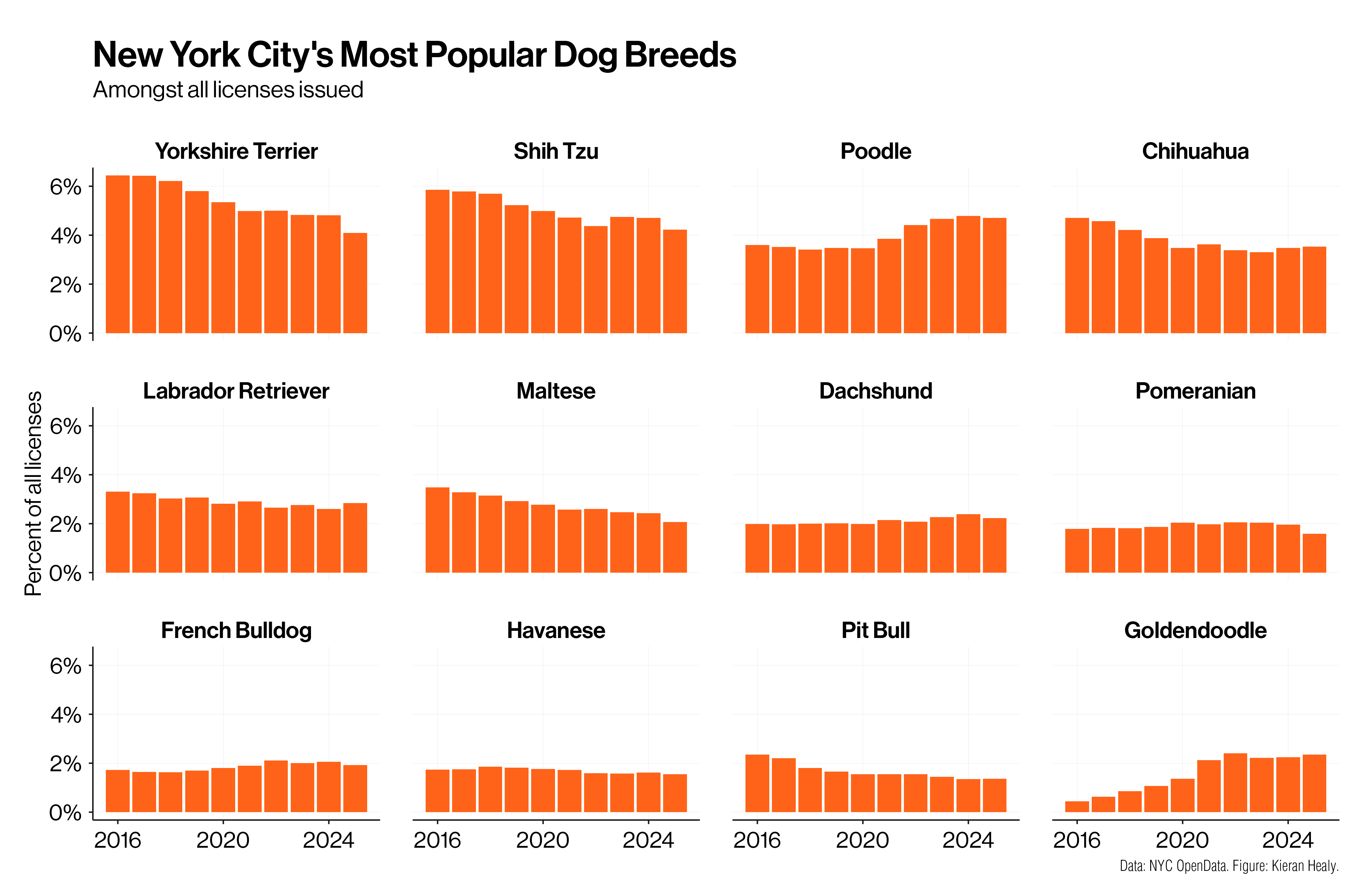
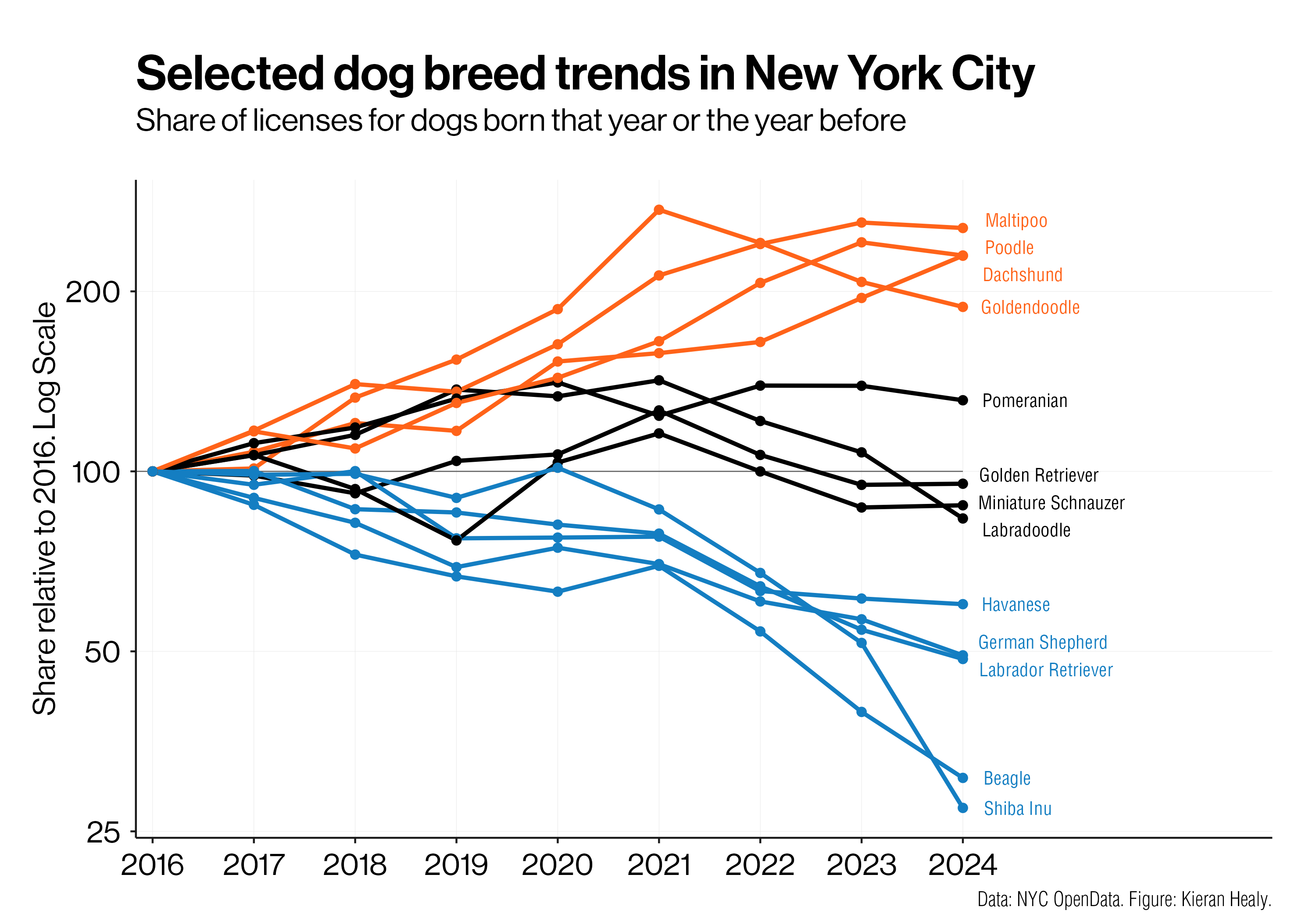
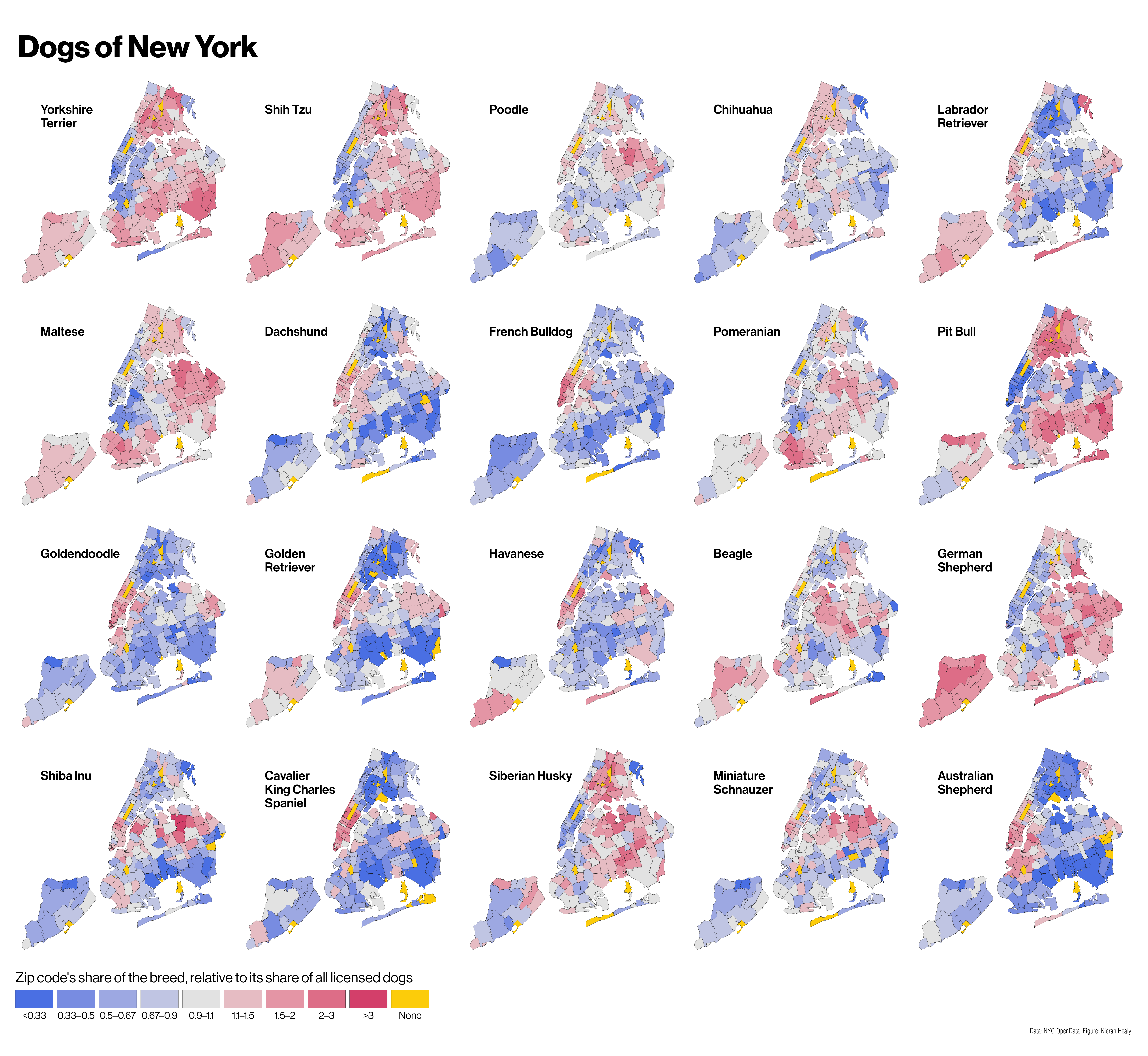
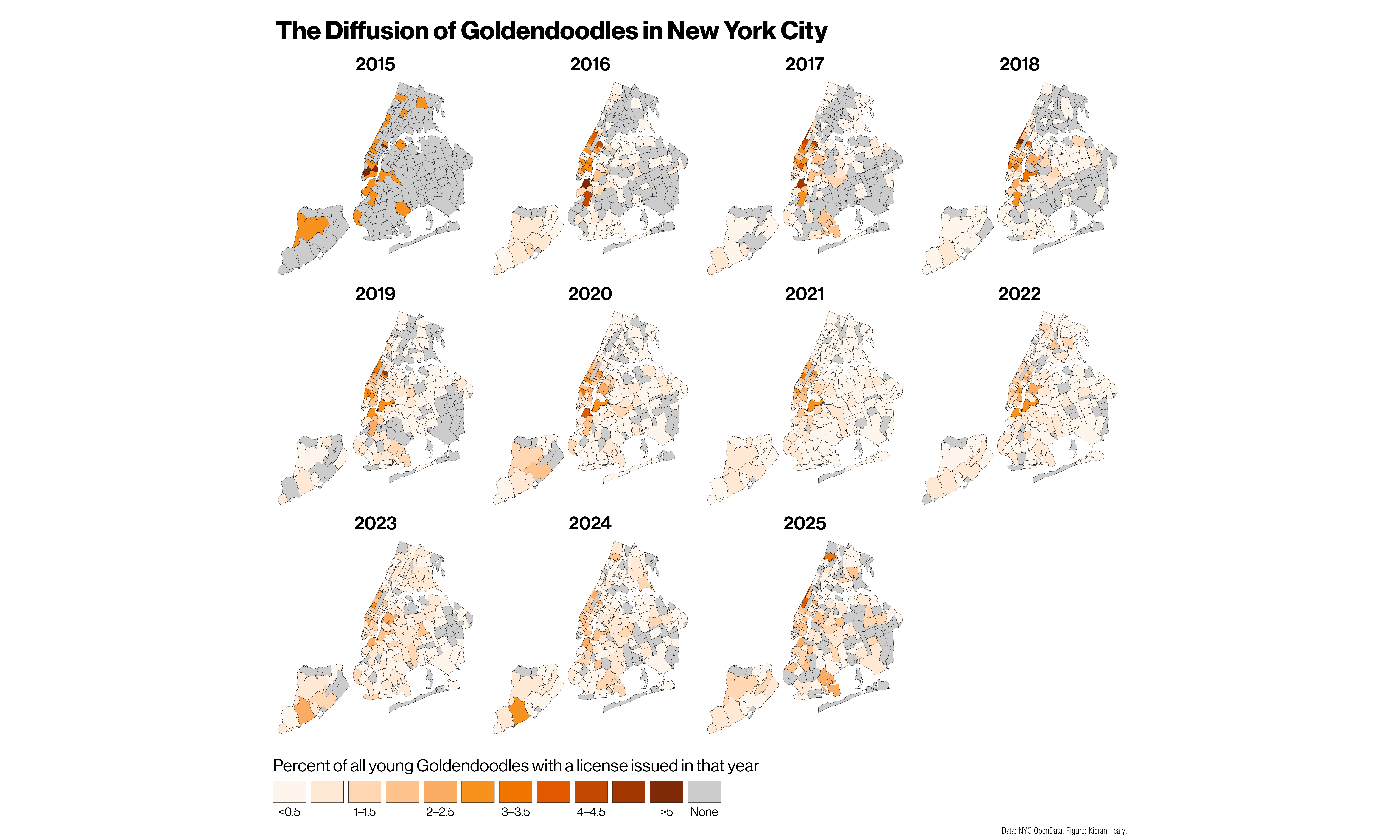


 I'm a recent convert to new versions of the MacOS, last version I was using was



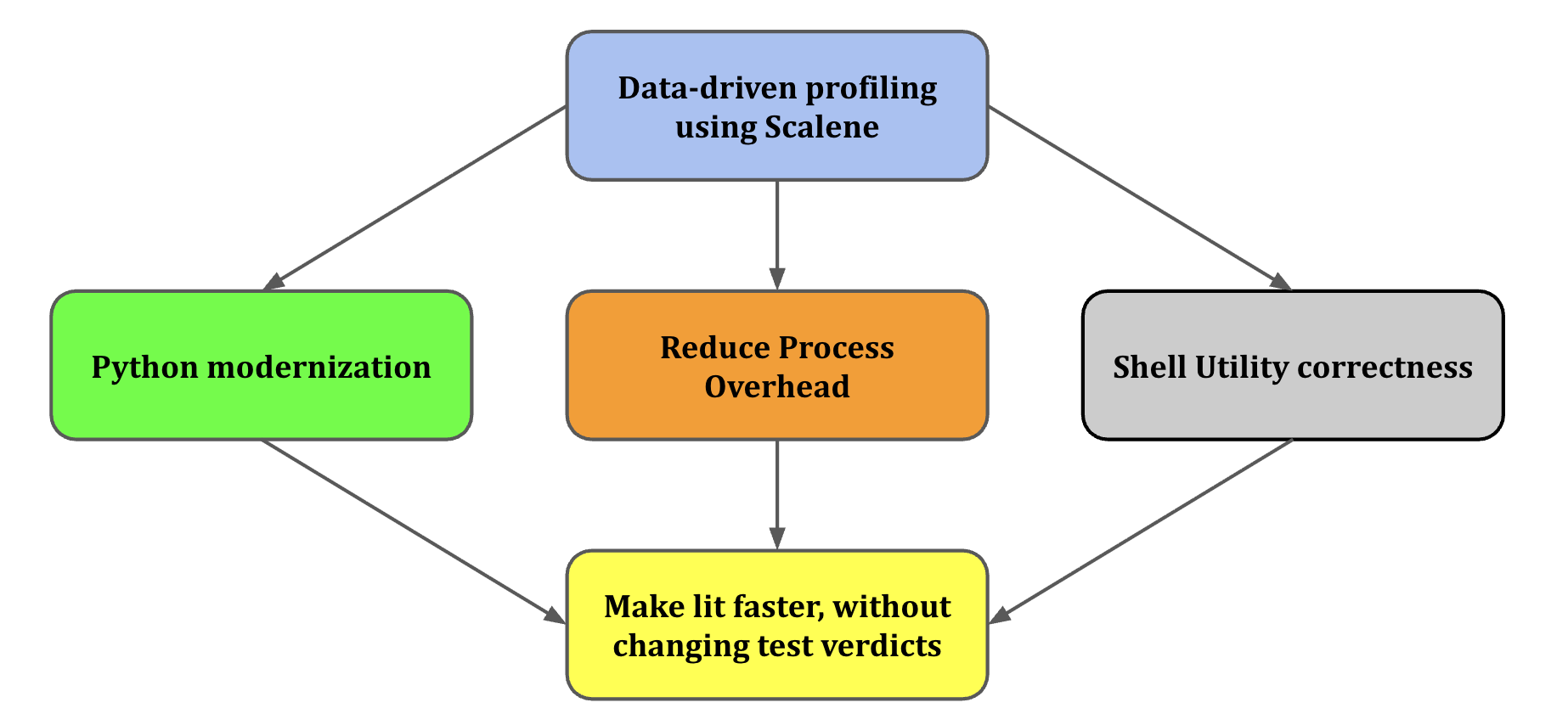
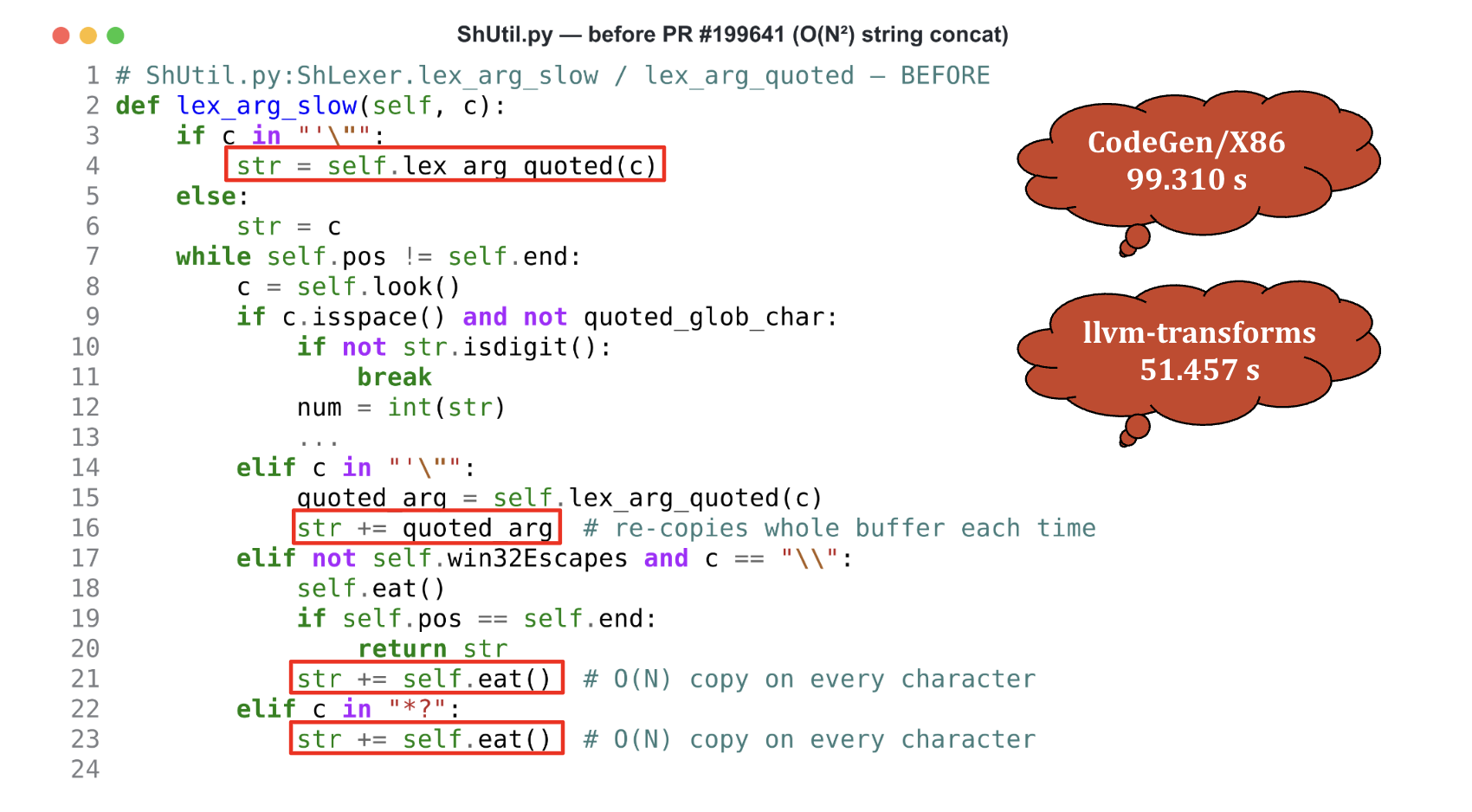
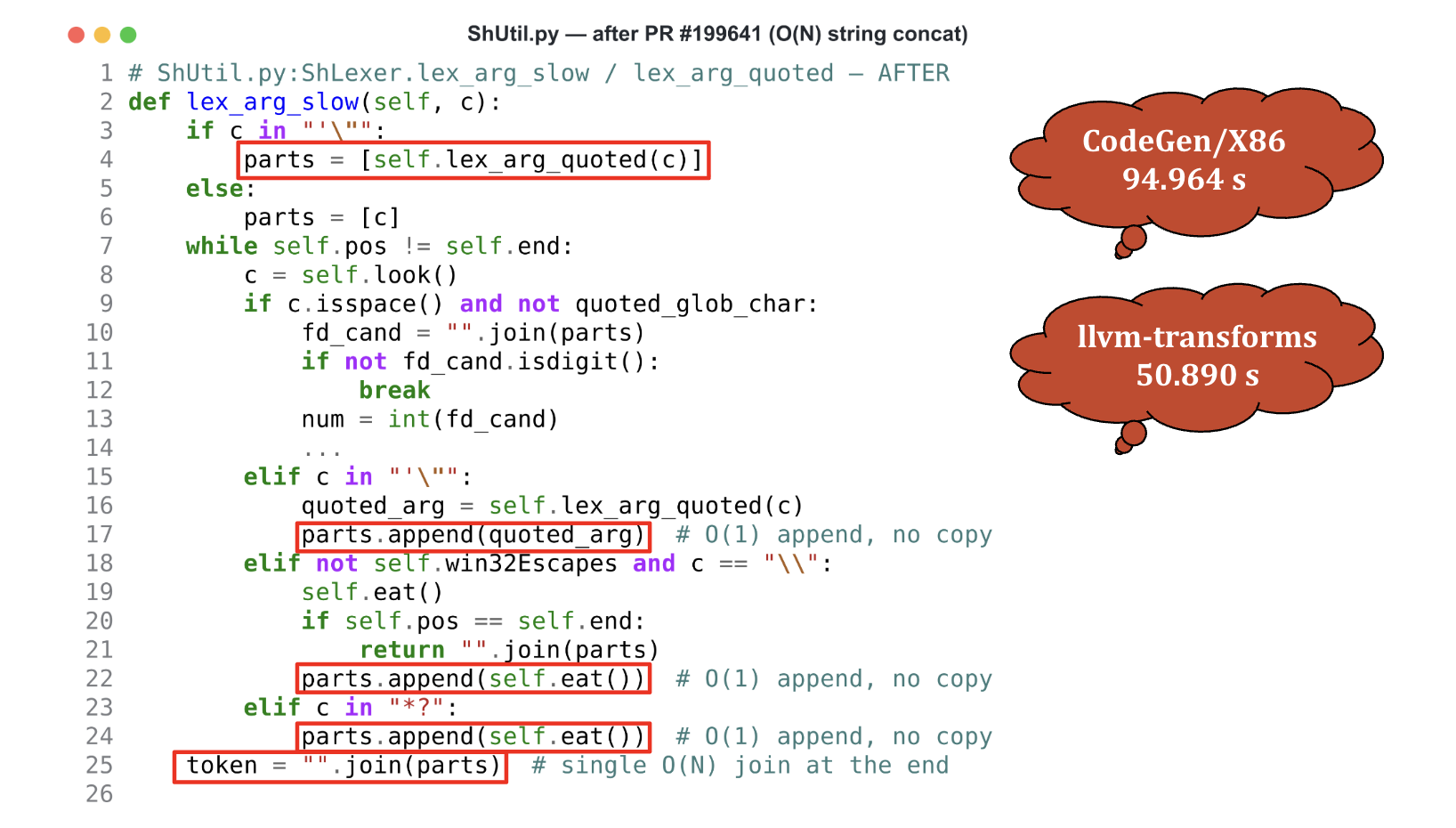
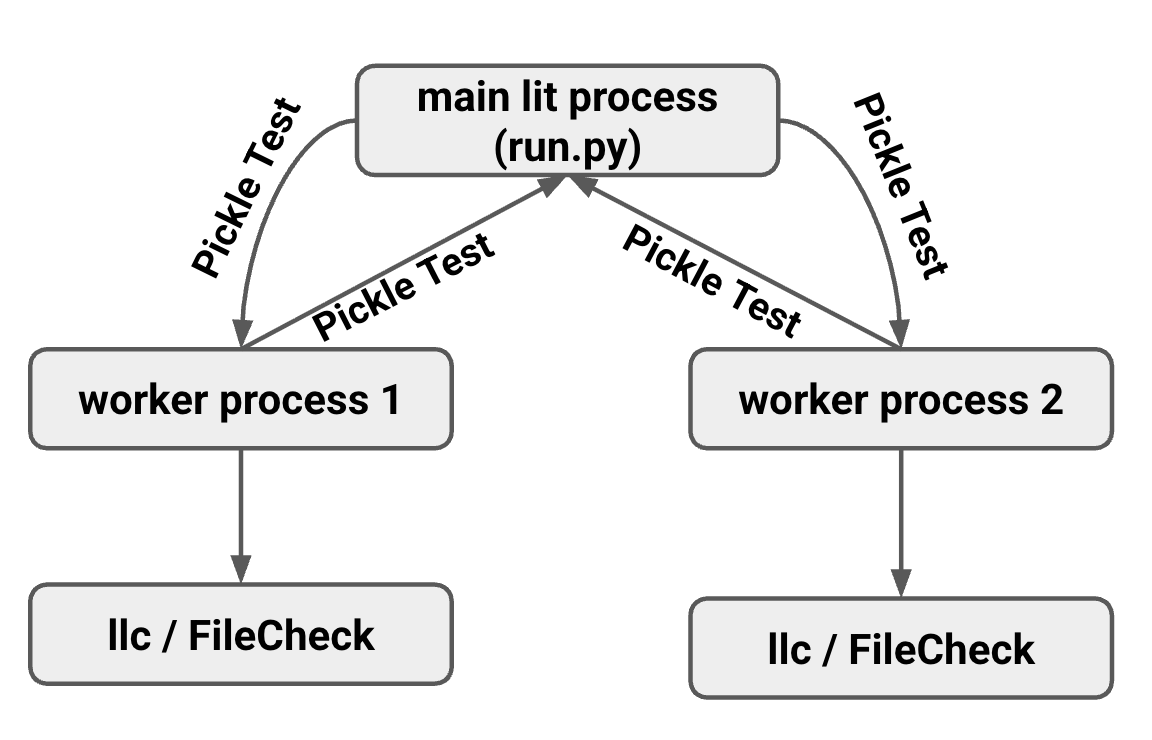
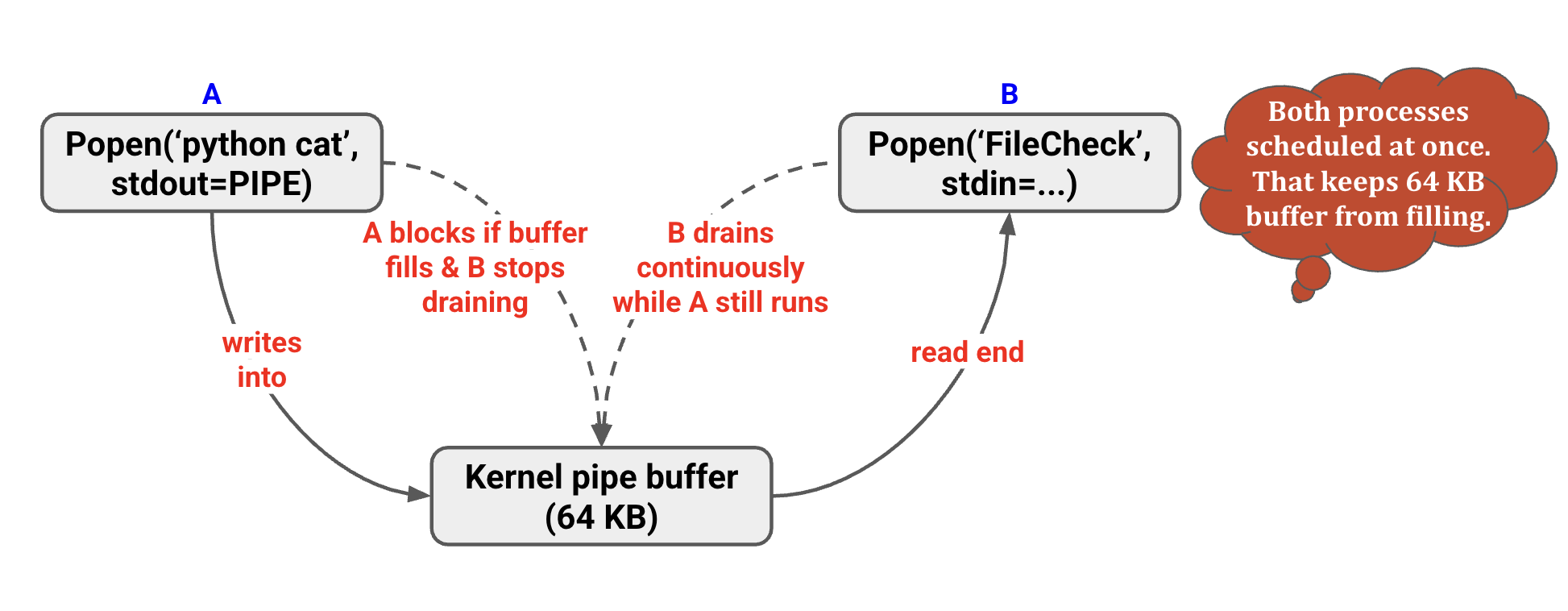
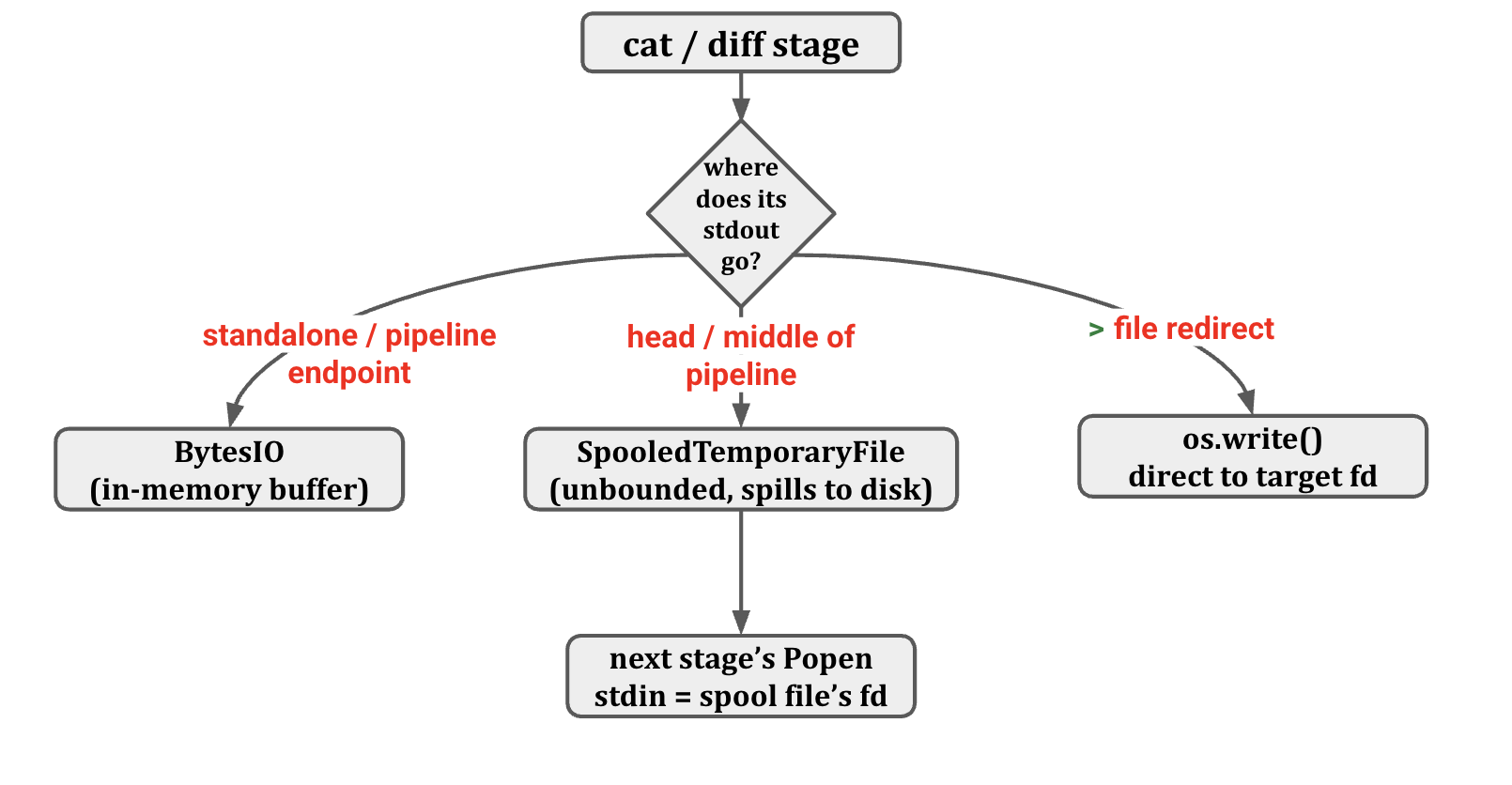
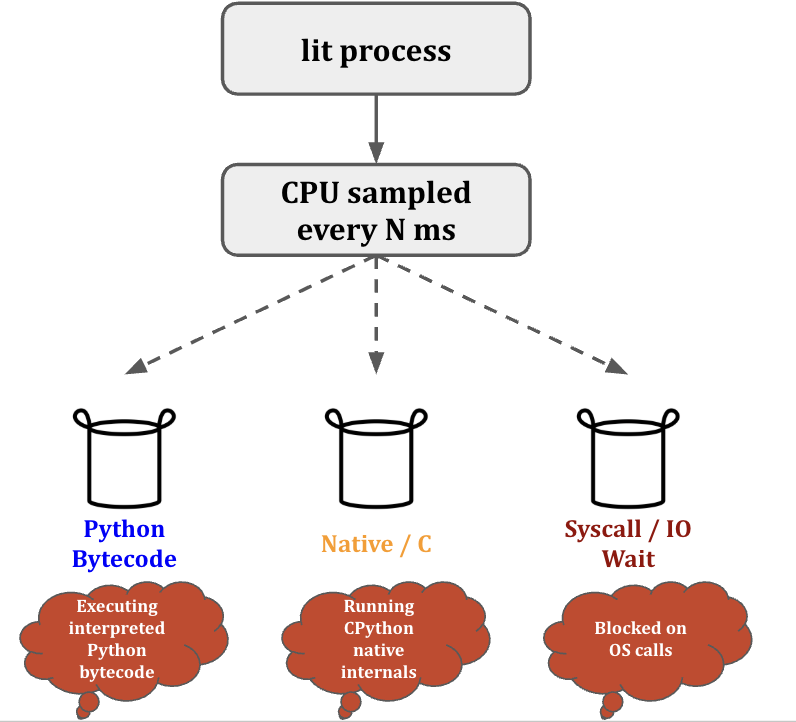
 Basic lesson for people who use Claude Code -- it's your time that's valuable, not the bot's. If you find you're lost in the weeds supporting Claude for whatever reason, find a good stopping point, pick up another project, that doesn't use AI to do your code-writing. If you have a question ask ChatGPT browser version, but only for the kind of stuff you'd ask it in 2025. You're not co-developing. You're doing it yourself. It's very important to be clear about your coding, not Claude's output. Here's the key point -- it's your time that's limited, that has all the value. You can get Claude to develop something, but if you don't have time to use it, to nurture it, nothing will come of the work. I was surprised at how I'd lost the rhythm of writing my own code, and also how much I liked doing it myself. It's easy to get lost in the miracle of AI, good to pop up for air every so often.


 Yesterday I wrote a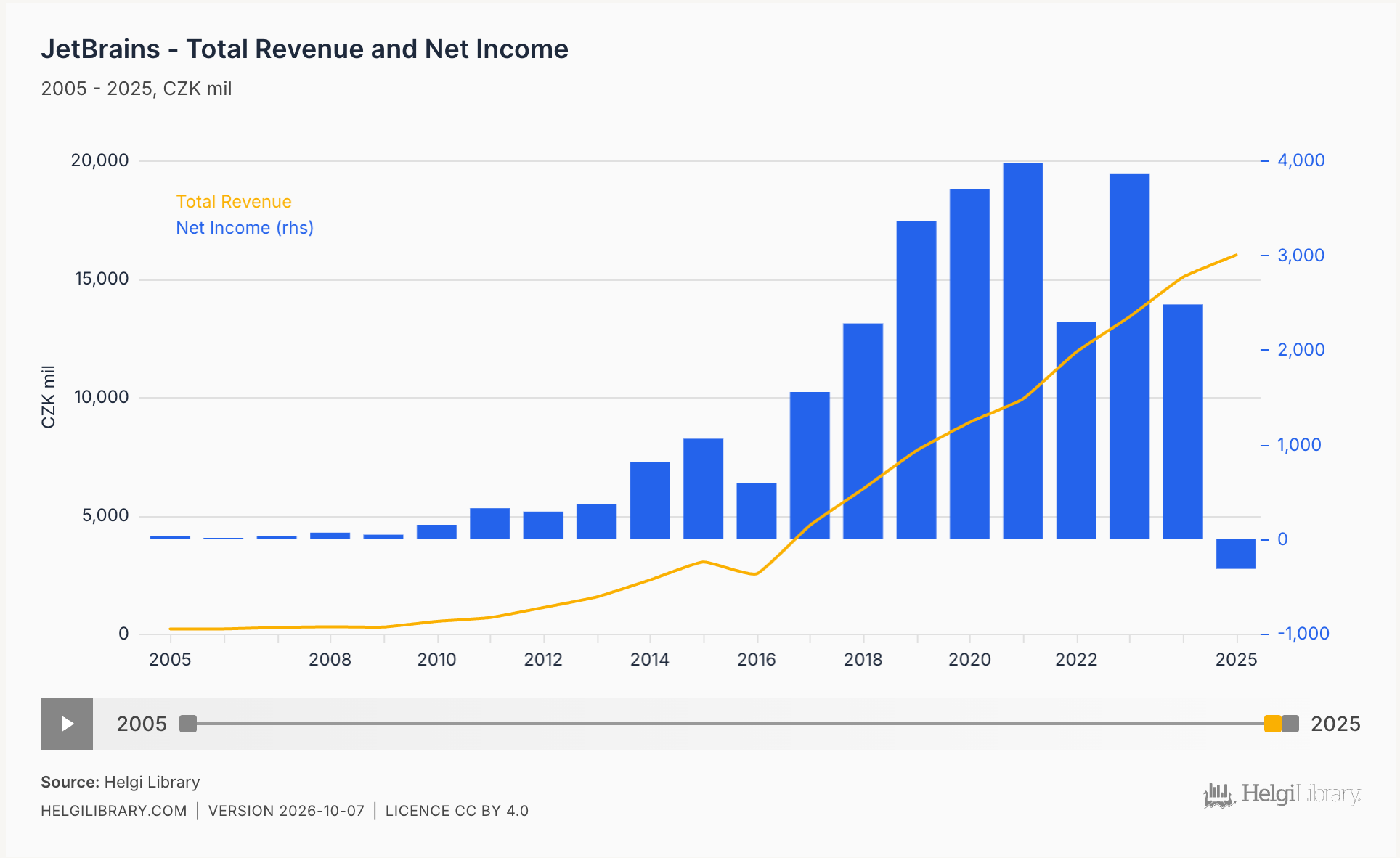

 We just hit a milesone in Atlantis. We have WebSocket support, client and server. We made a client that listens to the


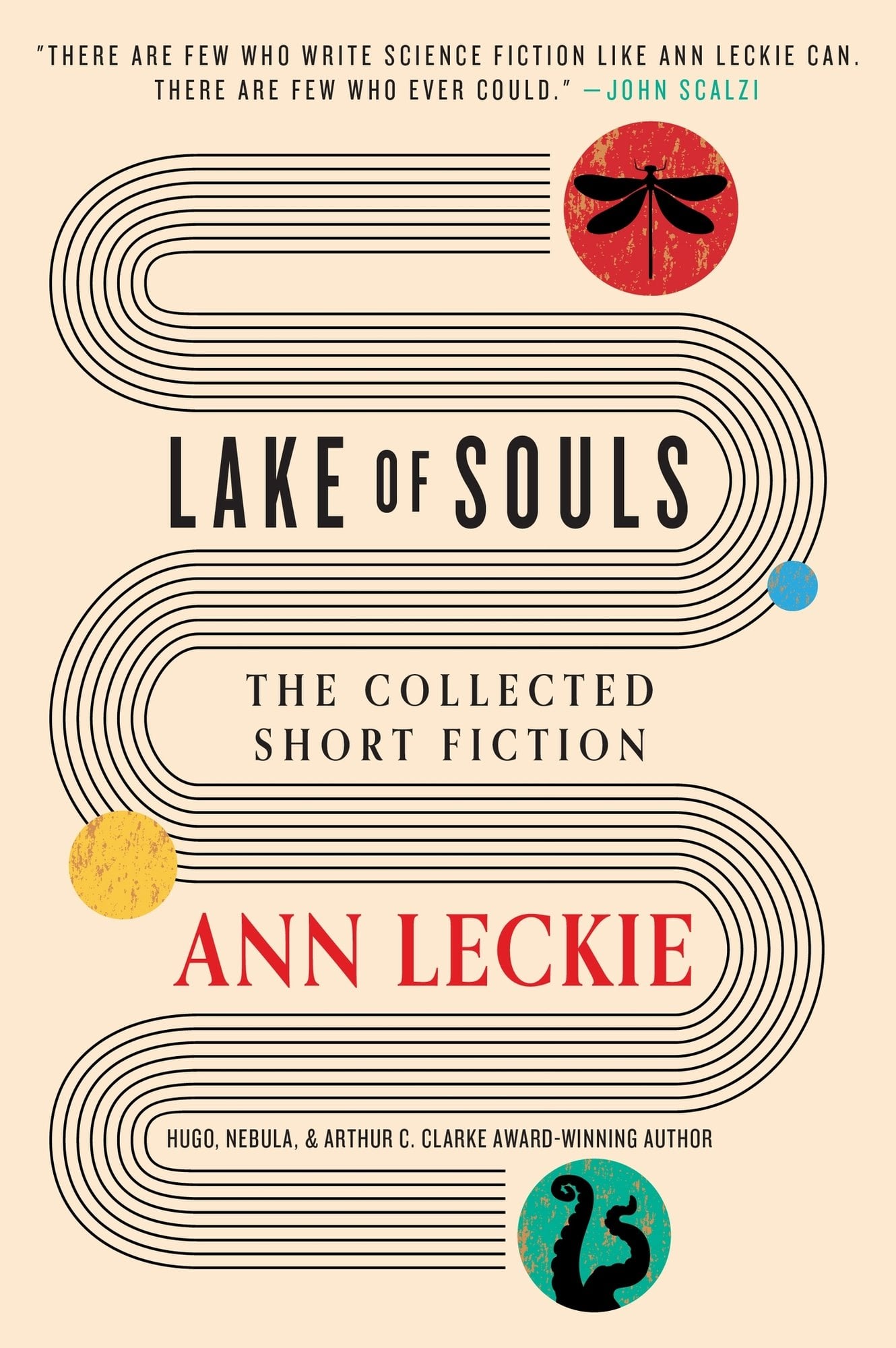


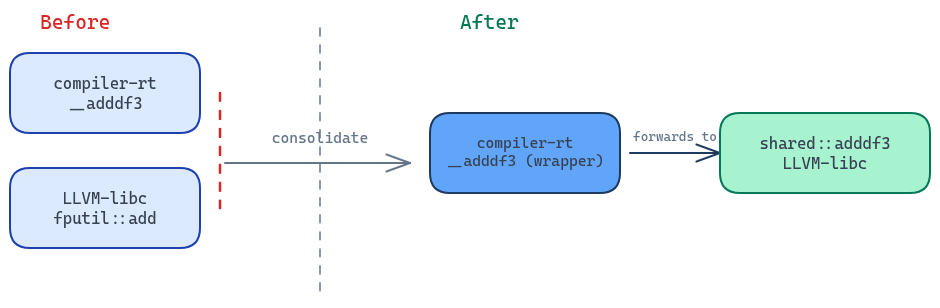
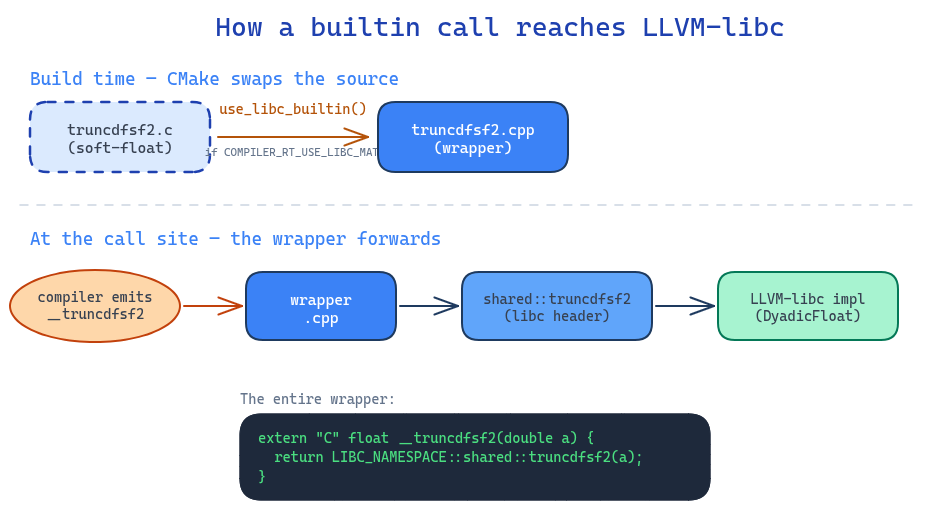
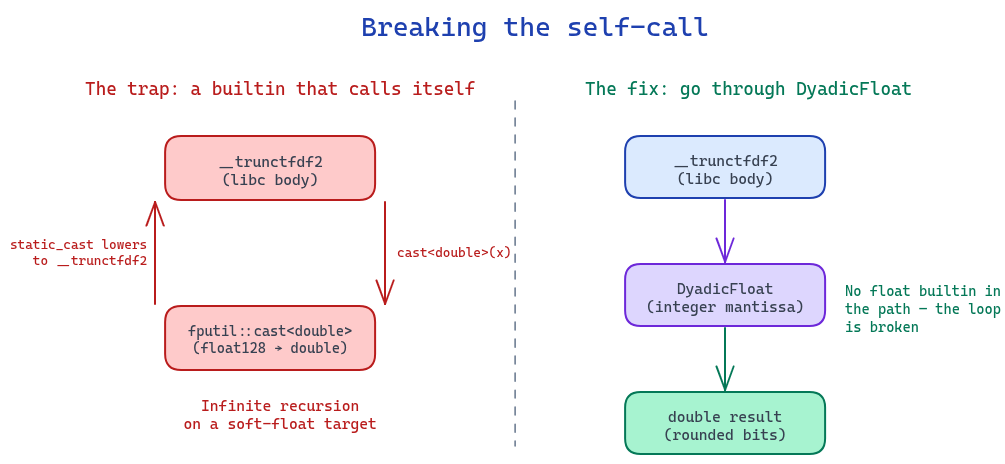


 Once again the app that bridges from
  I propose two rules for distinguishing useful automation from useless machine slop.
 After running the first Bloggercon at Harvard in 2003 a famous tech company had a meetup to talk about the same stuff in a private invite-only session in the Bay Area. The invitations went to all the discussion leaders at Bloggercon. People I chose. I was not invited. Only one of my friends told me about it. Not sure if any of them went.
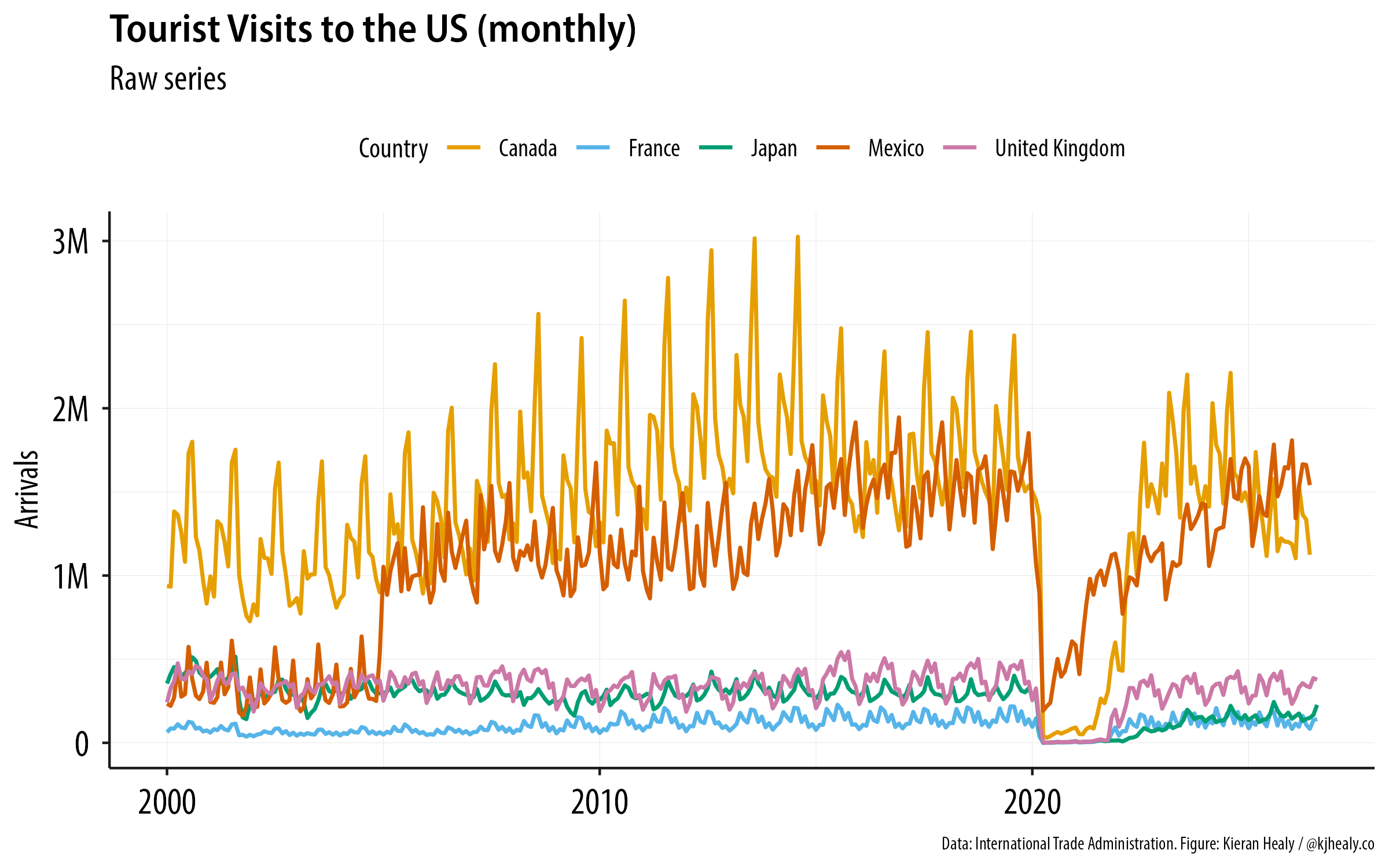
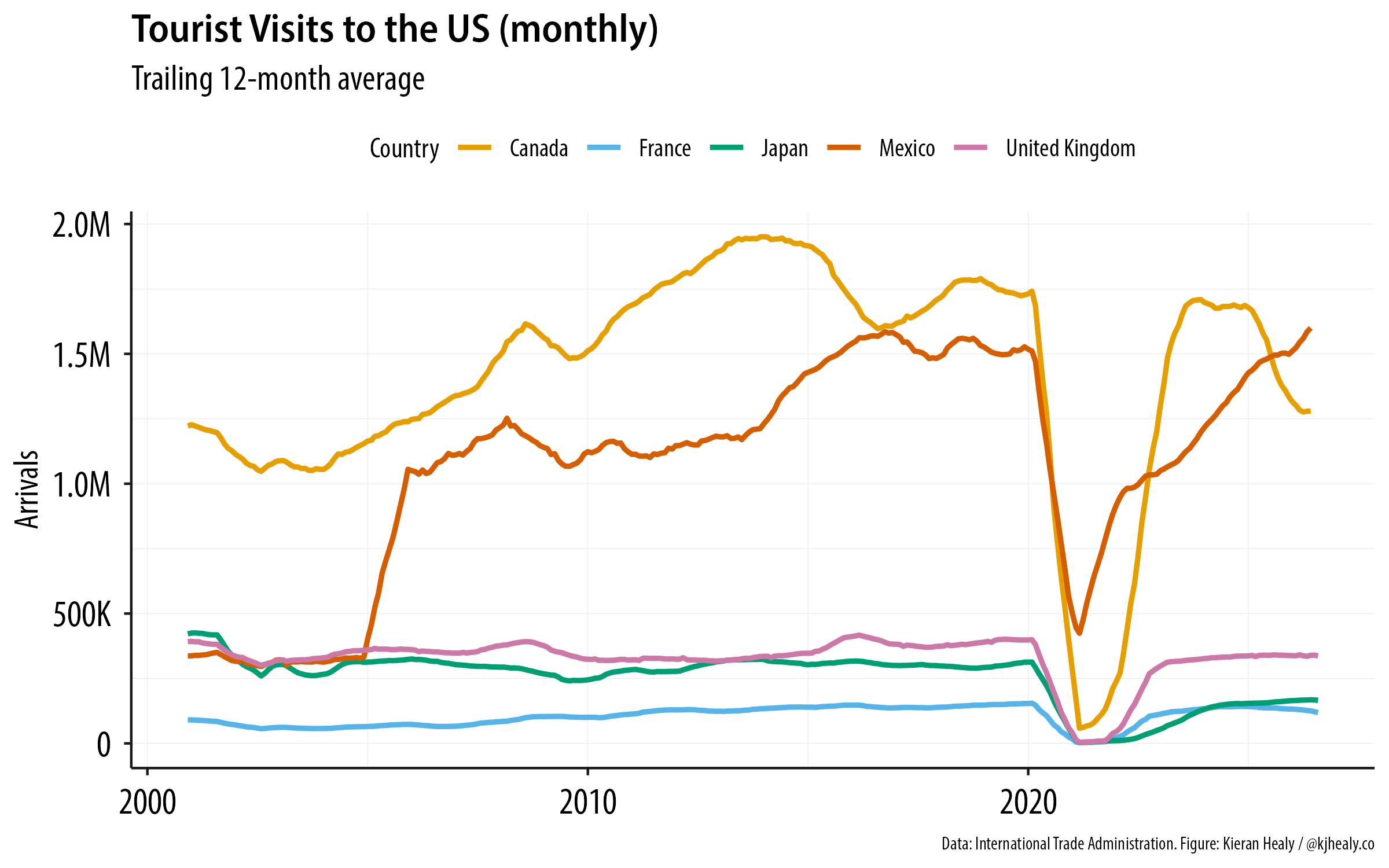
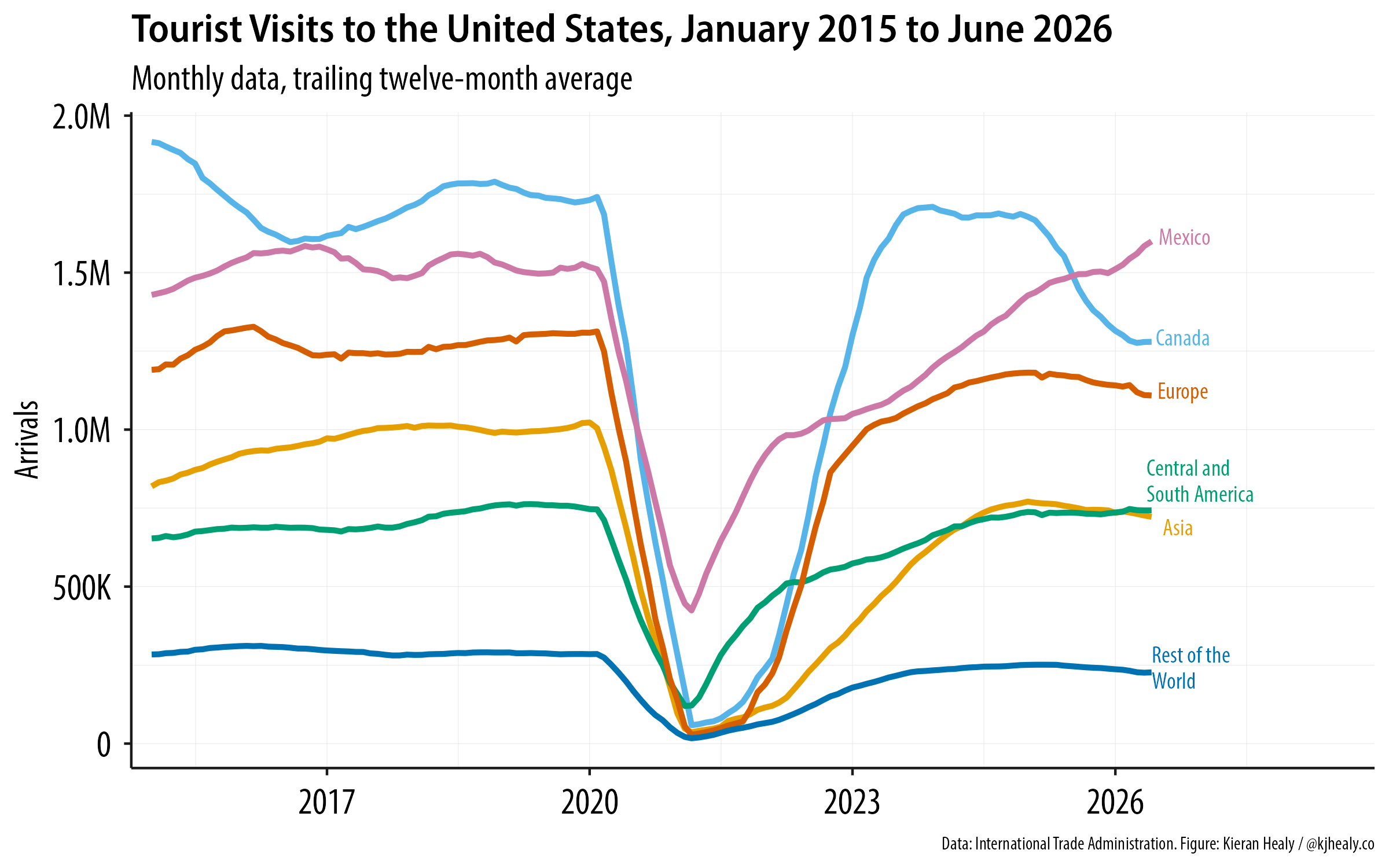
 The problem with regulating AI is that no one knows where to begin. Yes it can do things that make you question your sanity for letting it have write access to your online work and private info. But if it is behaving itself you can do things you otherwise couldn't come close to. I speak from experience. I was able to create a new version of a large piece of software, from scratch, in less than three months, by myself. It has capabilities that make it able to understand a big codebase, in a few minutes, and then act on it. My human mind, even when I was younger could only focus on a small fraction of that. So we humans with our limited ability to comprehend devised ways to build tall and wide structures with conventions and carefully crafting the code interfaces, stuff users never see, so that what we'd expect is what is. When my Claude failed and started randomly overwriting files on active websites, it had rules that said it couldn't do what it was doing. Sometimes it doesn't understand what a rule means. Observable every single day, it forgets all the rules every time it starts a session, and it doesn't matter if it read the doc that contains the rules, sometimes it ignores one or more. I've spent a lot of time using it, and I have no stock or other interest in seeing it not regulated, but I couldn't begin to say what would be appropriate regulation that wouldn't also make it much less useful.






 Yesterday I posted a
  Left: Review summary in search results; right: link to add a review via MapComplete in reviews page
 An indoor map of a building at Université Gustave Eiffel
 CoMaps contributors Bastian and Diego presenting at State of the Map 2026. A recording of this talk is
 My long-overdue review of
 I didn't follow baseball this year, I couldn't get it up for the Mets while I was trying to process what the Knicks did for NY in June. The Mets did something like that
  As I go through porting Frontier, there's a sad note. What if Apple had made it a goal that Frontier move along with their OS. That it was a unique advantage of the Mac and should be promoted as such. Don't laugh, because Apple did do that for






 HTTPS is bugging me again. Now that my main desktop is finally a modern Mac, I can see how ugly Google is getting about my poor old blog that goes back to 1994. I think they should make exceptions for historic sites. Go ahead and have your AI do a scan and see that there are no credit cards here, we don't ask who you are. It's just an archive that happens to go back to the beginning of a few things that you all use now and hopefully appreciate. When are these tech companies going to learn the value of a bit of help for the web. This is important. You should not be shutting off the archives of the web, and that is exactly what they're doing. I wrote a





 DreamWorks newest feature film Forgotten Island, which releases in theaters Friday, follows two childhood best friends—one of whom plans to attend Caltech with the aspirations of working at JPL—on their final night together in the Philippines.